
Guidelines for Shipping Oversized and Heavy Equipment Internationally
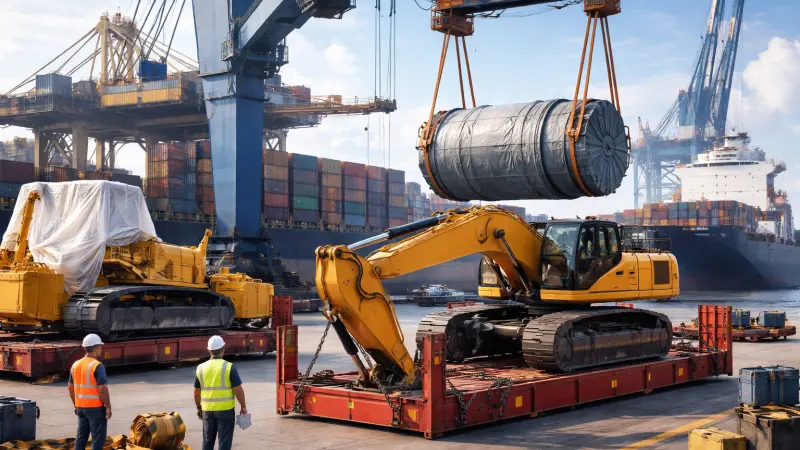
Imagine you have just secured a major contract to supply industrial machinery to a client in Southeast Asia. The equipment is too large for a standard shipping container, weighs several tonnes, and must arrive in perfect working condition within a strict deadline. Where do you begin? Shipping oversized and heavy equipment internationally is one of the most complex logistical challenges a business can face. Unlike standard parcel or pallet freight, these consignments demand specialist knowledge, meticulous planning, and a clear understanding of international regulations.
This guide is designed for UK businesses and freight professionals who need to ship oversized or heavy equipment across borders. From understanding freight classifications to navigating customs documentation, we cover everything you need to know to move large cargo safely, legally, and cost-effectively.
What Counts as Oversized or Heavy Equipment in International Freight?
Before diving into the practicalities of international shipping, it is important to understand how carriers and freight forwarders define oversized and heavy equipment. These definitions determine which shipping methods are available, what regulations apply, and how costs are calculated.
Standard Freight Limits
Most standard shipping containers — whether a 20-foot or 40-foot dry van — have defined limits for cargo dimensions and weight. As a general rule, cargo that exceeds any of the following thresholds is typically classified as oversized or heavy freight:
- Weight: Over 20,000 kg for full container loads, or beyond the safe payload of a standard flat-rack or open-top container
- Length: Exceeding approximately 12 metres
- Width: Over 2.4 metres
- Height: Over 2.6 metres (interior container height)
Cargo that surpasses these dimensions is commonly referred to as out of gauge (OOG) freight. Heavy lift cargo refers specifically to consignments that exceed the lifting capacity of standard port cranes or handling equipment.
Common Examples of Oversized and Heavy Equipment
A wide range of industries regularly ship oversized and heavy cargo internationally. Common examples include:
- Industrial machinery (presses, lathes, turbines)
- Construction equipment (excavators, cranes, bulldozers)
- Agricultural machinery (combine harvesters, tractors)
- Energy sector components (wind turbine blades, transformers, generators)
- Aerospace and defence equipment
- Mining equipment
- Modular buildings and prefabricated structures
If your cargo falls into any of these categories, specialist freight handling will almost certainly be required.
Key Shipping Methods for Oversized and Heavy Equipment
Choosing the right shipping method is one of the most consequential decisions in the entire process. The method you select will affect cost, transit time, risk of damage, and the complexity of customs clearance. The principal options available for heavy and oversized freight are outlined below.
Flat-Rack Containers
Flat-rack containers are standard ISO containers with the side walls removed, leaving a reinforced steel platform. They are suitable for cargo that is too wide or too tall for a conventional container but can still be secured and protected against the elements with appropriate lashing and covering. Flat-racks are available in 20-foot and 40-foot configurations and are widely used for construction plant, vehicles, and machinery.
One important consideration: flat-rack cargo that protrudes beyond the container's standard dimensions will be classified as out of gauge and may incur additional port handling fees.
Open-Top Containers
Open-top containers resemble standard dry containers but lack a solid roof, replaced instead by a removable tarpaulin cover. They are ideal for tall cargo that can be loaded by overhead crane. Items such as large coils, marble slabs, and machinery with significant vertical dimensions are frequently shipped in open-top containers.
Break Bulk Shipping
Break bulk refers to cargo that is shipped loose — neither containerised nor palletised in the conventional sense — and loaded directly into the ship's hold or onto its deck. This method is particularly suited to extremely large or irregularly shaped items that simply cannot fit within any standard container configuration. Break bulk shipping requires careful coordination with port authorities and specialist stevedores.
Roll-On/Roll-Off (RoRo) Shipping
RoRo vessels are designed to carry wheeled cargo — vehicles, trailers, and self-propelled machinery — that can be driven or towed directly on and off the ship.
This method is commonly used for construction plant, agricultural equipment, and vehicles. RoRo shipping is generally more cost-effective than break bulk for wheeled machinery and offers quicker port turnaround times.
Heavy Lift Vessels
For the most exceptional cargo — oversized modules, industrial plant sections, or entire factory components — heavy lift vessels are deployed. These specialised ships are equipped with onboard cranes capable of lifting hundreds or even thousands of tonnes. Heavy lift shipping is typically reserved for project cargo associated with oil and gas, energy, and large-scale infrastructure projects.
Air Freight for Heavy Equipment
Air freight is rarely used for heavy or oversized equipment due to weight and dimension restrictions, as well as prohibitive cost. However, for time-critical machinery components or replacement parts, air freight may occasionally be the only viable option. Specialist air cargo carriers can accommodate items up to certain size and weight thresholds.
Planning Your Shipment: Critical Steps Before Booking
Effective planning is the foundation of every successful heavy freight movement. Rushing into a booking without thorough preparation can result in costly delays, damage to equipment, or non-compliance with international regulations. The following steps should form the basis of your pre-shipment planning.
1. Conduct a Detailed Cargo Survey
Before approaching any freight forwarder or carrier, compile an accurate and comprehensive technical description of your cargo. This should include:
- Precise dimensions: length, width, height, and any protrusions or irregular shapes
- Gross weight and centre of gravity
- Any hazardous materials classifications (if applicable)
- Fragility ratings and handling requirements
- Whether the item can be dismantled for shipping
Inaccurate cargo specifications are among the most common causes of delays and additional charges in heavy freight logistics. Always verify measurements with your technical or engineering team.
2. Assess Origin and Destination Infrastructure
The ports and inland routes at both ends of the journey must be capable of handling your cargo. Not all international ports have the crane capacity, berth depth, or storage facilities to accommodate oversized or heavy lift consignments. Similarly, road infrastructure at the destination may impose restrictions on vehicle width, axle loads, or bridge clearances.
Engage a local agent or freight forwarder with specific knowledge of your destination country's infrastructure. They will be able to advise on port capabilities, route surveys, and any special permits required for inland haulage.
3. Engage a Specialist Freight Forwarder
General freight forwarders may lack the expertise required for oversized and heavy equipment shipments. Seek out a forwarder with a proven track record in project cargo or heavy lift logistics. They should be able to:
- Advise on the most appropriate shipping method
- Coordinate with port authorities and shipping lines
- Arrange specialist packing and lashing
- Manage customs documentation at both origin and destination
- Provide marine cargo insurance
In the UK, reputable freight forwarders are typically members of the British International Freight Association (BIFA), which sets professional standards for the industry.
4. Obtain Accurate Quotations
Heavy freight quotations are significantly more complex than standard parcel or pallet rates. Your quotation should itemise all charges, including:
- Ocean freight or air freight charges
- Port handling and terminal fees
- Out of gauge surcharges
- Customs duties and import taxes at destination
- Inland haulage and final mile delivery
- Insurance premiums
- Any permit fees for abnormal loads
Beware of quotations that appear unusually low — they may exclude critical charges that will emerge later in the process.
Packaging, Crating, and Securing Heavy Equipment
Proper packaging is not merely a best practice in heavy freight — it is a necessity. Equipment that is inadequately packed or secured is vulnerable to damage from vibration, moisture, shifting loads, and rough handling at ports. Marine-grade packaging standards apply to all international sea freight.
Timber Crating and Skidding
Heavy machinery is typically mounted on heavy-duty timber skids, which distribute the weight evenly and provide forklift access. For items requiring additional protection, a full timber crate or export-grade plywood case may be constructed.
All timber used in international shipments must be heat-treated in accordance with ISPM 15 regulations to prevent the spread of pests and diseases.
Lashing and Securing
On flat-rack and break bulk shipments, cargo must be securely lashed to prevent movement during transit. This typically involves steel chains, wire ropes, or webbing straps rated to the weight of the cargo, fixed to lashing points on the container or vessel deck. The lashing plan should be prepared by a qualified cargo surveyor and comply with the relevant provisions of the International Maritime Solid Bulk Cargoes (IMSBC) Code and the CSS Code.
Corrosion Protection
For machinery with metal components, appropriate corrosion protection measures are essential, particularly for long sea voyages. Options include applying VCI (Vapour Corrosion Inhibitor) films, desiccant packs, and protective coatings to exposed metal surfaces. Machinery that will be stored in open conditions at a port should be particularly well protected.
Customs Compliance and Documentation
Customs clearance is one of the most regulated aspects of international freight, and errors or omissions in documentation can result in significant delays and financial penalties. For heavy and oversized equipment, the documentation requirements are typically more extensive than for standard cargo.
Essential Export Documents from the UK
When exporting heavy equipment from the United Kingdom, the following documents are typically required:
- Commercial Invoice: Must accurately describe the goods, their value, and country of origin
- Packing List: A detailed breakdown of the shipment contents, dimensions, and weights
- Bill of Lading or Air Waybill: The contract of carriage issued by the shipping line or airline
- Export Declaration (EX1/CHIEF or CDS): Filed with HMRC via the Customs Declaration Service
- Certificate of Origin: Required for certain destinations to determine applicable tariff rates
- Technical Documentation: Machinery specifications, CE marking certificates, and safety data sheets where applicable
Import Requirements at Destination
Import requirements vary considerably between countries. Some key considerations include:
- Import Licences: Certain categories of machinery may require an import licence in the destination country
- Phytosanitary Certificates: Required for timber packaging in many countries, confirming ISPM 15 compliance
- Conformity Assessments: Some countries require machinery to meet local safety or environmental standards before importation
- Temporary Importation: Equipment for use on a project site and subsequently re-exported may be eligible for temporary importation relief (e.g., ATA Carnet)
Always consult with a customs broker or freight forwarder who has specific expertise in your destination country before shipping.
Incoterms and Liability
The Incoterms rules, published by the International Chamber of Commerce, define the responsibilities of buyer and seller in international trade transactions. For heavy equipment shipments, the choice of Incoterm has significant implications for who bears the cost and risk of transport at each stage. Commonly used Incoterms for heavy freight include:
- EXW (Ex Works): The buyer assumes all responsibility from the seller's premises
- FCA (Free Carrier): The seller delivers to a named carrier; risk transfers at this point
- CIF (Cost, Insurance, Freight): The seller pays freight and insurance to the destination port
- DAP (Delivered at Place): The seller is responsible for delivery to the named destination, excluding import duties
- DDP (Delivered Duty Paid): The seller assumes full responsibility, including import duties and taxes
Seek legal or commercial advice when agreeing Incoterms, as they have direct implications for contract risk, insurance, and tax liability.
Marine Cargo Insurance for Heavy Equipment
Given the high value of most heavy and oversized equipment, comprehensive marine cargo insurance is not optional — it is essential. Standard freight carrier liability is limited by international convention (typically to a very low figure per kilogram of gross weight) and will rarely come close to covering the replacement value of specialist machinery.
When arranging marine insurance, ensure your policy covers:
- All risks of physical loss or damage in transit
- General Average contributions (a maritime law principle by which all cargo owners share in losses sustained to save the voyage)
- War and strikes risks if shipping to higher-risk regions
- Delay in transit cover, if applicable
Declare the full insured value accurately and provide your insurer with all relevant cargo specifications. Under-insurance can result in proportional claims settlements that leave you significantly out of pocket.
Navigating Port Handling and Inland Logistics
The port handling of oversized and heavy cargo is a specialised operation requiring close coordination between the shipping line, port operator, customs authorities, and the cargo owner or their agent.
Pre-Arrival Planning
Notify the destination port of your cargo well in advance — ideally at the time of booking. Port operators need time to arrange appropriate berths, crane resources, and storage areas for oversized cargo. Failure to provide advance notice can result in your cargo being held on board the vessel at demurrage cost until a suitable handling slot becomes available.
Inland Haulage and Abnormal Load Permits
Once your equipment has cleared customs at the destination port, it must be transported to its final location. For oversized cargo, this may require specialist low-loader or modular trailer transport. In many countries, including the United Kingdom, abnormal loads exceeding defined size or weight thresholds require:
- Advance notification to the relevant highways authority
- Police escorts for certain load sizes
- Route surveys to identify low bridges, weight-restricted roads, and overhead utilities
- Special movement orders or permits
In the UK, the movement of abnormal loads on public roads is governed by the Road Vehicles (Authorisation of Special Types) (General) Order 2003, as amended. Your specialist haulier will be familiar with these requirements.
Cost Factors in International Heavy Equipment Shipping
The cost of shipping heavy and oversized equipment internationally is influenced by a wide range of variables. Understanding these factors will help you budget accurately and negotiate more effectively with carriers and forwarders.
Principal Cost Drivers
- Cargo dimensions and weight: Larger and heavier cargo commands higher freight rates and port handling fees
- Origin and destination: Trade lane availability, port congestion, and infrastructure capability at each end
- Shipping method: Break bulk and heavy lift shipping is typically more expensive per tonne than containerised freight
- Seasonal demand: Shipping rates fluctuate with market conditions, including seasonal peaks and disruptions
- Currency fluctuation: International freight is often priced in US dollars; exchange rate movements can affect Sterling costs
- Fuel surcharges: Carriers apply bunker adjustment factors (BAF) that vary with fuel prices
- Insurance: Premiums reflect cargo value, destination risk, and shipping method
Environmental and Regulatory Compliance
International heavy freight is subject to a growing body of environmental regulation that UK exporters must be aware of. The International Maritime Organisation (IMO) has implemented increasingly stringent emissions standards for shipping, including the IMO 2020 sulphur cap and ongoing decarbonisation commitments under the Energy Efficiency Design Index (EEDI).
Additionally, certain categories of equipment — particularly those containing refrigerants, hydraulic fluids, or batteries — may be classified as hazardous goods under the International Maritime Dangerous Goods (IMDG) Code or IATA Dangerous Goods Regulations for air freight. Non-compliance can result in cargo being refused by carriers or seized by customs authorities.
Consult with your freight forwarder or a hazardous goods specialist if there is any possibility that your equipment contains regulated substances.
Finding Specialist Partners for Your Shipment
Shipping oversized and heavy equipment internationally requires a network of reliable, specialist partners — from freight forwarders and customs brokers to marine surveyors and specialist hauliers. For UK businesses looking to build and maintain those professional relationships, visibility and accessibility are key. UK business directory websites such as Local Page UK provide a practical way for freight specialists, logistics providers, and related service businesses to list their operations and connect with clients. Whether you are searching for a specialist in project cargo forwarding or exploring verified providers through an online business directory UK platform, directories that support a broad range of industries — including those serving the logistics and freight sector — can be a useful starting point for sourcing credible, locally based expertise. As part of a wider network of business directories in the UK, such platforms help businesses improve their online visibility and make it easier for potential clients to find the specialist services they need.
Questions Clients Commonly Ask
What is the difference between out of gauge (OOG) and break bulk cargo?
Out of gauge (OOG) cargo refers specifically to items that exceed the standard dimensions of an ISO shipping container but are still carried in a modified container format, such as a flat-rack or open-top. Break bulk cargo, by contrast, is shipped without any container at all — loaded directly into a vessel's hold or onto its deck. Break bulk is typically used for the largest and most irregularly shaped items for which no container configuration is suitable.
Do I need an export licence to ship heavy machinery from the UK?
Most general industrial machinery does not require an export licence. However, equipment with potential military, dual-use, or strategic applications may be subject to UK export controls administered by the Export Control Joint Unit (ECJU). If your equipment falls into categories such as defence, telecommunications, or advanced manufacturing, you should check whether a Standard Individual Export Licence (SIEL) or Open General Export Licence (OGEL) is required before shipping.
How long does it typically take to ship heavy equipment internationally from the UK?
Transit times vary considerably depending on the destination and the shipping method used. Ocean freight to major European ports may take as little as a few days, whilst shipments to destinations in Asia, the Americas, or Australasia can take between three and eight weeks. Break bulk and heavy lift shipments often have longer and less predictable transit times than containerised freight, due to less frequent sailings and greater port handling complexity. Allow additional time for customs clearance at the destination, which can add several days to the overall schedule.
What is a cargo survey and do I need one?
A cargo survey is a professional inspection of your equipment carried out by a qualified marine surveyor, either before loading or upon arrival at the destination. Pre-shipment surveys document the condition of the cargo before it leaves the UK, providing a baseline for any damage claims that may arise during transit.
For high-value or fragile equipment, a pre-shipment survey is strongly recommended and may be required by your insurer. Post-discharge surveys are advisable if there is any suspicion of damage during transit.
Can I ship heavy equipment on a temporary basis and reclaim customs duties?
Yes, in many cases. Equipment exported temporarily for use on a project overseas and subsequently re-imported into the UK may benefit from duty relief under the Temporary Admission procedure. Similarly, equipment imported into many countries for temporary use can be admitted duty-free under an ATA Carnet, an internationally recognised customs document. An ATA Carnet must be arranged before the goods leave the UK through the London Chamber of Commerce and Industry or another authorised issuing body. Conditions and eligibility vary by destination country.
Disclaimer: The information provided in this article is for general informational and research purposes only. Company details, features, services, and market positions may change over time. Readers are advised to visit official company websites and conduct independent research before making any business decisions or purchasing services.
Most Searchable Keywords
Recent Blogs


Related Listings

Categories
- Accountants (295)
- Advertising Agencies (559)
- Architects (149)
- Automobiles (377)
- Beauty (300)
- Carpenters (146)
- Cleaning Services (387)
- Dentists (189)
- Driving (62)
- Education (1)
- Electricians (215)
- Energy (8)
- Event Organiser (689)
- Finance (602)
- Guide (3492)
- Health (2207)
- Information technology (207)
- Legal Services (361)
- Logistics (6)
- Maintenance (65)
Sponsored Listings in Educational Services


Related Blogs

Creamfields Daresbury: Impact on Local Reside...
Read this insightful article "Creamfields Daresbury: Impact on Local Residents" to expand your knowledge!

UK High Street Businesses in 2026-27: Which S...
Read this insightful article "UK High Street Businesses in 2026-27: Which Sectors Are Growing?" to expand your knowledge!

Why Complete Business Listings Matter More Th...
Read this insightful article "Why Complete Business Listings Matter More Than You Think" to expand your knowledge!
Questions & Answers – Find What You Need, Instantly!
Connect with local business experts, share verified insights, and find trusted answers across the Local Page UK network.
Ask Community
Ask questions to the Local Page UK community
Share Knowledge
Share your knowledge to help out others
Find Solutions
Find answers or offer instant solutions
Some of the most popular fantasy TV shows include "Game of Thrones," known for its epic battles and political intrigue, "The Witcher," which features monster hunting and magic, and "Stranger Things," blending supernatural elements with 1980s nostalgia. Other notable mentions are "His Dark Materials," "Shadow and Bone," and "The Mandalorian," each offering unique worlds and captivating storytelling that have garnered large fan bases.
When seeking bathroom renovation providers that handle both plumbing and tiling, it's advisable to look for licensed contractors who specialize in comprehensive bathroom remodels. Companies such as Home Depot, Lowe's, and Bath Fitter offer these services, often providing a seamless experience by managing all aspects of the renovation process. Additionally, local contractors with positive reviews in platforms like Angie's List or Houzz may also offer tailored solutions for your bathroom needs.
Absolutely, there are several distributors that supply crash mats and soft play equipment to gymnastics clubs in and around Birmingham. National companies like Gymnova, S & G (Spieth Gymnastics), and Jaques of London offer a wide range of crash mats, foam pits, and soft play pieces, and they typically deliver to the Birmingham area. For more local options, you might try The Gym Equipment Company, which has a showroom in the West Midlands, or check out smaller specialist suppliers like Playtime UK. Many of these distributors cater specifically to clubs, offering high-density foam mats that meet safety standards. I'd recommend reaching out to a few to compare pricing, delivery times, and whether they offer custom sizes or installation services. It's also worth checking if any of them have a physical showroom near Birmingham so you can test the equipment before buying. Happy tumbling!
For professionals seeking a reliable sanitaryware supplier in Manchester with trade account facilities, several established merchants combine extensive product ranges, competitive pricing, and dedicated trade support. The most reputable option is Graham Plumbers Merchant, which operates multiple branches across Manchester, including Salford Quays and Oldham. They offer a dedicated trade account service with preferential pricing, priority delivery scheduling, and access to a vast inventory of leading sanitaryware brands such as Villeroy & Boch, Duravit, Ideal Standard, and Roca. Their trade accounts typically include net 30-day payment terms, online account management, and a tailored project quotation system. Similarly, City Plumbing Supplies has several Manchester-based depots (such as Ashton-under-Lyne and Stockport) that cater specifically to trade customers, providing a rapid order-and-collect service, trade-only promotions, and a loyalty programme offering rebates on repeat purchases. Their product range covers everything from basins and WCs to complete bathroom suites and brassware, with in-house technical advisors available for specification support. Another key player is Plumb Center, part of the Wolseley Group, which offers trade accounts with bespoke pricing structures, direct-to-site deliveries within the Greater Manchester area, and access to over 10,000 lines of sanitaryware, including premium brands like Grohe and Hansgrohe. Their trade portal allows for real-time stock checking and order history tracking, facilitating efficient project management. For those seeking a more specialist or high-end option, Bathroom Spares in Manchester provides trade accounts with a focus on hard-to-find sanitaryware and discontinued ranges, which can be invaluable for refurbishment projects. Additionally, independent merchants such as M&B Plumbase in Trafford Park offer flexible trade terms, personalised service, and competitive pricing on both mainstream and luxury sanitaryware. When evaluating suppliers, trade customers should consider factors beyond price: reliability of stock availability, delivery timescales within Manchester’s often congested zones, clarity of returns policies, and the quality of after-sales support for warranty claims. It is advisable to request a trade account application from at least two to three suppliers to compare discounts, minimum order values, and payment terms. Many suppliers also offer showroom access for trade clients, allowing you to inspect finishes and dimensions before committing to large orders. For ongoing projects, establishing a relationship with a single supplier who offers consolidated invoicing and dedicated account management can streamline procurement. Ultimately, the most reliable supplier for your trade account in Manchester will be one that aligns with your volume requirements, preferred brands, and service expectations, so a site visit to their local branch and a discussion about your specific trade needs is highly recommended before committing to an account.
People in Leeds are loving their local florists—customers often mention gorgeous, fresh arrangements and super friendly service. Many rave about reliable same-day delivery and creative wedding bouquets. A few note pricing can vary, but overall, the buzz is all about quality and that personal touch making every order feel special.
Common problems for commercial gardening in Bristol include weed overgrowth, soil degradation, pest infestations, and irrigation malfunctions. Additionally, managing seasonal transitions, adhering to sustainability regulations, and maintaining consistent aesthetics pose significant challenges. Expert services mitigate these via structured maintenance, integrated pest management, and soil analysis to ensure long-term landscape health.