
UK Circular Economy Marketplaces Recommerce Repair Growth 2026
- 👤 Ryan Reynolds
- 👁️ 328 Views
- Last Updated: July 17, 2026
- 🏷️ News
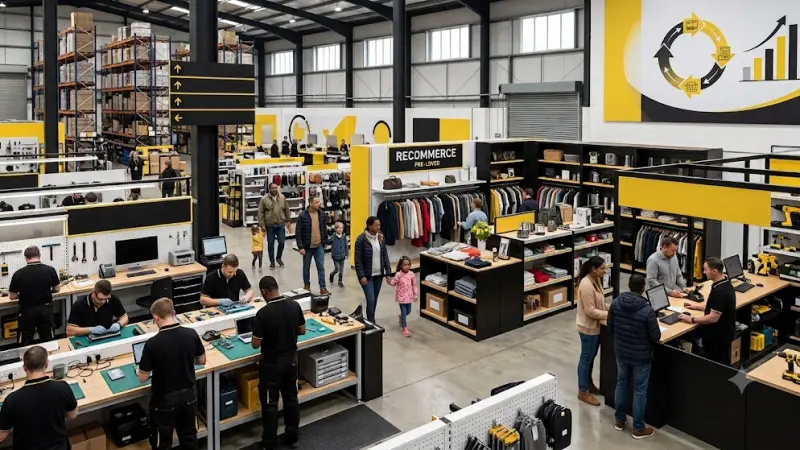
UK Circular Economy Marketplaces 2026: Recommerce, Repair & Rental Platforms Scaling Past £5B
The British retail and industrial landscapes are undergoing a profound structural shift as sustainability moves from a corporate compliance checklist to a multi-billion-pound commercial driver. As businesses and consumers align to meet strict net-zero targets and combat rising resource scarcity, the commercial infrastructure supporting sustainable commerce has rapidly matured. At the heart of this transformation are UK circular economy marketplaces 2026, which have officially crossed a critical financial threshold, scaling past £5B in aggregate market valuation and transaction volume. This unprecedented growth highlights a fundamental transition away from the traditional linear "take-make-waste" industrial framework toward a highly efficient, closed-loop ecosystem. Driven by advanced digital logistics, strict carbon reporting mandates, and shifts in consumer behavior, these platforms are no longer niche alternatives they are the new standard for resource management across the United Kingdom.
The Landscape of Sustainable Commerce in the United Kingdom
The dramatic ascension of the UK circular economy has been catalyzed by macroeconomic pressures, shifting regulatory environments, and a fundamental realignment of corporate capital allocation. In 2026, standard procurement frameworks routinely incorporate asset lifecycle parameters that were virtually non-existent a decade prior. The transition is anchored by three primary pillars: recommerce (the buying and selling of pre-owned, surplus, or refurbished goods), repair (the systematic extension of product lifespans through expert restoration), and rental (the shift from asset ownership to service-based utilization models).
Historically, these sectors operated within highly fragmented, localized, or consumer-facing environments. Today, enterprise-grade digital architecture has unified these disparate segments into high-performance commercial networks. The driving force behind recommerce platforms UK growth lies in their ability to eliminate transaction friction, verify product provenance, and seamlessly calculate scope 3 carbon emission reductions at scale.
For large-scale organisations, this infrastructure facilitates highly optimized resource allocation. Excess raw materials, decommissioned technology suites, and fleet vehicles are no longer written off as depreciation losses. Instead, they are liquidated through secondary channels, unlocking trapped balance sheet value while directly reducing corporate environmental footprints.
Current Market Drivers and Regulatory Catalysts
The scaling of sustainable platforms past the £5B mark is not an accidental milestone; it is the direct consequence of stringent regulatory updates and clear economic incentives. UK enterprise organizations face unprecedented legislative compliance demands, notably surrounding the Extended Producer Responsibility (EPR) frameworks and evolving corporate sustainability reporting structures aligned with the UK Sustainability Disclosure Requirements (SDR).
Under these frameworks, companies are financially accountable for the entire lifecycle of the products they manufacture, distribute, or utilize. Consequently, establishing robust B2B electronic asset recovery systems has shifted from an optional sustainability initiative to a core operational mandate. Furthermore, supply chain disruptions and volatile commodity prices across Western Europe have made the domestic sourcing of secondary raw materials significantly cheaper than importing virgin components.
From an investment standpoint, institutional venture capital and private equity firms within the City of London have directed substantial funding toward green tech infrastructure. Marketplaces that offer audited, transparent data pipelines capable of proving carbon avoidance are commanding premium valuations. Businesses utilizing these platforms can confidently report tangible environmental metrics to shareholders, avoiding the heavy financial penalties associated with greenwashing claims.
Technical Architecture of Modern Circular Platforms
To understand how circular economy business models for enterprises successfully operate at a multi-billion-pound scale, one must look at the underlying technology suite powering these marketplaces. Modern circular ecosystems rely on complex, integrated software architectures that handle asset tracking, dynamic pricing, logistics, and trust verification.
1. Digital Product Passports (DPP)
Every physical asset listed on a top-tier marketplace is assigned a secure digital ledger entry. This ledger tracks the component's origin, material composition, service history, and previous ownership records. When an item is processed through UK industrial asset repair services, the maintenance details are automatically appended to its digital passport, preserving its secondary market value.
2. Automated AI Valuation Engines
Determining the accurate market value of refurbished, rented, or repaired B2B assets requires sophisticated data modeling. Machine learning algorithms analyze historical sales volumes, real-time demand signals, component degradation rates, and current raw material indices. This ensures transparent, highly accurate pricing structures that protect both corporate buyers and sellers.
3. Integrated Reverse Logistics Networks
The single greatest historical barrier to circular commerce was the cost and complexity of bringing used goods back into the supply chain. Modern platforms overcome this by embedding specialized third-party logistics (3PL) providers directly into their software infrastructure. API integrations handle automated freight scheduling, custom customs declarations where applicable, and specialized handling protocols for hazardous materials like industrial lithium-ion batteries.
Exploring Sector-Specific Dynamics
The expansion across the UK economy is unevenly distributed but highly impactful within key commercial verticals. By breaking down individual sectors, corporate procurement teams can accurately identify where the highest returns on investment lie.
B2B Technology and Enterprise Electronics
The velocity of IT equipment turnover has historically generated substantial e-waste. However, the modern expansion of UK electronics repair networks scale has changed the calculus for Chief Information Officers (CIOs). Instead of decommissioning and crushing three-year-old server racks or corporate laptops, companies utilize specialized marketplaces to orchestrate secure data sanitization (following strict HMG IS5 standards) followed by component-level refurbishment.
These components are then reintroduced to the market, allowing mid-market firms to source high-performance hardware at a fraction of standard retail pricing.
Commercial Property, Construction, and Heavy Machinery
The built environment is responsible for a massive share of UK material consumption. The rise of specialized platforms in major urban centers like the Midlands and the North West has made asset sharing highly viable. For instance, using local equipment rental marketplaces Manchester enables construction firms to source heavy plant machinery, staging equipment, and structural steel components dynamically.
This on-demand procurement strategy reduces the capital expenditure locked up in idle inventory, optimizes project cash flows, and minimizes project-wide embodied carbon metrics.
Retail, Apparel, and Consumer Goods Commercialization
While B2C fashion platforms frequently dominate public headlines, the industrial reality involves the rapid scaling of the B2B backend that supports them. High-street brands utilize enterprise marketplaces to offload excess production runs, returns, and deadstock without destroying brand equity.
The growth of sustainable fashion recommerce platforms London has provided a highly organized channel for high-value textile redistribution. This development prevents millions of tons of wearable materials from entering domestic landfills while establishing a viable secondary revenue stream for traditional fashion conglomerates.
Strategic Implementation Framework for Procurement Executives
Transitioning an enterprise toward a sustainable procurement model requires an analytical framework that balances fiscal prudence with environmental compliance. The implementation of an eco friendly marketplace procurement strategy should follow a structured, phased approach to mitigate operational risks and ensure seamless integration with legacy Enterprise Resource Planning (ERP) software.
First, corporate procurement teams must perform a comprehensive asset tracking audit to identify high-depreciation items that are ideal candidates for rental or recommerce frameworks. Second, clear technical evaluation matrices must be deployed to assess external marketplace providers. Organizations must ensure that any chosen marketplace complies with rigorous data security, financial compliance, and verified carbon-accounting protocols.
Top UK Companies
To help UK businesses navigate this evolving ecosystem, we have compiled an authoritative directory of the leading platforms driving the circular economy forward in 2026. These organizations represent the absolute gold standard in trust, technological innovation, and scalable logistics infrastructure.
1. Qogita
-
Company Overview: Headquartered in London, Qogita operates a globally recognized B2B wholesale marketplace that drastically reduces procurement inefficiencies for health, beauty, and wellness sectors by sourcing inventory dynamically from vetted global suppliers.
-
Key Features: Automated global sourcing algorithms, real-time optimal allocation matching, fully centralized billing, and consolidated multi-supplier logistics handling.
-
Products or Services: B2B wholesale procurement optimization platform, inventory matching software, and supply chain consolidation services.
-
Why it is relevant in the UK market: Qogita eliminates the structural fragmentation traditionally found in wholesale procurement, allowing UK businesses to reduce overheads, source authenticated products efficiently, and drastically minimize supply chain carbon footprints by optimizing shipment routing.
2. Thrift+
-
Company Overview: Thrift+ is a dominant player in the commercial textile space, offering full-scale reverse logistics and end-to-end recommerce infrastructure for major fashion brands and retailers looking to manage pre-owned inventory.
-
Key Features: Automated SKU generation, high-volume product photography, standardized multi-point quality control grading, and integrated brand monetization widgets.
-
Products or Services: White-label brand recommerce portals, enterprise take-back programs, and specialized garment processing logistics.
-
Why it is relevant in the UK market: It serves as the primary infrastructure driving sustainable fashion recommerce platforms London initiatives, giving high-street retailers a seamless, non-disruptive pathway to achieve full Extended Producer Responsibility (EPR) compliance.
3. Circular Computing
-
Company Overview: Circular Computing specializes in the large-scale remanufacturing of enterprise-grade laptop computers, operating a dedicated, state-of-the-art production facility that restores corporate IT hardware to equal-to-new performance configurations.
-
Key Features: BSI Kitemark certified remanufacturing processes, rigorous 5-hour multi-point component testing, comprehensive enterprise-grade warranties, and verified carbon-neutral product lifecycle auditing.
-
Products or Services: Remanufactured enterprise IT hardware sales, corporate IT lifecycle management solutions, and detailed carbon reduction reporting certificates.
-
Why it is relevant in the UK market: Provides CIOs at major UK institutions with a low-risk, highly reliable alternative to purchasing new IT assets, directly driving down scope 3 emissions while ensuring absolute technological reliability.
4. Fat Llama
-
Company Overview: Fat Llama is a pioneering peer-to-peer and business-to-business asset rental marketplace that allows organizations and creative professionals to securely rent high-value equipment, ranging from cinematic cameras to specialized drones.
-
Key Features: Proprietary instant credit and verification checks, custom comprehensive insurance coverage structures, and geolocation-based equipment searching algorithms.
-
Products or Services: High-value equipment rental marketplace, asset tracking management software, and white-label rental platform infrastructure for traditional retailers.
-
Why it is relevant in the UK market: It represents one of the best commercial equipment rental platforms UK solutions for SMEs and creative agencies looking to access premium gear dynamically without carrying heavy capital asset burdens on their balance sheets.
5. Hydroware UK
-
Company Overview: Specializing in the modernization and remanufacturing of commercial lift systems, Hydroware UK designs high-performance hydraulic drive and control systems that allow existing building infrastructure to be upgraded rather than replaced.
-
Key Features: Modular component architecture, compatibility with major global elevator brands, energy-efficient regenerative drive technology, and open-source system controllers.
-
Products or Services: Lift modernization packages, hydraulic control systems, and specialized industrial engineering consulting services.
-
Why it is relevant in the UK market: A vital player within UK industrial asset repair services, allowing commercial property managers across London, Birmingham, and Manchester to significantly extend the operational lifespans of buildings while avoiding costly structural demolition.
6. Restory
-
Company Overview: Restory operates an advanced digital platform providing premium repair, restoration, and aftercare services for luxury fashion, footwear, and leather goods, partnering directly with leading global fashion houses.
-
Key Features: Integrated digital booking portals, secure end-to-end secure courier transit logistics, artisanal repair craftsman networks, and comprehensive digital preservation records.
-
Products or Services: Luxury garment and accessory restoration, corporate white-label aftercare integrations, and post-purchase customer retention software.
-
Why it is relevant in the UK market: Sets the benchmark for high-margin circularity within the British luxury sector, enabling premium brands to foster long-term customer loyalty through superior product lifespan management.
7. Boxxe
-
Company Overview: Boxxe is a major provider of digital transformation solutions and sustainable IT asset disposition (ITAD) frameworks for corporate enterprises and critical public sector organisations like the NHS and Ministry of Defence.
-
Key Features: Blancco-certified high-security data erasure, certified WEEE recycling protocols, comprehensive carbon offset credit tracking, and seamless integration with corporate procurement architectures.
-
Products or Services: Sustainable IT asset disposal, secure corporate data destruction, and enterprise technology procurement consulting.
-
Why it is relevant in the UK market: A cornerstone provider ensuring that B2B electronic asset recovery systems meet the absolute highest standards of government-mandated security and legal environmental compliance.
8. YardLink
-
Company Overview: YardLink is a highly efficient digital marketplace that connects construction supply chains by enabling contractors to instantly source and rent plant machinery, equipment, and waste management services from a verified local supplier network.
-
Key Features: Centralized multi-site equipment management dashboards, real-time availability tracking across suppliers, automated compliance validation, and consolidated commercial invoicing.
-
Products or Services: Construction equipment rental procurement software, supply chain tracking tools, and comprehensive site service coordination.
-
Why it is relevant in the UK market: Dramatically improves operational efficiency across the British construction sector, directly supporting localized sourcing frameworks like local equipment rental marketplaces Manchester networks to reduce transit emissions.
9. ReLondon
-
Company Overview: Operating as a high-impact partnership between the Mayor of London and London boroughs, ReLondon acts as a powerful structural incubator and advisory platform driving the city's transition to a low-carbon circular economy.
-
Key Features: Deep enterprise business transformation advisory suites, granular city-wide circularity metric tracking, local authority collaboration networks, and green business funding grants.
-
Products or Services: Corporate sustainability advisory services, circular economy business incubation, and public-private sector sustainability framework matching.
-
Why it is relevant in the UK market: Serves as the primary policy and strategic architectural body shaping the growth patterns of sustainable fashion recommerce platforms London ecosystems and urban resource networks.
10. Worn Again Technologies
-
Company Overview: A highly innovative technology enterprise that develops state-of-the-art chemical recycling processes capable of separating, decontaminating, and extracting pure polymers from complex blended textiles.
-
Key Features: Advanced proprietary chemical polymer extraction, closed-loop chemical processing loops, ability to process poly-cotton blends, and high-purity raw material outputs.
-
Products or Services: Licensed chemical recycling technology, high-grade circular polyester pellets, and sustainable circular cellulose pulp products.
-
Why it is relevant in the UK market: Provides the critical, foundational industrial technology required to scale commercial textile recycling infrastructure UK systems to meet strict upcoming textile disposal bans.
11. InPost UK
-
Company Overview: InPost has fundamentally revolutionized the logistics backend of the British recommerce sector through its ubiquitous network of automated parcel lockers deployed across every major urban center.
-
Key Features: 24/7 accessible automated parcel locker infrastructure, completely paperless label-free shipping protocols, optimized multi-parcel carrier routing, and convenient urban transit placements.
-
Products or Services: Recommerce reverse logistics handling, consumer-to-business parcel return systems, and localized urban distribution solutions.
-
Why it is relevant in the UK market: Drastically lowers the logistical friction and emissions associated with first-and-last-mile parcel transit, acting as the critical distribution backbone supporting recommerce platforms UK growth across all major consumer and corporate platforms.
B2B Supplier Evaluation Matrix
To help commercial buyers, asset managers, and corporate procurement directors systematically evaluate different circular economy platforms, the following comprehensive
comparison table outlines the core features, operational focuses, and technical capabilities of the top UK providers.
Evaluating the Economic Viability: Cost-Benefit Analysis
Implementing circular economy business models for enterprises requires rigorous financial vetting. Chief Financial Officers must analyze upfront migration costs against long-term operational savings and risk mitigation benefits. The following detailed matrix breaks down the financial inputs and returns associated with transitioning to these circular procurement networks.
A comprehensive enterprise recommerce platform cost analysis reveals that while initial data tracking integration incurs an upfront software expense, the mid-term savings are substantial. Organizations transitioning to procurement via certified recommerce or rental channels regularly experience a 30% to 50% reduction in total cost of ownership (TCO) for physical assets.
Furthermore, by utilizing asset recovery frameworks, companies insulate themselves from the extreme price volatility of global primary commodity markets.
Common Challenges and Mitigation Strategies
Despite the overwhelming commercial advantages, scaling circular operations within a traditional corporate framework introduces several distinct friction points that management teams must actively address.
1. Quality Control and Standardization Risks
The inherent variability of pre-owned, repaired, or rented assets can present consistency challenges for manufacturing and supply chains. To mitigate this risk, procurement departments should partner exclusively with platforms that offer clear, contractually backed service level agreements (SLAs) and third-party verified quality certifications, such as the BSI Kitemark.
2. Complex Reverse Logistics Management
Managing the return flow of decommissioned products from multiple geographical locations can strain traditional supply chains. Enterprise organizations can resolve this by embedding automated, API-driven logistics services directly into their legacy ERP systems.
This step ensures that automated courier dispatching and tracking occur instantly the moment an asset is flagged for recovery.
3. Data Security and Liability Concerns
Decommissioning technology hardware carries serious data breach liabilities under UK GDPR frameworks. Corporate risk officers must ensure that any chosen vendor utilizing B2B electronic asset recovery systems provides comprehensive, serialized certificates of data destruction.
Hardware must be completely sanitized via software erasure methods that meet strict government and military specifications before physical refurbishment occurs.
Step-by-Step Guide: Launching a Circular Procurement Framework
For enterprises aiming to leverage UK circular economy marketplaces 2026 networks to optimize resource utilization, this sequential roadmap details the exact methodology required to deploy a successful circular framework without disrupting existing operations.
Step 1: Conduct an Internal Material Audit
-
Objective: Identify high-volume, high-depreciation asset classes across the entire organization that are prime candidates for circular transition.
-
Action: Leverage internal fixed-asset registers to isolate categories like IT hardware, office furniture, or logistics vehicle fleets, calculating their current depreciation velocity and annual disposal costs.
Step 2: Establish Technical API Integrations
-
Objective: Connect existing legacy procurement software seamlessly with external circular marketplaces.
-
Action: Instruct IT infrastructure teams to develop secure API pipelines that link the company’s ERP system directly to chosen marketplace platforms, enabling real-time stock availability checks and automated listing creation for surplus inventory.
Step 3: Run a Non-Critical Pilot Program
-
Objective: Test the operational viability, internal compliance, and overall logistics speed of the new procurement pathway.
-
Action: Select a specific department or regional facility to conduct a 90-day trial run, sourcing all replacement IT peripherals or office setups exclusively via certified corporate recommerce platforms.
Step 4: Scale and Automate Secondary Recoveries
-
Objective: Transition the circular procurement model into a permanent, highly automated corporate framework.
-
Action: Deploy automated triggers within the procurement system that instantly route decommissioned or end-of-lifecycle components to verified repair or recommerce networks, locking in recurring residual value returns.
FAQ Section
What defines a platform under the UK circular economy marketplaces 2026 classification?
A platform within this category is an enterprise-grade digital marketplace operating in the UK that facilitates the automated buying, selling, renting, or repairing of physical goods and industrial assets. These platforms utilize advanced technology suites, such as Digital Product Passports and AI pricing models, to keep materials operating at their highest utility value within a closed-loop economic structure.
How do B2B circular economy software solutions track verified carbon emission reductions?
Modern software solutions integrate advanced carbon accounting engines directly into their procurement portals. By analyzing the delta between the carbon emissions generated by manufacturing a new virgin asset versus the significantly lower energy required to refurbish, repair, or rent an existing component, the software outputs audited, downloadable Scope 3 emissions reduction data suitable for formal compliance reporting.
What are the main financial risks detailed in an enterprise recommerce platform cost analysis?
The primary upfront costs stem from initial system integration, including API configuration and employee workflow retraining. Operational risks include potential variability in the supply consistency of secondary goods. These risks are effectively managed by working solely with marketplaces that enforce strict vendor vetting protocols and clear, contractually guaranteed asset grading criteria.
Why are local equipment rental marketplaces Manchester networks growing so rapidly?
Urban centers like Greater Manchester are hubs for major infrastructural development and commercial construction. Localized rental marketplaces enable large contracting firms to share high-value heavy machinery dynamically across nearby project sites. This structure significantly reduces transit times, avoids the heavy emissions of long-distance freight, and optimizes regional equipment utilization rates.
How does the commercial textile recycling infrastructure UK framework handle mixed synthetic fibers?
Advanced technological innovators within the UK market utilize sophisticated chemical recycling processes. Rather than relying on mechanical shredding, which degrades fiber length and quality, these platforms use chemical solvents to break down poly-cotton blends at the molecular level. This process isolates high-purity polyester polymers and cellulose pulp, which are then re-spun into premium virgin-grade textiles for reuse.
Disclaimer: The information provided in this article is for general informational and research purposes only. Company details, features, services, and market positions may change over time. Readers are advised to visit official company websites and conduct independent research before making any business decisions or purchasing services.
Most Searchable Keywords
Recent Blogs


Related Listings

Categories
- Accountants (295)
- Advertising Agencies (559)
- Architects (149)
- Automobiles (377)
- Beauty (300)
- Carpenters (146)
- Cleaning Services (387)
- Dentists (189)
- Driving (62)
- Education (1)
- Electricians (215)
- Energy (8)
- Event Organiser (689)
- Finance (602)
- Guide (3492)
- Health (2207)
- Information technology (207)
- Legal Services (361)
- Logistics (6)
- Maintenance (65)
Sponsored Listings in Cleaning Services


Related Blogs

Creamfields Daresbury: Impact on Local Reside...
Read this insightful article "Creamfields Daresbury: Impact on Local Residents" to expand your knowledge!

UK High Street Businesses in 2026-27: Which S...
Read this insightful article "UK High Street Businesses in 2026-27: Which Sectors Are Growing?" to expand your knowledge!

Why Complete Business Listings Matter More Th...
Read this insightful article "Why Complete Business Listings Matter More Than You Think" to expand your knowledge!
Questions & Answers – Find What You Need, Instantly!
Connect with local business experts, share verified insights, and find trusted answers across the Local Page UK network.
Ask Community
Ask questions to the Local Page UK community
Share Knowledge
Share your knowledge to help out others
Find Solutions
Find answers or offer instant solutions
Some of the most popular fantasy TV shows include "Game of Thrones," known for its epic battles and political intrigue, "The Witcher," which features monster hunting and magic, and "Stranger Things," blending supernatural elements with 1980s nostalgia. Other notable mentions are "His Dark Materials," "Shadow and Bone," and "The Mandalorian," each offering unique worlds and captivating storytelling that have garnered large fan bases.
When seeking bathroom renovation providers that handle both plumbing and tiling, it's advisable to look for licensed contractors who specialize in comprehensive bathroom remodels. Companies such as Home Depot, Lowe's, and Bath Fitter offer these services, often providing a seamless experience by managing all aspects of the renovation process. Additionally, local contractors with positive reviews in platforms like Angie's List or Houzz may also offer tailored solutions for your bathroom needs.
Absolutely, there are several distributors that supply crash mats and soft play equipment to gymnastics clubs in and around Birmingham. National companies like Gymnova, S & G (Spieth Gymnastics), and Jaques of London offer a wide range of crash mats, foam pits, and soft play pieces, and they typically deliver to the Birmingham area. For more local options, you might try The Gym Equipment Company, which has a showroom in the West Midlands, or check out smaller specialist suppliers like Playtime UK. Many of these distributors cater specifically to clubs, offering high-density foam mats that meet safety standards. I'd recommend reaching out to a few to compare pricing, delivery times, and whether they offer custom sizes or installation services. It's also worth checking if any of them have a physical showroom near Birmingham so you can test the equipment before buying. Happy tumbling!
For professionals seeking a reliable sanitaryware supplier in Manchester with trade account facilities, several established merchants combine extensive product ranges, competitive pricing, and dedicated trade support. The most reputable option is Graham Plumbers Merchant, which operates multiple branches across Manchester, including Salford Quays and Oldham. They offer a dedicated trade account service with preferential pricing, priority delivery scheduling, and access to a vast inventory of leading sanitaryware brands such as Villeroy & Boch, Duravit, Ideal Standard, and Roca. Their trade accounts typically include net 30-day payment terms, online account management, and a tailored project quotation system. Similarly, City Plumbing Supplies has several Manchester-based depots (such as Ashton-under-Lyne and Stockport) that cater specifically to trade customers, providing a rapid order-and-collect service, trade-only promotions, and a loyalty programme offering rebates on repeat purchases. Their product range covers everything from basins and WCs to complete bathroom suites and brassware, with in-house technical advisors available for specification support. Another key player is Plumb Center, part of the Wolseley Group, which offers trade accounts with bespoke pricing structures, direct-to-site deliveries within the Greater Manchester area, and access to over 10,000 lines of sanitaryware, including premium brands like Grohe and Hansgrohe. Their trade portal allows for real-time stock checking and order history tracking, facilitating efficient project management. For those seeking a more specialist or high-end option, Bathroom Spares in Manchester provides trade accounts with a focus on hard-to-find sanitaryware and discontinued ranges, which can be invaluable for refurbishment projects. Additionally, independent merchants such as M&B Plumbase in Trafford Park offer flexible trade terms, personalised service, and competitive pricing on both mainstream and luxury sanitaryware. When evaluating suppliers, trade customers should consider factors beyond price: reliability of stock availability, delivery timescales within Manchester’s often congested zones, clarity of returns policies, and the quality of after-sales support for warranty claims. It is advisable to request a trade account application from at least two to three suppliers to compare discounts, minimum order values, and payment terms. Many suppliers also offer showroom access for trade clients, allowing you to inspect finishes and dimensions before committing to large orders. For ongoing projects, establishing a relationship with a single supplier who offers consolidated invoicing and dedicated account management can streamline procurement. Ultimately, the most reliable supplier for your trade account in Manchester will be one that aligns with your volume requirements, preferred brands, and service expectations, so a site visit to their local branch and a discussion about your specific trade needs is highly recommended before committing to an account.
People in Leeds are loving their local florists—customers often mention gorgeous, fresh arrangements and super friendly service. Many rave about reliable same-day delivery and creative wedding bouquets. A few note pricing can vary, but overall, the buzz is all about quality and that personal touch making every order feel special.
Common problems for commercial gardening in Bristol include weed overgrowth, soil degradation, pest infestations, and irrigation malfunctions. Additionally, managing seasonal transitions, adhering to sustainability regulations, and maintaining consistent aesthetics pose significant challenges. Expert services mitigate these via structured maintenance, integrated pest management, and soil analysis to ensure long-term landscape health.