
Handling Negative Reviews on Listings
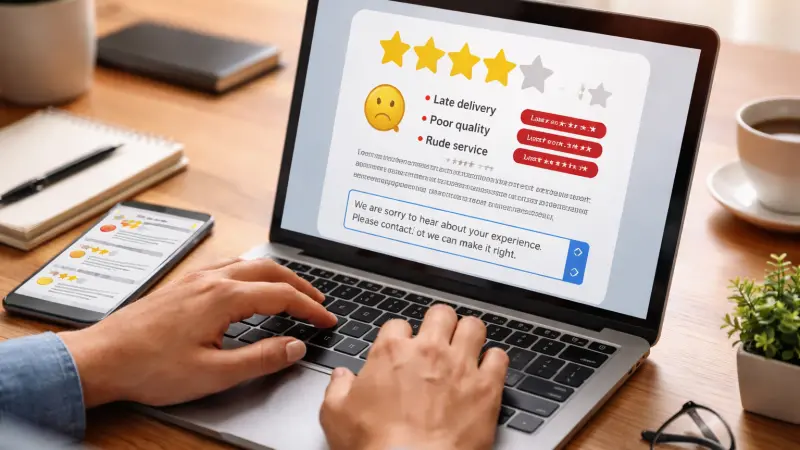
You have just checked your business listing and spotted it — a one-star review with a scathing comment for all to see. Perhaps the customer misunderstood your service, or perhaps something genuinely went wrong. Either way, it is sitting there publicly, and you are not sure how to respond. For many UK business owners, this scenario triggers anxiety, defensiveness, or the temptation to ignore it altogether. Yet how you handle negative reviews on listings can shape your reputation far more powerfully than the review itself.
In today's digital landscape, online reviews are one of the first things potential customers check before making a purchasing decision. Research consistently shows that the majority of consumers read reviews before engaging with a local business — and critically, many also read the business's response. A thoughtful, measured reply to a negative review can actually increase trust, demonstrating that you are a business that listens, takes responsibility, and values its customers.
This guide is designed for UK business owners and managers who want to understand how to handle negative reviews professionally and strategically. Whether your listing appears on a general business directory, a trade-specific platform, or a review aggregator, the principles here apply across the board.
Why Negative Reviews Matter More Than You Think
It is tempting to dismiss a single negative review as the work of an unreasonable customer, but ignoring them entirely is rarely the right approach. Negative reviews, handled poorly — or not at all — can quietly erode consumer confidence over time. Handled well, however, they can become one of your most powerful tools for demonstrating credibility.
The Psychology Behind Review Reading
When a prospective customer encounters a listing with only glowing five-star reviews and no variation whatsoever, it can actually raise suspicion. Paradoxically, a business with a 4.3-star rating and a handful of one-star reviews — particularly if those negative reviews have been responded to professionally — often comes across as more authentic and trustworthy than a perfect score with no context.
Consumers understand that no business is perfect. What they are evaluating is not whether mistakes happen, but how a business responds when they do. A calm, empathetic, and constructive reply signals that you are a professional outfit that takes customer experience seriously.
Search Visibility and Review Signals
Beyond consumer perception, reviews also carry weight in how your listing performs in local search results. Search engines factor in the volume, recency, and sentiment of reviews when determining how prominently a business listing appears. An unmanaged stream of negative reviews with no responses can suppress your visibility over time, making it harder for potential customers to find you in the first place.
This is why a proactive approach to online reputation management is not merely a customer service exercise — it is a core component of your digital marketing strategy.
Understanding the Types of Negative Reviews
Not all negative reviews are created equal, and recognising the different types will help you craft an appropriate response for each one.
Legitimate Complaints
These are reviews that reflect a genuine service failure or negative experience on the part of the customer. The delivery arrived late, the tradesperson did not turn up at the agreed time, or the product was not as described. These reviews deserve sincere, prompt acknowledgement and, where possible, a clear resolution.
Misunderstandings or Miscommunications
Sometimes a negative review stems from a misunderstanding rather than a genuine failing. A customer may have been unaware of your cancellation policy, or may have confused your business with another. In these cases, your response should politely clarify the facts without being dismissive of the customer's feelings.
Exaggerated or Disproportionate Reviews
Occasionally, a customer will leave a one-star review over a relatively minor inconvenience, or phrase their complaint in language that feels disproportionate to the situation. These reviews require careful handling — respond with professionalism and avoid matching their emotional tone.
Malicious or Fake Reviews
Unfortunately, some reviews are left in bad faith — by competitors, by individuals with a personal grievance unrelated to your business, or by individuals who have never actually used your services.
Most reputable platforms have mechanisms for reporting and disputing such reviews, and we will address this later in the guide.
How to Respond to Negative Reviews: A Step-by-Step Approach
When a negative review lands on your listing, the instinct to respond immediately and defensively is understandable — but resist it. Taking a moment to compose yourself before replying is one of the most important things you can do.
Step 1: Take Time Before Responding
Give yourself at least a few hours before crafting your response. If the review has angered you, wait until that feeling has passed. A response written in frustration is almost always one you will regret. Read the review carefully and try to understand the customer's perspective, even if you disagree with their account.
Step 2: Acknowledge and Apologise Where Appropriate
Begin your response by thanking the reviewer for taking the time to leave feedback. Then, acknowledge their experience. Even if you believe their version of events is inaccurate, there is almost always something you can acknowledge — the fact that they felt let down, for instance, or that their experience did not meet the standard you strive for.
Avoid beginning with a defensive statement. Phrases such as "We are sorry you feel that way" can come across as passive and dismissive. Instead, opt for something more direct and genuine: "We are sorry to hear that your experience did not meet our usual standard, and we appreciate you bringing this to our attention."
Step 3: Address the Specific Issue
Where appropriate, briefly address the substance of the complaint. If there was a genuine error, say so. If there are facts you need to correct, do so calmly and without sounding combative. Keep this section concise — a public review response is not the place for a lengthy point-by-point rebuttal.
Step 4: Offer a Resolution or Next Step
Where possible, invite the customer to continue the conversation privately. Provide a direct email address or telephone number and encourage them to get in touch so the issue can be resolved. This demonstrates goodwill and moves the more sensitive aspects of the conversation off the public platform.
Example: "We would welcome the opportunity to discuss this further and put things right. Please do not hesitate to contact us directly at [email address] and we will do our best to resolve the matter to your satisfaction."
Step 5: Keep It Brief and Professional
Your response does not need to be lengthy. In most cases, three to five sentences is sufficient. Prospective customers who read your reply are not looking for a full explanation — they want to see that you responded with courtesy and care. A concise, professional reply communicates competence far more effectively than a lengthy defence.
The Tone That Wins Trust
Getting the tone right is arguably more important than the content of your response. The following principles will help you strike the right balance.
Be Human, Not Corporate
Avoid overly formal or stilted language. While your response should be professional, it should also sound like it came from a real person who genuinely cares. Rigid, template-sounding replies often feel dismissive, even when the words are technically correct.
Avoid Defensiveness
Even if you believe the reviewer is wrong, your response should never read as combative. A defensive reply — particularly one that contradicts or belittles the customer — will almost always reflect worse on your business than the original review. Other readers will draw their own conclusions, and a business that argues with customers publicly rarely comes off well.
Do Not Overpromise
If you offer to resolve the issue, make sure you follow through. Promising a refund or a callback and then
failing to deliver compounds the problem significantly. Only commit to what you are genuinely able to provide.
Personalise Where Possible
If the review mentions a specific member of staff, a date, or a particular product, reference those details where appropriate. A personalised response demonstrates that you have read and considered their feedback properly, rather than deploying a generic reply.
Responding to Fake or Malicious Reviews
One of the most frustrating experiences for any business owner is receiving a negative review from someone who was never actually a customer. Competitor sabotage and coordinated fake reviews do occur, particularly in competitive markets.
Reporting the Review
Most major platforms — including Google, Trustpilot, and Yelp — have processes for flagging reviews that violate their policies. Fake reviews, reviews from individuals who cannot be identified as genuine customers, and reviews that contain hate speech or false statements are typically grounds for removal. Document your case thoroughly and submit a report through the platform's official channels.
Be aware that the process can take time, and there is no guarantee of removal. In the meantime, a brief, calm public response stating that you cannot verify this individual as a customer and encouraging them to make contact directly is often the most appropriate approach.
Seeking Legal Advice for Defamatory Content
In extreme cases where a review contains demonstrably false statements of fact that are causing material harm to your business, you may wish to seek legal advice. Defamation law in the UK does offer recourse in certain circumstances, though litigation is rarely the most practical or cost-effective first step. Always exhaust the platform's own reporting process before considering legal action.
Building a Strategy Around Review Management
Responding to negative reviews reactively is important, but the most resilient businesses also have a proactive strategy in place. Managing your online reputation is not a one-off task — it requires consistent attention over time.
Encourage Satisfied Customers to Leave Reviews
One of the most effective ways to dilute the impact of occasional negative reviews is to maintain a strong flow of positive ones. This does not mean soliciting fake or incentivised reviews — rather, it means making it easy and natural for satisfied customers to share their experience.
A simple follow-up message after a completed service, a card included with a delivery, or a prompt on your email signature can all encourage genuine reviews from customers who were happy with your business but simply never thought to leave feedback.
Monitor Your Listings Regularly
Set aside time each week to check your listings across all platforms where your business appears. Prompt responses to negative reviews — ideally within 24 to 48 hours — demonstrate attentiveness and prevent issues from festering unaddressed. Many platforms also offer email notifications when new reviews are posted, which can help you stay on top of activity without manually checking each site.
Use Negative Feedback Constructively
Negative reviews, unpleasant as they are to receive, often contain valuable information. If the same issue appears repeatedly across multiple reviews — delivery times, communication, a particular product — this is a signal that something in your operations may need attention.
Treating negative feedback as business intelligence, rather than purely as a reputational threat, can drive genuine improvements that benefit your customers and your bottom line.
Track Trends Over Time
Keeping a simple record of the reviews you receive — positive and negative — and reviewing them periodically can reveal patterns that individual reviews might obscure. A sudden spike in negative reviews might point to a staffing issue, a supplier problem, or a change in your processes that has not landed well with customers.
Negative Reviews Across Different Types of Listings
While the principles of handling negative reviews remain broadly consistent, the specific context of your listing can influence your approach.
Local Business Directories
Listings on business directories in the UK often serve as a first point of contact for local customers searching for a nearby service. Reviews on these platforms tend to carry significant weight, as they are viewed by people who are actively looking to engage with a business in their area. Prompt, professional responses are particularly important here, given the local and often high-intent nature of the audience.
Trade and Industry-Specific Platforms
For businesses listed on trade-specific platforms — such as those in construction, legal services, or healthcare — negative reviews may be scrutinised even more carefully by prospective clients who are making high-stakes decisions. In these contexts, your responses should reflect a particularly high standard of professionalism and demonstrate clear accountability.
E-Commerce and Product Listings
Product listings on retail platforms present a slightly different challenge, as the volume of reviews is often higher and the nature of complaints more varied. Consistency is key — ensure that your approach to responding is uniform across all product lines and that your team is trained to handle reviews in a way that aligns with your brand values.
Common Mistakes to Avoid
Understanding what not to do is just as important as knowing the right approach. The following are some of the most common errors UK businesses make when handling negative reviews on listings.
- Ignoring the review entirely. Saying nothing sends a message — and it is rarely the one you intend. Even a brief, polite response is better than no response at all.
- Responding in anger. A defensive or aggressive response can damage your reputation far more severely than the original review. Always respond calmly and professionally.
- Getting into a public argument. Back-and-forth exchanges played out publicly on a listing are uncomfortable to observe and rarely reflect well on the business. Take the conversation private as quickly as possible.
- Using identical template responses. Copying and pasting the same response to every negative review is obvious to readers and suggests that you have not engaged with the individual feedback. Tailor your responses, even if only slightly.
- Making promises you cannot keep. Offering compensation or a specific resolution in a public response and then failing to follow through will compound the original issue.
- Deleting or attempting to suppress genuine reviews. Attempting to game review platforms by reporting legitimate negative reviews as fake is both unethical and likely to backfire if discovered.
Final Thoughts
Handling negative reviews on listings is an unavoidable part of operating a business in the modern digital environment. Rather than viewing them as threats to be minimised, the most successful businesses treat them as opportunities — to demonstrate transparency, to show prospective customers how they handle adversity, and to identify genuine areas for improvement.
The key principles are straightforward: respond promptly, communicate with empathy and professionalism, take the conversation private where resolution is needed, and use feedback constructively to improve your service. Over time, a consistent approach to review management becomes one of the most reliable pillars of a strong online reputation.
For businesses looking to strengthen their visibility across business directories in UK, maintaining a well-managed and actively monitored listing is essential. Platforms such as Local Page UK provide a space where businesses can present themselves professionally and build a credible online presence — making the effort you put into managing your reviews all the more worthwhile.
Questions Clients Commonly Ask
How quickly should I respond to a negative review?
Ideally, you should aim to respond within 24 to 48 hours. A prompt reply demonstrates that you take customer feedback seriously and are attentive to your online presence. However, it is better to take a little extra time and respond thoughtfully than to reply immediately in a way that is defensive or poorly considered.
Should I respond to every negative review, even very old ones?
For recent reviews, a response is almost always advisable. For older reviews — those left a year or more ago — use your judgement. If the review is still visible and prominent on your listing, a brief response may still be worthwhile. If the issue has since been resolved, you can note this in your reply. Very old reviews with no ongoing relevance may not require a response if doing so would draw unnecessary attention to them.
Can I ask a reviewer to change or remove their review after I have resolved the issue?
You can certainly invite a customer to update their review once an issue has been resolved, but this should be done gently and without pressure. A simple note at the end of your resolution — along the lines of "We hope this has addressed your concerns, and we welcome any updated feedback you may wish to leave" — is acceptable. Never offer incentives in exchange for a review update, as this violates most platform policies.
What can I do if a negative review contains false information?
If a review contains specific false statements of fact, you should first report it to the platform for review. In your public response, you may calmly and briefly note that certain details do not accord with your records, without entering into a confrontational exchange.
If the content is potentially defamatory and causing demonstrable harm, seek legal advice from a solicitor experienced in digital reputation matters.
How many negative reviews does it take to damage my business reputation?
There is no fixed threshold. What matters most is the ratio of negative to positive reviews and, critically, how you respond. A business with a hundred reviews, four of which are negative, and with thoughtful responses to each, will generally be viewed far more favourably than a business with twenty reviews that are all five-star but with no responses of any kind. Active engagement with your reviews — positive and negative — is one of the clearest signals of a trustworthy, well-managed business.
Disclaimer: The information provided in this article is for general informational and research purposes only. Company details, features, services, and market positions may change over time. Readers are advised to visit official company websites and conduct independent research before making any business decisions or purchasing services.
Most Searchable Keywords
Recent Blogs


Related Listings

Categories
- Accountants (295)
- Advertising Agencies (559)
- Architects (149)
- Automobiles (377)
- Beauty (300)
- Carpenters (146)
- Cleaning Services (387)
- Dentists (189)
- Driving (62)
- Electricians (215)
- Energy (8)
- Event Organiser (686)
- Finance (602)
- Guide (3372)
- Health (2207)
- Information technology (206)
- Legal Services (353)
- Logistics (6)
- Maintenance (65)
- Manufacturing (35)
Sponsored Listings in Travel Agencies


Related Blogs

How Much Do UK Actors Really Earn Full Indust...
Read this insightful article "How Much Do UK Actors Really Earn Full Industry Breakdown" to expand your knowledge!

Blue Light Card UK 2026 Check Eligibility and...
Read this insightful article "Blue Light Card UK 2026 Check Eligibility and Claim" to expand your knowledge!

BBC Radio 1 DJs Net Worth Ranking Revealed
Read this insightful article "BBC Radio 1 DJs Net Worth Ranking Revealed" to expand your knowledge!
Questions & Answers – Find What
You Need, Instantly!
How can I update my business listing?
Is it free to manage my business listing?
How long does it take for my updates to reflect?
Why is it important to keep my listing updated?
