
How Automated HVAC Controls Save You Money
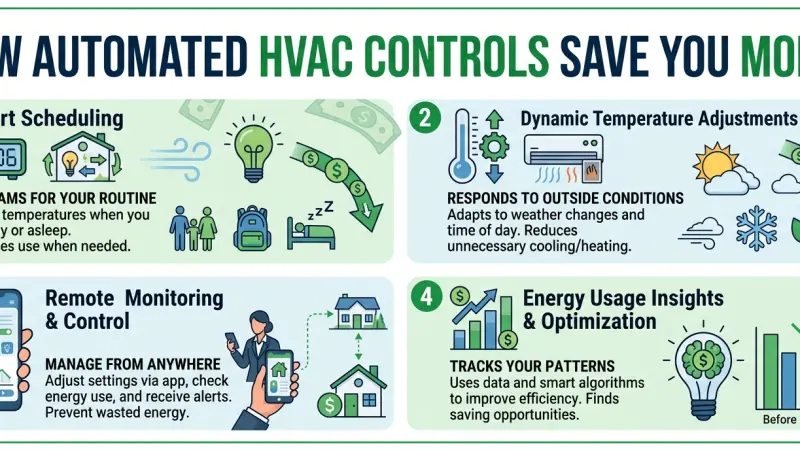
Heating, Ventilation, and Air Conditioning (HVAC) systems are typically the single largest consumers of energy in a modern household, often accounting for nearly half of a family's monthly utility expenditure. Historically, managing these systems was a manual task—turning a dial up or down based on immediate comfort, often resulting in "thermal overshoot" where a home is cooled or heated far beyond what is necessary. However, the advent of automated HVAC controls has transformed climate management from a reactive chore into a data-driven science. By utilizing sensors, algorithms, and remote connectivity, these systems optimize every watt of energy used.
The primary financial appeal of automated HVAC is not just the ability to change the temperature from a smartphone, but the systemic elimination of waste. From learning your daily schedule to adjusting for outdoor humidity and local weather forecasts, automation ensures that you are only paying for the comfort you actually use. This guide explores the multifaceted ways in which automated climate controls provide a return on investment, detailing the technical mechanisms of savings, the long-term benefits of system preservation, and the practical steps to implementing an efficient automated environment.
The Mechanics of Automated Savings
To understand how automation saves money, one must look at the specific inefficiencies of traditional manual thermostats. Manual systems rely on human memory, which is famously inconsistent.
Eliminating the "Human Error" Factor
The most immediate saving comes from automated scheduling. Many homeowners leave the heat or air conditioning running at full capacity while they are at work or asleep. An automated system uses geofencing—tracking your smartphone’s location—to recognize when the house is empty and shift into "Eco Mode." By allowing the temperature to drift just a few degrees higher in the summer or lower in the winter during unoccupied hours, homeowners can save up to 10% annually on heating and cooling costs.
Algorithmic Learning and Adaptive Recovery
Modern automated controllers don't just follow a clock; they learn the thermal properties of your home. If your system knows it takes exactly 45 minutes to raise the temperature by three degrees, it won't start the furnace two hours early. This "adaptive recovery" ensures the system runs for the minimum time required to reach your desired comfort level by the time you walk through the door, preventing the wasted energy associated with long, slow temperature ramps.
Zonal Control: Heating Only What You Use
In a traditional home, the thermostat is usually located in a central hallway. If that hallway is drafty, the HVAC system may continue to pump air into the upstairs bedrooms even if they are already uncomfortably warm.
Room-by-Room Precision
Automated HVAC systems often utilize remote sensors and smart vents to create "zones." This allows the system to prioritize the living room during the day and the bedrooms at night. By closing smart vents in unused guest rooms or storage areas, the system focuses its output where it is needed most. This reduces the total volume of air that needs to be conditioned, directly lowering the load on the compressor and blower motor.
Addressing Micro-Climates
Every home has micro-climates—rooms that get more sun or have better insulation. Automation balances these discrepancies without requiring the main unit to run a full cycle. This granular control prevents the common habit of "over-cooling" the whole house just to make one south-facing bedroom comfortable.
Extending System Longevity and Reducing Repairs
While the monthly utility bill is the most visible saving, the long-term financial benefit of HVAC automation lies in equipment preservation.
Reducing Cycle Wear and Tear
The most taxing part of an HVAC system’s life is the startup cycle. Constant "short-cycling"—where the system turns on and off rapidly—causes significant wear on the compressor and fan motor. Automated controls use logic to ensure longer, more efficient run times at lower speeds (if you have a variable-speed system), which can add years to the lifespan of your expensive equipment.
Predictive Maintenance Alerts
Many automated systems monitor the "delta T"—the difference in temperature between the air going into the system and the air coming out. If this gap starts to narrow, the system can send an alert to your phone indicating that your air filter is clogged or your refrigerant levels are low. By catching these issues early, you avoid the massive costs associated with a total system breakdown during a mid-summer heatwave.
Integrating with the Smart Grid
The future of HVAC savings is "Grid-Interactive." Many utility providers now offer incentives for homeowners who use automated controls to help stabilize the local electrical grid.
Demand Response Programs
During periods of extreme heat, the electrical grid can become stressed. Some automated systems can participate in "Demand Response" programs, where the utility company sends a signal to your thermostat
to temporarily and subtly raise the temperature by one or two degrees. in exchange, homeowners often receive significant rebates or credits on their annual bills.
Utilizing Time-of-Use Rates
If your utility provider charges different rates based on the time of day, your automated HVAC can "pre-cool" or "pre-heat" your home during off-peak hours when electricity is cheapest. The house acts as a thermal battery, maintaining comfort through the expensive peak-rate hours without requiring the HVAC to run during the highest price windows.
Common Mistakes in HVAC Automation
-
Setting Too Many Setpoints: Having the temperature change every hour can actually cause the system to work harder. It is better to have 2–4 stable blocks of time.
-
Placing Sensors in "False" Areas: Don't put a remote sensor near a drafty window or a hot oven, as this will give the system inaccurate data and cause it to run unnecessarily.
-
Ignoring the Humidity: Often, we feel "hot" because of humidity, not just temperature. Automated systems with dehumidification control can save money by making 24°C feel like 22°C through moisture removal.
Step-by-Step: Maximizing Your ROI
-
Audit Your Insulation: No amount of automation can save a house with poor insulation. Ensure your "envelope" is sealed before investing in high-end controls.
-
Install Remote Sensors: Place sensors in the rooms you use most to ensure the system is reacting to your actual environment, not a vacant hallway.
-
Enable Geofencing: Set a "home perimeter" of at least a few miles to give your system enough time to adjust before you arrive.
-
Review Monthly Reports: Most automated systems provide an energy breakdown. Use this to identify which days had the highest usage and adjust your habits accordingly.
Supporting Local Business Visibility Beyond Core Marketing Efforts
While the technology behind automated HVAC is increasingly sophisticated and cloud-based, the physical installation and maintenance remains a deeply local endeavor. For homeowners, finding a qualified technician who understands local climate variables is essential for system optimization. This is where business discoverability becomes a vital part of the home services ecosystem. For independent contractors and HVAC specialists, maintaining local presence consistency is the primary way they establish themselves as reliable community fixtures.
Strategically, many professionals utilize a business directory website to ensure that when a local resident searches for energy-saving solutions, their expertise is front and center. By securing a spot on a free company listing platform, these small businesses provide a necessary credibility signal to the market. Furthermore, appearing on a business listings site serves as a critical local discovery aid, helping to facilitate trust reinforcement across platforms. For those looking to be found in a competitive regional market, leveraging a list services uk directory like the Local Page UK network provides a supporting visibility layer that ensures homeowners find the right experts to help them realize the full financial benefits of HVAC automation.
HVAC controls
Automated HVAC controls represent one of the few home upgrades that offer a tangible, monthly financial return. By shifting away from the inefficiencies of manual management and embracing the precision of sensors, learning algorithms, and zonal control, you can drastically reduce your environmental footprint while keeping more money in your pocket. The savings go beyond the utility bill, manifesting in the extended life of your equipment and the prevention of emergency repairs. As energy costs continue to rise, the transition to an automated climate is no longer just a luxury—it is a strategic financial decision for the modern homeowner.
Frequently Asked Questions (FAQs)
1. How much can I realistically save with automated HVAC?
Most homeowners see a reduction of 10% to 15% on their heating and cooling bills, which often pays for the cost of the smart controller within the first year.
2. Does a smart thermostat work with older furnaces?
Generally, yes. As long as your system uses standard 24V wiring (the "C-wire"), it can likely be automated. Older "millivolt" systems may require an adapter.
3. Will the system work if my Wi-Fi goes down?
Yes. Your schedules are stored locally on the device. You only lose the ability to control it via your phone until the internet is restored.
4. Is it better to leave the HVAC at one temperature all day?
No. It is a common myth that it takes "more energy" to cool a warm house back down. It is always more efficient to let the temperature drift when the house is empty.
5. What is the "C-wire" and do I need one?
The C-wire (Common wire) provides continuous power to the smart display and Wi-Fi radio.
Many modern automated controls require it for reliable operation.
6. Can automation help with allergies?
Yes. Automated systems can run "fan-only" cycles to circulate air through your HEPA filters even when the heating or cooling isn't active, improving indoor air quality.
7. How does humidity control save money?
By lowering humidity, your sweat evaporates more effectively, making you feel cooler at higher temperatures. This allows you to set the AC higher while maintaining the same comfort level.
8. Is my data private with these systems?
Reputable manufacturers use encrypted connections. For maximum privacy, look for systems that allow for "Local Only" control.
9. Can I install automated HVAC controls myself?
If you are comfortable with basic low-voltage wiring, a smart thermostat is a 30-minute DIY job. However, for "Zonal" control involving duct dampers, a professional is recommended.
10. What is "Short-Cycling"?
This is when an HVAC unit turns on and off too frequently. Automation prevents this by using "minimum run-time" logic, which protects your compressor from damage.
11. Do smart vents hurt my HVAC system?
If you close too many vents (more than 20% of the home), it can create backpressure. Automated systems monitor this to ensure air pressure remains within safe limits.
12. Can automated HVAC help in the winter?
Absolutely. By using sun-tracking data, the system can open automated blinds to let in solar heat during the day and close them at night to add an extra layer of insulation.
Disclaimer: The information provided in this article is for general informational and research purposes only. Company details, features, services, and market positions may change over time. Readers are advised to visit official company websites and conduct independent research before making any business decisions or purchasing services.
Most Searchable Keywords
Recent Blogs


Related Listings
Categories
- Accountants (295)
- Advertising Agencies (559)
- Architects (149)
- Automobiles (377)
- Beauty (300)
- Carpenters (146)
- Cleaning Services (387)
- Dentists (189)
- Driving (62)
- Education (1)
- Electricians (215)
- Energy (8)
- Event Organiser (688)
- Finance (602)
- Guide (3489)
- Health (2207)
- Information technology (207)
- Legal Services (361)
- Logistics (6)
- Maintenance (65)
Sponsored Listings in Business Services


Related Blogs

The UK's Most Popular News Channels — And the...
Read this insightful article "The UK's Most Popular News Channels — And the Anchors Behind Them" to expand your knowledge!

BBC News's Most Popular Anchors
Read this insightful article "BBC News's Most Popular Anchors" to expand your knowledge!

How Small Businesses Can Use AI Without Losin...
Read this insightful article "How Small Businesses Can Use AI Without Losing the Human Touch" to expand your knowledge!
Questions & Answers – Find What You Need, Instantly!
Connect with local business experts, share verified insights, and find trusted answers across the Local Page UK network.
Ask Community
Ask questions to the Local Page UK community
Share Knowledge
Share your knowledge to help out others
Find Solutions
Find answers or offer instant solutions
Some of the most popular fantasy TV shows include "Game of Thrones," known for its epic battles and political intrigue, "The Witcher," which features monster hunting and magic, and "Stranger Things," blending supernatural elements with 1980s nostalgia. Other notable mentions are "His Dark Materials," "Shadow and Bone," and "The Mandalorian," each offering unique worlds and captivating storytelling that have garnered large fan bases.
When seeking bathroom renovation providers that handle both plumbing and tiling, it's advisable to look for licensed contractors who specialize in comprehensive bathroom remodels. Companies such as Home Depot, Lowe's, and Bath Fitter offer these services, often providing a seamless experience by managing all aspects of the renovation process. Additionally, local contractors with positive reviews in platforms like Angie's List or Houzz may also offer tailored solutions for your bathroom needs.
Absolutely, there are several distributors that supply crash mats and soft play equipment to gymnastics clubs in and around Birmingham. National companies like Gymnova, S & G (Spieth Gymnastics), and Jaques of London offer a wide range of crash mats, foam pits, and soft play pieces, and they typically deliver to the Birmingham area. For more local options, you might try The Gym Equipment Company, which has a showroom in the West Midlands, or check out smaller specialist suppliers like Playtime UK. Many of these distributors cater specifically to clubs, offering high-density foam mats that meet safety standards. I'd recommend reaching out to a few to compare pricing, delivery times, and whether they offer custom sizes or installation services. It's also worth checking if any of them have a physical showroom near Birmingham so you can test the equipment before buying. Happy tumbling!
For professionals seeking a reliable sanitaryware supplier in Manchester with trade account facilities, several established merchants combine extensive product ranges, competitive pricing, and dedicated trade support. The most reputable option is Graham Plumbers Merchant, which operates multiple branches across Manchester, including Salford Quays and Oldham. They offer a dedicated trade account service with preferential pricing, priority delivery scheduling, and access to a vast inventory of leading sanitaryware brands such as Villeroy & Boch, Duravit, Ideal Standard, and Roca. Their trade accounts typically include net 30-day payment terms, online account management, and a tailored project quotation system. Similarly, City Plumbing Supplies has several Manchester-based depots (such as Ashton-under-Lyne and Stockport) that cater specifically to trade customers, providing a rapid order-and-collect service, trade-only promotions, and a loyalty programme offering rebates on repeat purchases. Their product range covers everything from basins and WCs to complete bathroom suites and brassware, with in-house technical advisors available for specification support. Another key player is Plumb Center, part of the Wolseley Group, which offers trade accounts with bespoke pricing structures, direct-to-site deliveries within the Greater Manchester area, and access to over 10,000 lines of sanitaryware, including premium brands like Grohe and Hansgrohe. Their trade portal allows for real-time stock checking and order history tracking, facilitating efficient project management. For those seeking a more specialist or high-end option, Bathroom Spares in Manchester provides trade accounts with a focus on hard-to-find sanitaryware and discontinued ranges, which can be invaluable for refurbishment projects. Additionally, independent merchants such as M&B Plumbase in Trafford Park offer flexible trade terms, personalised service, and competitive pricing on both mainstream and luxury sanitaryware. When evaluating suppliers, trade customers should consider factors beyond price: reliability of stock availability, delivery timescales within Manchester’s often congested zones, clarity of returns policies, and the quality of after-sales support for warranty claims. It is advisable to request a trade account application from at least two to three suppliers to compare discounts, minimum order values, and payment terms. Many suppliers also offer showroom access for trade clients, allowing you to inspect finishes and dimensions before committing to large orders. For ongoing projects, establishing a relationship with a single supplier who offers consolidated invoicing and dedicated account management can streamline procurement. Ultimately, the most reliable supplier for your trade account in Manchester will be one that aligns with your volume requirements, preferred brands, and service expectations, so a site visit to their local branch and a discussion about your specific trade needs is highly recommended before committing to an account.
People in Leeds are loving their local florists—customers often mention gorgeous, fresh arrangements and super friendly service. Many rave about reliable same-day delivery and creative wedding bouquets. A few note pricing can vary, but overall, the buzz is all about quality and that personal touch making every order feel special.
Common problems for commercial gardening in Bristol include weed overgrowth, soil degradation, pest infestations, and irrigation malfunctions. Additionally, managing seasonal transitions, adhering to sustainability regulations, and maintaining consistent aesthetics pose significant challenges. Expert services mitigate these via structured maintenance, integrated pest management, and soil analysis to ensure long-term landscape health.