
How Does Cyber Liability Insurance Protect Your Business
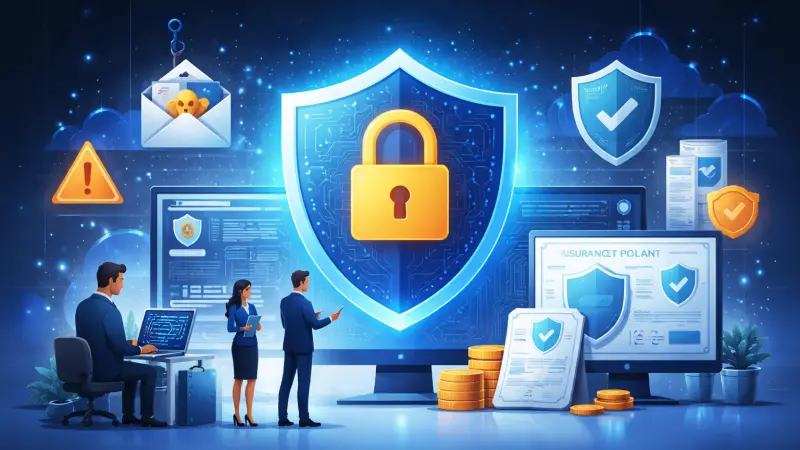
Would your business survive if your digital systems were rendered useless tomorrow morning? In an era where UK commerce is inextricably linked to the cloud, the threat of cybercrime has evolved from a distant IT concern into a primary boardroom risk. As British SMEs increasingly embrace hybrid working models and digital-first service delivery, the "attack surface" available to malicious actors has expanded exponentially. While we often think of theft in terms of physical assets, the modern-day heist happens in milliseconds, targeting the most valuable currency of the 21st century: data.
Cyber liability insurance has emerged as a critical safety net for businesses of all sizes, from London-based tech startups to established manufacturing firms in the Midlands. This specialised cover is designed to mitigate the financial and reputational fallout following a digital security breach. In this comprehensive guide, we explore why traditional insurance often falls short and how a dedicated cyber policy can safeguard your organisation’s future in an increasingly volatile digital landscape.
Understanding the Digital Threat Landscape for UK SMEs
The United Kingdom remains one of the most targeted nations for cyber-attacks globally. The shift toward remote work has fundamentally altered the security perimeter; employees accessing sensitive corporate networks via home Wi-Fi or personal devices have created new vulnerabilities that hackers are eager to exploit. When personal details, financial records, and proprietary intellectual property are decentralised, the risk of interception or unauthorised access rises sharply.
The Mechanics of Modern Cybercrime
While the methods used by cybercriminals are constantly evolving, most attacks directed at UK businesses fall into two primary categories:
- Ransomware Attacks: This involves malicious software that encrypts a company’s entire internal network. The hackers then demand a significant payment—usually in cryptocurrency—in exchange for the decryption key. For a small business, this can mean a total cessation of operations for days or even weeks.
- Data Breaches: This occurs when unauthorised individuals gain access to sensitive information. This might include customer names, addresses, National Insurance numbers, or banking details. Under the UK General Data Protection Regulation (UK GDPR), the consequences of such a leak are severe, involving both legal and financial ramifications.
The Financial Reality: What a Breach Truly Costs
Many business owners mistakenly believe that the only cost of a cyber-attack is the potential ransom or the price of a new server. In reality, the "hidden" costs of a breach are often what lead to insolvency. A data breach that exposes customer information creates a chain reaction of liabilities that standard public or professional indemnity policies are rarely equipped to handle.
Firstly, there is the cost of notification. Under UK law, businesses are often required to inform every affected individual if their data has been compromised. For a business with thousands of customers, the administrative and postal costs alone are staggering.
Secondly, there is the technical recovery. Specialist forensic accountants and IT security experts must be hired to identify the source of the breach, "clean" the network, and restore backed-up data.
Furthermore, business interruption can be devastating. If your systems are down, you cannot invoice, you cannot fulfill orders, and your staff cannot work. The loss of income during this period, coupled with the potential loss of future contracts due to a tarnished reputation, represents a massive financial blow that few SMEs can absorb without assistance.
Cyber Liability vs. General Liability Insurance
A common misconception among UK business owners is that their existing Business Insurance or General Liability policy provides sufficient protection. This is a dangerous assumption. General liability insurance is fundamentally designed to cover "tangible" risks—specifically physical property damage or bodily injury resulting from your products or services.
Digital data, however, is considered "intangible" property. Most standard policies explicitly exclude losses related to the loss, theft, or corruption of electronic data. This means that if a hacker shuts down your website or steals your client list, your general liability insurer will likely decline the claim. Cyber liability insurance is the specific "bolt-on" or standalone policy required to bridge this gap, covering the unique legal fees, regulatory fines, and recovery costs associated with the digital realm.
Types of Cyber Liability Coverage Explained
Not all cyber policies are created equal. To ensure your UK business is adequately protected, it is essential to understand the different "layers" of coverage available in the market. Most comprehensive policies are split into first-party and third-party protections.
First-Party Coverage: Protecting Your Own House
First-party coverage focuses on the immediate expenses your business incurs as a
direct result of an attack. Key features often include:
- Forensic Investigations: Hiring experts to find out how the hackers got in and what they took.
- Data Restoration: Costs associated with recovering or recreating lost or damaged digital assets.
- Crisis Management & PR: Fees for public relations firms to help manage your reputation and mitigate "brand damage" after a breach is made public.
- Cyber Extortion: Coverage for ransom payments (where legal) and the specialist negotiators required to deal with hackers.
Third-Party Coverage: Protecting Against External Claims
This side of the policy protects you if other people (customers, vendors, or partners) sue you because your security failure affected them. It typically includes:
- Legal Defence Costs: The cost of hiring solicitors to defend you in court or during regulatory investigations.
- Settlements and Damages: Payments awarded to third parties who suffered financial loss due to your data breach.
- Regulatory Fines: While not all fines are insurable (depending on the nature of the negligence), many policies provide support for the costs associated with responding to the Information Commissioner's Office (ICO).
Worldwide and Extended Reporting Coverage
Cybercrime is borderless. A hacker in Eastern Europe can target a contractor in Devon. Worldwide coverage ensures that your protection applies regardless of where the attack originated. Additionally, Extended Reporting Period (ERP) coverage is vital because cyber-attacks are often "silent." A malicious script might sit dormant in your system for months before it is discovered. ERP ensures that you are covered even if the breach is detected long after the policy period in which it initially occurred has ended.
Common Exclusions in Cyber Insurance Policies
While cyber insurance is robust, it is not a "catch-all" for every digital mistake. Understanding exclusions is vital for effective risk management. Most policies will not cover:
- Social Engineering Scams: If an employee is "tricked" (via phishing) into voluntarily transferring money to a fraudulent account, this is often categorized as "crime" insurance rather than "cyber liability," though some modern policies are beginning to blend these.
- Upgrading Systems: While the insurance will pay to restore your system to its previous state, it generally will not pay for you to buy a *better* or more advanced security system than you had before.
- Loss of Future Intellectual Property Value: If a competitor steals a trade secret, the insurance may cover the breach costs, but it rarely covers the projected loss of future profits caused by the loss of that secret.
Proactive Prevention: Reducing Your Cyber Risk Profile
Insurance should be the final line of defence, not the only one. Insurers in the UK are increasingly looking at a company’s "cyber hygiene" before offering a quote or setting premiums.
To protect your business and potentially lower your insurance costs, consider the following steps:
- Employee Training: The human element is often the weakest link. Regular training on how to spot phishing emails and the importance of secure password management is essential.
- Multi-Factor Authentication (MFA): Implementing MFA across all business accounts (especially email and VPNs) can prevent the vast majority of unauthorised access attempts.
- Regular Backups: Ensure that your data is backed up frequently and stored "off-site" or in a secure, encrypted cloud environment that is not directly connected to your main network.
- Security Patching: Keep all software and operating systems updated. Hackers frequently exploit known vulnerabilities in older software versions.
Conclusion
The question for modern UK businesses is no longer *if* they will face a cyber threat, but *when*. Whether you are a sole trader handling client data or a mid-sized enterprise managing complex supply chains, the financial risks of a digital breach are too significant to ignore. Cyber liability insurance provides more than just financial compensation; it provides access to a "breach response team" of legal, technical, and PR experts who can guide you through your darkest professional hour.
By combining a robust cyber insurance policy with proactive security measures, you can ensure that your business remains resilient, compliant, and ready to thrive in the digital age. Investing in your digital security today is not just a defensive move it is a foundational step in ensuring the long-term viability of your organisation.
Frequently Asked Questions About Cyber Insurance
Do small businesses really need cyber insurance?
Yes. Small businesses are often preferred targets because they typically have weaker security than large corporations. A single ransomware attack or GDPR fine can be enough to put a small company out of business.
Does cyber insurance cover GDPR fines in the UK?
Most policies will cover the *costs* of defending an ICO investigation. However, whether the actual fine can be paid by the insurer depends on the specific wording of the policy and whether the fine is deemed "insurable" under English law (fines for criminal acts or gross negligence may not be covered).
How much does cyber liability insurance cost?
Premiums vary based on your annual turnover, the volume of sensitive data you handle, and your existing security measures.
For many UK small businesses, basic coverage can be surprisingly affordable and is often comparable to the cost of a standard professional indemnity policy.
What is the difference between Cyber Liability and Cyber Crime insurance?
Cyber Liability focuses on the costs of data breaches and third-party lawsuits. Cyber Crime insurance specifically covers the direct theft of money or securities through digital fraud, such as "push payment" fraud or hacking into your bank accounts.
Disclaimer: The information provided in this article is for general informational and research purposes only. Company details, features, services, and market positions may change over time. Readers are advised to visit official company websites and conduct independent research before making any business decisions or purchasing services.
Most Searchable Keywords
Recent Blogs


Related Listings

Categories
- Accountants (295)
- Advertising Agencies (559)
- Architects (149)
- Automobiles (377)
- Beauty (300)
- Carpenters (146)
- Cleaning Services (387)
- Dentists (189)
- Driving (62)
- Education (1)
- Electricians (215)
- Energy (8)
- Event Organiser (686)
- Finance (602)
- Guide (3381)
- Health (2207)
- Information technology (206)
- Legal Services (359)
- Logistics (6)
- Maintenance (65)
Sponsored Listings in Home and Garden


Related Blogs

Strictly Come Dancing Pros Net Worth Salary a...
Read this insightful article "Strictly Come Dancing Pros Net Worth Salary and Personal Life" to expand your knowledge!

Britains Richest Authors Ranked for 2026 by N...
Read this insightful article "Britains Richest Authors Ranked for 2026 by Net Worth" to expand your knowledge!

Why Basel Market Risk Deadline Has Shifted to...
Read this insightful article "Why Basel Market Risk Deadline Has Shifted to 2028" to expand your knowledge!
Questions & Answers – Find What
You Need, Instantly!
How can I update my business listing?
Is it free to manage my business listing?
How long does it take for my updates to reflect?
Why is it important to keep my listing updated?
