
How to Apply for a Blue Badge in the UK
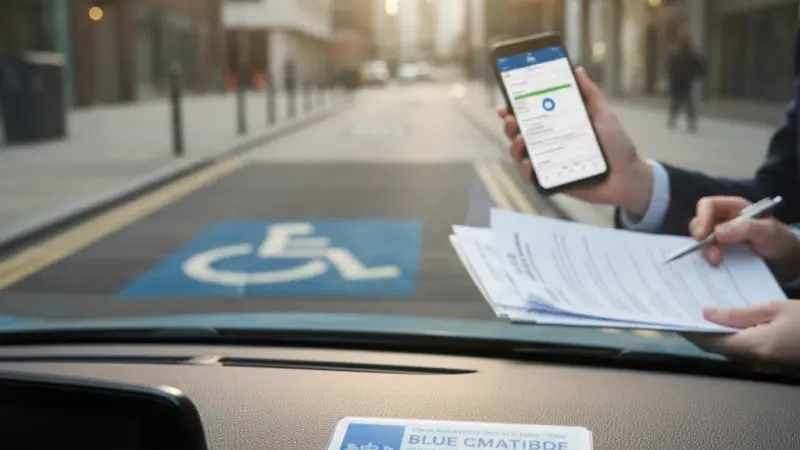
Applying for a Blue Badge in the UK is a vital step for individuals with mobility issues, providing easier access to shops, services, and essential facilities by allowing parking closer to destinations. To complete a Blue Badge application, you generally apply through your local council or via the official GOV.UK portal. The process requires proof of identity, evidence of address, and detailed medical documentation regarding your condition. A Blue Badge typically costs fifteen pounds in England and twenty pounds in Scotland, while it remains free of charge in Wales. Most applications are processed within eight to twelve weeks, though this varies by local authority and whether a face-to-face assessment is required to confirm your eligibility under the current Department for Transport criteria.
The Blue Badge scheme is a nationally recognised programme designed to assist people with disabilities or health conditions that significantly affect their ability to walk. By granting permission to park in designated bays and often providing exemptions from certain parking charges or time limits, the badge serves as a lifeline for maintaining independence. Whether you are a driver or a passenger, the scheme focuses on the individual rather than the vehicle, ensuring support is available whenever you travel. Understanding the nuances of the application is essential for a successful outcome, particularly as local councils have become more rigorous in their assessment of non-visible disabilities and long-term health challenges.
Navigating the Official Application Process
The journey toward securing a Blue Badge begins with an online submission via the central government gateway, which then routes your details to your specific local authority. It is essential to have all digital documents ready before starting, as the session may timeout if left inactive. You will need a recent digital photo, your National Insurance number, and details of your current medication or specialist consultants. For those who are not comfortable using digital platforms, most local libraries or council offices offer assisted digital support to ensure no one is excluded from the scheme due to a lack of technology access. Precision during this initial stage prevents unnecessary delays in the secondary review phase.
Identifying Necessary Supporting Documentation
Documentation is the cornerstone of any successful application. You must provide a high-quality scan or photo of your passport, driving licence, or birth certificate to verify your identity. Proof of residency is equally vital, usually established through a recent Council Tax bill or a utility statement dated within the last three months. Beyond administrative basics, the medical evidence must be robust. General Practitioner letters, hospital discharge summaries, or Personal Independence Payment award letters are standard requirements. The goal is to provide a clear, undeniable trail of evidence that links your medical condition to specific mobility limitations as defined by the scheme's statutory requirements.
Verifying Identity Standards
Identity verification ensures the integrity of the scheme and prevents fraudulent use of parking concessions. A valid UK driving licence is often the simplest form of ID to provide as it contains both your photograph and current address. If you do not hold a licence, a valid passport is the preferred alternative. Ensure that all corners of the document are visible in your upload and that there is no glare from camera flashes, as illegible documents are the primary cause for immediate application rejection by council administrative teams.
Understanding Eligibility Criteria for Applicants
Eligibility for a Blue Badge is split into two distinct categories: 'eligible without further assessment' and 'eligible subject to further assessment'. Those who automatically qualify typically receive certain rates of disability benefits, such as the higher rate mobility component of Disability Living Allowance or a specific score on the Personal Independence Payment mobility assessment. For everyone else, the council must determine if a permanent and substantial disability causes very considerable difficulty in walking. This assessment is holistic, looking at the distance you can walk, the speed at which you move, and the level of pain or breathlessness experienced during physical exertion.
Automatic Qualification through Benefit Awards
If you receive the Higher Rate Mobility Component of Disability Living Allowance, you are fast-tracked through the system. Similarly, those receiving Personal Independence Payment with a score of eight points or more in the 'moving around' category qualify automatically. It is important to check your latest award letter from the Department for Work and Pensions, as councils will require the full breakdown of points to verify your status. Being registered blind or receiving a War Pensioners' Mobility Supplement also grants automatic entry into the scheme, significantly reducing the amount of descriptive evidence you need to provide during the application.
Personal Independence Payment Scores
The transition from DLA to PIP has changed how many people access Blue Badges. To qualify under PIP, you generally need to score at least eight points in the 'moving around' activity or ten points in the 'planning and following a journey' activity specifically linked to psychological distress. Understanding exactly how your points were allocated during your DWP assessment will help you determine if your application is likely to be approved without a further medical review by the local authority's chosen healthcare professional.
Assessment for Non Visible Disabilities
In recent years, the scheme was significantly expanded to include people with non-visible disabilities, often referred to as hidden disabilities. This includes conditions such as autism, dementia, and severe anxiety. The criteria here focus on whether the individual experiences very considerable psychological distress when walking or is at risk of serious harm to themselves or others while near vehicles. This was a landmark change in UK policy, acknowledging that mobility is not just about physical movement but also about the cognitive and emotional capacity to navigate the environment safely and predictably without extreme hardship.
Documenting Psychological Distress and Safety Risks
When applying based on a hidden disability, the evidence required is often more descriptive. You should provide letters from specialists, such as psychologists or occupational therapists, who can testify to the specific triggers and behaviours manifested during travel.
For instance, an individual who experiences 'meltdowns' or 'shutdowns' in busy car parks needs documented evidence of these occurrences. The council needs to understand that without the badge, the applicant would be unable to undertake a journey or that doing so would cause a level of distress that is disproportionate to the task at hand.
Evidence from Specialist Professionals
Relying solely on a GP letter is often insufficient for non-visible disability claims. Councils look for input from specialists who manage the specific condition, such as a Consultant Psychiatrist or a Senior Social Worker. These professionals can provide the deep clinical context needed to explain why a shorter walking distance from a parking bay to a destination is a medical necessity rather than a mere convenience. Detailed care plans or education, health, and care plans are excellent sources of secondary evidence for younger applicants.
Common Mistakes to Avoid During Submission
One of the most frequent errors is providing outdated evidence. Councils typically require benefit award letters to be dated within the current year and utility bills to be less than three months old. Another pitfall is the use of a poor-quality photograph; the photo must follow passport standards, meaning it must be a true likeness, taken against a plain background, and showing the full face without any headwear unless for religious or medical reasons. Failing to describe the 'worst days' of a fluctuating condition can also lead to a rejection, as the assessor might only see a snapshot of your most mobile moments.
Ensuring Photographic Standards are Met
The photograph on your Blue Badge is used by enforcement officers to verify that the badge is being used by the correct person. If the photo is blurry, too dark, or includes other people, the application will be paused. Use a smartphone to take a clear head-and-shoulders shot in natural light. Ensure your expression is neutral and that your eyes are clearly visible. While it might seem like a small detail, the photograph is a legal requirement of the badge's production and must meet the high standards set by the Driver and Vehicle Licensing Agency for official identification cards.
Submitting Timely and Relevant Proofs
Timing is everything when gathering your proofs. If you submit a document that is about to expire or an award letter for a benefit that is currently under review, the council may defer your application until a final decision is reached. Always send the most recent correspondence you have received. If you are waiting for a new specialist letter, it is often better to wait a week to include it rather than submitting an incomplete file that will almost certainly trigger a request for more information, adding weeks to the total processing time.
The Practical Step by Step Guidance
To begin, visit the official government website and use the 'Check if you can get a Blue Badge' tool to gauge your likelihood of success. Once confirmed, gather your digital files including your ID, proof of address, and medical evidence. Proceed to the online application form, carefully filling in each section with honest and detailed descriptions of your mobility challenges. After submission, you will be prompted to pay the local fee. Keep a record of your application reference number. If the council requires a further assessment, they will contact you to arrange a telephone interview or a physical walking test with a qualified assessor.
Using the Online Government Portal
The GOV.UK portal is the most efficient way to apply, as it standardises the information sent to your local council. The form is broken down into logical segments: personal details, benefit information, and a detailed description of your condition. Take your time with the 'description' boxes; use these to explain exactly how far you can walk before feeling pain and what happens when you reach your limit. Once finished, the system allows you to upload your evidence directly, which is far faster and more secure than sending original documents through the postal system.
Handling Local Authority Payments
Each council has its own method for handling the administration fee. Some will ask for payment upfront during the online application, while others will only request funds once the badge has been approved. In England, this fee is capped at ten pounds, though some administrative costs can push it to fifteen. It is important to note that this fee is for the administration and production of the badge itself, not for the assessment. Therefore, if your application is unsuccessful, you may not always receive a refund depending on your specific local authority's policy terms.
What Happens After Your Application
Once your application is in the system, it undergoes a period of validation where an officer checks that all documents are present and correct. Following this, a decision-maker or a healthcare professional will review the medical evidence. If your case is straightforward, you may receive an approval notification within a few weeks. However, if your eligibility is not immediately clear, you may be invited to a 'Mobility Assessment'. This is a standard procedure where you might be asked to walk a short distance so an expert can observe your gait, balance, and physical exertion levels in a controlled environment.
Attending a Mobility Assessment
Being asked to attend an assessment is not a sign of failure; it is simply a way for the council to gather more information. These are usually conducted by physiotherapists or occupational therapists who understand the impact of various health conditions on movement.
During the appointment, be honest about your limitations and do not try to 'push through' the pain just to be polite. The assessor needs to see your natural movement and understand the true level of difficulty you face on a daily basis. Wear comfortable clothing and bring any walking aids you normally use.
Receiving and Using Your New Badge
If approved, your Blue Badge will be sent to your home address via post. Along with the badge, you will receive a 'parking clock' and a booklet titled 'The Blue Badge scheme: rights and responsibilities'. It is vital to read this guide, as misuse of a badge can lead to fines of up to one thousand pounds and the permanent withdrawal of the permit. The badge must be displayed clearly on the dashboard with the expiry date facing forward, and the clock must be set to the time of arrival whenever you are parking on yellow lines or in time-restricted bays.
Future Outlook for the Blue Badge Scheme
The future of the Blue Badge scheme is likely to see further integration with digital traffic management systems. We are already seeing the introduction of 'digital permits' in some London boroughs, where the badge is linked to a vehicle registration number to allow for automated enforcement in Low Emission Zones or residents' parking areas. Furthermore, as the UK transitions toward electric vehicles, there is an ongoing discussion about ensuring that disabled parking bays are equipped with accessible charging points. The scheme will continue to evolve to meet the needs of an ageing population and a more technologically advanced urban landscape.
Digital Integration and Smart Parking
Smart city initiatives are beginning to incorporate Blue Badge data to help users find available spaces in real-time through mobile applications. This reduces the time spent idling in traffic and makes trips into city centres far less stressful for those with limited mobility. While the physical badge is unlikely to disappear entirely due to the need for visual enforcement, the backend systems are becoming much more sophisticated. This helps local authorities identify areas of high demand and plan better infrastructure for the future, ensuring that the most vulnerable road users are prioritised in urban planning.
Accessibility in the Electric Vehicle Age
The shift to electric vehicles presents both challenges and opportunities for Blue Badge holders. Charging cables can represent a significant trip hazard, and the physical effort required to plug in a vehicle can be difficult for those with limited upper body strength or balance issues. Future updates to the scheme's guidance will likely include specific provisions for 'accessible charging', ensuring that disabled motorists are not left behind in the green revolution. We expect to see new standards for bay widths and charging station heights to accommodate a wider variety of mobility needs.
Responsibilities of a Blue Badge Holder
Owning a Blue Badge comes with significant legal responsibilities. The badge is for your use only; it is illegal to let friends or family members use it to run errands while you are not in the vehicle. Even if you are waiting in the car, the badge should only be displayed if you are getting out to visit a location. Misuse is a criminal offence under the Road Traffic Regulation Act. Additionally, you must ensure the badge is kept in good condition and is not faded or damaged, as this can make it invalid in the eyes of a traffic warden or civil enforcement officer.
Protecting Your Badge from Theft
Unfortunately, Blue Badges are high-value items for thieves. To protect yours, never leave it in the vehicle overnight or when you are parked at home. Some companies sell 'Blue Badge protectors', which are metal sleeves that lock to the steering wheel, making it much harder for someone to smash a window and grab the permit. If your badge is stolen, you must report it to the police immediately to obtain a crime reference number, which the council will require before they can issue a replacement. Staying vigilant helps preserve the scheme for those who truly need it.
Renewing Your Permit Before Expiry
Blue Badges are typically valid for three years. It is your responsibility to keep track of the expiry date, as councils do not always send out reminders. You should start the renewal process at least twelve weeks before your current badge expires to ensure there is no gap in your coverage.
The renewal process is essentially the same as a new application, requiring updated evidence of your condition. Driving or parking with an expired badge is the same as having no badge at all and can result in immediate PCNs or even vehicle impoundment in certain city jurisdictions.
Frequently Asked Questions
How much does a Blue Badge cost in the UK?
In England, the maximum fee for a Blue Badge is fifteen pounds, while in Scotland it is twenty pounds. In Wales, the badge is provided free of charge to eligible residents. This fee covers the administration and production costs of the badge itself. You will usually be asked to pay this once your application has been processed and approved by your local council administrative department.
How long does the application process usually take?
Most local authorities aim to process Blue Badge applications within eight to twelve weeks. However, this timeline can be extended if the council requires additional medical evidence or if you are asked to attend a formal mobility assessment. It is highly recommended to apply at least three months before you need the badge or before your current one expires to avoid any potential parking issues.
Can I use my Blue Badge in any vehicle?
Yes, the Blue Badge is issued to the individual, not a specific vehicle. This means you can use it in any car you are travelling in, whether you are the driver or a passenger. You must ensure that the badge is displayed correctly on the dashboard and that the person named on the badge is present during the journey for the parking concessions to be legally valid.
What should I do if my application is refused?
If your application is turned down, the council must provide a clear reason for the refusal. You have the right to ask for a review of the decision, usually within twenty-eight days. During this appeal, you should provide any new or additional evidence that supports your claim, such as a more detailed letter from a medical specialist that specifically addresses the reasons given by the council for the initial rejection.
Where am I not allowed to park with a Blue Badge?
Even with a Blue Badge, you cannot park in certain areas. This includes places where a loading ban is in force, on clearways, on pedestrian crossings, or in bays reserved for specific users like residents or loading. You must also avoid parking where you would cause an obstruction or danger to other road users. Always check local signs and the Blue Badge handbook for specific regional restrictions and rules.
Disclaimer: The information provided in this article is for general informational and research purposes only. Company details, features, services, and market positions may change over time. Readers are advised to visit official company websites and conduct independent research before making any business decisions or purchasing services.
Most Searchable Keywords
Recent Blogs


Related Listings
Categories
- Accountants (295)
- Advertising Agencies (559)
- Architects (149)
- Automobiles (377)
- Beauty (300)
- Carpenters (146)
- Cleaning Services (387)
- Dentists (189)
- Driving (62)
- Electricians (215)
- Energy (8)
- Event Organiser (686)
- Finance (602)
- Guide (3377)
- Health (2207)
- Information technology (206)
- Legal Services (357)
- Logistics (6)
- Maintenance (65)
- Manufacturing (35)
Sponsored Listings in Health and Wellbeing


Related Blogs

How Much BBC Radio 4 Today Programme Hosts Re...
Read this insightful article "How Much BBC Radio 4 Today Programme Hosts Really Earn" to expand your knowledge!

New UK Trade Union Access Rules for Employers...
Read this insightful article "New UK Trade Union Access Rules for Employers in 2026" to expand your knowledge!
Winter Fuel Payment Eligibility and How Much...
Read this insightful article "Winter Fuel Payment Eligibility and How Much You Could Get" to expand your knowledge!
Questions & Answers – Find What
You Need, Instantly!
How can I update my business listing?
Is it free to manage my business listing?
How long does it take for my updates to reflect?
Why is it important to keep my listing updated?
