
How to Apply for a Provisional Driving Licence in the UK
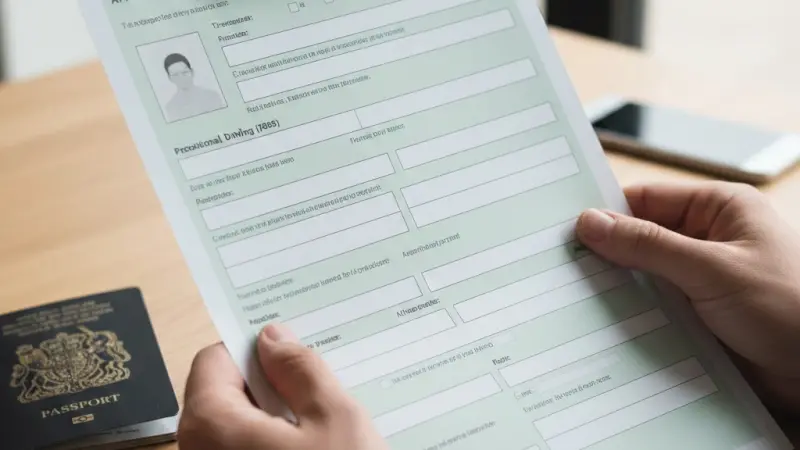
In the evolving landscape of 2026, the ability to drive remains a cornerstone of economic participation and operational efficiency for UK businesses. Whether you are a startup founder looking to mobilise your sales team or a hospitality manager helping apprentices secure their first mode of transport, understanding the nuances of the provisional licence application is essential. This guide provides a definitive overview of the process, costs, and regional considerations for those navigating the Driver and Vehicle Licensing Agency (DVLA) and Driver & Vehicle Agency (DVA) systems.
According to the Department for Business and Trade (2025), there are now over 5.6 million private sector businesses in the UK, many of which rely on mobile staff who must first navigate the provisional licence system to begin their professional journey.
Determining Eligibility Before Commencing Your Application
Age and Residency Requirements for UK Applicants
In England, Scotland, and Wales, you can apply for a provisional driving licence once you are 15 years and 9 months old. However, you must wait until your 17th birthday before you can legally drive a car on public roads. For those receiving the enhanced rate of the mobility component of Personal Independence Payment (PIP), this age limit is reduced to 16. It is imperative to ensure that the applicant has been a resident of Great Britain for at least 185 days in the last 12 months before the application date.
The Vision Standard: Legal Minimums for 2026
The DVLA maintains strict eyesight requirements. You must be able to read a car number plate (made after 1 September 2001) from a distance of 20 metres. In 2026, the DVLA has integrated more digital health reporting, but the physical check remains a standard part of the practical test. If you require glasses or contact lenses to meet this standard, they must be worn whenever you are behind the wheel.
Identifying Pre-Existing Medical Conditions
Failing to disclose a notifiable medical condition to the DVLA is a criminal offence and can lead to a fine of up to £1,000. Common conditions include epilepsy, strokes, and certain neurological or mental health conditions. Businesses sponsoring staff licences should encourage transparency to avoid future compliance issues with the ICO regarding sensitive health data handling.
Documentation: What You Need to Support Your Identity
Digital Identity Verification and the UK Post Office
By 2026, the integration between the DVLA and the UK's digital identity framework has streamlined the process significantly. Most applicants now use a valid UK biometric passport to verify their identity instantly online. If you do not possess a biometric passport, you will likely need to provide original documents, such as a birth certificate or a current residence permit, accompanied by a professional's signature to confirm your identity.
National Insurance Numbers and Address History
You must provide your National Insurance number during the application. For those in Northern Ireland, the DVA requires a similar level of scrutiny. Furthermore, the DVLA requires a full three-year address history. For young entrepreneurs or students who have moved frequently between different regions—perhaps moving from Cardiff to Manchester for university—keeping an accurate log of these dates is vital for a smooth approval process.
Navigating the Online vs. Postal Application Paths
The Digital-First Approach: Using GOV.UK
The vast majority of applications are now processed through the official GOV.UK portal. The online system is not only faster—often resulting in a licence arriving within one week—but it is also more cost-effective. In 2026, the online application fee stands at £34. This digital route is highly recommended for businesses managing multiple employee applications, as it provides an immediate digital audit trail for HMRC and compliance purposes.
When to Use the D1 Paper Application Form
Despite the digital shift, paper applications remain necessary for certain circumstances, such as when providing non-digital identity documents or when applying through a Post Office Check and Send service. The postal fee is currently £43. You can obtain a D1 form from most major Post Office branches in England, Wales, and Scotland. For those in Northern Ireland, the equivalent is the DL1 form, which is submitted to the DVA in Coleraine.
Avoiding Common Submission Errors
The most frequent cause of delay in 2026 remains the submission of poor-quality photographs or incomplete address histories. Ensure the photo meets current passport style standards: clear, focused, and taken against a plain, light-coloured background. A blurred image can result in a rejection and a forfeiture of the application fee.
Regional Variations: England, Scotland, Wales, and Northern Ireland
The Role of the DVA in Northern Ireland
It is a common misconception that the DVLA covers the entire UK. Residents of Northern Ireland must apply through the Driver & Vehicle Agency (DVA). While the requirements are broadly similar, the administrative systems are distinct.
Following the 2024 updates to the Windsor Framework, cross-border trade and movement have increased by 12%, making it more important than ever for Northern Irish businesses to ensure their drivers have the correct DVA-issued provisional documentation before crossing into the Republic of Ireland for training purposes.
Bilingual Support and Business Wales
In Wales, the DVLA (headquartered in Swansea) provides comprehensive bilingual services. Welsh businesses can access specific support through Business Wales, which provides guidance for micro-enterprises (which make up 94% of the Welsh business population) on how to integrate driver training into their staff development plans. The provisional licence application form is available in both English and Welsh.
According to Ofcom (2025), 76% of UK consumers research local businesses online before visiting. Having a mobile workforce that can reach these customers often starts with the successful acquisition of a provisional licence.
Financial Considerations and Business Budgeting
Understanding the Total Cost of Mobilisation
For a business, the £34 application fee is only the beginning. In 2026, the average cost of a driving lesson in the UK has reached approximately £40 per hour. When budgeting for staff training, professional services firms should account for roughly 45 hours of professional tuition plus the cost of the Theory and Practical tests. This represents a significant investment in a micro-business context where every pound of turnover must be justified.
Tax Implications and HMRC Guidance
HMRC generally views the cost of obtaining a first driving licence as a personal expense rather than a business one. Therefore, if a company pays for an employee's provisional licence and subsequent lessons, it is usually treated as a Benefit in Kind (BIK). Professional services businesses—which account for 22% of the UK business population—must ensure this is correctly recorded on P11D forms to maintain compliance with current tax legislation.
Leveraging Apprenticeship Levies for Training
In some sectors, such as construction (which employs 7% of the UK workforce), certain training costs can be offset if they form part of a formal apprenticeship standard. While the licence itself is rarely covered, the mobility it provides is often a prerequisite for completing the apprenticeship, indirectly supporting the business's return on investment.
The Modern Provisional Licence: Privacy and Data Security
ICO Compliance and Employee Records
When a business collects a copy of an employee's provisional licence for insurance or record-keeping, they become a data controller under the UK GDPR. The Information Commissioner's Office (ICO) mandates that this sensitive data—which includes the individual's home address and date of birth—must be stored securely. In 2026, many UK businesses use encrypted HR software to ensure these records are only accessible to authorised personnel.
The Move Toward Digital Licences
The UK government is currently trialling a digital version of the driving licence. While the physical plastic card remains the legal standard for provisional holders in 2026, the DVLA View Driving Record service allows businesses to check the status of a licence in real-time, including any endorsements or disqualifications, provided they have the driver's permission and a check code.
Preparing for the Theory Test Post-Application
Booking via the Official DVLA Channel
Once the provisional licence arrives, the holder can book their Theory Test. In 2026, it is vital to avoid third-party booking sites that charge administration fees. Use the official GOV.UK booking service. The test consists of multiple-choice questions and a hazard perception section, both of which are updated annually to reflect the latest UK road safety trends and statistics.
Study Resources and Digital Apps
71% of UK adults now use smartphones for local business and educational needs. The DVLA offers official apps that simulate the test environment. For businesses, providing these resources to staff can decrease the time taken to qualify, reducing the overall unproductive training period and accelerating the employee's contribution to the company's £2.3 trillion annual turnover contribution by SMEs.
Voice Search: Quick Answers for Provisional Applications
Hey Google, how long does a provisional licence take to arrive?
In 2026, online applications typically arrive within 5 to 7 working days. Postal applications may take up to 3 weeks, especially if there are complications with your identity documents or medical history.
Siri, how much is a provisional licence in the UK?
The standard fee for a first provisional driving licence is £34 when you apply online via the official GOV.UK website. If you choose to apply by post using a D1 form, the fee is £43.
Alexa, can I drive as soon as I apply for my provisional?
No, you must wait until you have the physical licence in your possession and you have reached the legal driving age (usually 17). You must also be supervised by a qualified driver and have the correct L-plates and insurance in place.
Insurance Requirements for Provisional Holders
Learner Driver Insurance for Business Vehicles
If an employee is practicing in a company vehicle, the business must ensure that the insurance policy specifically covers learner drivers. Many standard commercial policies exclude provisional holders. In 2026, several specialist insurers offer top-up learner cover that protects the company's No Claims Bonus while the provisional holder is practicing.
The Supervisor Rule: What Businesses Need to Know
A provisional licence holder must be supervised at all times. The supervisor must be over 21, have held a full driving licence (for that category of vehicle) for at least three years, and meet the same eyesight standards as the driver. For businesses, ensure that the designated supervisor is a responsible employee who understands the legal liabilities involved.
Maintaining Your Licence and Future Compliance
Updating Personal Details with the DVLA
You must inform the DVLA immediately if you change your address. Failure to do so can result in a £1,000 fine. This is a common pitfall for young workers in the gig economy or those in hospitality who move frequently between staff accommodation.
Businesses should include a licence check as part of their annual employee review to ensure all details remain current and compliant.
Transitioning to a Full Driving Licence
The provisional licence is valid for 10 years, but its primary purpose is to facilitate the transition to a full licence. Once the practical test is passed, the examiner will usually take the provisional card and arrange for the full licence to be sent automatically. For businesses, this marks the point where the employee can begin solo operations, significantly increasing their utility to the firm.
Ready to Mobilise Your UK Business?
Whether you're hiring new staff or expanding your fleet, staying compliant with UK driving regulations is essential for long-term growth.
List Your Business LocallyFrequently Asked Questions
Yes, provided you are a resident of the UK. You must have lived in the country for at least 185 days within the past 12 months. You will need to provide valid proof of identity, such as a biometric residence permit or a settled status code, during the application process to satisfy the DVLA or DVA requirements.
Yes. To complete a Compulsory Basic Training (CBT) course—which is required for most people to ride a moped or motorcycle—you must first have a valid provisional licence with the correct category (usually Category P or AM). This is particularly relevant for delivery businesses in the hospitality sector.
You must apply for a replacement immediately through GOV.UK. The fee for a replacement licence is currently £20. You cannot take your theory or practical test without showing your physical provisional licence to the examiner, so any loss should be rectified as soon as possible to avoid cancellation fees.
The core application process is the same as in England and Wales, as the DVLA manages licensing for all of Great Britain. However, Scottish applicants should be aware of specific local support; for example, young people in certain rural council areas may be eligible for subsidised travel or training schemes through Scottish Enterprise.
Yes, a provisional licence is a widely accepted form of identification in the UK for opening bank accounts, entering age-restricted premises, and verifying identity for employment. However, businesses must still perform additional Right to Work checks, as a driving licence alone does not prove an individual's right to work in the UK.
A provisional licence card is usually valid for 10 years. The 'valid until' date on the front of the card (item 4b) indicates when the photo needs updating. You must renew the photo to keep the licence valid, even if you haven't yet passed your test. Driving with an expired photo licence can result in a fine.
Not necessarily. Most medical conditions do not prevent you from driving but may require a medical review. The DVLA may issue a licence for a shorter period (1, 2, or 3 years) or ask you to take a specific driving assessment. It is vital to be honest on the application to ensure your insurance remains valid.
To change your name (e.g., after marriage), you must apply by post. You cannot do this online. You'll need to send the D1 form along with your original marriage certificate or deed poll and your current licence. There is usually no fee for updating your name or address unless you are also renewing the photo.
Yes, a business can pay the fee, but HMRC typically treats this as a taxable benefit. The cost should be processed through the payroll or reported on a P11D form.
Many businesses in the trades and professional services sectors do this as part of a recruitment incentive for junior staff or apprentices.
Applicants in Northern Ireland should send their DL1 form and supporting documents to the DVA in Coleraine. Unlike the DVLA in Swansea, the DVA handles its own distinct database. You can also use the Check and Send service at participating Post Office branches across Northern Ireland for a small additional fee.
Disclaimer: The information provided in this article is for general informational and research purposes only. Company details, features, services, and market positions may change over time. Readers are advised to visit official company websites and conduct independent research before making any business decisions or purchasing services.
Most Searchable Keywords
Recent Blogs


Related Listings

Categories
- Accountants (295)
- Advertising Agencies (559)
- Architects (149)
- Automobiles (377)
- Beauty (300)
- Carpenters (146)
- Cleaning Services (387)
- Dentists (189)
- Driving (62)
- Electricians (215)
- Energy (8)
- Event Organiser (686)
- Finance (602)
- Guide (3374)
- Health (2207)
- Information technology (206)
- Legal Services (354)
- Logistics (6)
- Maintenance (65)
- Manufacturing (35)
Sponsored Listings in Travel Agencies


Related Blogs

Meet the Fair Work Agency Changing UK Work Ru...
Read this insightful article "Meet the Fair Work Agency Changing UK Work Rules in 2026" to expand your knowledge!

Collective Redundancy Errors Now Carry Higher...
Read this insightful article "Collective Redundancy Errors Now Carry Higher 2026 Penalties" to expand your knowledge!

Explore Dog Friendly Walks in the Cotswolds f...
Read this insightful article "Explore Dog Friendly Walks in the Cotswolds for 2026" to expand your knowledge!
Questions & Answers – Find What
You Need, Instantly!
How can I update my business listing?
Is it free to manage my business listing?
How long does it take for my updates to reflect?
Why is it important to keep my listing updated?
