
How to Change a Limited Company Name: Step-by-Step Guide
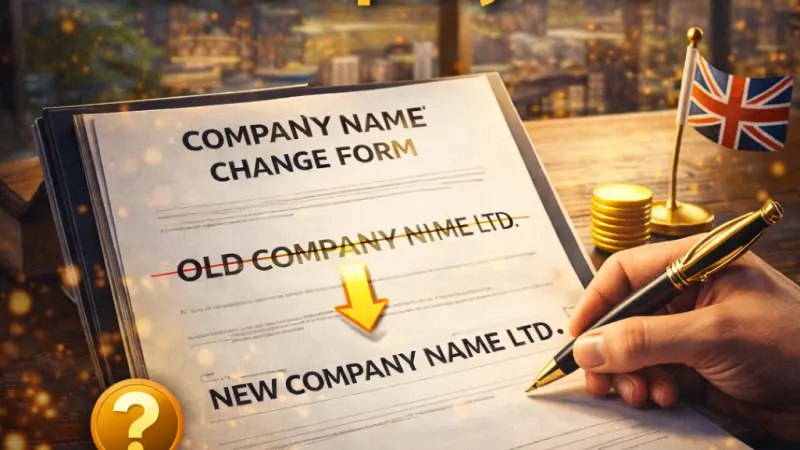
Changing a company name is a significant milestone in any business’s journey, often triggered by rebranding, a shift in market focus, or a merger. In the UK, the process is strictly regulated by the Companies Act 2006 to ensure transparency for creditors, customers, and the public. While the process is relatively straightforward, it requires specific legal steps and a series of notifications to ensure your business remains compliant.
1. Check Name Availability and Restrictions
Before taking any formal action, you must ensure your proposed new name is available. You can use the Companies House Search Service to check if the name is already in use by another entity. Even if a name isn't identical, it cannot be "too like" an existing name.
Furthermore, certain words are restricted. You cannot use words that suggest a connection to the UK government or local authorities (e.g., "British," "Institute," or "Royal") without specific permission. In 2026, Companies House has enhanced powers to reject names that could be used for criminal purposes or are intended to mislead the public.
2. Pass a Resolution
A company name cannot be changed by a director acting alone. It must be approved by the shareholders. There are two primary ways to do this:
Special Resolution: This is the most common method. You must hold a meeting of shareholders and pass a "Special Resolution," which requires a 75% majority vote.
Provisions in Articles: Some companies have specific rules in their Articles of Association that allow for a name change via a board meeting or a different percentage of votes. Always check your Articles first.
Once the resolution is passed, you must keep a written record of it in your company's internal minutes.
3. Notify Companies House
Once the resolution is passed, you must formally notify the Registrar. You have two ways to do this:
Online Filing (Fastest): Most companies use the Companies House online service. It is cheaper and usually processed within 24 hours. Postal Filing (Form NM01): You can download and mail Form NM01, "Notice of change of name by resolution." This method takes longer and carries a higher administrative fee.
Once Companies House approves the change, they will issue a Certificate of Incorporation on Change of Name. Your company's unique registration number will remain the same; only the name changes.
4. Update Your Business Assets and Stationery
Changing the name at Companies House is only the legal starting point. You must ensure that your new name is displayed correctly across all business touchpoints. By law, you must update:
Your Registered Office: Your new name must be displayed outside your registered office and any other location where you conduct business.
Digital Presence: Update your website, social media profiles, and email signatures.
Business Stationery: This includes invoices, letterheads, order forms, and receipts. Your business's
full legal name must appear on these documents.
5. Notify HMRC and Your Bank
Companies House will automatically notify some government departments, but you are responsible for updating several critical institutions:
HMRC: You must notify HMRC of the name change for Corporation Tax, VAT, and PAYE purposes. If you are VAT registered, you can usually update this through your online VAT account. Business Bank Account: Your bank will require a copy of the new Certificate of Incorporation before they will update your account details and issue new bank cards or chequebooks. Insurance Providers: Ensure your professional indemnity, public liability, and employer's liability insurance policies reflect the new name to avoid any issues with future claims.
6. Update Contracts and Intellectual Property
Review your existing contracts with suppliers, landlords, and clients. While a name change does not typically invalidate a contract, it is good practice to send a formal notice of the change to all parties. If you have trademarks or patents, you must also notify the Intellectual Property Office (IPO) to ensure your protections remain accurate.
The Bottom Line
Changing your Ltd company name is a simple three-step legal process: check availability, pass a resolution, and file with Companies House. However, the administrative "cleanup" — updating your bank, HMRC, and branding — is where the real work lies. Ensuring these steps are completed promptly prevents confusion and maintains your professional credibility during the transition.
Disclaimer: The information provided in this article is for general informational and research purposes only. Company details, features, services, and market positions may change over time. Readers are advised to visit official company websites and conduct independent research before making any business decisions or purchasing services.
Most Searchable Keywords
Recent Blogs


Related Listings
Categories
- Accountants (295)
- Advertising Agencies (559)
- Architects (149)
- Automobiles (377)
- Beauty (300)
- Carpenters (146)
- Cleaning Services (387)
- Dentists (189)
- Driving (62)
- Electricians (215)
- Energy (8)
- Event Organiser (686)
- Finance (602)
- Guide (3374)
- Health (2207)
- Information technology (206)
- Legal Services (354)
- Logistics (6)
- Maintenance (65)
- Manufacturing (35)
Sponsored Listings in Travel Agencies



Related Blogs

Meet the Fair Work Agency Changing UK Work Ru...
Read this insightful article "Meet the Fair Work Agency Changing UK Work Rules in 2026" to expand your knowledge!

Collective Redundancy Errors Now Carry Higher...
Read this insightful article "Collective Redundancy Errors Now Carry Higher 2026 Penalties" to expand your knowledge!

Explore Dog Friendly Walks in the Cotswolds f...
Read this insightful article "Explore Dog Friendly Walks in the Cotswolds for 2026" to expand your knowledge!
Questions & Answers – Find What
You Need, Instantly!
How can I update my business listing?
Is it free to manage my business listing?
How long does it take for my updates to reflect?
Why is it important to keep my listing updated?
