
How to Check Company Details UK
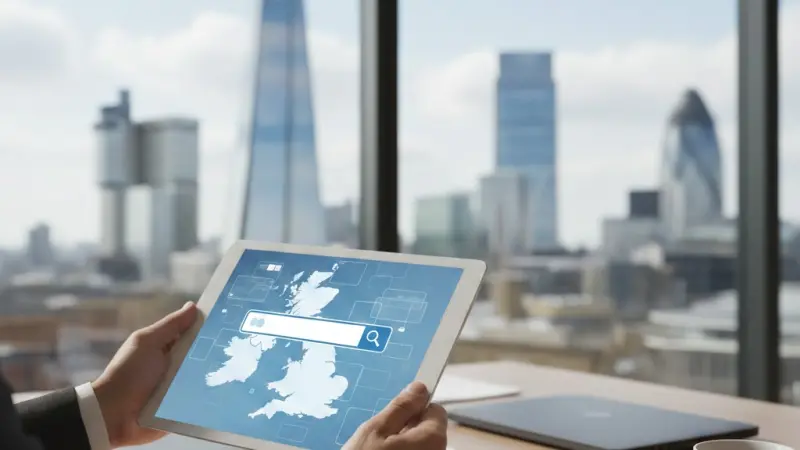
How to Check Company Details in the UK: The Ultimate 2026 Verification Guide
Published by LocalPage.uk Architecture Team | Updated for the 2025-2026 Tax Year | 12 Minute Read

In the evolving landscape of 2026, verifying the legitimacy and financial health of a business entity is no longer a luxury—it is a fundamental requirement for due diligence. Whether you are a small business owner in Manchester looking to vet a new supplier, or a startup in Cardiff evaluating a potential partner, knowing how to check company details in the UK is the primary safeguard against commercial fraud and insolvency risks.
5.6m The total number of private sector businesses currently operating in the UK (Department for Business and Trade, 2025). With 99.3% of these being SMEs, the need for robust, accessible data has never been higher.
Understanding the Primary Source: The Role of Companies House
Companies House remains the definitive registrar for all limited companies and limited liability partnerships (LLPs) across the United Kingdom. In early 2026, the registrar continues to enhance its digital services, offering nearly instantaneous access to the public record. Understanding how to navigate this system is the first step in any professional inquiry.
Accessing the Find and Update Company Information Service
The primary tool for any search is the 'Find and Update Company Information' service on GOV.UK. This platform allows you to search by company name, officer name, or the unique Company Registration Number (CRN). Whilst many third-party websites offer similar data, it is always recommended to go directly to the source to ensure you are viewing the most current filings.
Interpreting the Company Overview Screen
The overview screen provides an immediate snapshot of the company's status. You should look specifically for the "Active" status. If a company is listed as "Liquidation," "Dissolved," or "Active — proposal to strike off," this is a significant red flag. In 2025, Companies House implemented stricter verification protocols for registered office addresses to combat the rise in "shell" companies, so ensuring the address is genuine is a high priority.
Verifying the Registered Office Address
Check if the address is a genuine place of business or merely a "virtual" office. While virtual offices are legal and common for small businesses, a discrepancy between the registered office and the trading address should prompt further investigation. For businesses in Scotland, the registered office must remain in Scotland, even if they trade across the UK.
Analysing Company Officers and Persons with Significant Control
A company is only as reliable as the individuals who lead it. To truly check company details in the UK, you must look beyond the entity and examine the officers (directors) and the Persons with Significant Control (PSC) register.
The Importance of the PSC Register
The PSC register was introduced to increase transparency regarding who truly owns and influences UK companies. Most PSCs are individuals who hold more than 25% of shares or voting rights. In 2026, the accuracy of this register is more strictly enforced by the ICO and Companies House. If the PSC information is missing or outdated, it suggests a lack of compliance within the organisation.
Investigating Director History and Disqualifications
You can view the current and resigned directors of any limited company. Take note of how many other appointments a director has. "Phoenixing"—where directors close a failing company only to start an identical one under a new name—remains a concern. You can also search the Disqualified Directors Register to ensure the individuals you are dealing with haven't been banned from running a company by the Insolvency Service.
Professional Tip: When checking directors, look for their "Appointment History." A director with dozens of concurrent appointments across unrelated sectors may be a nominee director rather than an active operational leader, which could complicate accountability in legal disputes.
Evaluating Financial Health Through Filed Accounts
Checking company details isn't just about identity; it's about solvency. Every limited company in the UK must file annual accounts with Companies House. These documents are public and provide a window into the company's financial stability.
Micro-Entity vs. Full Accounts
Most of the 4.2 million micro-businesses in the UK file simplified "micro-entity" accounts. These are less detailed but still show the balance sheet. For larger entities, you will see full accounts, including a profit and loss statement and a director's report.
In 2026, look specifically for the "Net Assets" figure. A company with negative net assets (liabilities exceeding assets) may be trading in a precarious position.
Checking the Filing History for Consistency
Late filings are often the first sign of internal distress. If a company consistently files its accounts or confirmation statements near the deadline—or misses them entirely—it indicates administrative weakness or financial trouble. HMRC frequently takes a keen interest in companies that fail to maintain their filing schedule, often leading to compulsory strike-off actions.
Identifying Charges and Mortgages
The "Charges" tab on Companies House reveals if the company has secured loans against its assets. If a company has multiple "outstanding" charges, it means its assets are pledged to lenders like banks. This is normal for growth-stage businesses but is a critical factor if you are considering extending credit to them.
Regional Variations in Company Verification
While the Companies Act 2006 provides a unified framework, there are nuances across the four nations of the UK that you must account for during your search.
Specifics for Companies in Scotland and Wales
Scottish companies (identified by an 'SC' prefix in their company number) fall under the jurisdiction of the Companies House office in Edinburgh. While the search process is identical, legal disputes may be settled under Scots Law. In Wales, many companies choose to file their documents in Welsh; Companies House provides bilingual support through its Cardiff office and Business Wales. Ensure that if you are reviewing a Welsh entity, you are aware of any bilingual filing options they have utilised.
The Northern Ireland Perspective
Companies in Northern Ireland (identified by an 'NI' prefix) have seen a unique economic shift. With cross-border trade between NI and the Republic of Ireland increasing by 12% since 2024, verifying an NI company often requires a dual check. You may need to verify their status on the UK register whilst also checking if they have an active presence on the CRO (Companies Registration Office) in Ireland if they operate across the border.
76% Of UK consumers now research a local business online before engaging their services (Ofcom, 2025). This digital due diligence has become the standard for both B2B and B2C interactions.
Verifying Regulatory Compliance and Licences
Checking company details at Companies House is only half the battle. Depending on the industry, a company may need to be registered with various other UK authorities.
The Financial Conduct Authority (FCA) Register
If the company offers financial advice, insurance, or credit, they *must* appear on the Financial Services Register. Dealing with an unauthorised firm means you will not have access to the Financial Ombudsman Service or the Financial Services Compensation Scheme (FSCS) if things go wrong. In 2026, the FCA has increased its crackdown on "clone firms" that mimic the details of genuine registered companies.
The Information Commissioner’s Office (ICO) Data Protection Register
Any company that processes personal data—which includes almost every business with a website or a mailing list—is legally required to register with the ICO. You can search the ICO's public register of data controllers. A company that takes data protection seriously will have an active registration and a clear privacy policy. This is a vital check for professional services and retail businesses.
Local Authority Licensing for Trades and Hospitality
For trades like plumbing or electrical work, check for membership in Competent Person Schemes (like NICEIC or Gas Safe). For hospitality businesses, check with the local authority in England or the relevant council in Northern Ireland for their food hygiene rating and liquor licenses. These are public records that verify the operational legality of the premises.
Identifying Red Flags and Fraudulent Activity
The rise of digital business has unfortunately led to a rise in sophisticated fraud. Knowing how to spot the signs of a "scam" company is a core part of checking company details in the UK.
Discrepancies in Digital Presence
Check the company's website against its official filings. Does the address on the website match the registered office at Companies House? Is the company number clearly displayed at the bottom of the page (as required by the Companies Act)?
If a company claims to have been trading for ten years but Companies House shows they were incorporated six months ago, you are likely dealing with a fraudulent entity.
The "One-Man Band" vs. The Multinational Claim
Be wary of companies that use "International," "Global," or "Group" in their name but only have one director and £100 in share capital. While small businesses often have ambitious names, a massive discrepancy between a company's claims of scale and its filed balance sheet should lead to extreme caution.
Voice Search Insights: Verified Answers
"Hey Siri, how do I check if a UK company is real?"
The most reliable way is to use the free "Companies House Service" on GOV.UK. Simply enter the company name or number to see their registration status, director names, and filed accounts. All legitimate UK limited companies must be listed there.
"Alexa, is it free to check company details in the UK?"
Yes, checking basic company information, filing history, and officer details is free via the official Companies House website. Some advanced credit reports from private agencies may charge a fee for deep-dive financial analysis.
Using Third-Party Credit Reports and Reviews
While official registers provide the facts, third-party platforms provide the context. To fully check company details in the UK, you should look at how the market perceives the entity.
Credit Risk and Scoring
Agencies like Experian, Dun & Bradstreet, or Creditsafe provide "Credit Scores" for UK companies. These scores predict the likelihood of a company failing in the next 12 months. For high-value contracts, paying for a credit report is an essential investment. It often reveals trade payment data—showing if a company pays its suppliers on time, which is not visible in Companies House accounts.
The Role of Online Reviews and Trust Signals
68% of UK customers trust online reviews as much as personal recommendations. Platforms like Trustpilot or Google Business Profiles are invaluable for checking the "lived experience" of a company's customers. However, be mindful of "review bombing" or fake positive reviews. Look for detailed, verified purchases rather than generic five-star ratings.
Checking VAT and Tax Status
A company may be registered at Companies House but not registered for VAT.
Understanding this distinction is vital for financial planning.
VAT Registration Verification
If a company's turnover exceeds £90,000 (the 2025-26 threshold), it must register for VAT with HMRC. You can verify a company's VAT number using the "Check a UK VAT number" service on GOV.UK. This ensures the number is valid and belongs to the business you are dealing with, preventing VAT fraud.
Employer Status and Payroll
For those looking to work for a company, verifying if they are an active employer is harder as HMRC records are private. However, looking at the "Social Security" costs in their full accounts or checking their LinkedIn presence can give an indication of their workforce size. In Northern Ireland, businesses often have unique payroll considerations due to specific regional employment laws.
Checklist for Due Diligence:
- Is the status "Active" on Companies House?
- Do the directors have a history of disqualification?
- Are the accounts filed up to date?
- Is there a valid VAT number for large transactions?
- Does the company hold the necessary industry licenses (FCA, ICO, etc.)?
Final Summary: Protecting Your Interests in 2026
Checking company details in the UK is a multi-layered process. It starts with Companies House but extends into regulatory registers, financial reports, and market reputation. By dedicating 15 minutes to these checks before signing a contract or making a payment, you significantly reduce your exposure to commercial risk. As the UK economy continues to adapt in 2026, transparency remains the best tool for business success.
Frequently Asked Questions
Can I check a UK company's details for free?
Yes, the vast majority of company data is free. You can access the Companies House 'Find and Update' service at no cost to view registration status, officer details, and download PDF copies of filed accounts. Only specialized credit reports or historical archived documents usually require a fee.
What is a Company Registration Number (CRN)?
A CRN is a unique 8-character identifier issued by Companies House upon incorporation. It stays with the company forever, even if the name changes. Using the CRN is the most accurate way to check company details, as it avoids confusion between businesses with similar names.
How do I know if a company is about to go bust?
Look for "Red Flags" such as a "Proposal to Strike Off" on their filing history, late accounts, or multiple new charges (loans) registered in a short period. If the "Net Assets" on their balance sheet are negative, the company is technically insolvent, which is a major warning sign.
Is a director's home address public?
Generally, no. Directors must provide a "Service Address" for the public record, which is often the company's registered office or an accountant's address. While they must provide their home address to Companies House, it is kept on a private register and not shown to the general public.
How can I check if a business is a Sole Trader?
Sole traders are not registered at Companies House. To verify a sole trader, you must ask for their UTR (Unique Taxpayer Reference) or proof of business insurance. You can also check if they are registered for VAT or have a local trading license if applicable to their industry.
What does 'Active — Proposal to Strike Off' mean?
This means Companies House is in the process of removing the company from the register, usually because they failed to file their annual accounts or confirmation statement. You should avoid doing business with a company in this state until the proposal is withdrawn.
Can I check company details for a business in Northern Ireland?
Yes, Northern Ireland companies (prefixed with 'NI') are included in the main UK Companies House search. However, due to the Windsor Framework, you may also want to verify their EORI number if they are involved in moving goods between NI, GB, and the EU.
How long does it take for new details to show on the register?
Most digital filings, such as changes to directors or registered offices, appear on the public register within 24 hours. Paper filings can take significantly longer—up to several weeks—depending on the current processing times at Companies House.
Who are 'Persons with Significant Control' (PSC)?
PSCs are individuals who ultimately own or control the company. This usually means they hold more than 25% of the shares or voting rights.
Checking the PSC register is essential to understand who is actually "behind" the business and who makes the high-level decisions.
Where can I complain about a fraudulent UK company?
If you suspect a company is involved in fraud, you should report them to Action Fraud (the UK's national reporting centre for fraud and cybercrime). If the issue relates to company law or director conduct, you can also report them directly to the Insolvency Service or Companies House.

Disclaimer: The information provided in this article is for general informational and research purposes only. Company details, features, services, and market positions may change over time. Readers are advised to visit official company websites and conduct independent research before making any business decisions or purchasing services.
Most Searchable Keywords
Recent Blogs


Related Listings

Categories
- Accountants (295)
- Advertising Agencies (559)
- Architects (149)
- Automobiles (377)
- Beauty (300)
- Carpenters (146)
- Cleaning Services (386)
- Dentists (189)
- Driving (62)
- Electricians (215)
- Energy (8)
- Event Organiser (685)
- Finance (599)
- Guide (3365)
- Health (2207)
- Information technology (206)
- Legal Services (353)
- Logistics (6)
- Maintenance (65)
- Manufacturing (35)

Sponsored Listings in Locksmith Services

Related Blogs

Gen Z Political Reporters and News Creators i...
Read this insightful article "Gen Z Political Reporters and News Creators in the UK" to expand your knowledge!

Famous Female Social Media Influencers Across...
Read this insightful article "Famous Female Social Media Influencers Across the UK" to expand your knowledge!

Your UK Sponsor Licence 2026 Step by Step Gui...
Read this insightful article "Your UK Sponsor Licence 2026 Step by Step Guide" to expand your knowledge!
Questions & Answers – Find What
You Need, Instantly!
How can I update my business listing?
Is it free to manage my business listing?
How long does it take for my updates to reflect?
Why is it important to keep my listing updated?
