
How to Choose the Best Insurance for Your Business
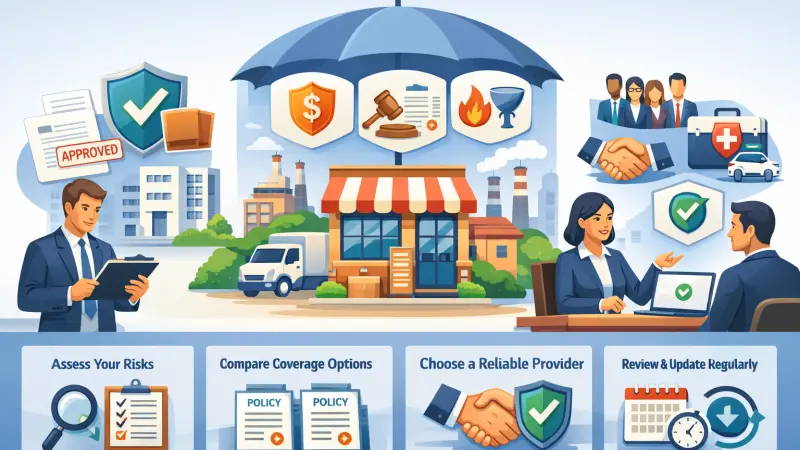
Did you know that according to industry data, nearly 40% of small businesses in the United Kingdom operate without any form of optional insurance, leaving them vulnerable to sudden, devastating financial losses? While the excitement of launching a new venture often focuses on branding, product development, and sales, the foundation of any sustainable enterprise is robust risk management. Business insurance is not merely a "grudge purchase" or a bureaucratic hurdle; it is a critical safety net designed to protect your livelihood from the unpredictable nature of the modern marketplace.

Just as personal insurance safeguards your home and health, commercial insurance shields your business from liabilities, property damage, and legal disputes that could otherwise lead to insolvency. However, the UK insurance landscape is vast, and choosing the right combination of policies requires a nuanced understanding of your specific industry risks. This guide provides a comprehensive roadmap for evaluating your needs and selecting the most effective coverage for your business.
Evaluating Your Business Risk Profile
Before requesting quotes or consulting with brokers, you must perform a thorough internal audit of your operations. "One size fits all" does not apply to commercial insurance; a freelance graphic designer in London faces entirely different risks compared to a manufacturing firm in the Midlands.
Identifying Assets and Liabilities
Start by listing your tangible and intangible assets. Tangible assets include your premises, machinery, stock, and IT equipment. Intangible assets include your professional reputation and digital data. Ask yourself: what would happen if these were lost, stolen, or damaged? Simultaneously, consider your liabilities. Do members of the public visit your office? Do you provide expert advice that clients rely on? Understanding these touchpoints is the first step in identifying which insurance "wrappers" you require.
Setting a Realistic Premium Budget
Your "premium" is the annual or monthly cost of your insurance, while the "excess" (or deductible) is the amount you agree to pay towards any claim. Generally, opting for a higher excess can lower your premium, but you must ensure your business has the liquidity to cover that excess should a claim arise. Balancing comprehensive protection with affordability is key to maintaining a healthy cash flow.
Essential Types of Business Insurance in the UK
The following categories represent the most common forms of protection. While some are optional, others
are mandated by UK law or requested by clients as a condition of contract.
1. Public Liability Insurance
Public Liability (PL) insurance is widely considered the cornerstone of business protection. It is designed for businesses that interact with third parties—whether that is customers visiting your shop, or you visiting a client’s site.
- What it covers: Compensation claims for third-party injuries or property damage caused by your business activities.
- Example: A customer slips on a wet floor in your retail unit, or a contractor accidentally spills coffee on a client's high-end server.
- Why you need it: Legal fees and compensation awards can easily reach six or seven figures, which could bankrupt an uninsured small business.
2. Professional Indemnity Insurance
If your business involves providing expertise, designs, or professional advice, Professional Indemnity (PI) insurance is essential. This is often a mandatory requirement for members of chartered bodies, such as accountants, architects, and solicitors.
- What it covers: Protection against claims of negligence, errors, omissions, or breach of confidentiality that result in a client’s financial loss.
- Example: A consultant provides a strategy that leads to a significant loss of revenue for a client, or a web designer accidentally uses copyrighted imagery.
- Why you need it: It covers the cost of defending your business in court and any subsequent settlements, protecting both your finances and your professional standing.
3. Employers' Liability Insurance (Legal Requirement)
In the UK, if you employ even one person, Employers' Liability (EL) insurance is almost certainly a legal requirement under the Employers’ Liability (Compulsory Insurance) Act 1969. Failing to have a valid policy can result in fines of up to £2,500 per day from the Health and Safety Executive (HSE).
- What it covers: Claims from employees who suffer an injury or illness as a result of their work for you.
- Example: An employee develops a repetitive strain injury due to poor workstation ergonomics, or suffers a fall from a ladder.
- Why you need it: Aside from being a legal necessity, it ensures your staff are protected and that the business is not held liable for massive medical or compensation costs.
4. Commercial Property and Buildings Insurance
Whether you own your premises or rent them, you need to protect the physical environment where you work. If you work from home, you should check your domestic policy, as many home insurance providers exclude business activities.
- What it covers: Damage to the building and its contents caused by fire, flood, theft, or vandalism.
- Example: A burst pipe floods your office, destroying your furniture and computer hardware.
- Note on Stock: If you hold significant inventory, ensure your policy specifically includes "stock insurance" to cover the cost price of your goods.
5. Cyber Security Insurance
As UK businesses increasingly rely on digital infrastructure, the risk of data breaches and cyber-attacks has escalated. GDPR (General Data Protection Regulation) has also increased the financial penalties associated with data mishandling.
- What it covers: Recovery costs following a hack, legal fees, and the cost of notifying customers of a breach. It may also cover "cyber extortion" (ransomware).
- Example: Your client database is breached by hackers, or your systems are locked down by malware.
- Why you need it: Standard property or liability policies rarely cover digital assets. Cyber insurance provides the technical and legal support needed to navigate a crisis.
6. Commercial Vehicle and Fleet Insurance
Standard private motor insurance does not cover "business use" beyond a simple commute. If you use a van,
car, or HGV for deliveries, transporting equipment, or visiting multiple sites, you need commercial cover.
- What it covers: Third-party liability, fire, theft, and accidental damage to your business vehicles.
- Example: A delivery driver involved in an accident while on their rounds.
- Requirement: It is a legal requirement in the UK to have at least third-party insurance for any vehicle used on public roads.
7. Business Interruption Insurance
While property insurance pays for the physical damage, Business Interruption (BI) insurance covers the income you lose while your business is unable to operate.
- What it covers: Lost revenue and fixed costs (like rent and wages) during the period of recovery after a covered event (like a fire).
- Why you need it: Many businesses survive the initial disaster but fail in the following months because they cannot cover their ongoing overheads without incoming revenue.
How to Compare Business Insurance Policies Effectively
Once you have identified your needs, the next step is to obtain and compare quotes. Price is a major factor, but the cheapest policy is not always the best value if it contains restrictive exclusions.
Reviewing Policy Wording and Exclusions
Every insurance policy contains "exclusions"—specific scenarios where the insurer will not pay out. For instance, a professional indemnity policy might exclude claims related to work performed for US-based clients unless specifically added. It is vital to read the "Key Facts" document or the full policy wording before signing. Ensure the definitions of "business activity" accurately reflect what you actually do daily.
The Benefit of "Bundled" Policies
Many UK insurers offer "Business Owner Policies" (BOPs) or "Packaged" insurance. These combine several types of cover—such as Public Liability, Employers' Liability, and Contents—into a single policy. Bundling often results in a significant discount compared to buying each policy individually and simplifies your administration with a single renewal date.
Working with a Broker vs. Going Direct
Small, straightforward businesses may find it easy to use comparison sites or go directly to insurers. However, if your business has complex risks or operates in a niche industry, using a specialist insurance broker can be invaluable.
Brokers can access markets not available to the general public and can advocate for you during the claims process.
Frequently Asked Questions
Is business insurance tax-deductible in the UK?
Yes, most commercial insurance premiums are considered an "allowable expense" for tax purposes. This means you can deduct the cost of your premiums from your business’s turnover when calculating your taxable profit, effectively reducing your Corporation Tax or Self-Assessment bill.
Do I need insurance if I work from home as a freelancer?
Yes. Your standard home insurance likely won't cover your business equipment, and it certainly won't cover professional liability or public liability if a client visits your home. You should inform your home insurer and take out a specific "Working from Home" or "Freelancer" policy.
What is 'Run-off' cover?
Run-off cover is specifically for Professional Indemnity insurance. It provides protection against claims made after you have retired or closed your business for work you performed while the business was still active. Since PI claims can emerge years after a project is finished, this is a vital consideration for retirees.
How often should I review my insurance policies?
You should review your coverage at least once a year during the renewal period. However, you should also update your insurer immediately if your business undergoes significant changes, such as hiring new staff, moving premises, or offering a completely new service.
The Bottom Line: Peace of Mind for Growth
Selecting the right insurance is an investment in your business’s future. It provides the financial resilience needed to withstand accidents, legal challenges, and unforeseen disasters.
By taking the time to evaluate your risks, understand the different types of cover available, and carefully compare policy details, you can operate with the confidence that your hard work is protected.
Remember, the goal of business insurance is to ensure that a single bad day doesn't result in the end of your entrepreneurial journey. Seek professional advice if you are unsure, and always ensure your policy keeps pace with your business’s growth and evolution.

Disclaimer: The information provided in this article is for general informational and research purposes only. Company details, features, services, and market positions may change over time. Readers are advised to visit official company websites and conduct independent research before making any business decisions or purchasing services.
Most Searchable Keywords
Recent Blogs


Related Listings


Categories
- Accountants (295)
- Advertising Agencies (559)
- Architects (149)
- Automobiles (377)
- Beauty (300)
- Carpenters (146)
- Cleaning Services (386)
- Dentists (189)
- Driving (62)
- Electricians (215)
- Energy (8)
- Event Organiser (685)
- Finance (599)
- Guide (3365)
- Health (2207)
- Information technology (206)
- Legal Services (353)
- Logistics (6)
- Maintenance (65)
- Manufacturing (35)
Sponsored Listings in Locksmith Services


Related Blogs

Gen Z Political Reporters and News Creators i...
Read this insightful article "Gen Z Political Reporters and News Creators in the UK" to expand your knowledge!

Famous Female Social Media Influencers Across...
Read this insightful article "Famous Female Social Media Influencers Across the UK" to expand your knowledge!

Your UK Sponsor Licence 2026 Step by Step Gui...
Read this insightful article "Your UK Sponsor Licence 2026 Step by Step Guide" to expand your knowledge!
Questions & Answers – Find What
You Need, Instantly!
How can I update my business listing?
Is it free to manage my business listing?
How long does it take for my updates to reflect?
Why is it important to keep my listing updated?
