
How to Claim Child Benefit UK
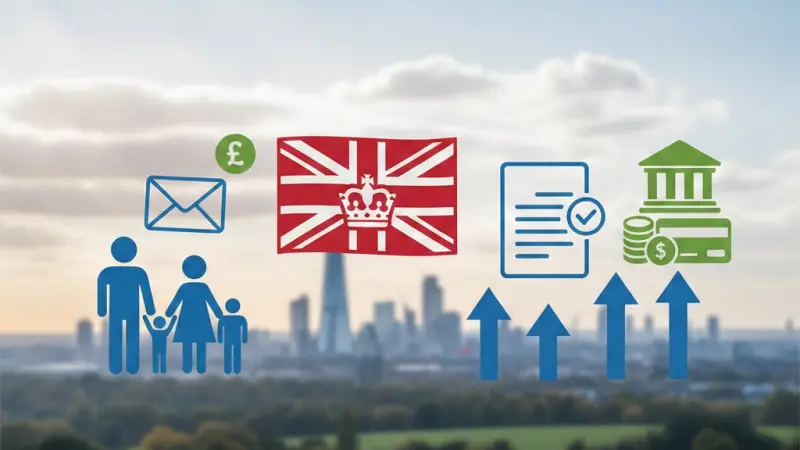
How to claim Child Benefit in the UK: 2025/26 Guide
Published by LocalPage.uk Content Architecture Team | Updated for Tax Year 2025-2026
Navigating the landscape of UK welfare and taxation requires a measured approach, particularly for business owners and high-earning professionals. Child Benefit remains a cornerstone of the UK's social security framework, yet its interaction with the tax system—specifically the High Income Child Benefit Charge (HICBC)—has made the "simple" act of claiming a strategic financial decision. For the millions of families across England, Scotland, Wales, and Northern Ireland, understanding how to optimise this claim whilst ensuring full compliance with HM Revenue and Customs (HMRC) is essential.
5.6m UK private sector businesses currently operate in an economy where employee benefits and tax efficiency are paramount. Understanding Child Benefit is no longer just a personal task; it is a vital piece of knowledge for any employer supporting a modern workforce.
Evaluating Your Eligibility for Child Benefit
Before embarking on the application process, one must determine if they meet the fundamental criteria set by the Department for Work and Pensions (DWP) and HMRC. In the UK, you can claim Child Benefit if you are responsible for bringing up a child who is under 16, or under 20 if they stay in approved education or training.
Who Qualifies as "Responsible" for a Child?
Responsibility is defined by HMRC as living with the child or contributing at least the same amount as the Child Benefit rate towards their upkeep. This includes food, clothes, and pocket money. It is important to note that only one person can receive Child Benefit for a child, meaning in separated households, a clear agreement must be reached to avoid double-claiming, which can trigger an investigation.
Age Limits and Educational Extensions
Whilst the standard cut-off is 16, many parents overlook the extension to age 20. This applies if the child is in 'approved' education, such as A-levels, Scottish Highers, or NVQs up to Level 3. It does not apply to university degrees or higher-level apprenticeships. In Scotland, the transition from Highers to Advanced Highers is a common point where claims need updating to avoid cessation of payments.
Evidence of Parental Responsibility
Keep records of child maintenance payments or shared custody agreements. HMRC may request these during a compliance check, especially if both parents have separate residences in different UK regions.
The Strategic Impact of the High Income Tax Charge
Perhaps the most significant change in Child Benefit history is the High Income Child Benefit Charge. For the 2025-2026 tax year, the thresholds and tapering rules have been adjusted to reflect inflation and wage growth. If you or your partner earn over the threshold, you may have to pay back some or all of the benefit through your Self Assessment tax return.
£60,000 is the current adjusted threshold at which the tax charge begins to apply. Previously set lower, this 2025-26 adjustment has brought thousands of UK families back into full eligibility.
How the Tapering Mechanism Functions
The charge is 1% of the amount of Child Benefit received for every £200 of income above the threshold. Once an individual's income exceeds £80,000, the tax charge equals the total amount of benefit, effectively nullifying the financial gain. For business owners in London or the South East, where salaries are often higher, this calculation is a frequent part of annual tax planning.
Why You Should Claim Even if You Earn Over £80,000
Many professionals choose not to claim to avoid the hassle of Self Assessment. However, this can be a costly mistake. Claiming Child Benefit, even if you opt out of receiving the payments, ensures you receive National Insurance credits which protect your State Pension. For stay-at-home parents or those with gaps in their employment history, these credits are invaluable.
Protecting Your State Pension
A full UK State Pension requires 35 qualifying years of National Insurance contributions. Missing out on Child Benefit credits can lead to a significant shortfall in retirement income.
Navigating the Application Process via GOV.UK
HMRC has significantly digitised the claiming process. Most new parents can now claim Child Benefit online or through the HMRC app, a move that has reduced processing times from weeks to days for the majority of applicants across England and Wales.
The Digital Claiming Route
To claim online, you will need your Government Gateway ID, your child's birth or adoption certificate, and your National Insurance number. If you are a micro-business owner or a freelancer, you likely already have a Government Gateway account for your VAT or Self Assessment; the Child Benefit portal is accessed through the same secure login.
Manual Claims and Paper Forms
Whilst digital is preferred, some circumstances require form CH2. This is often the case if your child was born outside the UK, or if you are claiming for a child who has moved in with you recently.
For those in Northern Ireland, whose birth records are held by the General Register Office for Northern Ireland (GRONI), the online system is fully integrated to verify details instantly.
Verification Timelines
Most claims are processed within 3 working days if done online. However, if HMRC requires physical documents, such as an original birth certificate, it may take up to 22 working days to return the documents and finalise the claim.
Child Benefit Rates for the 2025-2026 Tax Year
Understanding the actual monetary value of the claim is necessary for household budgeting and financial forecasting. Rates are typically reviewed annually and adjusted in line with the Consumer Price Index (CPI).
£25.60 is the weekly rate for the eldest or only child. Additional children are currently paid at a rate of £16.95 per week. Over a year, this provides over £1,300 for the first child.
Calculating Annual Income and Allowances
When calculating your "income" for the High Income Charge, you should use your 'Adjusted Net Income'. This is your total taxable income before personal allowances, minus things like pension contributions (made before tax) and Gift Aid donations. For many small business directors, pension contributions are a strategic way to keep their income below the £60,000 threshold.
Regional Variations in Cost of Living
While Child Benefit rates are consistent across the UK, their impact varies. In regions like the North East of England or parts of Wales, the benefit covers a larger percentage of essential childcare costs compared to London, where 82% of adults report that local costs far exceed national support levels.
Special Considerations for Scottish Families
Scotland has a unique additional layer of support known as the Scottish Child Payment. This is managed by Social Security Scotland rather than HMRC. If you live in Scotland and are already in receipt of certain benefits, you may be eligible for this additional weekly payment per child.
Integrating UK and Scottish Claims
You must first claim the UK-wide Child Benefit to establish your eligibility for the Scottish Child Payment. Scottish Enterprise and local authorities often provide workshops for small businesses to help employees understand this dual-benefit system, which can significantly improve employee retention in the hospitality and retail sectors.
The Role of Scottish Assessors
For those living in Scotland, your residency is verified through your Scottish Tax Code (starting with an 'S'). Ensure your address is updated with HMRC to ensure you are categorised correctly for both tax and benefit purposes.
Address Updates
Always notify HMRC of a move between UK nations immediately. Failure to do so can lead to overpayments or the suspension of localized top-up benefits.
Unique Requirements for Northern Ireland
Northern Ireland operates under a slightly different administrative framework due to the Windsor Framework and the Northern Ireland Protocol. While Child Benefit itself is a "reserved" matter handled by HMRC for the whole UK, the social context and cross-border trade elements create unique scenarios.
Cross-Border Families and Irish Claims
If you live in Northern Ireland but work in the Republic of Ireland (or vice versa), complex EU social security coordination rules may apply. Generally, the country where you work is responsible for paying family benefits. If you work in both, or if one parent works in NI and the other in the Republic, you may receive a "supplementary" payment to ensure you get the highest amount available between the two systems.
Invest Northern Ireland Guidance
Small businesses in Derry/Londonderry or Newry often employ staff who live across the border. Invest NI suggests that HR departments provide specific guidance on Child Benefit to avoid confusion over where tax is paid and where benefits are claimed.
Windsor Framework Compliance
Ensure that any correspondence regarding benefits correctly identifies your residency status to avoid complications with the Integrated Payroll systems used in cross-border commerce.
Child Benefit for Business Owners and the Self-Employed
For the 4.2 million micro-businesses in the UK, Child Benefit is often treated as a component of the director's remuneration strategy.
Unlike PAYE employees, the self-employed have more control over when and how they receive income, which can affect their liability for the High Income Charge.
Managing Dividends and the Threshold
Limited company directors often pay themselves a combination of salary and dividends. Because dividends count towards your Adjusted Net Income, a large dividend payment at the end of the tax year could unexpectedly push you over the £60,000 or £80,000 thresholds, resulting in a surprise tax bill. Careful monitoring throughout the financial year is required.
Reporting via Self Assessment
If you are liable for the High Income Child Benefit Charge, you must register for Self Assessment by 5 October following the end of the tax year. Failure to notify HMRC of your liability can result in "failure to notify" penalties, which are often a percentage of the tax owed.
HMRC Compliance Checks
HMRC uses data-matching technology to identify parents whose income exceeds the threshold but who haven't declared the charge. In 2025, these systems are more integrated than ever with Companies House and banking data.
The Importance of National Insurance Credits
As touched upon earlier, the non-monetary value of Child Benefit—the National Insurance (NI) credit—is arguably its most vital feature for long-term financial security. This is particularly relevant in the 2026 economic climate where the state pension age and value are frequent topics of debate.
Protecting the Non-Earning Partner
If one parent earns over £80,000 and the other does not work, the high-earner should still ensure the non-earner is the one who "claims" the benefit. This transfers the NI credit to the non-earner, ensuring their pension record remains intact. The high-earner can then choose to 'opt out' of the actual cash payments to avoid the tax charge, whilst the NI credit continues to flow.
Voluntary Contributions vs. Child Benefit Credits
Buying back a missed year of National Insurance can cost over £800. Over 16 years of a child's life, the credits provided by a Child Benefit claim are worth nearly £13,000 in "saved" voluntary contributions. For startups where founders may not take a salary for the first year, this is a critical safety net.
Check Your NI Record
Use the 'Check your State Pension' tool on GOV.UK to see if your Child Benefit credits have been correctly applied to your record. This should be done every 3-5 years.
Common Pitfalls and How to Avoid Them
Even with a professional approach, errors in Child Benefit claims are common. These often stem from changes in household circumstances that go unreported to HMRC.
Changes in Circumstances
You must report if your child leaves education, moves out, or starts receiving certain benefits themselves. Additionally, if a new partner moves in and their income is higher than yours, the responsibility for the High Income Charge may shift to them. This is a common point of confusion in modern, blended families.
Overpayments and Recovery
If HMRC pays you too much Child Benefit, they will usually recover it by reducing future payments or through your tax code. If you are a business owner, this could result in a lower "take-home" from your PAYE salary. It is always better to proactively report changes than to wait for HMRC to discover them.
Notification Deadlines
Most changes must be reported within one month. Keeping a digital log of all
correspondence with the Child Benefit Office is highly recommended for audit purposes.
Voice Search & Quick Queries
"Hey Google, how do I claim Child Benefit for a newborn?"
You can claim online via GOV.UK or the HMRC app. You'll need your child's birth certificate and your Government Gateway ID. Most claims take about 3 days to process online.
"Siri, what is the income limit for Child Benefit in 2025?"
The High Income Child Benefit Charge starts when one parent earns over £60,000. You lose the benefit entirely if you earn over £80,000, though you should still claim for NI credits.
"Alexa, how much is Child Benefit per week?"
For the 2025/26 tax year, it is £25.60 for the first child and £16.95 for each additional child, paid usually every four weeks into your bank account.
Frequently Asked Questions
Can I backdate a Child Benefit claim if I forgot to apply?
Yes, you can backdate a claim for up to three months. HMRC will not allow backdating further than this, so it is vital to apply as soon as the child is born or joins your household. If you are waiting for a birth certificate, you should still start the claim process online and send the certificate later.
Does Child Benefit affect my other UK business taxes?
No, Child Benefit itself is not taxable income. However, the High Income Child Benefit Charge is a tax that is calculated based on your income. It doesn't affect your Corporation Tax or VAT, but it will be a factor in your personal Self Assessment tax return if you earn over £60,000.
What happens if my partner and I both earn over £60,000?
Only the person with the higher income is responsible for paying the tax charge, regardless of who actually receives the Child Benefit payments. If you are both over £80,000, the charge will equal the full amount of benefit received. You should still file the claim to protect your National Insurance record.
Is Child Benefit available for non-UK citizens living here?
Eligibility depends on your immigration status. Generally, if you have "recourse to public funds," you can claim. If your visa states "no recourse to public funds," claiming Child Benefit could breach your visa conditions. Always check your BRP card or immigration paperwork before applying.
I am self-employed; how do I prove my income for the claim?
HMRC uses your Self Assessment tax return from the previous year to estimate your income. If your income has changed significantly in the current year (e.g., your business has grown), you should adjust your expectations for the tax charge and set aside funds accordingly.
Can I claim for a child if I am not the biological parent?
Yes, Child Benefit is based on responsibility, not biology. This includes legal guardians, foster parents (in some cases), and step-parents. The key factor is that you are the primary person providing for the child's financial and physical needs.
Do I need a separate bank account for Child Benefit?
No, the money can be paid into any UK bank, building society, or National Savings and Investments (NS&I) account. Most parents choose to have it paid into their current account to help with day-to-day expenses or a dedicated savings account for the child.
What if my child lives in another UK country for school?
As long as the child is under your responsibility and still within the UK (England, Scotland, Wales, or Northern Ireland), your claim is unaffected. If they move to a boarding school or stay with relatives for study, you remain eligible if you are still paying for their upkeep.
How do I stop receiving payments but keep the NI credits?
You can do this when you first apply by selecting the 'opt-out' of payments option. If you are already receiving payments, you can use the online HMRC service to 'stop' payments. This is the most efficient way to avoid the High Income Charge whilst protecting your pension.
Will the 2026 budget change these rates again?
UK benefit rates are typically reviewed every April. While we expect inflationary increases, any major structural changes would be announced in the Autumn Statement.
We recommend checking back with LocalPage.uk or GOV.UK in March 2026 for the latest figures.
Optimize Your Business and Personal Compliance
Ensure your business and family are fully aligned with the latest 2025/26 HMRC regulations. For further guides on UK business management and compliance, visit our directory.
Disclaimer: The information provided in this article is for general informational and research purposes only. Company details, features, services, and market positions may change over time. Readers are advised to visit official company websites and conduct independent research before making any business decisions or purchasing services.
Most Searchable Keywords
Recent Blogs


Related Listings

Categories
- Accountants (295)
- Advertising Agencies (559)
- Architects (149)
- Automobiles (377)
- Beauty (300)
- Carpenters (146)
- Cleaning Services (387)
- Dentists (189)
- Driving (62)
- Education (1)
- Electricians (215)
- Energy (8)
- Event Organiser (689)
- Finance (602)
- Guide (3492)
- Health (2207)
- Information technology (207)
- Legal Services (361)
- Logistics (6)
- Maintenance (65)
Sponsored Listings in Energy Industry

Related Blogs

Creamfields Daresbury: Impact on Local Reside...
Read this insightful article "Creamfields Daresbury: Impact on Local Residents" to expand your knowledge!

UK High Street Businesses in 2026-27: Which S...
Read this insightful article "UK High Street Businesses in 2026-27: Which Sectors Are Growing?" to expand your knowledge!

Why Complete Business Listings Matter More Th...
Read this insightful article "Why Complete Business Listings Matter More Than You Think" to expand your knowledge!
Questions & Answers – Find What You Need, Instantly!
Connect with local business experts, share verified insights, and find trusted answers across the Local Page UK network.
Ask Community
Ask questions to the Local Page UK community
Share Knowledge
Share your knowledge to help out others
Find Solutions
Find answers or offer instant solutions
Some of the most popular fantasy TV shows include "Game of Thrones," known for its epic battles and political intrigue, "The Witcher," which features monster hunting and magic, and "Stranger Things," blending supernatural elements with 1980s nostalgia. Other notable mentions are "His Dark Materials," "Shadow and Bone," and "The Mandalorian," each offering unique worlds and captivating storytelling that have garnered large fan bases.
When seeking bathroom renovation providers that handle both plumbing and tiling, it's advisable to look for licensed contractors who specialize in comprehensive bathroom remodels. Companies such as Home Depot, Lowe's, and Bath Fitter offer these services, often providing a seamless experience by managing all aspects of the renovation process. Additionally, local contractors with positive reviews in platforms like Angie's List or Houzz may also offer tailored solutions for your bathroom needs.
Absolutely, there are several distributors that supply crash mats and soft play equipment to gymnastics clubs in and around Birmingham. National companies like Gymnova, S & G (Spieth Gymnastics), and Jaques of London offer a wide range of crash mats, foam pits, and soft play pieces, and they typically deliver to the Birmingham area. For more local options, you might try The Gym Equipment Company, which has a showroom in the West Midlands, or check out smaller specialist suppliers like Playtime UK. Many of these distributors cater specifically to clubs, offering high-density foam mats that meet safety standards. I'd recommend reaching out to a few to compare pricing, delivery times, and whether they offer custom sizes or installation services. It's also worth checking if any of them have a physical showroom near Birmingham so you can test the equipment before buying. Happy tumbling!
For professionals seeking a reliable sanitaryware supplier in Manchester with trade account facilities, several established merchants combine extensive product ranges, competitive pricing, and dedicated trade support. The most reputable option is Graham Plumbers Merchant, which operates multiple branches across Manchester, including Salford Quays and Oldham. They offer a dedicated trade account service with preferential pricing, priority delivery scheduling, and access to a vast inventory of leading sanitaryware brands such as Villeroy & Boch, Duravit, Ideal Standard, and Roca. Their trade accounts typically include net 30-day payment terms, online account management, and a tailored project quotation system. Similarly, City Plumbing Supplies has several Manchester-based depots (such as Ashton-under-Lyne and Stockport) that cater specifically to trade customers, providing a rapid order-and-collect service, trade-only promotions, and a loyalty programme offering rebates on repeat purchases. Their product range covers everything from basins and WCs to complete bathroom suites and brassware, with in-house technical advisors available for specification support. Another key player is Plumb Center, part of the Wolseley Group, which offers trade accounts with bespoke pricing structures, direct-to-site deliveries within the Greater Manchester area, and access to over 10,000 lines of sanitaryware, including premium brands like Grohe and Hansgrohe. Their trade portal allows for real-time stock checking and order history tracking, facilitating efficient project management. For those seeking a more specialist or high-end option, Bathroom Spares in Manchester provides trade accounts with a focus on hard-to-find sanitaryware and discontinued ranges, which can be invaluable for refurbishment projects. Additionally, independent merchants such as M&B Plumbase in Trafford Park offer flexible trade terms, personalised service, and competitive pricing on both mainstream and luxury sanitaryware. When evaluating suppliers, trade customers should consider factors beyond price: reliability of stock availability, delivery timescales within Manchester’s often congested zones, clarity of returns policies, and the quality of after-sales support for warranty claims. It is advisable to request a trade account application from at least two to three suppliers to compare discounts, minimum order values, and payment terms. Many suppliers also offer showroom access for trade clients, allowing you to inspect finishes and dimensions before committing to large orders. For ongoing projects, establishing a relationship with a single supplier who offers consolidated invoicing and dedicated account management can streamline procurement. Ultimately, the most reliable supplier for your trade account in Manchester will be one that aligns with your volume requirements, preferred brands, and service expectations, so a site visit to their local branch and a discussion about your specific trade needs is highly recommended before committing to an account.
People in Leeds are loving their local florists—customers often mention gorgeous, fresh arrangements and super friendly service. Many rave about reliable same-day delivery and creative wedding bouquets. A few note pricing can vary, but overall, the buzz is all about quality and that personal touch making every order feel special.
Common problems for commercial gardening in Bristol include weed overgrowth, soil degradation, pest infestations, and irrigation malfunctions. Additionally, managing seasonal transitions, adhering to sustainability regulations, and maintaining consistent aesthetics pose significant challenges. Expert services mitigate these via structured maintenance, integrated pest management, and soil analysis to ensure long-term landscape health.