
How to Ensure Compliance with International Freight Regulations
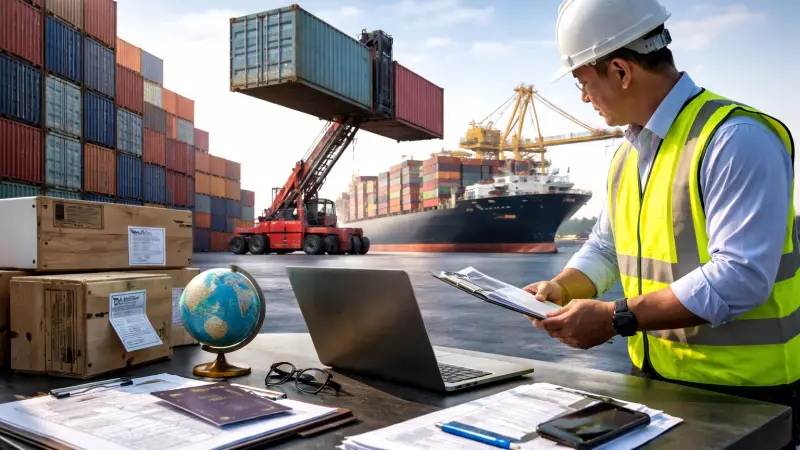
Imagine your shipment is held at the port of Rotterdam, duties have not been declared correctly, and your customer is waiting. This is not an uncommon scenario for UK businesses navigating the complex web of international freight regulations. Whether you are a seasoned logistics manager or a growing e-commerce business expanding into new markets, understanding how to ensure compliance with international freight regulations is not optional — it is essential to avoid costly delays, fines, and reputational damage.
International freight compliance refers to the process of adhering to the legal, procedural, and documentary requirements that govern the movement of goods across borders. These requirements vary by country, commodity type, mode of transport, and trade agreement. For UK businesses operating post-Brexit, this landscape has become considerably more complex, with new obligations at both UK and EU borders.
Understanding the Regulatory Framework for International Freight
Before you can achieve compliance, you must understand the regulatory environment in which your freight operates. International freight is governed by a layered system of rules originating from national governments, international bodies, and bilateral or multilateral trade agreements.
Key Governing Bodies and Agreements
Several organisations and frameworks shape the rules around international freight:
- World Customs Organisation (WCO): Sets global customs standards, including the Harmonised System (HS) for classifying goods.
- World Trade Organisation (WTO): Oversees international trade rules and disputes between member states.
- International Air Transport Association (IATA): Regulates the transport of goods by air, including dangerous goods.
- International Maritime Organisation (IMO): Governs sea freight, including container safety and dangerous cargo conventions.
- HM Revenue and Customs (HMRC): The UK authority responsible for customs declarations, duties, and import/export controls.
- UK Border Force: Enforces border controls on goods entering the UK.
Each of these bodies produces rules, conventions, and guidance that directly affect how goods must be classified, documented, and declared when crossing borders.
Post-Brexit Compliance Changes for UK Businesses
Since the UK's departure from the European Union, freight compliance has undergone significant changes. The UK is no longer part of the EU's single market or customs union, which means goods moving between the UK and EU member states are now subject to customs formalities that did not previously exist.
UK exporters must now submit export declarations to HMRC via the Customs Declaration Service (CDS). Similarly, goods arriving from the EU into the UK require import declarations. Businesses must also apply rules of origin to determine whether preferential tariff rates apply under the UK–EU Trade and Cooperation Agreement (TCA).
Failure to account for these changes has resulted in significant disruptions for businesses unprepared for the new requirements.
Getting Commodity Codes Right: Tariff Classification
One of the most fundamental — and frequently misunderstood — elements of freight compliance is the correct classification of goods using commodity codes.
What Are Commodity Codes?
Commodity codes, also known as HS codes or tariff codes, are standardised numerical codes used globally to classify goods for customs purposes. In the UK, these are based on the Harmonised System developed by the WCO and further extended for UK trade tariff purposes.
The correct commodity code determines:
- The rate of import duty payable
- Whether import VAT applies
- Whether a licence or permit is required
- Whether the goods are subject to sanctions or export controls
- Whether anti-dumping duties or other trade remedies apply
How to Find the Correct Commodity Code
The UK Trade Tariff, accessible via the HMRC website, allows businesses to look up commodity codes. However, classification is not always straightforward. Goods with multiple components or uses may fall under different headings depending on their primary function. When in doubt, businesses can apply for a Binding Tariff Information (BTI) ruling from HMRC, which provides legally binding classification advice.
Misclassification — even if unintentional — can result in underpayment of duties, delays at the border, and potential penalties.
Investing in professional classification support is a worthwhile consideration for businesses shipping complex or high-value goods.
Customs Documentation: What You Need and Why It Matters
Accurate and complete documentation is the backbone of international freight compliance. Every shipment crossing an international border requires a set of documents that declare what is being shipped, where it came from, its value, and its intended destination.
Essential Customs Documents
The specific documents required will vary depending on the destination country, the nature of the goods, and the mode of transport. However, the following are commonly required across most international freight transactions:
- Commercial Invoice: Details the seller, buyer, description of goods, value, and terms of sale. It is used to assess customs duties.
- Packing List: Describes the physical contents of each package, including weight, dimensions, and quantity.
- Bill of Lading (sea) or Airway Bill (air): A legal document between the shipper and carrier confirming the details of the shipment.
- Certificate of Origin: Declares the country in which the goods were manufactured, which may affect the applicable duty rate.
- Export Declaration (UK): Required for goods leaving the UK, submitted via the Customs Declaration Service.
- Import Declaration: Required by the destination country's customs authority upon arrival of goods.
- Dangerous Goods Declaration: Required when shipping hazardous materials, in accordance with IATA, IMO, or ADR regulations.
- Licences and Permits: Required for regulated goods such as pharmaceuticals, agricultural products, chemicals, and dual-use items.
Common Documentation Errors and How to Avoid Them
Even small errors in customs documentation can cause significant delays. Common mistakes include:
- Incorrect or vague descriptions of goods
- Mismatched values between the commercial invoice and customs declaration
- Missing or incorrect commodity codes
- Failure to include the correct country of origin
- Outdated or missing licences for regulated goods
To reduce errors, businesses should establish clear internal checklists, use customs management software, and work with experienced freight forwarders who can review documentation before submission.
Understanding Incoterms and Their Compliance Implications
Incoterms — International Commercial Terms — are a set of standardised trade terms published by the International Chamber of Commerce (ICC). They define the responsibilities of buyers and sellers in an international transaction, including who is responsible for shipping costs, insurance, and customs clearance.
Why Incoterms Matter for Compliance
Choosing the wrong Incoterm can create misunderstandings about who bears responsibility for customs formalities, duties, and risk at each stage of the journey. For example:
- EXW (Ex Works): The buyer is responsible for all freight, export clearance, and import duties. The seller's responsibility ends at their premises.
- DDP (Delivered Duty Paid): The seller is responsible for delivering goods to the buyer's location, including all duties and import clearance.
- DAP (Delivered at Place): The seller delivers to the named destination, but import duties and clearance are the buyer's responsibility.
- CIF (Cost, Insurance, and Freight): The seller pays for transport and insurance to the destination port, but import clearance is the buyer's responsibility.
It is essential to agree on Incoterms clearly in your contracts and ensure that all parties — including your freight forwarder and customer — understand the implications for compliance obligations.
Export Controls and Sanctions Compliance
Export controls are government-imposed restrictions on the shipment of specific goods, technologies, and services to particular destinations or end-users. Failing to comply with export controls can result in severe penalties, including substantial fines and criminal prosecution.
UK Export Controls
In the UK, export controls are administered by the Export Control Joint Unit (ECJU), which is part of the Department for Business and Trade. Export licences may be required for:
- Military goods and equipment
- Dual-use goods (items with both civil and military applications)
- Cryptographic technology
- Certain chemicals and biological materials
- Goods destined for sanctioned countries or individuals
Sanctions Screening
UK businesses must screen their customers, end-users, and destinations against the UK Sanctions List, maintained by the Office of Financial Sanctions Implementation (OFSI) and the Foreign, Commonwealth and Development Office (FCDO). Trading with sanctioned parties — even unknowingly — is a serious legal risk.
Sanctions screening should be carried out for every new customer and for existing customers on a periodic basis. Automated screening tools are widely available and significantly reduce the burden of manual checks.
Import Duties, VAT, and Customs Reliefs
Understanding the duty and tax implications of your imports is central to freight compliance and financial planning.
Import Duties
Import duties are charged on goods entering the UK from outside the country. The rate depends on the commodity code and the country of origin. The UK Global Tariff sets out the applicable rates for goods not covered by a preferential trade agreement.
Under the UK–EU Trade and Cooperation Agreement, goods meeting the relevant rules of origin may qualify for zero tariffs when imported from the EU. However, businesses must be able to demonstrate origin compliance through appropriate supplier declarations or movement certificates.
Import VAT
VAT is typically due on goods imported into the UK. Businesses registered for VAT can use Postponed VAT Accounting (PVA) to account for import VAT on their VAT return, rather than paying it upfront at the border. This can significantly improve cash flow for regular importers.
Customs Duty Reliefs
The UK offers several customs duty relief schemes that businesses should be aware of:
- Customs Warehousing: Allows imported goods to be stored without paying duties until they are released into free circulation.
- Inward Processing Relief (IPR): Enables businesses to import goods for processing or repair without paying duties, provided the processed goods are subsequently exported.
- Temporary Admission: Allows goods to be temporarily imported for purposes such as exhibitions or testing without full customs duties.
- Returned Goods Relief: Allows goods previously exported from the UK to be re-imported free of duty within three years.
Proper use of these reliefs can result in significant cost savings for businesses engaged in regular international trade.
Dangerous Goods Regulations
The transport of dangerous goods is subject to strict international regulations, regardless of the mode of transport used. These regulations exist to protect the safety of those handling, transporting, and receiving goods that pose chemical, biological, or physical risks.
Key Regulations by Transport Mode
- Sea Freight: The International Maritime Dangerous Goods (IMDG) Code, published by the IMO, governs the classification, packing, marking, and documentation of dangerous goods shipped by sea.
- Air Freight: The IATA Dangerous Goods Regulations (DGR) apply to the air transport of hazardous materials. These are among the most stringent regulations and are updated annually.
- Road Transport: The European Agreement concerning the International Carriage of Dangerous Goods by Road (ADR) applies to road transport across Europe and continues to be applicable in the UK.
- Rail Transport: The RID Regulations govern the transport of dangerous goods by rail internationally.
Any business shipping dangerous goods must ensure their staff are appropriately trained, goods are correctly classified and packaged, and all required documentation — including the Dangerous Goods Declaration — is in order before the goods are consigned.
Working with Freight Forwarders and Customs Brokers
For most businesses, working with a reputable freight forwarder or customs broker is one of the most effective ways to maintain compliance. These professionals are specialists in navigating the complexities of international trade regulations and can handle much of the compliance burden on your behalf.
What to Look for in a Compliance-Focused Freight Partner
When selecting a freight forwarder or customs broker, consider the following:
- Authorised Economic Operator (AEO) status: AEO certification, granted by HMRC, indicates that a business meets high standards of customs compliance, security, and financial solvency. Working with an AEO-certified partner can expedite customs clearance.
- Industry memberships: Look for membership of bodies such as the British International Freight Association (BIFA) or the Freight Transport Association (FTA), now known as Logistics UK.
- Experience with your specific goods and trade lanes: A forwarder with experience in your industry will be better placed to identify compliance risks specific to your products.
- Technology and transparency: Modern freight forwarders use digital platforms to provide real-time visibility of shipments and compliance documentation.
Your Responsibilities as an Importer or Exporter
It is important to note that even when you appoint a freight forwarder or customs broker, legal compliance responsibility remains with the importer or exporter. Customs declarations are made on your behalf, but you are ultimately accountable for their accuracy. Ensure you have robust internal processes for verifying the information provided to your freight partners.
Building an Internal Compliance Framework
Beyond outsourcing compliance functions, businesses that are serious about international freight should invest in building their own internal compliance capabilities.
Key Elements of a Freight Compliance Programme
- Written policies and procedures: Document your processes for classifying goods, completing customs declarations, screening customers, and managing licences.
- Training: Ensure relevant staff — including procurement, logistics, and finance teams — receive regular training on applicable regulations.
- Internal audits: Conduct periodic reviews of customs declarations and documentation to identify errors or process gaps.
- Record keeping: HMRC requires businesses to retain customs records for a minimum of four years. Digital record-keeping systems make this considerably more manageable.
- Incident management: Have a clear process for identifying, reporting, and correcting compliance failures when they occur.
Using Technology to Support Compliance
A growing number of technology solutions are available to support freight compliance. These include customs declaration software integrated with HMRC's Customs Declaration Service, tariff classification tools, trade agreement preference determination software, and sanctions screening platforms. Investing in appropriate technology can significantly reduce the risk of human error and improve efficiency.
Staying Updated: Regulatory Changes and Trade Developments
International freight regulations are not static. Trade agreements are renegotiated, sanctions regimes change, and commodity code classifications are updated annually. Staying ahead of regulatory changes is an ongoing commitment.
UK businesses should monitor updates from:
- HMRC's Trade Tariff and Customs Declaration Service updates
- The Export Control Joint Unit (ECJU)
- The Department for Business and Trade
- The World Customs Organisation
- Industry associations such as Logistics UK and BIFA
Subscribing to regulatory updates and participating in industry working groups can help businesses remain informed and responsive to change.
Compliance as a Business Advantage
Ensuring compliance with international freight regulations is not simply a legal obligation — it is a strategic advantage. Businesses that invest in robust compliance processes benefit from faster customs clearance, reduced risk of financial penalties, and greater confidence in their supply chains. In an increasingly regulated global trading environment, compliance capability is a mark of operational maturity and trustworthiness.
For UK businesses operating across borders, the complexity of freight regulations demands a proactive and structured approach — from correct tariff classification and documentation to export controls, sanctions screening, and duty relief management. Partnering with experienced freight professionals, investing in appropriate technology, and maintaining a strong internal compliance culture are the foundations of a resilient international logistics operation.
For businesses looking to strengthen their digital presence alongside their operational capabilities, platforms such as Local Page UK offer a practical starting point. As one of the growing online business directory UK platforms, Local Page UK helps companies improve their online visibility across business directories in the UK — making it easier for clients and partners to find reliable, compliance-focused freight and logistics businesses. Whether you are exploring UK business directory websites to list your services or searching for vetted suppliers, comprehensive business directories UK can be a useful resource for connecting businesses within the trade and logistics sector.
Questions Clients Commonly Ask
1. What happens if my business fails to comply with international freight regulations?
Non-compliance can result in a range of consequences, including shipment delays, seizure of goods, financial penalties, and in serious cases — particularly involving export controls or sanctions — criminal prosecution. HMRC and Border Force conduct regular audits and checks, and businesses found to be non-compliant may face additional scrutiny on future shipments.
2. Do small businesses need to comply with the same freight regulations as large corporations?
Yes. International freight regulations apply regardless of the size of your business. While larger businesses may have dedicated compliance teams, small and medium-sized enterprises are subject to the same legal requirements. Working with an experienced customs broker or freight forwarder is particularly valuable for smaller businesses that may lack in-house expertise.
3. What is an Authorised Economic Operator (AEO) and should my business apply?
An Authorised Economic Operator is a business that has been granted a trusted trader status by HMRC, recognising high standards of customs compliance and security. AEO status can facilitate faster customs clearance and is particularly beneficial for businesses engaged in frequent high-volume international trade. The application process involves a thorough assessment of your compliance procedures, financial solvency, and physical security standards.
4. How do rules of origin affect my duty liability?
Rules of origin determine the economic nationality of a product and are used to establish whether goods qualify for preferential tariff rates under a trade agreement.
Under the UK–EU Trade and Cooperation Agreement, for example, goods must meet specific origin criteria to benefit from zero tariffs. Failing to correctly apply rules of origin can result in underpayment of duties and subsequent penalties.
5. Is it possible to reclaim import duties that have been overpaid?
Yes. Businesses can apply to HMRC for a repayment of import duties that have been overpaid, provided they can demonstrate the overpayment and submit a claim within the relevant time limits — generally three years from the date of acceptance of the original customs declaration. Businesses should maintain thorough records of all customs entries to support any potential claims.
Disclaimer: The information provided in this article is for general informational and research purposes only. Company details, features, services, and market positions may change over time. Readers are advised to visit official company websites and conduct independent research before making any business decisions or purchasing services.
Most Searchable Keywords
Recent Blogs


Related Listings

Categories
- Accountants (295)
- Advertising Agencies (559)
- Architects (149)
- Automobiles (377)
- Beauty (300)
- Carpenters (146)
- Cleaning Services (387)
- Dentists (189)
- Driving (62)
- Electricians (215)
- Energy (8)
- Event Organiser (686)
- Finance (602)
- Guide (3372)
- Health (2207)
- Information technology (206)
- Legal Services (353)
- Logistics (6)
- Maintenance (65)
- Manufacturing (35)
Sponsored Listings in Travel Agencies


Related Blogs

How Much Do UK Actors Really Earn Full Indust...
Read this insightful article "How Much Do UK Actors Really Earn Full Industry Breakdown" to expand your knowledge!

Blue Light Card UK 2026 Check Eligibility and...
Read this insightful article "Blue Light Card UK 2026 Check Eligibility and Claim" to expand your knowledge!

BBC Radio 1 DJs Net Worth Ranking Revealed
Read this insightful article "BBC Radio 1 DJs Net Worth Ranking Revealed" to expand your knowledge!
Questions & Answers – Find What
You Need, Instantly!
How can I update my business listing?
Is it free to manage my business listing?
How long does it take for my updates to reflect?
Why is it important to keep my listing updated?
