
Step by Step Process of Freight Shipping From Pickup to Delivery
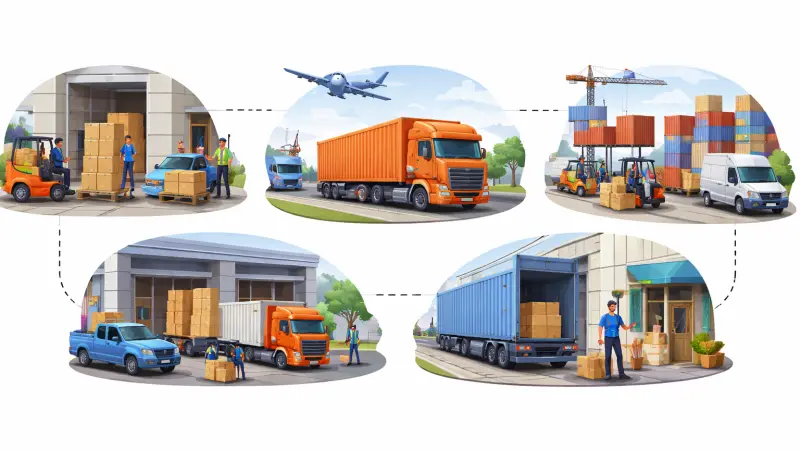
Every day, millions of tonnes of goods move across the United Kingdom and beyond — yet for many businesses and individuals arranging a shipment for the first time, the process can feel opaque and overwhelming. How does a pallet of goods collected from a warehouse in Birmingham end up at a distribution centre in Munich, or a residential address in Edinburgh, with relatively little fuss? The answer lies in a well-structured freight shipping process that, once understood, demystifies the entire journey from door to door.
This guide walks through every stage of freight shipping in the UK — from the initial booking and collection to transit, customs (where applicable), and final delivery. Whether you are a small business dispatching goods to customers or a logistics manager overseeing large commercial consignments, understanding this process helps you plan more effectively, avoid costly errors, and communicate clearly with carriers and freight forwarders.
What Is Freight Shipping?
Freight shipping refers to the commercial transportation of goods in bulk quantities, typically by road, rail, sea, or air. Unlike parcel delivery services designed for small packages, freight shipping is intended for larger, heavier, or more complex consignments that require specialist handling, vehicles, and documentation.
In the UK, freight shipping underpins the supply chain of almost every industry — from manufacturing and retail to agriculture and construction. It encompasses domestic haulage within Great Britain, cross-border services to Northern Ireland and the Republic of Ireland, and international freight forwarding to Europe and beyond.
Understanding how freight shipping works is not merely an operational concern. It has direct implications for delivery timelines, cost management, insurance coverage, and regulatory compliance — all of which matter to any business moving goods commercially.
Step 1: Booking and Freight Quotation
The freight shipping process begins before a single item is loaded onto a vehicle. The first step is obtaining a quotation and making a formal booking with a carrier or freight forwarder.
Providing Accurate Shipment Details
To receive an accurate quote, you must supply precise information about your consignment. This typically includes:
- Dimensions and weight — Length, width, height, and gross weight of each item or pallet
- Nature of goods — A clear description of the cargo, including any hazardous or restricted materials
- Collection and delivery addresses — Including postcodes and any access restrictions at either location
- Preferred collection and delivery dates
- Incoterms — For international shipments, the agreed commercial terms (e.g., EXW, DAP, DDP) that define responsibility for costs and risk at each stage
Providing inaccurate measurements or misclassifying goods is one of the most common causes of unexpected surcharges and delays in UK freight shipping. Carriers may re-weigh and re-measure consignments at depots, and any discrepancy can result in additional charges or, in the case of hazardous goods, refusal to carry.
Choosing the Right Service Type
Once details are provided, carriers will typically offer several service options:
- Full Load (FTL/FCL) — The entire vehicle or container is dedicated to your consignment. Faster and more direct, but more expensive.
- Groupage / Less Than Load (LTL/LCL) — Your goods share space with other consignments in a single vehicle or container. More economical but potentially slower.
- Express or priority freight — Guaranteed transit times with faster delivery windows, at a premium.
- Pallet network services — A popular option for UK domestic freight, where palletised goods are handled through a hub-and-spoke network of member carriers.
The right choice depends on your budget, timeline, and the nature of the goods being shipped. A freight forwarder can advise on the most appropriate and cost-effective solution for your specific requirements.
Step 2: Preparing the Shipment and Documentation
Once a booking is confirmed, the shipper — that is, the party sending the goods — must prepare the consignment and compile the necessary paperwork. Inadequate preparation at this stage is a leading cause of delays, damage claims, and failed deliveries.
Packaging and Labelling
Goods must be packaged to withstand the rigours of transit, including loading, unloading, stacking, and vibration. For pallet shipments, this means:
- Ensuring goods are stacked squarely and evenly on the pallet
- Wrapping securely with stretch film to prevent shifting
- Keeping the load within the pallet's footprint to prevent damage to adjacent consignments
- Labelling each pallet clearly with collection and delivery addresses, reference numbers, and handling instructions (e.g., "Fragile", "This Way Up")
For sea freight, goods shipped in containers must be secured against movement during transit across open water, where vessel motion can be considerable. Similarly, air freight consignments are subject to strict weight and packaging requirements imposed by airlines and aviation authorities.
Essential Shipping Documents
Documentation is a critical component of the freight shipping process, particularly for international consignments. Key documents include:
- Commercial Invoice — Describes the goods, their value, and the parties involved in the transaction. Required for customs clearance on international shipments.
- Packing List — A detailed itemisation of the contents of each package or pallet.
- Bill of Lading (BoL) — For sea freight, this is the primary contract of carriage and title document.
- Air Waybill (AWB) — The equivalent of a BoL for air freight.
- Consignment Note (CMR) — Used for international road freight within Europe under the CMR Convention.
- Customs Declaration — Required for all imports and exports crossing international borders, including post-Brexit trade between Great Britain and the EU.
- Commodity Codes (HS Codes) — International codes that classify goods for customs purposes and determine applicable duties and VAT.
Since the UK's departure from the European Union, customs documentation requirements for GB–EU trade have increased significantly. Errors or omissions in customs declarations can result in goods being held at the border, attracting storage fees, duties, and potentially significant delays.
Step 3: Collection and Loading
On the agreed collection date, the carrier's vehicle — whether a rigid lorry, curtainsider trailer, or specialist vehicle — will attend the collection address. This stage involves several important considerations.
Access and Handling Requirements
Carriers need to know in advance about any access restrictions at the collection point. A narrow industrial estate access road, a loading bay with a height restriction, or a residential address with limited turning space all affect which vehicle can be deployed. Failing to communicate these details at the booking stage may mean the driver cannot complete the collection, resulting in a failed attempt charge and a rescheduled visit.
Similarly, if the shipment requires specialist handling equipment — such as a tail-lift for goods at ground level without a loading dock, or a forklift — this must be requested at the time of booking. Most carriers offer these as additional services, but they are not automatically included in a standard quotation.
The Handover Process
When the driver arrives, they will inspect the consignment against the booking details and request the shipper to sign a consignment note or proof of collection. It is important to retain a copy of this document, as it serves as confirmation that the goods were collected in good condition and handed over to the carrier.
Any pre-existing damage to packaging or goods should be noted on the consignment note before signing. Failure to do so can complicate damage claims later in the process.
Step 4: Transit and Intermediate Handling
Once collected, the goods enter the transit phase. Depending on the service type and destination, this may involve a straightforward point-to-point journey or a more complex multi-leg operation involving intermediate depots, hubs, and transhipment points.
Domestic Road Freight in the UK
For domestic shipments within Great Britain, pallet network services are widely used. Goods are collected by a local member carrier, consolidated at a regional hub, trunked overnight to a national hub, and then redistributed to a local member carrier near the delivery address. This hub-and-spoke model enables next-day delivery across much of the UK at relatively low cost, though it involves multiple handling stages.
Full load services, by contrast, travel directly from collection point to delivery address without intermediate handling, reducing both transit time and the risk of damage.
International Freight in Transit
For international shipments, the transit phase is more complex. Road freight to Europe typically passes through one of several major Channel crossing points — most commonly via the Channel Tunnel rail freight service or ferry services from ports such as Dover, Folkestone, Harwich, or Hull. Since Brexit, all GB–EU freight must pass through customs on both sides of the border, which adds time and administrative requirements.
Sea freight involves considerably longer transit times — typically seven to thirty days depending on origin and destination — with goods loaded into standardised containers aboard cargo vessels. Air freight offers the fastest transit, often one to three days internationally, but at significantly higher cost and with weight and size restrictions.
Tracking and Visibility
Most UK freight carriers now offer shipment tracking via online portals or automated notifications. This allows shippers and recipients to monitor the progress of a consignment in real time and receive estimated delivery windows. For time-sensitive or high-value shipments, proactive tracking can help identify potential issues early and allow for corrective action.
Step 5: Customs Clearance (International Shipments)
For any consignment crossing an international border — whether between the UK and the EU, or the UK and further afield — customs clearance is a mandatory stage of the freight shipping process.
This is one of the most administratively complex aspects of international logistics and one where mistakes carry the greatest consequences.
Import and Export Declarations
In the UK, customs declarations are submitted electronically through HMRC's Customs Declaration Service (CDS). These declarations require detailed information about the goods, their value, their origin, and the applicable commodity codes. Depending on the nature and value of the goods, import duties, anti-dumping duties, and VAT may be applicable.
Many businesses work with a licensed customs broker or freight forwarder to handle declarations on their behalf. This is advisable for companies without dedicated customs expertise, as the penalties for non-compliance — including seizure of goods, fines, and delayed clearance — can be severe.
Physical Inspection
Not all consignments are physically inspected at customs, but border authorities retain the right to examine any shipment. Inspection may be triggered by risk profiling, random selection, or discrepancies in documentation. A physical inspection can add one to several days to the transit time, and the costs of inspection — including re-packing and storage — are typically borne by the importer.
Certain categories of goods, including food products, plants, animals, and goods of animal origin, are subject to mandatory checks at designated Border Control Posts (BCPs) in addition to customs clearance. Importers of such goods must give advance notice and ensure appropriate health certificates are in order.
Step 6: Final Mile Delivery
The final stage of the freight shipping process is delivery to the recipient's premises. This is often referred to as "last mile" or "final mile" delivery — a term that reflects both its literal position in the supply chain and the logistical challenges it frequently presents.
Delivery Notifications and Access
Carriers will typically contact the recipient in advance to confirm the delivery date and, in many cases, provide an estimated time window. It is important for the recipient to ensure that appropriate personnel are available to receive the goods and that any access requirements — such as a loading bay, forklift, or security clearance — have been arranged.
For deliveries to residential addresses — which are increasingly common as e-commerce freight volumes grow — carriers may offer a kerbside delivery only, meaning they will not carry goods beyond the threshold. This should be clarified at the booking stage if room-of-choice or white-glove delivery is required.
Proof of Delivery
Upon delivery, the driver will present a Proof of Delivery (POD) document for the recipient to sign. The POD confirms that the goods have been received and, importantly, records the condition in which they were delivered. If any items are damaged or missing, this must be noted clearly on the POD at the time of signing. A signed POD without exceptions is generally taken to mean the consignment was received in good order, which can make it significantly harder to pursue a damage claim after the fact.
Most carriers now use electronic POD systems — either a handheld device or a mobile app — which capture a signature digitally and may include a photograph of the delivered consignment. This provides an auditable record that both parties can access.
Step 7: Post-Delivery Administration
Once delivery is complete, the administrative side of the freight shipping process concludes with invoice reconciliation, claims processing (where applicable), and record-keeping.
Invoice Checking
Freight invoices should be checked carefully against the original quotation and booking confirmation. Common causes of invoice discrepancies include dimensional weight charges (where the volumetric weight of a consignment exceeds its actual weight), surcharges for fuel,
remote delivery areas, or failed delivery attempts, and re-weighing or re-measuring adjustments. Disputes should be raised promptly with the carrier, as most have defined timeframes within which queries must be submitted.
Claims for Loss or Damage
If goods are lost or damaged during transit, a formal claim must be submitted to the carrier within the timeframe specified in their terms and conditions — typically between seven and twenty-eight days depending on the carrier and the type of claim. Claims must be supported by evidence, including the original POD (with exceptions noted), photographs of the damage, a copy of the commercial invoice confirming the value of the goods, and a repair or replacement cost assessment where applicable.
Carriers' liability is generally limited by the terms of the carriage contract and, for international shipments, by international conventions such as CMR (road), Warsaw/Montreal (air), and Hague-Visby Rules (sea). These limits may be significantly lower than the commercial value of the goods, which is why cargo insurance — arranged separately from the standard liability included in freight rates — is strongly recommended for high-value consignments.
Key Considerations for UK Businesses
Several factors make the UK freight shipping landscape distinctive, particularly in the post-Brexit regulatory environment.
Rules of Origin
Under the UK–EU Trade and Cooperation Agreement, goods traded between the UK and EU may benefit from zero tariffs — but only if they meet specific Rules of Origin requirements. Goods that do not meet these requirements are subject to full customs duties. Understanding Rules of Origin is therefore essential for businesses that source materials or components internationally and export finished goods to the EU.
VAT on Imports
Since January 2021, VAT is due on all goods imported into the UK, regardless of their value. UK VAT-registered businesses can typically recover import VAT through their VAT return, but it must be accounted for correctly. The Postponed VAT Accounting (PVA) scheme allows VAT-registered importers to account for import VAT on their VAT return rather than paying it at the point of importation, improving cash flow.
EORI Numbers
Any UK business that imports or exports goods — including trade with the EU — requires an Economic Operator Registration and Identification (EORI) number. This is issued by HMRC and must be quoted on all customs declarations. Businesses that do not have an EORI number cannot legally import or export goods and will experience significant delays at customs.
How to Choose a Freight Carrier or Forwarder
The quality and reliability of your freight shipping experience depends heavily on the carrier or freight forwarder you work with. When evaluating providers, consider the following:
- Coverage and network — Does the carrier serve your required origin and destination, and do they have a strong network of partners for international services?
- Track record and reviews — Look for independently verified reviews and case studies from businesses with similar shipping profiles to your own.
- Technology and visibility — Does the provider offer real-time tracking, electronic documentation, and online booking?
- Customer service — Can you reach a knowledgeable contact quickly when issues arise? Responsiveness is particularly important in time-sensitive situations.
- Insurance and liability — Understand the carrier's liability limits and whether additional cargo insurance is available through them or needs to be arranged separately.
- Compliance and accreditations — Look for membership of recognised industry bodies such as the British International Freight Association (BIFA) or the Freight Transport Association (now Logistics UK).
Many businesses find it useful to consult UK business directories when searching for reputable freight and logistics providers in their area. Platforms that list verified businesses across sectors — including transport and logistics — can simplify the process of identifying and comparing local and national carriers, particularly for businesses that are new to commercial freight.
The freight shipping process, while multi-faceted, follows a logical and well-established sequence of steps — from booking and collection through transit, customs clearance, and final delivery. For UK businesses, a solid understanding of this process enables better planning, more effective communication with logistics partners, and a reduced risk of costly errors or delays.
As the UK freight and logistics sector continues to evolve — shaped by changing trade regulations, advances in tracking technology, and growing demand for sustainable transport options — staying informed about best practice is an ongoing responsibility for any business that relies on moving goods commercially. For those looking to connect with freight and logistics providers locally, platforms that list businesses across the UK business directory sites ecosystem can be a valuable starting point for identifying trusted carriers and forwarders operating in your region. A comprehensive business directory of UK logistics providers can help businesses of all sizes find the right partners for their shipping needs and improve their supply chain visibility with ease.
Questions Clients Commonly Ask
What is the difference between a freight forwarder and a carrier?
A carrier is the company that physically transports the goods — operating the lorries, vessels, or aircraft. A freight forwarder is an intermediary that arranges transportation on behalf of the shipper, typically using a network of carriers. Freight forwarders add value through their expertise in routing, documentation, customs clearance, and multi-modal logistics. Many businesses use a freight forwarder rather than dealing directly with carriers, particularly for complex or international shipments.
How long does freight shipping take within the UK?
For domestic road freight within Great Britain, transit times typically range from next-day delivery (for standard pallet network services) to two to three working days for more remote destinations. Full load services from a single collection point to a single delivery address are generally faster, as they do not involve intermediate handling at depots. Express and timed services are available at a premium for time-critical consignments.
What documents do I need to ship goods from the UK to the EU?
For GB–EU freight post-Brexit, you will typically require: a commercial invoice, a packing list, an export declaration (submitted to HMRC via the Customs Declaration Service), and an import declaration in the destination EU country. Depending on the goods, you may also need a EUR.1 movement certificate or a supplier's declaration to claim preferential tariff rates under the UK–EU Trade and Cooperation Agreement. Working with a licensed customs broker is strongly advisable if you are new to EU trade.
Is cargo insurance included in freight shipping costs?
Standard freight rates include a level of carrier liability, but this is almost always limited and may be significantly less than the commercial value of your goods. For example, under CMR for international road freight, carrier liability is limited to 8.33
Special Drawing Rights per kilogram of gross weight of the goods lost or damaged. For high-value consignments, separately arranged cargo insurance — which covers the full commercial value of the goods — is strongly recommended.
What should I do if my freight is delayed or damaged?
If your shipment is delayed, contact the carrier or freight forwarder immediately and request an update on the consignment's location and estimated delivery time. If goods are delivered in a damaged condition, note the damage clearly on the Proof of Delivery before signing, photograph the damage thoroughly, and notify the carrier in writing as soon as possible. Submit a formal claim within the timeframe specified in the carrier's terms and conditions, supported by all relevant documentation.
Disclaimer: The information provided in this article is for general informational and research purposes only. Company details, features, services, and market positions may change over time. Readers are advised to visit official company websites and conduct independent research before making any business decisions or purchasing services.
Most Searchable Keywords
Recent Blogs


Related Listings


Categories
- Accountants (295)
- Advertising Agencies (559)
- Architects (149)
- Automobiles (377)
- Beauty (300)
- Carpenters (146)
- Cleaning Services (387)
- Dentists (189)
- Driving (62)
- Education (1)
- Electricians (215)
- Energy (8)
- Event Organiser (689)
- Finance (602)
- Guide (3492)
- Health (2207)
- Information technology (207)
- Legal Services (361)
- Logistics (6)
- Maintenance (65)
Sponsored Listings in Plumbers

Related Blogs

Creamfields Daresbury: Impact on Local Reside...
Read this insightful article "Creamfields Daresbury: Impact on Local Residents" to expand your knowledge!

UK High Street Businesses in 2026-27: Which S...
Read this insightful article "UK High Street Businesses in 2026-27: Which Sectors Are Growing?" to expand your knowledge!

Why Complete Business Listings Matter More Th...
Read this insightful article "Why Complete Business Listings Matter More Than You Think" to expand your knowledge!
Questions & Answers – Find What You Need, Instantly!
Connect with local business experts, share verified insights, and find trusted answers across the Local Page UK network.
Ask Community
Ask questions to the Local Page UK community
Share Knowledge
Share your knowledge to help out others
Find Solutions
Find answers or offer instant solutions
Some of the most popular fantasy TV shows include "Game of Thrones," known for its epic battles and political intrigue, "The Witcher," which features monster hunting and magic, and "Stranger Things," blending supernatural elements with 1980s nostalgia. Other notable mentions are "His Dark Materials," "Shadow and Bone," and "The Mandalorian," each offering unique worlds and captivating storytelling that have garnered large fan bases.
When seeking bathroom renovation providers that handle both plumbing and tiling, it's advisable to look for licensed contractors who specialize in comprehensive bathroom remodels. Companies such as Home Depot, Lowe's, and Bath Fitter offer these services, often providing a seamless experience by managing all aspects of the renovation process. Additionally, local contractors with positive reviews in platforms like Angie's List or Houzz may also offer tailored solutions for your bathroom needs.
Absolutely, there are several distributors that supply crash mats and soft play equipment to gymnastics clubs in and around Birmingham. National companies like Gymnova, S & G (Spieth Gymnastics), and Jaques of London offer a wide range of crash mats, foam pits, and soft play pieces, and they typically deliver to the Birmingham area. For more local options, you might try The Gym Equipment Company, which has a showroom in the West Midlands, or check out smaller specialist suppliers like Playtime UK. Many of these distributors cater specifically to clubs, offering high-density foam mats that meet safety standards. I'd recommend reaching out to a few to compare pricing, delivery times, and whether they offer custom sizes or installation services. It's also worth checking if any of them have a physical showroom near Birmingham so you can test the equipment before buying. Happy tumbling!
For professionals seeking a reliable sanitaryware supplier in Manchester with trade account facilities, several established merchants combine extensive product ranges, competitive pricing, and dedicated trade support. The most reputable option is Graham Plumbers Merchant, which operates multiple branches across Manchester, including Salford Quays and Oldham. They offer a dedicated trade account service with preferential pricing, priority delivery scheduling, and access to a vast inventory of leading sanitaryware brands such as Villeroy & Boch, Duravit, Ideal Standard, and Roca. Their trade accounts typically include net 30-day payment terms, online account management, and a tailored project quotation system. Similarly, City Plumbing Supplies has several Manchester-based depots (such as Ashton-under-Lyne and Stockport) that cater specifically to trade customers, providing a rapid order-and-collect service, trade-only promotions, and a loyalty programme offering rebates on repeat purchases. Their product range covers everything from basins and WCs to complete bathroom suites and brassware, with in-house technical advisors available for specification support. Another key player is Plumb Center, part of the Wolseley Group, which offers trade accounts with bespoke pricing structures, direct-to-site deliveries within the Greater Manchester area, and access to over 10,000 lines of sanitaryware, including premium brands like Grohe and Hansgrohe. Their trade portal allows for real-time stock checking and order history tracking, facilitating efficient project management. For those seeking a more specialist or high-end option, Bathroom Spares in Manchester provides trade accounts with a focus on hard-to-find sanitaryware and discontinued ranges, which can be invaluable for refurbishment projects. Additionally, independent merchants such as M&B Plumbase in Trafford Park offer flexible trade terms, personalised service, and competitive pricing on both mainstream and luxury sanitaryware. When evaluating suppliers, trade customers should consider factors beyond price: reliability of stock availability, delivery timescales within Manchester’s often congested zones, clarity of returns policies, and the quality of after-sales support for warranty claims. It is advisable to request a trade account application from at least two to three suppliers to compare discounts, minimum order values, and payment terms. Many suppliers also offer showroom access for trade clients, allowing you to inspect finishes and dimensions before committing to large orders. For ongoing projects, establishing a relationship with a single supplier who offers consolidated invoicing and dedicated account management can streamline procurement. Ultimately, the most reliable supplier for your trade account in Manchester will be one that aligns with your volume requirements, preferred brands, and service expectations, so a site visit to their local branch and a discussion about your specific trade needs is highly recommended before committing to an account.
People in Leeds are loving their local florists—customers often mention gorgeous, fresh arrangements and super friendly service. Many rave about reliable same-day delivery and creative wedding bouquets. A few note pricing can vary, but overall, the buzz is all about quality and that personal touch making every order feel special.
Common problems for commercial gardening in Bristol include weed overgrowth, soil degradation, pest infestations, and irrigation malfunctions. Additionally, managing seasonal transitions, adhering to sustainability regulations, and maintaining consistent aesthetics pose significant challenges. Expert services mitigate these via structured maintenance, integrated pest management, and soil analysis to ensure long-term landscape health.