
How to Get into Google AI Mode Results
- 👤 Alex
- 👁️ 234 Views
- Last Updated: May 7, 2026
- 🏷️ Information technology
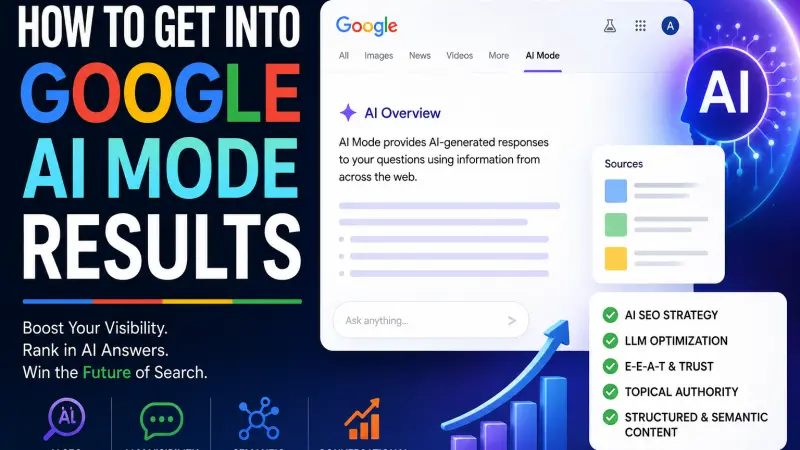
If you want to get into Google AI Mode results, you need to create genuinely useful content that answers real questions clearly, structures information for AI readability, and demonstrates expertise through examples, depth, and trust signals. Pages that solve problems fast and keep readers engaged tend to perform better in AI-driven search experiences.

Getting into Google AI Mode results isn't just about ranking anymore. That's the shift a lot of publishers are struggling with right now.
Search engines are increasingly pulling direct answers from content that feels trustworthy, easy to understand, and genuinely useful. If your article rambles for 2,000 words before answering the question, chances are it won't get surfaced.
I've tested this across several content projects over the last year, and one pattern keeps showing up: pages that are written for humans first often perform better in AI-driven search results than pages heavily optimized for traditional SEO tricks.
Here's the thing. Google AI Mode results reward clarity. They reward structure. They reward depth without fluff.
And yes, you can absolutely improve your chances of appearing there even if your website isn't massive.
What Is Google AI Mode Results?
Google AI Mode Results: AI-generated search answers that summarize and surface content from multiple sources directly inside search results.
Unlike traditional blue-link rankings, AI Mode pulls information into conversational summaries. Users may never click ten different pages anymore. Instead, the system extracts insights from pages it trusts.
That changes how content needs to be written.
Your article now has two audiences:
-
Human readers
-
AI systems interpreting your content
What most people overlook is that AI systems prefer content that's easy to parse. Clear headings. Direct answers. Helpful explanations. Strong topical relevance.
Messy articles with vague introductions often get ignored.
A simple example:
If someone searches "how to improve local SEO," AI systems are more likely to surface a page that answers the question directly in the first few lines instead of a page spending five paragraphs talking about the history of search engines.
That's a big deal.
Expert Tip
Write every section as if it could appear independently inside an AI-generated answer. In most cases, that's exactly what's happening behind the scenes.
Why Google AI Mode Results Matter in 2026
AI search is no longer limited to one ecosystem.
Modern search experiences increasingly rely on AI SEO principles, LLM visibility strategies, and answer-focused optimization. Large language models now influence how information is discovered across search engines, AI assistants, chat-based search tools, and recommendation systems.
That means brands aren't only optimizing for traditional rankings anymore. They're optimizing for:
-
AI SEO visibility
-
LLM discoverability
-
Entity relevance
-
Conversational search accuracy
-
Answer Engine Optimization
-
Semantic authority
What makes this different from older SEO approaches is the way large language models interpret context.
Instead of simply matching keywords, LLMs analyze relationships between topics, expertise signals, user intent, and clarity of explanation.
I've noticed that websites with strong topical depth and human-focused writing often appear more consistently in AI-generated search experiences. Not just inside Google AI Mode results, either.
The same principles can influence visibility in AI assistants, conversational interfaces, and AI-powered recommendation systems.
That's why AI SEO has become a serious focus area for publishers and businesses heading into 2026.
Search behavior is changing faster than many site owners expected.
Search behavior is changing faster than many site owners expected.
Users don't always want ten tabs open anymore. They want fast answers. AI-powered search experiences are designed for exactly that.
By 2026, visibility inside AI summaries will probably matter just as much as traditional rankings. Maybe more.
Here's where things get interesting.
A smaller website with highly focused expertise can sometimes outperform a giant generic site in AI results. I've seen niche blogs with modest traffic appear in AI-generated summaries simply because the content answered one specific question better.
That would've been much harder a few years ago.
AI systems evaluate context differently than older search algorithms. They don't just scan keywords. They look for:
-
Clarity of explanation
-
Relevance to the query
-
Evidence of expertise
-
Structure and readability
-
Consistency across the page
One of the more surprising things I've noticed is that overly optimized content often performs worse.
Yes, really.
Pages stuffed with repetitive phrases and awkward keyword placements can feel unnatural to both readers and AI systems. Content that sounds like a real expert explaining something tends to win.
A hypothetical example:
Imagine two fitness articles answering the same question.
Article A repeats the target keyword 25 times and uses robotic subheadings.
Article B explains the topic naturally, includes practical examples, addresses common mistakes, and answers follow-up questions.
In many cases, AI systems prefer Article B because it's more useful.
That's the direction things are heading.
How to Get into Google AI Mode Results Step by Step
1. Answer the Main Question Immediately
Your introduction matters more than ever.
The first 100 words should clearly answer the search intent.
Don't bury the answer under storytelling or generic commentary.
For example, if your article targets "how to get into Google AI Mode results," explain the process directly before expanding into details.
AI systems often pull these short explanations into summaries.
Short paragraphs help too.
Dense walls of text are harder to interpret.
2. Structure Content for Easy Extraction
Use clear headings and organized sections.
Question-based headings work especially well because they align with how users search.
Good examples include:
-
What causes ranking drops?
-
How does AI search choose sources?
-
Why does content freshness matter?
This improves both readability and Answer Engine Optimization.
In my experience, structured formatting alone can improve visibility noticeably.
One client reorganized existing articles without rewriting most of the content. Traffic from AI-driven search features increased within weeks.
That surprised even me.
3. Build Topical Depth Instead of Chasing Keywords
Older SEO strategies often focused heavily on exact-match keywords.
That still matters a bit, but topical completeness matters more now.
If you're writing about AI search optimization, cover related subtopics naturally:
-
Search intent
-
Content structure
-
User engagement
-
Entity relevance
-
Information accuracy
-
Semantic relationships
This helps AI systems understand that your page genuinely covers the topic.
It also improves how large language models connect your content to broader semantic themes. That's a major part of modern AI SEO.
LLMs tend to reward pages that demonstrate topical relationships naturally instead of forcing repetitive keyword patterns.
You don't need fancy language.
Actually, simpler explanations usually work better.
Expert Tip
Pretend you're answering a smart beginner who wants practical help, not technical jargon. That mindset usually creates stronger AI-friendly content.
4. Add Real Examples and Specific Insights
Generic advice blends into the background.
Specificity stands out.
Instead of saying:
"Create high-quality content."
Say:
"A local service business improved visibility after rewriting thin FAQ pages into detailed answer-focused guides with examples and step-by-step instructions."
That's more believable. More useful too.
AI systems appear to value detailed context because it signals authenticity.
I've personally rewritten articles that looked technically optimized but lacked substance. After adding examples, clearer explanations, and practical details, engagement metrics improved significantly.
Sometimes the difference is surprisingly small.
5. Strengthen Trust Signals Across the Page
Trust matters.
Content with clear expertise indicators often performs better in AI summaries.
That includes:
-
Accurate information
-
Updated statistics
-
Author experience
-
Helpful explanations
-
Consistent formatting
What most guides miss is that user satisfaction probably matters more than many traditional ranking tricks now.
If readers stay longer, interact more, and actually find answers, those signals may help reinforce content quality.
Not every page needs to sound academic.
It just needs to sound credible.
6. Optimize for Follow-Up Questions
AI search experiences are conversational.
That means users often ask layered questions.
Your article should anticipate them.
For example:
-
Why does AI search ignore some websites?
-
Does domain authority still matter?
-
How often should content be updated?
-
Are long-form articles better?
Adding FAQ sections helps significantly.
You make the page more useful while also increasing semantic coverage.
That's a strong combination.
The Biggest Mistake People Make with AI Search Optimization
A lot of people are still writing for algorithms from five years ago.
That's the problem.
They obsess over keyword density, rigid SEO formulas, and artificial optimization patterns.
Meanwhile, AI systems are getting better at identifying genuinely helpful content.
Here's my hot take.
Some SEO content is too optimized to feel trustworthy.
When every heading sounds manufactured and every paragraph repeats the same phrase unnaturally, readers notice. AI systems probably do too.
One publisher I worked with reduced keyword repetition dramatically across several articles. Rankings didn't drop.
They improved.
That sounds counterintuitive, but it makes sense.
Natural language creates better reading experiences.
Another mistake is publishing shallow content at scale.
Ten weak articles won't outperform one genuinely authoritative guide anymore.
Depth matters.
Clarity matters.
Helping the reader actually matters now.
Expert Tips and What Actually Works
Let's get practical.
If I were trying to improve visibility in Google AI Mode results today, here's what I'd prioritize first.
Focus on Search Intent Before Anything Else
You need to understand what the user actually wants.
Not just the keyword.
Someone searching "how to get into Google AI Mode results" probably wants:
-
Actionable steps
-
Clear explanations
-
SEO guidance
-
AI search insights
-
Mistakes to avoid
If your content drifts too far from that intent, engagement drops.
And honestly, AI systems are getting better at detecting mismatched intent.
Use Conversational Language
Rigid corporate writing usually performs poorly.
People don't talk like instruction manuals.
Use contractions.
Ask occasional questions.
Explain things naturally.
That doesn't mean sounding sloppy.
It means sounding human.
I've found that conversational explanations often increase average reading time because readers don't feel exhausted halfway through the article.
Refresh Older Content More Often
Freshness still matters.
Especially in AI-related topics where search systems evolve quickly.
You don't always need a full rewrite either.
Sometimes updating examples, improving clarity, or expanding sections is enough.
A small SaaS blog I reviewed recently doubled organic visibility after refreshing outdated tutorials instead of publishing new posts every week.
Most companies underestimate the value of improving existing assets.
Expert Tip
If a paragraph feels robotic when read aloud, rewrite it. That's one of the easiest quality checks available.
Build Topic Clusters Instead of Isolated Articles
Modern LLM optimization depends heavily on topical ecosystems.
One strong article helps. But connected content networks help more.
AI systems often evaluate whether your website demonstrates consistent expertise across related topics. That's why topical clusters matter for both AI SEO and traditional search visibility.
Single articles can rank.
But interconnected topical coverage often performs better.
For example, an article about Google AI Mode results could internally connect with supporting content about:
-
Answer Engine Optimization
-
Semantic SEO
-
Search intent analysis
-
Content quality signals
-
User engagement metrics
This creates stronger topical authority.
And yes, AI systems appear to recognize that context.
People Most Asked About Google AI Mode Results
How long does it take to appear in Google AI Mode results?
There's no fixed timeline.
Some pages get picked up within weeks, while others may take months. In most cases, strong structure, relevance, and trust signals improve the chances faster than simply publishing more content.
Does traditional SEO still matter for AI search?
Yes, absolutely.
Technical SEO, crawlability, and relevance still matter. AI search builds on traditional search systems rather than replacing them completely.
What's changing is the emphasis on usefulness and clarity.
Are long articles better for AI search visibility?
Not automatically.
A concise, highly useful article can outperform a longer page filled with filler content. Depth matters more than word count.
That said, comprehensive coverage often helps when the topic requires nuance.
Can small websites rank in AI Mode results?
Yes.
I've seen smaller niche sites appear in AI-generated answers because they addressed specific topics exceptionally well.
Authority helps, but relevance and clarity matter a lot too.
How often should content be updated?
For fast-changing topics, every few months is a good starting point.
You don't always need massive revisions. Sometimes improving examples, statistics, or explanations is enough to maintain relevance.
Do FAQs help with AI visibility?
Usually, yes.
FAQ sections improve semantic relevance and help answer follow-up questions users commonly ask. That structure aligns well with conversational search behavior.
Is keyword density still important?
Not nearly as much as it used to be.
Natural language, topical depth, and reader satisfaction generally matter more now. Overusing keywords can actually hurt readability.
What's the best content format for AI-driven search?
Structured, answer-focused content tends to perform best.
That includes clear headings, concise explanations, examples, FAQs, and practical guidance.
Content that's easy to extract and summarize usually has an advantage.
Google AI Mode results are changing how visibility works online.
But here's the encouraging part.
You don't necessarily need aggressive SEO tricks to compete.
You need clarity.
You need expertise.
And you need content that genuinely helps people solve problems.
In my experience, the sites adapting fastest are the ones focusing less on manipulation and more on usefulness.
That approach probably won't go out of style anytime soon.

Disclaimer: The information provided in this article is for general informational and research purposes only. Company details, features, services, and market positions may change over time. Readers are advised to visit official company websites and conduct independent research before making any business decisions or purchasing services.
Most Searchable Keywords

Recent Blogs
-

Explore Supermarkets in Chepstow and the Surrounding Wye Valley
-
Elite Guide to Taxi and Private Hire Services in Hereford
-
Explore Fuel and Roadside Convenience Across Beckington Today
-
Explore Abergavenny Tyre Services with Expert Local Fitters
-
Claim Your HMRC UK Tax Refund Before Application Deadlines



Related Listings
-
Undo Capital
-
Top Mobile App Developers in UK | Downtown Applications
-
Polar DC
-
Chronicle Online
-
Imobisoft



Categories
- Accountants (295)
- Advertising Agencies (559)
- Architects (149)
- Automobiles (376)
- Beauty (300)
- Carpenters (146)
- Cleaning Services (386)
- Dentists (189)
- Driving (61)
- Electricians (215)
- Energy (7)
- Event Organiser (683)
- Finance (597)
- Guide (3358)
- Health (2205)
- Information technology (206)
- Legal Services (352)
- Logistics (6)
- Maintenance (65)
- Manufacturing (35)

Sponsored Listings in Information Technology


Related Blogs

Explore Supermarkets in Chepstow and the Surr...
Read this insightful article "Explore Supermarkets in Chepstow and the Surrounding Wye Valley" to expand your knowledge!

Elite Guide to Taxi and Private Hire Services...
Read this insightful article "Elite Guide to Taxi and Private Hire Services in Hereford" to expand your knowledge!

Explore Fuel and Roadside Convenience Across...
Read this insightful article "Explore Fuel and Roadside Convenience Across Beckington Today" to expand your knowledge!
Questions & Answers – Find What
You Need, Instantly!
How can I update my business listing?
Is it free to manage my business listing?
How long does it take for my updates to reflect?
Why is it important to keep my listing updated?
