
How to Handle Emergency Cleanup After a Disaster
- 👤 Alex
- 👁️ 92 Views
- Last Updated: April 9, 2026
- 🏷️ Cleaning Services
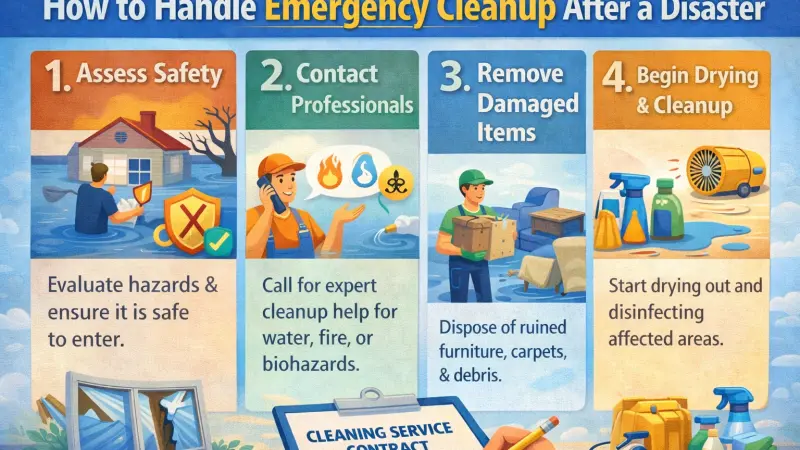
A disaster, whether it is a flash flood, a kitchen fire, or a structural failure caused by a severe storm, is a traumatic and overwhelming event. In the immediate aftermath, the sheer scale of the damage can leave homeowners feeling paralyzed. However, the first 24 to 48 hours are the most critical for mitigating further loss. Effective emergency cleanup is not just about restoring the aesthetic appeal of your home; it is a race against time to prevent secondary issues like black mold, structural rot, and permanent smoke contamination.

Navigating this process requires a calm head and a systematic approach. While your instinct may be to dive into the debris, safety must remain the absolute priority. From managing utility shutdowns to documenting every inch of the damage for insurance purposes, the steps you take today will dictate the speed and success of your recovery. This guide provides a detailed, step-by-step roadmap to handling the aftermath of a disaster, ensuring you protect your health, your property, and your financial future.
Safety First: Assessing the Environment
Before you set foot inside a damaged structure, you must ensure that the building is stable. Disasters often create "invisible" hazards that can be life-threatening if ignored.
Structural Integrity and Utility Hazards
-
Electrical Safety: Never enter a flooded basement or room if the power is still on. Water and electricity are a lethal combination. If you can safely reach the main breaker without standing in water, turn it off. Otherwise, wait for an electrician or utility worker.
-
Gas Leaks: If you smell gas or hear a hissing sound, leave the premises immediately and call your gas provider. Do not flip any light switches or use a phone inside the building, as a spark could trigger an explosion.
-
Structural Damage: Look for sagging ceilings, cracked foundations, or leaning walls. If the building’s "bones" appear compromised, do not enter.
Personal Protective Equipment (PPE)
Cleanup is a hazardous task. You should never attempt it without:
-
N95 Masks: Essential for protection against mold spores and fine soot particles.
-
Heavy-Duty Gloves: To protect against sharp debris and chemical contaminants.
-
Rubber Boots: Specifically for water damage to prevent contact with "black water" (sewage-contaminated water).
The Documentation Phase: The Key to Insurance Success
One of the most common mistakes homeowners make is starting the cleanup before documenting the damage. Your insurance adjuster needs a "frozen in time" view of the disaster to process your claim fairly.
Photographic Evidence
Take hundreds of photos and videos. Capture wide-angle shots of entire rooms and close-up shots of specific damage to appliances, flooring, and personal belongings. Do not throw anything away—even ruined furniture—until your adjuster has given you the green light to do so.
Creating a Loss Inventory
Start a spreadsheet listing every item that was damaged or destroyed. Include the approximate age of the item, the original purchase price (if known), and its current condition. This documentation acts as the foundation for your financial recovery.
Water Damage Cleanup: Mitigating Moisture
Water is a silent destroyer. Within 24 hours, moisture can begin to delaminate drywall and warp hardwood floors. Within 48 hours, mold colonies can become established.
1. Water Extraction
If the water is shallow and clean (e.g., from a burst pipe), you can use wet/dry vacuums to remove it. If the water is deep or contaminated (e.g., floodwater or sewage), specialized high-volume pumps are required.
2. The Drying Process
Removing the standing water is only the first step. You must also address the moisture trapped in the air and inside the walls.
-
Air Movers: Industrial fans designed to move massive volumes of air across surfaces.
-
Dehumidifiers: Essential for pulling moisture out of the air to prevent mold growth on ceilings and behind cabinets.
3. Sanitization
Floodwater often carries bacteria and pathogens. All hard surfaces must be scrubbed with a professional-grade disinfectant. Porous materials like carpets, padding, and upholstered furniture that have been soaked in contaminated water usually cannot be salvaged and must be discarded.
Fire and Smoke Restoration: Dealing with Soot
Fire damage is unique because the "cleanup" can often cause more damage if handled incorrectly. Soot is acidic and can permanently etch surfaces like glass, metal, and plastic if left to sit.
Addressing Smoke Odor
Smoke odor is not just a smell; it is caused by microscopic particles trapped in the pores of your home's structure.
-
Thermal Fogging: A professional technique that uses a chemical fog to penetrate surfaces and neutralize odors at a molecular level.
-
Ozone Treatment: Using an ozone generator to break down smoke molecules. (Note: These should only be used in unoccupied spaces).
Cleaning Soot Particles
Never use a standard household vacuum on soot; it will simply blow the fine particles back into the air. Use a HEPA-filter vacuum or specialized "soot sponges" that lift the particles without smearing them.
Mold Remediation: The Post-Disaster Silent Threat
If your cleanup was delayed or if moisture remained trapped in a wall cavity, mold is almost inevitable. Mold remediation is not a DIY task if the affected area is larger than 10 square feet.
Identification
Mold isn't always visible. If a room has a musty, earthy smell, or if residents begin experiencing respiratory issues, mold is likely present behind the drywall.
Containment
Professional remediation involves sealing off the affected area with plastic sheeting and using "negative air" machines to ensure that spores do not travel to clean parts of the house during the removal process.
Common Mistakes in Emergency Cleanup
-
Waiting Too Long: Delaying the start of the drying process by even a day can double the cost of repairs.
-
Inadequate Drying: Thinking the house is "dry" because the carpet feels dry. The subfloor and wall studs may still be saturated.
-
Mixing Chemicals: Never mix bleach with ammonia or other household cleaners during sanitization, as this creates toxic chlorine gas.
-
Using Household Vacuums: Standard vacuums are not designed for wet environments or fine soot and will likely be destroyed or spread contaminants.
Long-Term Recovery and Rebuilding
Once the environment is clean, dry, and safe, the focus shifts to rebuilding. This is the time to consider "resilient rebuilding"—installing materials that are more resistant to future disasters, such as water-resistant flooring or fire-rated drywall.
Supporting Local Business Visibility Beyond Core Marketing Efforts
Navigating a recovery process is significantly easier when you have access to a network of reliable professionals. For a local service provider, maintaining a consistent Local Page UK presence is essential for building trust during high-stress periods. When companies choose to advertise company uk directory services, they are ensuring that their expertise is accessible to homeowners who are in urgent need of discoverability and aid.
This type of directory marketing uk serves as a vital credibility signal, helping consumers distinguish between established firms and fly-by-night operators who often appear after a disaster. Homeowners are encouraged to verify company ratings uk to ensure they are partnering with a service that has a proven track record of safety and integrity. Furthermore, a firm that lists itself in a free business database directory reinforces its local presence consistency, acting as a supporting visibility layer that aids in trust reinforcement across platforms when it matters most.
Take Control of Your Recovery
The moments following a disaster are undeniably difficult, but you do not have to navigate them alone. By following a structured cleanup plan and prioritizing your safety and documentation, you lay the groundwork for a successful restoration. If you are currently facing a property emergency, start by securing the site and contacting your insurance provider immediately. Recovery is a journey, and the first step is always the most important.
Frequently Asked Questions
1. Is it safe to stay in my house after a flood?
If there is standing water or signs of mold, it is generally unsafe due to electrical risks and respiratory hazards. Consult with a professional before reoccupying.
2. Does my standard home insurance cover flood damage?
In many regions, standard policies exclude "rising water" (floods) and require a
separate flood insurance policy. Most do cover "burst pipes," however.
3. How long does the professional drying process take?
Typically, it takes between 3 and 5 days of continuous high-powered air moving and dehumidification to reach acceptable moisture levels.
4. Can I save my wet books and photographs?
Yes, if you act quickly. Place them in a freezer to stop the degradation and prevent mold growth until you can consult a restoration specialist.
5. What is "Black Water"?
Black water is highly contaminated water, such as sewage or rising floodwater from rivers, which contains pathogens. It requires professional-grade sanitization.
6. Should I use bleach to kill mold?
Bleach is effective on non-porous surfaces like tile, but it does not kill mold roots in porous materials like wood or drywall. Professional antimicrobials are more effective.
7. What should I do if my ceiling is sagging after a leak?
Do not stand under it. The weight of the water-logged insulation and drywall can cause a sudden collapse. Call a professional to drain the area safely.
8. How do I get rid of the "fire smell" in my clothes?
Standard washing often sets the odor. Dry cleaning or ozone treatment is usually required for smoke-damaged textiles.
9. Will the insurance company pay for my temporary housing?
Most policies include "Loss of Use" or "Additional Living Expenses" (ALE) coverage, which pays for hotels and meals if your home is uninhabitable.
10. How can I tell if a restoration contractor is legitimate?
Check for ICRC (Institute of Inspection Cleaning and Restoration Certification) credentials and verify their local business listings and reviews.

Disclaimer: The information provided in this article is for general informational and research purposes only. Company details, features, services, and market positions may change over time. Readers are advised to visit official company websites and conduct independent research before making any business decisions or purchasing services.
Most Searchable Keywords

Recent Blogs



Related Listings
-

Platinum Exterior Cleaning
-
End of Tenancy Cleaning Agency
-
Royal Cleaning
-
FastKlean
-
Fantastic Services



Categories
- Accountants (295)
- Advertising Agencies (559)
- Architects (149)
- Automobiles (376)
- Beauty (300)
- Carpenters (146)
- Cleaning Services (386)
- Dentists (189)
- Driving (61)
- Electricians (215)
- Energy (8)
- Event Organiser (684)
- Finance (598)
- Guide (3363)
- Health (2205)
- Information technology (206)
- Legal Services (352)
- Logistics (6)
- Maintenance (65)
- Manufacturing (35)

Sponsored Listings in Cleaning Services

Related Blogs

Bristol Firework Displays Every Local Should...
Read this insightful article "Bristol Firework Displays Every Local Should Experience" to expand your knowledge!

Self Assessment Registration 2026 Common Erro...
Read this insightful article "Self Assessment Registration 2026 Common Errors and Rules" to expand your knowledge!

Calculate Your 2026 Employer National Insuran...
Read this insightful article "Calculate Your 2026 Employer National Insurance Bill Easily" to expand your knowledge!
Questions & Answers – Find What
You Need, Instantly!
How can I update my business listing?
Is it free to manage my business listing?
How long does it take for my updates to reflect?
Why is it important to keep my listing updated?
