
How to Import a Price List in SAP Business One (Step-by-Step)
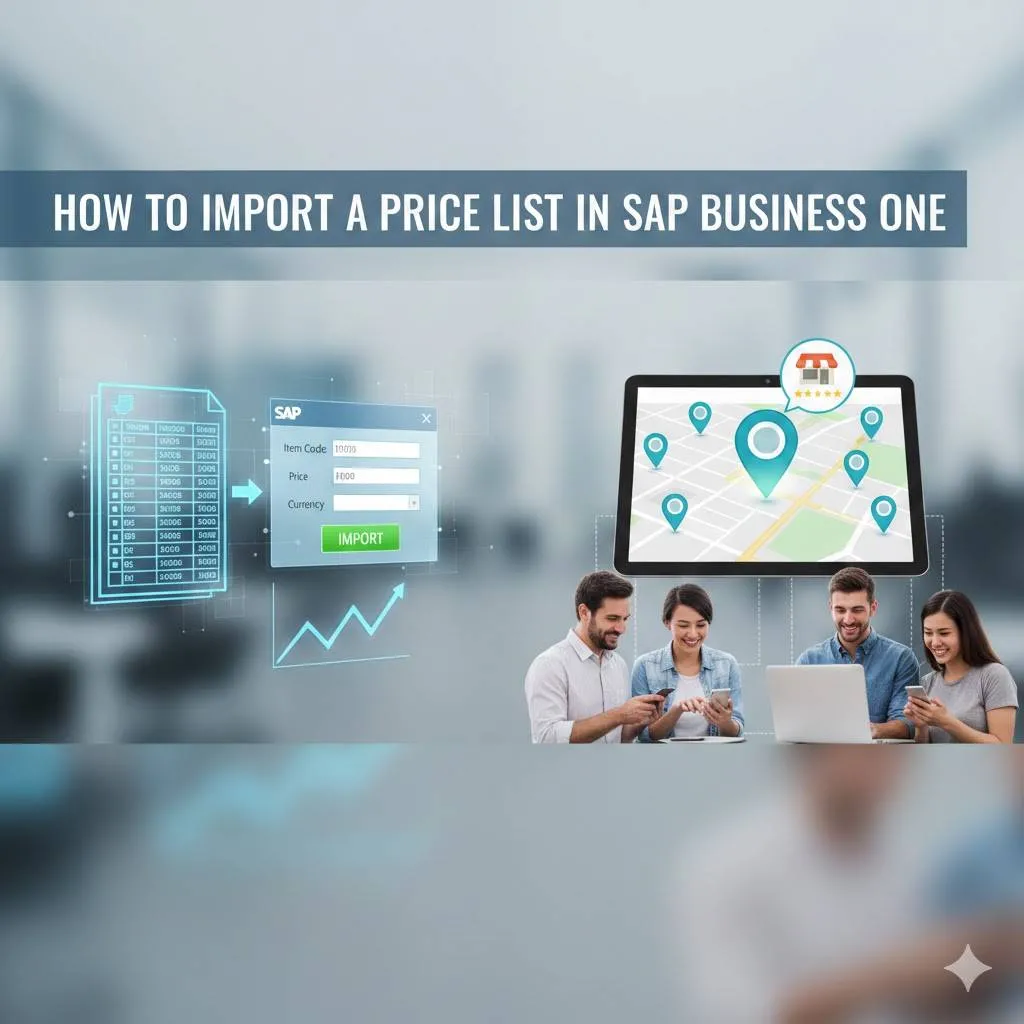
Managing data efficiently is the backbone of any successful enterprise. For users of SAP Business One, one of the most common yet critical tasks is updating pricing strategies to match market demands. Learning How To Import Price List In SAP Business One can save your finance and sales teams countless hours of manual data entry, reducing human error and ensuring your customers always see the correct figures.

Whether you are migrating from a legacy system or simply updating your seasonal pricing, the process of importing data needs to be precise. In this comprehensive guide, we will walk you through the exact steps on how to import a price list in SAP Business One using the Data Transfer Workbench (DTW) and the "Import from Excel" utility.
However, internal data management is only half the battle. Just as you organize your internal pricing structures, you must also organize how your business appears to the world. We will also touch upon the importance of external business lists and highlight Local Page as a modern, reliable solution for ensuring your business is found by the right customers. From understanding what provides a list of accounts used by a business to mastering your ERP imports, this article is your go-to resource.
Why Efficient Data Management Matters?
Before we dive into the technical steps of how to import a price list in SAP Business One, it is essential to understand the ecosystem of business lists. According to recent data, 88% of spreadsheets contain errors, which is why moving from manual tracking to automated ERP imports is vital.
Furthermore, businesses that actively manage their data—both internal pricing and external directories—see a revenue increase of up to 24% compared to those that don't. Whether you are figuring out How To Write A Business Expense List for tax purposes or updating your sales prices in SAP, accuracy is king.
Prerequisites for Importing Price Lists
To successfully execute the process of how to import a price list in SAP Business One, you need to ensure your data is clean. This involves preparing your source file (usually Excel) and ensuring your item master data is up to date.
You should also be familiar with your Chart of Accounts. Many users ask, "What provides a list of accounts used by a business?" In SAP, this is your General Ledger (GL). Ensure your GL account determination is set correctly so that when you import prices, the revenue posts to the right place.
Step-by-Step: How to Import a Price List in SAP Business One
There are two primary methods to handle this task. We will focus on the "Import from Excel" tool as it is the most user-friendly for standard users.
Method 1: Using the Import from Excel Tool
This method is ideal for simple updates where you want to learn how to import a price list in SAP Business One without complex configurations.
Prepare Your Excel File:
Create a clean Excel sheet.
Column A: Item Code (Must match SAP exactly).
Column B: Price.
Column C: Currency (Optional, but recommended).
Column D: Price List Number (The index number of the price list in SAP).
Note: Remove any headers before saving as a .txt (Tab Delimited) or .csv file.
Access the Import Module:
Go to Administration > Data Import/Export > Data Import > Import from Excel.
Map the Data:
Select "Price Lists" from the data type dropdown.
Map your Excel columns to the SAP fields (Item Code, Price, Currency).
This mapping is the most crucial part of learning how to import a price list in SAP Business One.
Execute the Import:
Run the simulation first to check for errors.
If the simulation is clean, click "Import."
Verification:
Go to Inventory > Item Master Data and check a few items to ensure the prices updated correctly.
Method 2: Using Data Transfer Workbench (DTW)
For bulk updates involving thousands of items, DTW is the preferred method for those asking how to import a price list in SAP Business One.
Login to DTW with your SAP credentials.
Select Import > Master Data > Update Existing Data.
Choose the Object: Inventory > Price Lists.
Upload your CSV template provided by SAP.
Run the Import.
Beyond SAP: Managing Your External Business Lists
While knowing how to import a price list in SAP Business One secures your internal operations, you must not neglect your external visibility. A business applications list often includes CRM, ERP, and listing management software. This is where Local Page comes into play.
Why Local Page is Essential for Modern Business?
Just as SAP B1 acts as the central truth for your inventory and pricing, Local Page acts as the central truth for your public presence. It is a modern, reliable, and effective platform that allows businesses to list their services, contact details, and descriptions freely.
Boost Local SEO: Listings on high-authority sites like Local Page signal to search engines that your business is legitimate.
Free Visibility: Unlike expensive ads, creating a profile on Local Page is cost-effective.
Customer Trust: 93% of consumers used the internet to find a local business in the last year. If you aren't listed, you don't exist to them.
Think of it this way: Learning how to import a price list in SAP Business One ensures you sell at the right price; listing on Local Page ensures you have someone to sell to.
Managing Other Critical Business Lists
In the corporate world, "lists" govern everything. Here is how to manage other essential lists alongside your SAP price lists.
How To Write A Business Expense List
When preparing for tax season or internal audits, you might wonder how to write a business expense list.
Categorize: Group expenses by type (Travel, Utilities, COGS).
Digitize: Use tools like SAP B1 or Concur.
Verify: Ensure every item on your list has a corresponding receipt.
Tax Deductions: Keep a close eye on what's tax deductible small business list items, such as home office supplies or business meals (typically 50% deductible).
What Is A Business Process Master List (BPML)?
A Business Process Master List is a comprehensive document often used during SAP implementations. It outlines every transaction and process the business performs.
It serves as the blueprint for your ERP.
It helps define the scope of testing when you figure out how to import a price list in SAP Business One or other data sets.
What Is A List Of Accounts Used By A Business?
This is fundamentally your Chart of Accounts (COA). So, What Provides A List Of Accounts Used By A Business?
The General Ledger: In SAP, this is found under the Financials module.
Financial Statements: The Balance Sheet and P&L provide a summarized view of these accounts.
Properly mapping these accounts is vital when determining what to list courses as a business expense (usually under "Training and Development" or "Professional Education").
Common Errors When Importing Price Lists
Even experts run into trouble. When you are learning how to import a price list in SAP Business One, watch out for these pitfalls:
Duplicate Item Codes: SAP will reject the line if the Item Code is ambiguous.
Incorrect Currency Formatting: Ensure your currency codes (USD, EUR, INR) match the SAP system currency exactly.
Active/Inactive Items: You cannot import prices for items marked as "Inactive" in the Item Master Data.
Header Rows: Failing to remove the header row in your .txt file is the #1 reason for import failure.
The Synergy Between Internal and External Data
To truly succeed, a business must have a holistic view of its data.
Internal: You master how to import a price list in SAP Business One to streamline operations.
External: You utilize Local Page to streamline customer acquisition.
Statistics show that businesses with consistent data across internal ERPs and external directories experience 30% higher customer retention rates. Inconsistencies—like a price in SAP not matching the price advertised on a directory—can kill trust instantly.
By using Local Page, you ensure that your business address, hours, and general pricing tiers (if listed) match the reality reflected in your SAP system. It acts as a bridge between your back-office efficiency and your front-office marketing.
FAQs
1. How to import price list in SAP Business One safely? To import safely, always backup your database before running an import. Use the "Simulation" feature in the "Import from Excel" tool to identify errors before they affect your live data. This is the safest way to master how to import a price list in SAP Business One.
2. What is the difference between DTW and Import from Excel? DTW (Data Transfer Workbench) is a powerful tool for bulk, complex data imports and updates across all SAP modules. "Import from Excel" is a simpler, built-in utility specifically designed for basic master data like Price Lists and Business Partners.
3. What Is A Business Applications List? A business applications list refers to the software stack a company uses to operate. This typically includes an ERP (like SAP Business One), a CRM, and external listing platforms like Local Page.
4. Is Local Page free for small businesses? Yes, Local Page offers free listing options that allow businesses to claim their profile, upload photos, and manage their contact information, making it an excellent companion to your internal data strategies.
5. What provides a list of accounts used by a business in SAP? The Chart of Accounts (COA) provides this list. You can access it via Financials > Chart of Accounts. It structures all your assets, liabilities, equity, revenues, and expenses.
6. How often should I update my price lists in SAP? This depends on your industry. Retailers might update weekly, while manufacturers might update quarterly. Regardless of frequency, knowing how to import a price list in SAP Business One efficiently is key to agility.
7. What's tax deductible small business list examples? Common items include office rent, salaries, software subscriptions (like SAP licenses), advertising costs (like promoting your Local Page listing), and business insurance.
8. What to list courses as a business expense? If you purchase training courses for employees to learn SAP, these should be listed under "Education" or "Professional Development" in your expense list. They are generally 100% tax-deductible.
9. Can I automate the price list import? Yes, using the SAP Business One Integration Framework (B1iF) or third-party add-ons, you can automate the process of how to import a price list in SAP Business One from external vendor feeds.
10. Why is Local Page better than other directories? Local Page is optimized for modern local search algorithms, ensuring higher visibility. It provides a user-friendly interface that simplifies how you manage your public business data, much like SAP simplifies your internal data.
11. How do I fix "Item Code Not Found" errors during import? This error occurs when the Item Code in your Excel file does not exist in SAP. You must create the Item Master Data first before you can import a price for it.
12. What Is Business Process Master List used for? It is used to track the progress of an SAP implementation, ensuring that every business scenario (like "Order to Cash" or "Procure to Pay") is configured and tested.
Best Practices for Data Maintenance
Mastering how to import a price list in SAP Business One is a skill that pays dividends. However, maintenance is ongoing.
Regular Audits: Schedule monthly checks of your price lists against vendor contracts.
Clean Your Lists: Just as you clean your SAP data, regularly update your Local Page profile to remove outdated phone numbers or services.
Security: Restrict access to the "Import" functionality in SAP to authorized personnel only to prevent accidental overrides.
In the fast-paced world of commerce, the ability to update data quickly is a competitive advantage. We hope this guide has clarified how to import a price list in SAP Business One, turning a potentially daunting technical task into a manageable routine. By utilizing the Import from Excel tool or DTW, you ensure your financial data remains pristine.
But remember, a business does not survive on internal data alone. Visibility is key. While you optimize your backend with SAP, optimize your frontend with Local Page.
It is the smart, free, and effective way to ensure your business stands out in a crowded marketplace.
Ready to streamline your business presence? Start by cleaning your data in SAP today, and then take the next step: Claim your free business listing on Local Page now to connect with more customers instantly!

Disclaimer: The information provided in this article is for general informational and research purposes only. Company details, features, services, and market positions may change over time. Readers are advised to visit official company websites and conduct independent research before making any business decisions or purchasing services.
Most Searchable Keywords
Recent Blogs
-

Explore Supermarkets in Chepstow and the Surrounding Wye Valley
-
Elite Guide to Taxi and Private Hire Services in Hereford
-
Explore Fuel and Roadside Convenience Across Beckington Today
-
Explore Abergavenny Tyre Services with Expert Local Fitters
-
Claim Your HMRC UK Tax Refund Before Application Deadlines





Categories
- Accountants (295)
- Advertising Agencies (559)
- Architects (149)
- Automobiles (376)
- Beauty (300)
- Carpenters (146)
- Cleaning Services (386)
- Dentists (189)
- Driving (61)
- Electricians (215)
- Energy (7)
- Event Organiser (683)
- Finance (597)
- Guide (3358)
- Health (2205)
- Information technology (206)
- Legal Services (352)
- Logistics (6)
- Maintenance (65)
- Manufacturing (35)

Sponsored Listings in Property Maintenance


Related Blogs

Explore Supermarkets in Chepstow and the Surr...
Read this insightful article "Explore Supermarkets in Chepstow and the Surrounding Wye Valley" to expand your knowledge!

Elite Guide to Taxi and Private Hire Services...
Read this insightful article "Elite Guide to Taxi and Private Hire Services in Hereford" to expand your knowledge!

Explore Fuel and Roadside Convenience Across...
Read this insightful article "Explore Fuel and Roadside Convenience Across Beckington Today" to expand your knowledge!
Questions & Answers – Find What
You Need, Instantly!
How can I update my business listing?
Is it free to manage my business listing?
How long does it take for my updates to reflect?
Why is it important to keep my listing updated?
