
How to Lose a Customer in 10 Ways: The Ultimate Guide to Business Retention
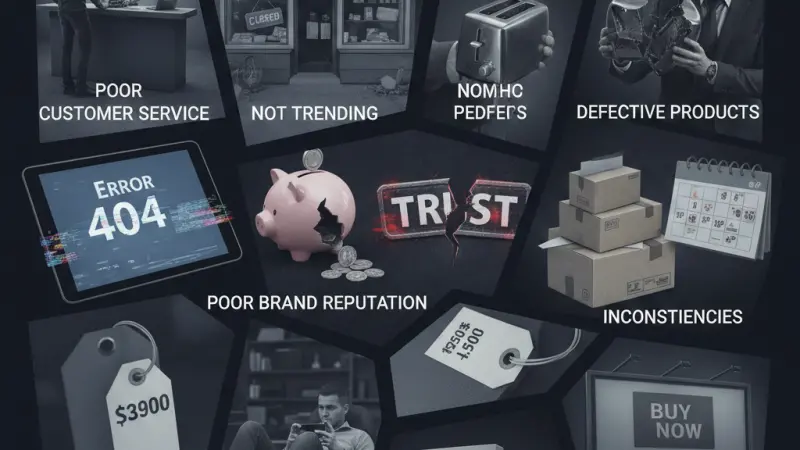
In the modern marketplace, the old adage "the customer is always right" has evolved into something more complex: "the customer has more options than ever." Whether you are running a boutique shop in a small town or a global e-commerce powerhouse, your customers are the lifeblood of your operation. Every pound spent is a vote of confidence in your brand, allowing you to keep the lights on and the innovation flowing.
However, many businesses suffer from "silent churn"—the phenomenon where customers simply stop buying without ever filing a formal complaint. Understanding why this happens is the first step toward building a resilient brand. If you are looking for a blueprint on how to dismantle your customer base, follow these ten steps. If you want to thrive, do the exact opposite.
Mastering the Art of Poor Customer Service
If you want to lose a customer fast, treat them like a transaction rather than a person. Poor customer service consistently tops the list of reasons why people abandon brands.
When a customer reaches out with a question or a grievance, they aren't looking for a scripted response; they are looking for empathy and a solution. If your staff treats inquiries as a "bother" or if your support system is a maze of automated bots that never lead to a human, you are sending a clear message: We have your money, and we no longer care about you.
The Fix: Invest in soft-skills training. Empower your employees to make decisions that favor the customer, even if it costs a few pence in the short term. A loyal customer is worth ten times their initial purchase over their lifetime.
Ignoring Trends and Staying Static
The world moves fast. If your business is still operating like it’s 2015, your customers have likely already moved on. Being "trendy" isn't just about following fashion; it’s about aligning with shifts in technology, ethics, and buying habits.
Whether it’s the shift toward sustainable packaging or the adoption of contactless payments, consumers are naturally drawn to brands that evolve. If you refuse to adapt, you become a relic.
The Fix: Conduct quarterly market research. Look at what your most successful competitors are doing—not to copy them, but to understand the "new normal" of consumer expectations.
Shipping Defective or Subpar Products
Nothing destroys trust faster than a product that doesn't work. While a single mistake can be forgiven if handled well, repeated reports of defective goods create a permanent stain on your reputation.
In the age of social media, a "lemon" isn't just a private disappointment; it’s a public viral post. Frequent product recalls or a high return rate suggest that you value profit margins over quality control and safety.
The Fix: Implement rigorous QA (Quality Assurance) protocols. It is significantly cheaper to catch a defect in the factory than it is to manage a PR crisis and a mass refund.
Neglecting Your Website Performance
In the digital age, your website is often your storefront. If it takes more than three seconds to load, if the search bar returns "no results" for common items, or if the checkout process is a 10-step nightmare, you are effectively locking your front door.
A poor website creates "friction." Modern consumers are looking for the path of least resistance. If your site freezes or isn't optimized for mobile devices (where over 50% of shopping now happens), you are handing your sales to the competition.
The Fix: Prioritize UX (User Experience) design. Ensure your site is mobile-responsive and use high-speed hosting. Test your checkout flow weekly to ensure there are no bugs.
Allowing Your Brand Reputation to Sour
A brand reputation is built over years and destroyed in seconds. All it takes is one unaddressed negative review, a tone-deaf social media post, or a public scandal to trigger an "ambush of negativity."
Many businesses make the mistake of ignoring negative feedback or, worse, arguing with customers in public forums. This transparency can be a double-edged sword; while you can't stop people from complaining, you can control how you respond.
The Fix: Be proactive. Use social listening tools to monitor what people are saying about you. Address negativity with professional, solution-oriented responses. Transparency and a sincere apology can often turn a critic into a brand advocate.
Embracing Inconsistency
Consistency breeds comfort. When a customer knows exactly what to expect from your content, your quality,
and your delivery times, they feel safe. Inconsistency, on the other hand, creates anxiety.
If your Instagram looks like a luxury brand but your website looks like a discount bin, the customer gets "brand whiplash." Furthermore, in an era where "Same Day Delivery" is becoming the gold standard, being inconsistent with shipping speeds is a death sentence.
The Fix: Create a Brand Style Guide and stick to it. From your email tone to your packaging, everything should feel like it comes from the same source. Align your logistics with modern expectations to ensure "on-time" means "every time."
Tolerating Toxic Employee Behavior
Your employees are the face of your brand. A toxic employee—one who is distracted by their phone, gossips within earshot of customers, or brings personal drama into the workspace—is a walking advertisement for your competition.
Customers can sense when an employee doesn't want to be there. This lack of engagement translates to a lack of care for the customer's needs. Toxicity is also contagious; one bad apple can ruin the productivity and morale of your entire team.
The Fix: Hire for attitude, train for skill. Foster a workplace culture where employees feel valued and motivated. If an employee's behavior is consistently sabotaging the customer experience, it may be time to part ways.
Overpricing Without Added Value
Price is always a factor, but it is rarely the only factor. However, if your products are significantly more expensive than the market average without offering superior quality, service, or status, your target audience will eventually find a cost-effective alternative.
Inflation and economic shifts mean customers are more conscious of their "disposable" income. If they feel they are being "gouged," they won't just leave—they will tell others to stay away.
The Fix: Perform regular competitive pricing analysis. If you must charge a premium, ensure the "value-add" (like a better warranty or exclusive features) is clearly communicated in your marketing.
Lagging Behind the Technological Curve
Technology isn't just a "nice-to-have"; it’s an efficiency engine. Whether it’s using AI to personalize recommendations or implementing a seamless CRM (Customer Relationship Management) system, technology shows your audience that you are invested in the future.
Being "behind" makes you look out of touch and slow. It suggests that your internal processes are likely just as dated as your outward-facing tech.
The Fix: You don't need every new gadget, but you do need the essentials. Invest in automation for repetitive tasks and stay updated on the software that defines your industry.
Producing Boring or Irrelevant Marketing
If your marketing feels like white noise, your customers will tune out. "Boring" marketing happens when a brand stops trying to connect and starts just trying to sell. If your campaigns fail to spark an emotional response or solve a problem, they are a waste of budget.
When customers are bored, they become "on the fence"—easily swayed by a competitor with a flashier, more engaging message.
The Fix: Use storytelling. Don't just tell people what you sell; tell them why it matters. Use promotions, interactive content, and video to keep your audience engaged and curious about what you’ll do next.
Boost Your Visibility with Local Page UK
In the competitive landscape of the British market, being found is half the battle. To ensure your business doesn't fall into the traps mentioned above, you need a platform that connects you with the right audience. Whether you are looking for a uk online business directory or a comprehensive uk business directory, Local Page UK is the premier choice for growth.
Small businesses can take advantage of a business listing uk to start building their online presence. Our uk local business directory helps consumers find local businesses uk with ease, offering a curated local businesses list uk that spans every industry. For those just starting out, a business listing uk entry can be the catalyst for your first hundred customers.
Our platform is more than just a list; it is a uk small business directory designed for modern SEO. We cater to both the uk b2b business directory sector and the uk b2c business directory market.
If you want your company to appear in a business directory uk online, or if you are among the many uk service providers directory members looking for leads, we provide the tools you need.
Get started today with a business listing uk or explore our extensive local business listings uk. From uk service listings to uk verified business listings, we ensure that your brand is seen by those who matter most. Don't miss out on being part of the uk business listings online. Join the local page uk business directory and secure your uk business directory website presence now.
Looking for specific leads? Our uk top rated local businesses section highlights the best of the best. Whether you need a uk home services directory, uk professional services listings, uk trade services listings, or a uk local trades directory, our local page uk listings have you covered. Use our uk local business search to see where you stand.
For maximum value, check out our business listing uk options, including business listing uk, and business listing uk. We even offer a business listing uk tier and specialized business listing uk options for capital-based firms. Get your business listing uk today!
Questions Clients Commonly Ask
1. What is the #1 reason businesses lose customers?
Statistically, poor customer service and a perceived lack of indifference from the staff are the primary reasons customers leave.
2. How can I improve my website performance quickly?
Start by compressing large images, using a Content Delivery Network (CDN), and eliminating unnecessary plugins that slow down your load time.
3. Does pricing always matter most to customers?
No. While price is important, many customers will pay more for better quality, convenience, and superior customer support.
4. How do I handle a toxic employee?
Address the behavior privately and immediately. Provide clear expectations for improvement and, if the behavior persists, follow your HR protocols for termination to protect your brand.
5. How often should I update my business technology?
You should review your tech stack annually. If a new technology can significantly
improve customer experience or reduce costs, it is worth the investment.
6. What is "Silent Churn"?
Silent churn is when customers stop buying from you without complaining. This is often due to boredom or finding a more convenient alternative.
7. How do I fix a bad brand reputation?
By being transparent, apologizing for mistakes, and consistently providing excellent service moving forward. Ask happy customers to leave positive reviews to drown out the old negativity.
8. Is same-day delivery necessary?
While not necessary for every industry, it is becoming a standard expectation in retail. If you can't offer it, ensure your standard shipping is highly reliable and well-communicated.
9. How do I make my marketing less "boring"?
Focus on the "Why" behind your product. Use user-generated content, storytelling, and interactive social media polls to involve your audience.
10. What are the benefits of a business directory listing?
It improves your local SEO, makes it easier for customers to find your contact details, and builds "backlink" authority for your website.
11. Should I respond to every negative review?
Yes. A professional response shows potential customers that you are attentive and care about resolving issues.
12. How do I stay "on trend" without losing my brand identity?
Adopt trends that align with your core values. You don't need to jump on every fad—only those that solve a problem or resonate with your specific audience.
13. How does employee morale affect customers?
Happy employees provide better service. If morale is low, the quality of interaction drops, and customers will feel unwelcome.
14. What defines a "defective" product?
Anything that does not perform the function it was advertised to do or poses a safety risk to the user.
15. Can a business recover after losing many customers?
Yes, but it requires a total "customer-first" overhaul of operations, better marketing, and a commitment to quality.
Disclaimer: The information provided in this article is for general informational and research purposes only. Company details, features, services, and market positions may change over time. Readers are advised to visit official company websites and conduct independent research before making any business decisions or purchasing services.
Most Searchable Keywords
Recent Blogs


Related Listings

Categories
- Accountants (295)
- Advertising Agencies (559)
- Architects (149)
- Automobiles (377)
- Beauty (300)
- Carpenters (146)
- Cleaning Services (387)
- Dentists (189)
- Driving (62)
- Electricians (215)
- Energy (8)
- Event Organiser (686)
- Finance (602)
- Guide (3374)
- Health (2207)
- Information technology (206)
- Legal Services (354)
- Logistics (6)
- Maintenance (65)
- Manufacturing (35)
Sponsored Listings in Travel Agencies


Related Blogs

Meet the Fair Work Agency Changing UK Work Ru...
Read this insightful article "Meet the Fair Work Agency Changing UK Work Rules in 2026" to expand your knowledge!
Collective Redundancy Errors Now Carry Higher...
Read this insightful article "Collective Redundancy Errors Now Carry Higher 2026 Penalties" to expand your knowledge!

Explore Dog Friendly Walks in the Cotswolds f...
Read this insightful article "Explore Dog Friendly Walks in the Cotswolds for 2026" to expand your knowledge!
Questions & Answers – Find What
You Need, Instantly!
How can I update my business listing?
Is it free to manage my business listing?
How long does it take for my updates to reflect?
Why is it important to keep my listing updated?
