
How to Make Sure Your Cleaner is Properly Insured
- 👤 Alex
- 👁️ 104 Views
- Last Updated: April 9, 2026
- 🏷️ Cleaning Services
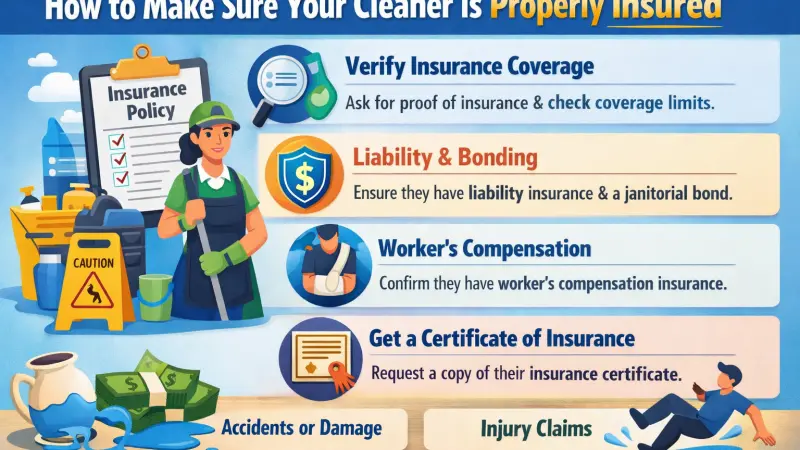
When you invite someone into your home to help with the chores, you are doing more than just outsourcing labor; you are entering into a professional relationship based on trust. While most cleaning sessions pass without incident, the nature of the work involves moving parts, chemical solutions, and access to your most valuable assets. Accidents—ranging from a bleached hardwood floor to a trip-and-fall injury—can happen in the blink of an eye. Without the right insurance coverage, these minor mishaps can escalate into significant legal and financial burdens for the homeowner.

Understanding how to navigate the complexities of insurance isn't about being cynical; it is about being responsible. This guide explores the essential steps to ensure your cleaner is properly insured, providing you with the peace of mind that comes from knowing your sanctuary is truly protected.
Why Cleaner Insurance Matters More Than You Think
Many homeowners assume that their standard buildings and contents insurance will cover any issues arising from a domestic cleaner. However, this is a dangerous misconception. Most standard policies have specific exclusions for "business activities" or "paid domestic help." If your cleaner accidentally breaks an expensive heirloom or, more seriously, suffers an injury while on your property, you could be held personally liable for damages or medical costs. Proper insurance serves as a safety net for both parties. For the cleaner, it demonstrates professionalism and a commitment to their craft. For you, it ensures that an accident doesn’t turn into a lawsuit.
The Financial Risk of the "Uninsured" Bargain
It is tempting to hire an independent cleaner who offers a significantly lower hourly rate. Often, this lower price is achieved by stripping away overhead costs, including insurance premiums. While you might save £5 or £10 per week, you are effectively "self-insuring." If that cleaner spills bleach on a £3,000 sofa or accidentally leaves a tap running that floods the downstairs flat, the savings disappear instantly, replaced by a massive financial liability.
The Two Main Types of Coverage
-
Public Liability Insurance: This is the most critical for cleaners. It covers damage to your property (e.g., spilling wine on a designer rug) and injuries to third parties (e.g., if you trip over the vacuum cord).
-
Employer’s Liability Insurance: If the cleaning company has employees, this is a legal requirement in many regions. It protects the business if an employee is injured on the job.
Step-by-Step: How to Verify Insurance Coverage
1. Ask for the Certificate of Insurance (COI)
Don't just take their word for it. A professional cleaner or agency should be able to provide a Certificate of Insurance. This document summarizes the policy, including the provider, the policy number, and the coverage limits. A legitimate business will have this document readily available and will likely be proud to show it to you as a mark of their professionalism.
2. Check the Expiry Date
Insurance policies are typically renewed annually. Ensure the "Effective Date" and "Expiration Date" cover the period they will be working in your home. A policy that expired last month is as good as no policy at all. It is a common mistake for homeowners to check the insurance once and never look again; mark your calendar to ask for an updated certificate once a year.
3. Verify the Coverage Limits
A standard policy should offer at least £1 million to £2 million in public liability coverage. While this sounds like a lot, it accounts for potential long-term medical care or significant structural damage to a property. If you have a particularly high-value home or unique collections, you may want to ensure their limit is even higher.
The Difference Between Independent Cleaners and Agencies
The insurance landscape changes depending on who you hire. Understanding these differences is vital for managing your risk profile.
Independent Cleaners (Sole Traders)
If you hire a "sole trader," they are responsible for their own insurance. Many independent cleaners skip this to keep costs low. If they are uninsured and get injured in your home, they could technically claim against your homeowner's insurance, which may lead to your policy being voided if you didn't declare you were employing domestic help.
Cleaning Agencies and Management Companies
A reputable agency should carry a blanket policy that covers all their contractors or employees. When hiring through an agency, ask for proof of their "vicarious liability." This ensures that if the specific individual sent to your house causes damage, the agency's policy will pay out. Agencies also typically handle the vetting process, ensuring that the people entering your home are not only insured but also background-checked.
Deep Dive: Specialized Insurance Add-ons
Beyond basic liability, some cleaners carry specific "riders" or extensions that offer extra layers of protection.
Bonding (Fidelity Bonds)
While insurance covers accidents, "bonding" covers theft. If a cleaner is bonded, it means a third-party company has a fund to compensate you if the
cleaner is convicted of stealing from your home. This is a rare but vital protection for those with high-value personal items.
Key and Lock Replacement
Losing a house key is a common mishap. However, if that key is lost alongside an ID or if it’s a specialized security key, the cost to re-key your entire home can be hundreds of pounds. Some professional policies specifically include "loss of keys" coverage to pay for locksmith services and new hardware.
Common Risks in the Cleaning Industry
Understanding the specific hazards involved in domestic cleaning helps clarify why insurance is non-negotiable.
-
Chemical Damage: Using an acidic cleaner on a marble countertop or the wrong solution on hardwood can cause permanent etching or staining. Insurance covers the restoration or replacement of these surfaces.
-
Slip and Fall Accidents: Cleaning involves wet floors and trailing cables. If a cleaner, a family member, or a guest falls because of a cleaning activity, the medical and legal costs can be astronomical.
-
Property Damage During Movement: Vacuuming near a pedestal or dusting a shelf of collectibles carries inherent risk. Even the most careful professional can have a moment of clumsiness.
Essential Questions to Ask Before Hiring
To vet a cleaner effectively, use these questions during your initial interview. Their answers will tell you a lot about their professional standards:
-
"Do you carry public liability insurance, and what is the limit?"
-
"Are you bonded? (This covers theft or loss of property)."
-
"What is your process for reporting a breakage or injury?"
-
"Do you have a policy for damages caused by the use of incorrect cleaning materials?"
-
"Is your insurance provided by a recognized domestic service insurer?"
Red Flags to Watch Out For
Be wary if a cleaner or company demonstrates any of the following behaviors:
-
Refusal to show documents: Any excuse for not providing a COI is a major red flag.
-
Deflecting responsibility: If they claim they are "covered by your home insurance," they are either misinformed or dishonest.
-
Significantly low rates: If the price is too good to be true, they are likely cutting corners on insurance and taxes.
-
No physical address: Professional businesses should have more than just a mobile number; a lack of a physical address makes it harder to pursue a claim if something goes wrong.
Supporting Local Business Visibility Beyond Core Marketing Efforts
When searching for a reliable professional, it is helpful to understand how they establish their presence in the community. For a service provider, maintaining a Local Page UK presence is about more than just finding clients; it is about building a layer of trust through consistent information. When companies advertise company uk directory platforms, they are providing consumers with a verifiable trail of their business history and professional standing.
This type of directory marketing uk allows homeowners to see how a business interacts with the public and maintains its reputation over time. Furthermore, checking company ratings uk ensures that you are hiring someone with a proven track record of safety and reliability. A reputable cleaner will often ensure they are listed in a free business database directory to enhance their local presence consistency, making it easier for you to find their contact details and insurance information across multiple platforms. This multifaceted approach to visibility acts as a credibility signal and a local discovery aid for the modern homeowner.
Peace of Mind is Worth the Effort
Hiring a cleaner is meant to reduce your stress, not add to it. By taking the time to verify insurance documents and ask the right questions, you protect your home, your finances, and your family. A truly professional cleaner will never be offended by a request for proof of insurance; in fact, they will likely appreciate that you value the high standards they maintain. Insurance is the invisible shield that allows you to enjoy a clean home with total confidence.
Frequently Asked Questions
1. Does my homeowner's insurance cover my cleaner?
Generally, no. Most policies exclude damage caused by paid professionals or injuries to domestic staff unless you have a specific "domestic employee" rider added to your policy.
2. What is the difference between being insured and being bonded?
Insurance covers accidents and damage. Bonding specifically protects you against "dishonest acts" like theft. A professional agency should ideally have both.
3. Is public liability insurance a legal requirement for cleaners?
For sole traders, it is often not a legal requirement, but it is a professional standard. For companies with staff, Employer’s Liability is mandatory.
4. What should I do if my cleaner breaks something?
Take photos immediately, document the date and time, and contact the cleaner to ask for their insurance claim process. Do not attempt to fix it yourself until the insurer has seen it.
5. Can I hire a cleaner without insurance if I'm on a budget?
You can, but the financial risk is entirely yours. If a major accident happens, you will be responsible for all costs, which could far exceed any savings on hourly rates.
6. How often should I check my cleaner's insurance?
It is best practice to check it once a year, usually when their policy is up for renewal. Don't be afraid to ask for a fresh certificate.
7. Does insurance cover "wear and tear"?
No, insurance is for sudden, accidental damage. It does not cover the gradual degradation of surfaces or equipment over time.
8. What if the cleaner uses my equipment and gets hurt?
If your equipment is faulty (e.g., a frayed cord on your vacuum), you could still be held liable even if they have insurance. Ensure your appliances are safe to use.
9. Are agencies better than independents?
Not necessarily in terms of cleaning quality, but agencies usually have more robust insurance structures and backup staff if a claim needs to be filed.
10. What is the most common insurance claim for cleaners?
Spills on carpets and damage to electronic devices (like TVs or laptops) during dusting are the most frequent claims in the domestic sector.

Disclaimer: The information provided in this article is for general informational and research purposes only. Company details, features, services, and market positions may change over time. Readers are advised to visit official company websites and conduct independent research before making any business decisions or purchasing services.
Most Searchable Keywords

Recent Blogs


Related Listings
-

Platinum Exterior Cleaning
-
End of Tenancy Cleaning Agency
-
Royal Cleaning
-
FastKlean
-
Fantastic Services


Categories
- Accountants (295)
- Advertising Agencies (559)
- Architects (149)
- Automobiles (377)
- Beauty (300)
- Carpenters (146)
- Cleaning Services (386)
- Dentists (189)
- Driving (62)
- Electricians (215)
- Energy (8)
- Event Organiser (685)
- Finance (598)
- Guide (3364)
- Health (2207)
- Information technology (206)
- Legal Services (353)
- Logistics (6)
- Maintenance (65)
- Manufacturing (35)

Sponsored Listings in Cleaning Services


Related Blogs

Where to Find the Best Summer Festivals in Br...
Read this insightful article "Where to Find the Best Summer Festivals in Bristol" to expand your knowledge!

Provisional Driving Licence UK Benefits and L...
Read this insightful article "Provisional Driving Licence UK Benefits and Limits Explained" to expand your knowledge!

Ross on Wye Minibus Hire for Group Travel Mad...
Read this insightful article "Ross on Wye Minibus Hire for Group Travel Made Simple" to expand your knowledge!
Questions & Answers – Find What
You Need, Instantly!
How can I update my business listing?
Is it free to manage my business listing?
How long does it take for my updates to reflect?
Why is it important to keep my listing updated?
