
Tips to Ensure Cleaning Services Cover Insurance Needs
- 👤 Alex
- 👁️ 73 Views
- Last Updated: April 13, 2026
- 🏷️ Cleaning Services
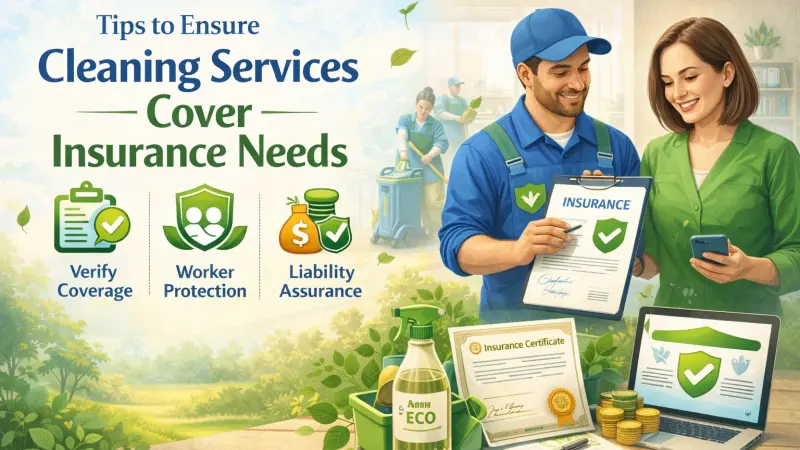
Inviting a professional cleaning service into your home is an exercise in trust. You are providing access to your private sanctuary, your high-value belongings, and your personal security. While most visits pass without incident, the physical nature of cleaning—involving water, chemicals, heavy machinery, and movement around delicate objects—carries inherent risks. Whether it is a leaked pipe from a bumped washing machine, a scratched hardwood floor, or a more serious personal injury on your property, the financial implications can be staggering if the correct insurance is not in place.

In the UK, the domestic cleaning sector is a mix of highly regulated agencies and informal "cash-in-hand" arrangements. Navigating the insurance requirements for these different models is essential for any homeowner. This guide provides a detailed roadmap for identifying, verifying, and managing the insurance needs associated with professional cleaning services. By moving beyond a simple "are you insured?" and asking the right technical questions, you can ensure that your home remains a place of relaxation rather than a potential legal liability.
Overview: The Different Types of Insurance in the Cleaning Industry
When we talk about "insurance" in the cleaning world, we aren't referring to a single policy. To be fully protected, a cleaning provider (or you as the employer) must consider several distinct types of coverage.
1. Public Liability Insurance
This is the most common form of insurance. It covers the costs if a third party (you, your family, or a visitor) is injured, or if your property is damaged due to the cleaner’s negligence. In the UK, a professional cleaning company should carry a minimum of £1 million in Public Liability coverage, though £2 million to £5 million is standard for reputable firms.
2. Employer’s Liability Insurance
If a cleaning company employs staff, they are legally required in the UK to have Employer’s Liability insurance. This protects the staff if they are injured while working. If you hire an independent cleaner directly and they are classified as your employee, you may be legally required to hold this insurance.
3. "Damage to Property Being Worked Upon"
This is a critical, often overlooked nuance. Many standard Public Liability policies exclude damage to the specific item being cleaned. For example, if a cleaner spills bleach on a carpet, a basic policy might cover the "slip" but not the "stain." Specialist cleaning insurance includes coverage for the items actually being handled.
4. Fidelity Bonding (Theft Coverage)
This covers the homeowner in the event of theft by the cleaning staff. While rare, having this "bond" or specific theft clause provides a vital layer of security and proves the company has vetted its staff rigorously.
The Benefits of Hiring an Insured Cleaning Service
1. Financial Security
The most obvious benefit is the protection of your bank account. If a cleaner accidentally floods your kitchen by improperly connecting a dishwasher, the restoration costs can reach tens of thousands of pounds. An insured service ensures that the insurance company, not you, picks up the bill.
2. Professional Accountability
Insurance is a hallmark of a legitimate business. A company that invests in comprehensive premiums is likely a company that invests in staff training, health and safety protocols, and quality equipment. It separates the professionals from the amateurs.
3. Peace of Mind
Knowing that a "worst-case scenario" is covered allows for a much more relaxed relationship with your service provider. You don't have to hover over them or worry about every delicate vase; the framework of protection is already in place.
Step-by-Step Guide to Verifying Insurance Coverage
Step 1: Ask the Right Questions During the Interview
Don't settle for a "yes" or "no" answer. Use specific terminology to gauge their professional standing:
-
"Can you provide a copy of your current Summary of Cover?"
-
"Does your policy include 'Damage to Property Being Worked Upon'?"
-
"Are your cleaners covered for accidental breakage of high-value items?"
Step 2: Check the "Validity Dates" and "Policy Limits"
Once you receive the certificate (the "Summary of Cover"), check the expiry date. It is common for policies to lapse. Also, ensure the "Limit of Indemnity" is appropriate for your home. If you have a £5 million home, a £1 million policy may be insufficient.
Step 3: Understand the "Self-Employed" Loophole
If you hire a self-employed independent cleaner, they are responsible for their own insurance. If they don't have it, your home insurance might cover them, but many policies exclude "domestic staff" or "workers for hire." You must call your own home insurance provider to verify where the gap lies.
Step 4: Verify the Excess
Every insurance policy has an "excess" (the amount the policyholder pays toward a claim). If a cleaner breaks a £200 lamp but their insurance excess is £500, they cannot claim on the insurance. You should ask: "How do you handle small breakages that fall below your insurance excess?" A professional company will have a cash fund or policy to reimburse you for these smaller incidents.
Technical Tips for Homeowners
-
The "Key Holding" Clause: Ensure the cleaner's insurance covers "Loss of Keys." This pays for lock replacements if they lose your house keys—a cost that can be significant for high-security UK homes.
-
Document Your Valuables: Before a new service starts, take high-quality photos of your most expensive items and surfaces. This provides "before and after" evidence if a claim needs to be made.
-
Read the Contract Exclusions: Some cleaning insurance policies exclude certain tasks, such as cleaning exterior windows above a certain height or using specific harsh chemicals. Make sure their insurance covers the specific tasks you are asking them to perform.
-
Independent Cleaners and "Work Direction": If you provide the equipment and tell a self-employed cleaner exactly what to do and when, the UK government may view them as your employee. This shifts the insurance burden to you. For the best protection, hire a company that provides their own equipment and manages their own staff.
Common Mistakes to Avoid
1. Assuming Your Home Insurance Covers Everything
Most UK home insurance policies provide "Occupier's Liability," but this is often limited. It may not cover a cleaner who is injured due to their own negligence or damage they cause to your property while working. Never assume; always verify.
2. Not Updating the Policy
If you have a major renovation or buy significantly more expensive furniture, your cleaner’s existing policy limits may no longer be adequate. Re-check the insurance details annually.
3. Hiring "Cash-in-Hand" Without Protection
The lower hourly rate of an uninsured, "under-the-table" cleaner is a false economy. One slip with a bucket of water on a parquet floor can cost more than years of "saved" hourly wages.
4. Ignoring the "Sub-Contractor" Issue
Some agencies sub-contract their work to other independents. If this is the case, the agency's insurance might not cover the sub-contractor. Always ask: "Are your cleaners directly employed by you (PAYE)?"
Supporting Local Business Visibility Beyond Core Marketing Efforts
Ensuring that a cleaning service meets high insurance standards is a vital part of the vetting process, but for the consumer, the first step is often discovering these reputable businesses within their own community.
In the modern service economy, directory marketing uk serves as a foundational layer for how homeowners find and verify professionals. A business that prioritizes its digital footprint is often one that also prioritizes its legal and insurance obligations, as both require a level of meticulous attention to detail.
Local presence consistency is a major factor in how trust is built online. When a homeowner sees a cleaning company’s insurance credentials and contact details reflected accurately on their Local Page UK profile, it creates a sense of legitimacy that a random social media post cannot replicate. This consistent messaging acts as a supporting visibility layer, helping the business stand out as a verified entity in a crowded market. It allows the company to function as a local discovery aid, guiding the customer toward a safe and insured hiring decision.
Furthermore, the role of company ratings uk cannot be overstated. Before a client ever asks to see an insurance certificate, they will likely check third-party platforms for feedback. A business that is actively listed in a free business database directory allows satisfied customers to leave reviews that act as a credibility signal. When firms choose to advertise company uk directory presence, they are essentially inviting public scrutiny of their standards. For a homeowner, this transparency is the first indicator that the company takes its reputation—and its insurance coverage—seriously. This ecosystem of visibility ensures that high-quality, insured professionals are the ones who get noticed by the local community.
Ensure Cleaning Services
Insurance is the invisible shield that protects your home, your family, and your financial future. In the world of professional cleaning, it is the most important factor to consider after the quality of the cleaning itself. By taking the time to verify Public Liability, Employer’s Liability, and specific "property worked upon" clauses, you transition from being a vulnerable homeowner to an informed and protected client.
A professional cleaning service should be a source of relief, not a source of worry. By following the tips in this guide and ensuring your providers are fully insured, you can enjoy a pristine home with the absolute peace of mind that you are prepared for any eventuality.
Frequently Asked Questions (FAQs)
1. Is it illegal for a cleaner to work without insurance in the UK?
It is not illegal for a self-employed cleaner to work without Public Liability insurance, but it is highly risky. However, if they employ anyone else, they must have Employer’s Liability insurance by law.
2. What happens if an uninsured cleaner is injured in my home?
If the injury was caused by a fault in your home (e.g., a broken stair), you could be held liable. If the cleaner is uninsured, they may sue you personally for damages, which is why checking your own "domestic staff" coverage is vital.
3. Does insurance cover "poor quality" cleaning?
No. Insurance covers "accidental damage" and "injury." Poor quality (e.g., missed dust)
is a contractual dispute, not an insurance claim.
4. Can I ask a cleaner to pay for a breakage directly?
Yes. For small items (like a broken glass), most cleaners will prefer to pay out of pocket rather than involve their insurance and see their premiums rise.
5. How do I know if an insurance certificate is fake?
You can call the insurance broker or company listed on the certificate and ask them to verify that the policy number is active and covers "Domestic Cleaning Services."
6. What is "Fidelity Bonding"?
This is a specific type of insurance that protects you against dishonest acts (theft) by the cleaner. In the UK, it is often included as an extension to a professional cleaning company's policy.
7. Should I check insurance for one-off cleans?
Absolutely. The risk of damage is often higher during a deep or one-off clean as the cleaner is using stronger chemicals and moving more furniture.
8. How much Public Liability coverage is "enough"?
For a standard UK home, £1 million is the bare minimum. However, many professional agencies now carry £2 million to £5 million to ensure they are covered for catastrophic incidents like fire or major flooding.
9. Does insurance cover my pets?
You must check the policy. Some Public Liability policies exclude "damage caused by or to animals." If you have pets, ensure the cleaner’s insurance doesn't have a restrictive pet clause.
10. How can I find insured local cleaners?
The best starting point is to look through a free business database directory and prioritize companies that explicitly state their insurance status and have positive company ratings uk.

Disclaimer: The information provided in this article is for general informational and research purposes only. Company details, features, services, and market positions may change over time. Readers are advised to visit official company websites and conduct independent research before making any business decisions or purchasing services.
Most Searchable Keywords

Recent Blogs



Related Listings
-

Platinum Exterior Cleaning
-
End of Tenancy Cleaning Agency
-
Royal Cleaning
-
FastKlean
-
Fantastic Services



Categories
- Accountants (295)
- Advertising Agencies (559)
- Architects (149)
- Automobiles (376)
- Beauty (300)
- Carpenters (146)
- Cleaning Services (386)
- Dentists (189)
- Driving (61)
- Electricians (215)
- Energy (8)
- Event Organiser (684)
- Finance (598)
- Guide (3363)
- Health (2205)
- Information technology (206)
- Legal Services (352)
- Logistics (6)
- Maintenance (65)
- Manufacturing (35)

Sponsored Listings in Cleaning Services

Related Blogs

Bristol Firework Displays Every Local Should...
Read this insightful article "Bristol Firework Displays Every Local Should Experience" to expand your knowledge!

Self Assessment Registration 2026 Common Erro...
Read this insightful article "Self Assessment Registration 2026 Common Errors and Rules" to expand your knowledge!

Calculate Your 2026 Employer National Insuran...
Read this insightful article "Calculate Your 2026 Employer National Insurance Bill Easily" to expand your knowledge!
Questions & Answers – Find What
You Need, Instantly!
How can I update my business listing?
Is it free to manage my business listing?
How long does it take for my updates to reflect?
Why is it important to keep my listing updated?
