
How to Use Listings to Improve Customer Credibility
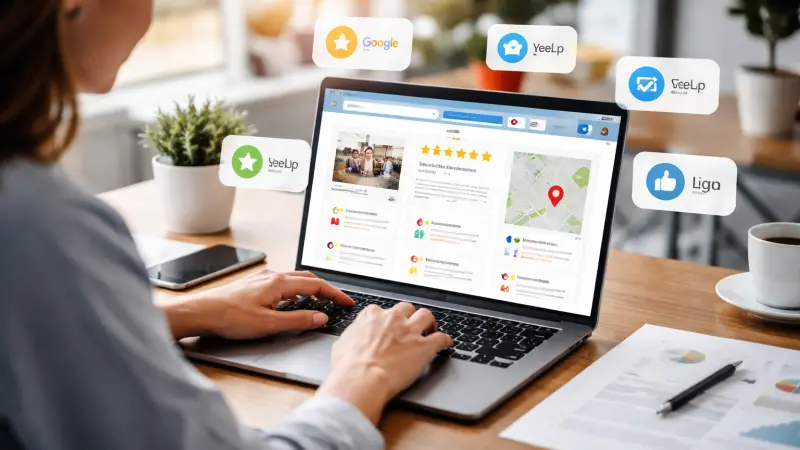
Imagine you are searching for a local plumber, accountant, or florist. You find two businesses: one appears across multiple reputable directories, has consistent contact details, and features genuine customer reviews. The other has only a basic website and no external presence whatsoever. Which one do you instinctively trust more? For the vast majority of consumers, the answer is obvious — and it highlights one of the most underestimated tools available to modern businesses: the strategic use of business listings.
In an era where customer scepticism is high and competition is fierce, business listings serve as one of the most reliable and cost-effective ways to establish credibility. Whether you operate a sole-trader consultancy, a growing retail brand, or a regional service provider, your presence in reputable directories directly influences how potential customers perceive you — often before they ever visit your website or make contact.
This guide explores how listings work, why they matter for customer trust, and what steps UK businesses can take to use them strategically and effectively.
What Are Business Listings and Why Do They Matter?
A business listing is an entry within an online directory or platform that presents key details about your company — typically your name, address, phone number, website, operating hours, and a brief description of your services. These entries appear on platforms such as Google Business Profile, Bing Places, Yell, Thomson Local, and a wide range of specialist and regional directories.
The significance of these listings goes well beyond mere contact information. In practical terms, they function as digital endorsements. When a reputable directory features your business, it sends a signal to both consumers and search engines that your business is real, established, and worth considering. This is why many UK businesses — particularly small and medium-sized enterprises — increasingly invest time in building a strong directory presence.
From a consumer behaviour perspective, research consistently shows that people are more likely to engage with businesses that appear across multiple trusted platforms. The logic is straightforward: if a business exists only on its own website, customers have no third-party reference point to confirm its legitimacy. Listings on well-known directories provide that external validation.
The Connection Between Listings and Perceived Trustworthiness
Trust is not given — it is earned through consistent, verifiable signals. When a potential customer encounters your business in a business directory in the UK, they immediately receive a set of implicit assurances: that the business has taken the time to establish a formal presence, that the information has been vetted (to at least a basic degree) by the directory, and that other customers may have interacted with and reviewed the business.
Each of these elements contributes to what psychologists refer to as social proof — the tendency for individuals to look to the actions and judgements of others when forming their own decisions. Listings, particularly those that include customer reviews and ratings, are one of the most tangible forms of social proof available in digital marketing today.
How Business Listings Build Customer Credibility
1. Consistent and Accurate Information
One of the foundational elements of credibility is consistency. If a customer finds your business listed in three different directories but each entry shows a slightly different phone number or address, doubt begins to form. Are these the same company? Which information is correct? Is this business still operating?
This is why SEO professionals and digital marketers refer to NAP consistency — Name, Address, and Phone number — as a critical factor not only for search rankings but for consumer confidence. Maintaining accurate, uniform information across all your listings demonstrates attention to detail and a commitment to being findable and accessible.
For small businesses especially, this level of diligence can be a meaningful differentiator. In markets where competitors are numerous and services appear similar, the business that presents its information clearly and consistently across local business directories in the UK will often be the one that earns the enquiry.
2. Customer Reviews and Ratings
Perhaps no single factor influences consumer trust more powerfully than reviews. Studies from across the UK and Europe have found that the majority of consumers read
online reviews before making a purchasing decision, and a significant proportion trust those reviews as much as personal recommendations from friends or family.
Business listings that feature genuine customer reviews provide prospective clients with a window into the experiences of others. Positive reviews reassure, while the presence of reviews — even where businesses respond thoughtfully to criticism — demonstrates transparency and a willingness to engage. A business with no reviews at all can feel anonymous and unproven, regardless of how capable it actually is.
Encouraging satisfied customers to leave reviews on your directory profiles is therefore not simply a vanity exercise — it is a structured approach to building credibility over time. Each review adds another layer of social proof that potential customers can rely upon when making their decision.
3. Third-Party Validation
When your business appears on established platforms and directories, those platforms lend you a degree of their own authority and reputation. Appearing in a well-regarded small business directory in the UK signals that your business meets a certain standard — even if the vetting process is relatively straightforward.
For newer businesses in particular, this third-party validation can be invaluable. A start-up that has been trading for only a few months may struggle to project credibility through its website alone. But if it appears consistently across multiple reputable directories, with accurate information and even a handful of early reviews, it begins to look like an established, trustworthy operation.
4. Enhanced Search Visibility
Credibility and visibility are deeply intertwined. A business that appears prominently in search results — whether through Google's local pack, Bing's business listings, or individual directory pages — benefits from the implicit trust that high search rankings generate. Most consumers associate appearing near the top of search results with authority and legitimacy.
Listings contribute directly to this visibility. Search engines use the data from business directories to verify and validate the information on your website. A strong presence across multiple listing platforms helps search engines confirm that your business is genuine, consistent, and relevant to local searches — all of which can improve your rankings over time.
This is particularly relevant for searches with local intent — queries such as "accountant in Leeds" or "florist near me" — where Google and Bing heavily weight directory data in determining which businesses to display. Businesses that are well-represented across all UK business directories are far better positioned to capture this traffic.
Types of Business Listings That Influence Credibility
General Business Directories
These are broad platforms that list businesses from all sectors and regions. In the UK, well-known examples include Yell, Thomson Local, and Scoot. Appearing on these platforms gives your business broad exposure and leverages the domain authority of established, high-traffic websites.
Industry-Specific Directories
Many sectors have their own dedicated directories — for example, legal professionals may list on Solicitors.guru or the Law Society directory, whilst tradespeople often appear on Checkatrade or TrustATrader. Being listed in an industry-specific directory signals specialist credibility and helps potential customers who are already searching within a particular sector to find and trust you.
Local and Regional Directories
For businesses that serve a specific geographic area, local directories carry particular weight. A family-run restaurant in Bristol or a bookkeeping firm in Edinburgh benefits considerably from appearing in regional business directories that consumers in those areas actively use. These listings align your business with a community and reinforce your relevance to local search queries.
Google Business Profile
Although technically a product of a single company, Google Business Profile warrants special mention because of the extraordinary influence it has on customer perception. A complete and well-maintained Google profile — featuring accurate opening hours,
professional photographs, a clear business description, and a collection of genuine reviews — is among the most powerful credibility tools available to any UK business, regardless of size or sector.
Common Mistakes That Undermine Listing Credibility
Understanding how to use listings effectively also requires awareness of the mistakes that can do more harm than good. Several common errors can actively damage your credibility rather than enhance it.
Inconsistent NAP Information
As discussed, variations in your business name, address, or phone number across different directories create confusion and erode trust. This issue often arises when businesses relocate, change their trading name, or update their contact details without auditing all existing listings. A regular review of your directory entries should be a standard part of your digital housekeeping.
Incomplete Profiles
A listing that contains only the minimum information — a name and a phone number, for example — conveys far less credibility than a fully completed profile. Wherever possible, populate your listings with a thorough business description, your website URL, photographs, operating hours, and any relevant categories or tags. Incomplete profiles can suggest a lack of care or, worse, that the business is no longer active.
Ignoring or Mishandling Reviews
Failing to respond to customer reviews — particularly negative ones — can significantly undermine your credibility. Potential customers frequently read not only the reviews themselves but also how businesses respond to criticism. A thoughtful, professional response to a negative review can actually enhance your reputation by demonstrating accountability and a commitment to customer satisfaction.
Listing on Irrelevant Directories
Quantity is not always an advantage. Being listed on dozens of low-quality or entirely irrelevant directories can dilute your digital presence and, in some cases, raise suspicions about the nature of those links. Focus on directories that are reputable, relevant to your sector or region, and actively used by your target audience.
Building a Listing Strategy: Practical Steps for UK Businesses
Step 1: Audit Your Existing Presence
Before adding new listings, conduct a thorough audit of where your business already appears. Search for your business name across the major directories and check for inconsistencies, outdated information, or duplicate entries. Tools such as Moz Local or BrightLocal can assist with this process and provide a clear picture of your current listing health.
Step 2: Prioritise High-Authority Platforms
Begin by ensuring your presence is comprehensive and accurate on the most authoritative platforms: Google Business Profile, Bing Places, Apple Maps, and the leading UK directories. These platforms carry the most weight both in terms of consumer visibility and search engine signals.
Step 3: Expand to Relevant Niche and Local Directories
Once your core listings are in order, identify directories that are specific to your industry or geographic area. Research where your competitors are listed and consider whether those platforms are worth targeting.
Niche directories, whilst smaller in scale, often attract highly targeted audiences who are more likely to convert into customers.
Step 4: Actively Solicit and Manage Reviews
Develop a consistent approach to requesting reviews from satisfied customers. This might involve a follow-up email after a purchase or service, a polite request at the point of completion, or a prompt on your receipts or invoices. Equally important is a process for monitoring and responding to reviews across all platforms on a regular basis.
Step 5: Keep Listings Updated
Listings are not a one-time task. Whenever your business details change — new address, updated hours, seasonal changes, new services — update all your listings promptly. Stale or inaccurate information is one of the quickest ways to undermine the credibility that your listings have helped to build.
The Long-Term Benefits of a Strong Listing Presence
The advantages of maintaining a well-curated listing presence extend far beyond immediate visibility. Over time, a consistent and credible directory presence contributes to a compound effect on your business reputation.
Search engines increasingly reward businesses that demonstrate consistency, longevity, and genuine customer engagement. A business that has maintained accurate and active listings for several years, accumulated a steady flow of positive reviews, and responded professionally to customer feedback is likely to rank significantly higher in local search results than a competitor that has neglected these fundamentals.
From a customer journey perspective, the trust established through directory listings often carries forward into the purchasing decision itself. When a customer arrives at your website or contacts you having already encountered your business across multiple trusted platforms, they do so with a significantly higher baseline of confidence. This not only improves conversion rates but also tends to result in a more positive initial interaction — customers who trust you are typically easier to work with and more satisfied with the outcome.
For small businesses in particular, this level of trust is difficult to manufacture through advertising alone. Listings provide an organic, sustainable mechanism for building the kind of credibility that marketing budgets cannot simply purchase.
In today's digital landscape, customer credibility is not built through a single action but through a consistent, multi-platform presence that reinforces the same message: this is a trustworthy, professional, and accessible business. Listings in reputable directories are one of the most practical and enduring ways to establish and sustain that credibility — offering benefits that span consumer trust, search visibility, and long-term brand reputation.
For UK businesses looking to strengthen their online presence, a good starting point is ensuring they are visible across well-established platforms that serve local audiences. Local Page UK is one such platform operating as a business directory in the UK, designed to help businesses of all sizes improve their visibility within local and regional search results. Whether you are exploring local business directories in the UK for the first time or looking to consolidate your presence across a small business directory in the UK, ensuring your listing is accurate, complete, and actively maintained remains one of the most effective steps you can take to build lasting customer credibility. As businesses across the country continue to recognise the value of all UK business directory platforms, those that invest in this area consistently are the ones best placed to earn and retain the trust of their customers.
Questions Clients Commonly Ask
How many directories should my business be listed in?
There is no fixed number that suits every business, but as a general principle, quality should take precedence over quantity. Ensure your business is comprehensively listed on the major national platforms and the most relevant sector-specific or local directories for your area. For most UK SMEs, a well-maintained presence across 10 to 20 reputable directories is a solid and manageable starting point.
Do business listings actually affect my Google rankings?
Yes — particularly for local search results. Google uses data from directories and listing platforms to verify business information and assess relevance. Consistent NAP details across multiple sources, combined with a strong Google Business Profile and genuine customer reviews, are recognised factors that can positively influence your position in local search results.
What should I do if my business has negative reviews on a directory?
Respond promptly, professionally, and constructively. Acknowledge any valid concerns, offer to resolve the issue offline where appropriate, and avoid defensive or dismissive language. A well-handled negative review can actually reinforce your credibility by demonstrating that your business takes customer feedback seriously and is willing to engage openly.
Are free directory listings as effective as paid ones?
Free listings on reputable platforms can be highly effective and should always be utilised. Paid listings typically offer enhanced features — such as premium placement, additional images, or expanded business descriptions — which may be worthwhile
for businesses in competitive markets or those seeking to maximise visibility in a particular directory. Evaluate the potential return on investment based on the directory's audience and your specific business goals.
How often should I review and update my business listings?
At minimum, you should review your key listings every quarter. Additionally, make it a habit to update all relevant listings immediately whenever there are changes to your contact details, operating hours, services, or business name. Regular reviews also give you the opportunity to refresh your business descriptions, add new photographs, and respond to any recently submitted reviews.
Disclaimer: The information provided in this article is for general informational and research purposes only. Company details, features, services, and market positions may change over time. Readers are advised to visit official company websites and conduct independent research before making any business decisions or purchasing services.
Most Searchable Keywords
Recent Blogs



Categories
- Accountants (295)
- Advertising Agencies (559)
- Architects (149)
- Automobiles (377)
- Beauty (300)
- Carpenters (146)
- Cleaning Services (387)
- Dentists (189)
- Driving (62)
- Education (1)
- Electricians (215)
- Energy (8)
- Event Organiser (689)
- Finance (602)
- Guide (3492)
- Health (2207)
- Information technology (207)
- Legal Services (361)
- Logistics (6)
- Maintenance (65)
Sponsored Listings in Educational Services


Related Blogs

Creamfields Daresbury: Impact on Local Reside...
Read this insightful article "Creamfields Daresbury: Impact on Local Residents" to expand your knowledge!

UK High Street Businesses in 2026-27: Which S...
Read this insightful article "UK High Street Businesses in 2026-27: Which Sectors Are Growing?" to expand your knowledge!

Why Complete Business Listings Matter More Th...
Read this insightful article "Why Complete Business Listings Matter More Than You Think" to expand your knowledge!
Questions & Answers – Find What You Need, Instantly!
Connect with local business experts, share verified insights, and find trusted answers across the Local Page UK network.
Ask Community
Ask questions to the Local Page UK community
Share Knowledge
Share your knowledge to help out others
Find Solutions
Find answers or offer instant solutions
Some of the most popular fantasy TV shows include "Game of Thrones," known for its epic battles and political intrigue, "The Witcher," which features monster hunting and magic, and "Stranger Things," blending supernatural elements with 1980s nostalgia. Other notable mentions are "His Dark Materials," "Shadow and Bone," and "The Mandalorian," each offering unique worlds and captivating storytelling that have garnered large fan bases.
When seeking bathroom renovation providers that handle both plumbing and tiling, it's advisable to look for licensed contractors who specialize in comprehensive bathroom remodels. Companies such as Home Depot, Lowe's, and Bath Fitter offer these services, often providing a seamless experience by managing all aspects of the renovation process. Additionally, local contractors with positive reviews in platforms like Angie's List or Houzz may also offer tailored solutions for your bathroom needs.
Absolutely, there are several distributors that supply crash mats and soft play equipment to gymnastics clubs in and around Birmingham. National companies like Gymnova, S & G (Spieth Gymnastics), and Jaques of London offer a wide range of crash mats, foam pits, and soft play pieces, and they typically deliver to the Birmingham area. For more local options, you might try The Gym Equipment Company, which has a showroom in the West Midlands, or check out smaller specialist suppliers like Playtime UK. Many of these distributors cater specifically to clubs, offering high-density foam mats that meet safety standards. I'd recommend reaching out to a few to compare pricing, delivery times, and whether they offer custom sizes or installation services. It's also worth checking if any of them have a physical showroom near Birmingham so you can test the equipment before buying. Happy tumbling!
For professionals seeking a reliable sanitaryware supplier in Manchester with trade account facilities, several established merchants combine extensive product ranges, competitive pricing, and dedicated trade support. The most reputable option is Graham Plumbers Merchant, which operates multiple branches across Manchester, including Salford Quays and Oldham. They offer a dedicated trade account service with preferential pricing, priority delivery scheduling, and access to a vast inventory of leading sanitaryware brands such as Villeroy & Boch, Duravit, Ideal Standard, and Roca. Their trade accounts typically include net 30-day payment terms, online account management, and a tailored project quotation system. Similarly, City Plumbing Supplies has several Manchester-based depots (such as Ashton-under-Lyne and Stockport) that cater specifically to trade customers, providing a rapid order-and-collect service, trade-only promotions, and a loyalty programme offering rebates on repeat purchases. Their product range covers everything from basins and WCs to complete bathroom suites and brassware, with in-house technical advisors available for specification support. Another key player is Plumb Center, part of the Wolseley Group, which offers trade accounts with bespoke pricing structures, direct-to-site deliveries within the Greater Manchester area, and access to over 10,000 lines of sanitaryware, including premium brands like Grohe and Hansgrohe. Their trade portal allows for real-time stock checking and order history tracking, facilitating efficient project management. For those seeking a more specialist or high-end option, Bathroom Spares in Manchester provides trade accounts with a focus on hard-to-find sanitaryware and discontinued ranges, which can be invaluable for refurbishment projects. Additionally, independent merchants such as M&B Plumbase in Trafford Park offer flexible trade terms, personalised service, and competitive pricing on both mainstream and luxury sanitaryware. When evaluating suppliers, trade customers should consider factors beyond price: reliability of stock availability, delivery timescales within Manchester’s often congested zones, clarity of returns policies, and the quality of after-sales support for warranty claims. It is advisable to request a trade account application from at least two to three suppliers to compare discounts, minimum order values, and payment terms. Many suppliers also offer showroom access for trade clients, allowing you to inspect finishes and dimensions before committing to large orders. For ongoing projects, establishing a relationship with a single supplier who offers consolidated invoicing and dedicated account management can streamline procurement. Ultimately, the most reliable supplier for your trade account in Manchester will be one that aligns with your volume requirements, preferred brands, and service expectations, so a site visit to their local branch and a discussion about your specific trade needs is highly recommended before committing to an account.
People in Leeds are loving their local florists—customers often mention gorgeous, fresh arrangements and super friendly service. Many rave about reliable same-day delivery and creative wedding bouquets. A few note pricing can vary, but overall, the buzz is all about quality and that personal touch making every order feel special.
Common problems for commercial gardening in Bristol include weed overgrowth, soil degradation, pest infestations, and irrigation malfunctions. Additionally, managing seasonal transitions, adhering to sustainability regulations, and maintaining consistent aesthetics pose significant challenges. Expert services mitigate these via structured maintenance, integrated pest management, and soil analysis to ensure long-term landscape health.