
Identify Green Certifications for Cleaning Services UK
- 👤 Alex
- 👁️ 99 Views
- Last Updated: April 13, 2026
- 🏷️ Cleaning Services
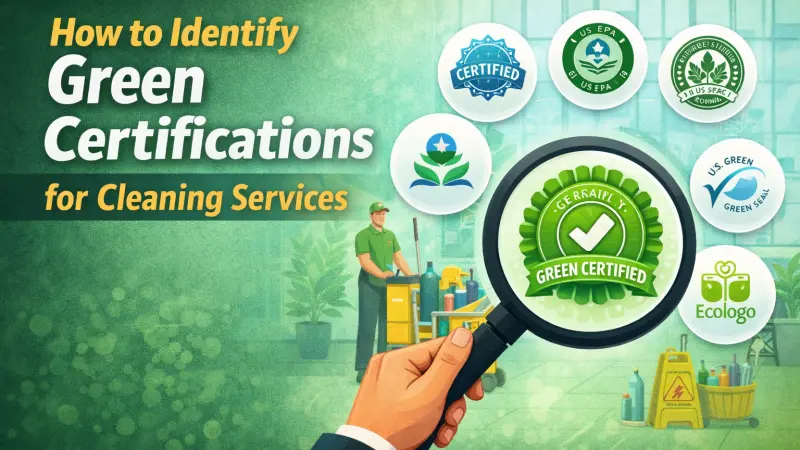
In an era where environmental consciousness is no longer a niche preference but a global necessity, the UK cleaning industry has seen a massive surge in "eco-friendly" claims. From "non-toxic" sprays to "planet-safe" promises, homeowners and business managers are bombarded with terminology designed to appeal to their conscience. However, the rise of greenwashing—the practice of making misleading or unsubstantiated claims about environmental benefits—has made it increasingly difficult to distinguish between a company that truly prioritizes the planet and one that simply uses green packaging.
Identifying genuine green certifications is the most reliable way to ensure your cleaning service aligns with sustainable values. These certifications act as a third-party seal of approval, verifying that the chemicals, processes, and business ethics of a company meet rigorous environmental standards. In this guide, we will explore the specific certifications relevant to the UK market, the differences between service providers, and how to navigate the complex world of sustainable professional cleaning.
Overview: The Importance of Third-Party Verification
The term "green" is not legally protected in the UK. This means any company can claim to be green without having to prove it. Third-party certifications bridge this gap by providing an objective assessment of a company’s impact. Unlike "self-declared" environmental claims, which are often vague, third-party audits involve rigorous testing of the chemical composition, manufacturing footprint, and end-of-life impact of cleaning agents.
The Post-Brexit Landscape
Since the UK left the European Union, there has been some confusion regarding the EU Ecolabel. While the UK now has its own regulatory frameworks (like UK REACH), many professional cleaning chemicals manufactured in Europe and sold in the UK still carry the EU Ecolabel. It remains one of the highest benchmarks for environmental excellence. A company that understands these nuances is a company that is paying attention to the details.
Beyond the Bottle: The "Triple Bottom Line"
A truly certified green service adheres to the "Triple Bottom Line": People, Planet, and Profit.
-
Planet: Using surfactants that don't harm aquatic life in the Thames or the Severn.
-
People: Protecting the respiratory health of the cleaning technicians and the inhabitants of the building.
-
Profit: Ensuring the business remains viable without cutting corners on environmental or social standards.
Franchise vs. Independent Cleaners: The Green Approach
The path to sustainability often looks different depending on the business structure. In the UK, both models have unique advantages when it comes to "going green."
1. National Franchises: The Corporate Standard
Large franchises often have the purchasing power to influence the supply chain.
-
Bespoke Chemical Lines: Some UK franchises partner directly with chemical manufacturers to create plant-based formulas that are exclusive to their brand. This allows for a very high level of quality control.
-
Carbon Offsetting: Larger entities are more likely to participate in carbon-neutral schemes, offsetting the emissions of their fleet of vans across the country.
-
Training Consistency: They use standardized "Green Modules" to ensure that every cleaner knows exactly how to use eco-products without over-saturating surfaces.
2. Independent Cleaners: The Local Innovators
Smaller, local companies often lead through passion and niche expertise.
-
Niche Brands: You’ll often find independent cleaners using UK-made, boutique eco-brands (like Delphis Eco or Bio-D) that bigger companies might find too expensive to scale.
-
Hyper-Local Footprint: An independent cleaner in a city like Bristol or Brighton might use an electric bike or walk to jobs, virtually eliminating transport emissions—something a national franchise with heavy vans struggle to do.
-
Plastic-Free Initiatives: Independent businesses are often the first to adopt truly "circular" economies, such
as taking empty glass bottles back to a local refill shop.
3. The Comparison
| Feature | National Franchise | Independent Specialist |
| Certifications | Often ISO 14001 (Management) | Often Product-Specific (Ecolabel) |
| Scalability | High; good for large offices | Lower; better for domestic/small office |
| Agility | Slow to change corporate policy | Fast to adopt new eco-tech |
| Cost | Mid-range | Can vary significantly |
Deep Dive: The Science of "Certified Green"
To truly identify a green service, you need to understand what the certificates are actually testing. It’s not just about "not using bleach."
1. Surfactants and Aquatic Toxicity
Surfactants are the "cleaning" part of a detergent. Traditional surfactants are often derived from petroleum and can linger in the environment, coating the gills of fish. Green certifications require surfactants to be aerobically and anaerobically biodegradable. This ensures that once the soapy water goes down your drain, it breaks down quickly into harmless water and $CO_2$.
2. VOCs and Indoor Air Quality (IAQ)
The air inside UK homes can be up to five times more polluted than outdoor air, largely due to cleaning chemicals. Volatile Organic Compounds (VOCs) are the "fumes" you smell. Certifications like Indoor Advantage Gold or the EU Ecolabel strictly limit the percentage of VOCs allowed. This is crucial for households with children, elderly residents, or pets.
3. Phosphorus and Eutrophication
Many traditional cleaners contain phosphates, which lead to "algal blooms" in UK waterways, suffocating local fish populations. Certified green products must contain zero or very low levels of phosphorus.
Step-by-Step Decision-Making Guide
Step 1: Verification of Claims
When a company says they are "eco-friendly," ask them for their Sustainability Statement. A legitimate company will have a 1-2 page document detailing their carbon reduction goals, their chemical sourcing, and their waste management. If they can’t produce this, their "green" claim is likely just marketing.
2. The "Refill" Check
Ask about their plastic usage. The UK produces millions of tonnes of plastic waste annually. A certified green service should use:
-
Dosing Systems: Concentrated bottles that provide exactly 10ml of product into a reusable spray bottle.
-
Dissolvable Sachets: Modern "pods" that dissolve in water, meaning the company never has to throw away a plastic bottle.
3. The Methodology Audit
A green certification doesn't just look at the chemical; it looks at the method.
-
Steam Cleaning: Does the company offer steam cleaning? This uses 0% chemicals and is one of the "greenest" ways to sanitize a home.
-
HEPA Filtration: Are their vacuums equipped with HEPA filters? This ensures that dust and allergens are trapped, rather than blown back into the air.
Practical Tips for the UK Homeowner
-
The "Eco-Labelling" App: Use your smartphone to scan logos you don't recognize. Authentic certifications will have a registered number under the logo.
-
Check the Laundry: Does the company wash their microfibre cloths in eco-friendly, low-temperature cycles? There’s no point in using green sprays if the company is using harsh biological powders and high-heat dryers for their cloths.
-
Beware of "Fragrance-Free" vs "Unscented": In the UK, "unscented" often means they’ve added more chemicals to mask the smell of the ingredients. "Fragrance-free" is usually the greener, safer option for those with sensitivities.
Common Mistakes to Avoid
1. The "Vinegar and Bicarb" Myth
While vinegar and bicarbonate of soda are green, they are not disinfectants. They cannot kill pathogens like E. coli or Norovirus. A professional green cleaning service should use certified bio-detergents that are laboratory-tested to kill bacteria while remaining biodegradable. Using only "kitchen cupboard" items for a professional clean is often ineffective.
2. Misinterpreting "Biodegradable"
Technically, everything is biodegradable over a long enough timeline (even plastic). You are looking for "Readily Biodegradable"—meaning 60% or more of the product breaks down within 28 days.
3. Falling for "Green" Packaging
Many brands in the UK use green bottles and images of leaves to signal "eco," while the ingredients inside are standard, harsh chemicals.
Always look for the certification stamp, not just the colour of the bottle.
Supporting Local Business Visibility Beyond Core Marketing Efforts
Identifying a certified green cleaning company is only half the battle; the other half is making sure these ethical businesses can be found by the public. In the UK's competitive service landscape, discoverability is a major hurdle for smaller, independent eco-cleaners who may not have the massive advertising budgets of national corporations. For a local business to thrive, it must establish a consistent and trustworthy presence where consumers are actually looking.
This is where the concept of local presence consistency becomes vital. When a business takes the time to advertise company uk directory listings, they are doing more than just placing an ad; they are building a web of trust signals. If a consumer sees the same green certifications and contact details on an official website and a reputable directory marketing uk platform, their confidence in that business increases. Consistency across these platforms tells search engines and users alike that the business is legitimate and active.
Furthermore, the role of community-driven data cannot be understated. High-quality cleaning services often rely on company ratings uk to prove their worth. For a green cleaning company, a rating isn't just about how clean the floor is; it’s about the client’s experience with their eco-friendly approach—perhaps mentioning that the house didn't smell of harsh bleach or that the staff were knowledgeable about pet safety. By utilizing a free business database directory, even the smallest independent cleaner can compete on a level playing field with larger franchises. These directories act as a bridge, connecting environmentally conscious consumers with local experts who are often overlooked in standard search results. Ensuring your local business is visible on platforms like Local Page UK helps sustain a diverse and green local economy.
The Green Cleaning Verification Checklist
To ensure you aren't being "greenwashed," use this checklist during your next booking:
-
Third-Party Seals: Can they show the EU Ecolabel, EcoCert, or Cradle to Cradle mark?
-
Plastic Strategy: Do they use refills or concentrates rather than single-use bottles?
-
The "Scent" Profile: Is the post-clean smell neutral or naturally derived (essential oils)?
-
DBS & Vetting: While not environmental, ethical treatment of staff is a key part of "Social Sustainability."
-
Microfibre Usage: Do they use high-GSM microfibre cloths instead of paper towels?
-
Water Management: Are they trained in "low-moisture" cleaning techniques to conserve water?
-
Local Credibility: Do they have a verified presence on local directories and positive eco-focused reviews?
Shift Toward Green Cleaning
The shift toward green cleaning in the UK is a vital response to our shared environmental challenges. However, as "eco" becomes a lucrative marketing buzzword, the responsibility lies with the consumer to look for the evidence behind the claims.
True sustainability in the cleaning industry is a marriage of science and ethics. It involves choosing a service that invests in expensive certifications, trains its staff in the chemistry of surfactants, and operates with transparency.
Whether you choose a large franchise for their standardized ISO certifications or a local independent for their low-carbon, bespoke approach, ensure that you are looking for the third-party "stamp" of approval. In doing so, you aren't just getting a clean home; you're supporting a cleaner, healthier United Kingdom.
FAQs
1. Is "Green" cleaning as effective against viruses as bleach?
Yes. Many certified green disinfectants use plant-derived lactic acid or citric acid, which are highly effective at breaking down the lipid envelope of viruses (including Coronaviruses) without the toxic fumes of chlorine bleach.
2. What is the "Cradle to Cradle" certification?
This is a high-level certification that looks at the circularity of a product. It ensures that every ingredient can be safely returned to the environment or infinitely recycled.
3. Why do some eco-cleaners avoid using aerosols?
Aerosols contribute to ground-level ozone and often contain propellants that are greenhouse gases. Certified green services prefer trigger sprays or "fogging" machines that use liquid solutions.
4. Are "Organic" cleaners better than "Green" cleaners?
"Organic" usually refers to the farming of the ingredients, while "Green" refers to the impact of the final product on the ecosystem. Both are good, but "Green" certifications are more relevant to the cleaning process.
5. How do I know if a company's ISO 14001 is legitimate?
A company should be able to provide their certificate number, which you can verify on the UKAS (United Kingdom Accreditation Service) website.
6. Does "Green" cleaning help with asthma?
Yes, significantly. By reducing VOCs and synthetic fragrances, green cleaning minimizes the triggers for asthma and other respiratory conditions.
7. Can a green cleaner handle "End of Tenancy" cleans?
Absolutely. While these require more "mechanical action" (scrubbing), a trained green cleaner can achieve the same "deposit-back" results as a traditional cleaner.
8. What is "Eutrophication" in a cleaning context?
This occurs when phosphates from cleaning products enter rivers, causing excess algae growth that kills fish. Certified green products are designed to prevent this.
9. Is there a UK-specific eco-label?
While the EU Ecolabel is still used, the UK is increasingly looking toward the "Delphis Eco" standard and others that align with the UK REACH regulations.
10. How can I find local green cleaners?
The best way is to check directory marketing uk platforms and filter for companies that explicitly list environmental certifications or have high company ratings uk regarding their eco-friendly methods.
Disclaimer: The information provided in this article is for general informational and research purposes only. Company details, features, services, and market positions may change over time. Readers are advised to visit official company websites and conduct independent research before making any business decisions or purchasing services.
Most Searchable Keywords
Recent Blogs

Related Listings


Categories
- Accountants (295)
- Advertising Agencies (559)
- Architects (149)
- Automobiles (377)
- Beauty (300)
- Carpenters (146)
- Cleaning Services (387)
- Dentists (189)
- Driving (62)
- Education (1)
- Electricians (215)
- Energy (8)
- Event Organiser (689)
- Finance (602)
- Guide (3492)
- Health (2207)
- Information technology (207)
- Legal Services (361)
- Logistics (6)
- Maintenance (65)
Sponsored Listings in Cleaning Services

Related Blogs

Creamfields Daresbury: Impact on Local Reside...
Read this insightful article "Creamfields Daresbury: Impact on Local Residents" to expand your knowledge!

UK High Street Businesses in 2026-27: Which S...
Read this insightful article "UK High Street Businesses in 2026-27: Which Sectors Are Growing?" to expand your knowledge!

Why Complete Business Listings Matter More Th...
Read this insightful article "Why Complete Business Listings Matter More Than You Think" to expand your knowledge!
Questions & Answers – Find What You Need, Instantly!
Connect with local business experts, share verified insights, and find trusted answers across the Local Page UK network.
Ask Community
Ask questions to the Local Page UK community
Share Knowledge
Share your knowledge to help out others
Find Solutions
Find answers or offer instant solutions
Some of the most popular fantasy TV shows include "Game of Thrones," known for its epic battles and political intrigue, "The Witcher," which features monster hunting and magic, and "Stranger Things," blending supernatural elements with 1980s nostalgia. Other notable mentions are "His Dark Materials," "Shadow and Bone," and "The Mandalorian," each offering unique worlds and captivating storytelling that have garnered large fan bases.
When seeking bathroom renovation providers that handle both plumbing and tiling, it's advisable to look for licensed contractors who specialize in comprehensive bathroom remodels. Companies such as Home Depot, Lowe's, and Bath Fitter offer these services, often providing a seamless experience by managing all aspects of the renovation process. Additionally, local contractors with positive reviews in platforms like Angie's List or Houzz may also offer tailored solutions for your bathroom needs.
Absolutely, there are several distributors that supply crash mats and soft play equipment to gymnastics clubs in and around Birmingham. National companies like Gymnova, S & G (Spieth Gymnastics), and Jaques of London offer a wide range of crash mats, foam pits, and soft play pieces, and they typically deliver to the Birmingham area. For more local options, you might try The Gym Equipment Company, which has a showroom in the West Midlands, or check out smaller specialist suppliers like Playtime UK. Many of these distributors cater specifically to clubs, offering high-density foam mats that meet safety standards. I'd recommend reaching out to a few to compare pricing, delivery times, and whether they offer custom sizes or installation services. It's also worth checking if any of them have a physical showroom near Birmingham so you can test the equipment before buying. Happy tumbling!
For professionals seeking a reliable sanitaryware supplier in Manchester with trade account facilities, several established merchants combine extensive product ranges, competitive pricing, and dedicated trade support. The most reputable option is Graham Plumbers Merchant, which operates multiple branches across Manchester, including Salford Quays and Oldham. They offer a dedicated trade account service with preferential pricing, priority delivery scheduling, and access to a vast inventory of leading sanitaryware brands such as Villeroy & Boch, Duravit, Ideal Standard, and Roca. Their trade accounts typically include net 30-day payment terms, online account management, and a tailored project quotation system. Similarly, City Plumbing Supplies has several Manchester-based depots (such as Ashton-under-Lyne and Stockport) that cater specifically to trade customers, providing a rapid order-and-collect service, trade-only promotions, and a loyalty programme offering rebates on repeat purchases. Their product range covers everything from basins and WCs to complete bathroom suites and brassware, with in-house technical advisors available for specification support. Another key player is Plumb Center, part of the Wolseley Group, which offers trade accounts with bespoke pricing structures, direct-to-site deliveries within the Greater Manchester area, and access to over 10,000 lines of sanitaryware, including premium brands like Grohe and Hansgrohe. Their trade portal allows for real-time stock checking and order history tracking, facilitating efficient project management. For those seeking a more specialist or high-end option, Bathroom Spares in Manchester provides trade accounts with a focus on hard-to-find sanitaryware and discontinued ranges, which can be invaluable for refurbishment projects. Additionally, independent merchants such as M&B Plumbase in Trafford Park offer flexible trade terms, personalised service, and competitive pricing on both mainstream and luxury sanitaryware. When evaluating suppliers, trade customers should consider factors beyond price: reliability of stock availability, delivery timescales within Manchester’s often congested zones, clarity of returns policies, and the quality of after-sales support for warranty claims. It is advisable to request a trade account application from at least two to three suppliers to compare discounts, minimum order values, and payment terms. Many suppliers also offer showroom access for trade clients, allowing you to inspect finishes and dimensions before committing to large orders. For ongoing projects, establishing a relationship with a single supplier who offers consolidated invoicing and dedicated account management can streamline procurement. Ultimately, the most reliable supplier for your trade account in Manchester will be one that aligns with your volume requirements, preferred brands, and service expectations, so a site visit to their local branch and a discussion about your specific trade needs is highly recommended before committing to an account.
People in Leeds are loving their local florists—customers often mention gorgeous, fresh arrangements and super friendly service. Many rave about reliable same-day delivery and creative wedding bouquets. A few note pricing can vary, but overall, the buzz is all about quality and that personal touch making every order feel special.
Common problems for commercial gardening in Bristol include weed overgrowth, soil degradation, pest infestations, and irrigation malfunctions. Additionally, managing seasonal transitions, adhering to sustainability regulations, and maintaining consistent aesthetics pose significant challenges. Expert services mitigate these via structured maintenance, integrated pest management, and soil analysis to ensure long-term landscape health.