
In what ways can AI-driven analytics improve targeting of high-value financial leads
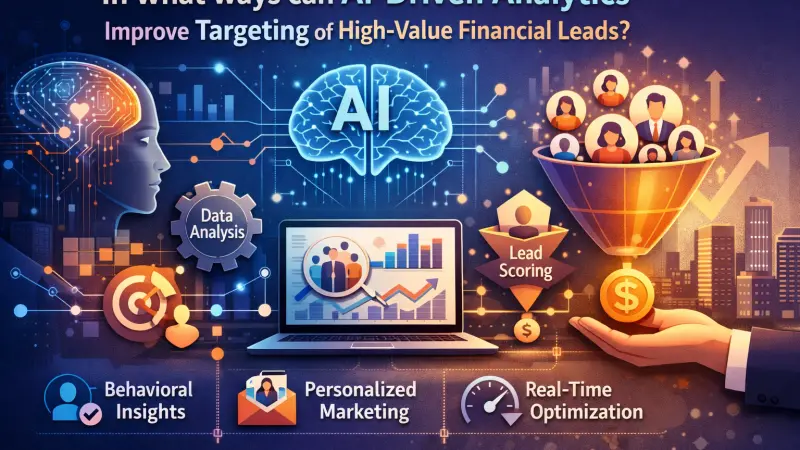
How can financial institutions distinguish a casual browser from a high-net-worth individual ready to invest millions? In an era where data is often described as the new oil, the challenge for the UK financial sector is no longer the acquisition of data, but the refinement of it. AI-driven analytics have emerged as the most potent tool for this task, moving beyond traditional demographic snapshots to provide a multi-dimensional view of potential clients. By leveraging sophisticated machine learning algorithms, firms can now predict future behaviours with startling accuracy, ensuring that marketing resources are allocated to the prospects most likely to yield significant long-term value. This shift from broad-spectrum advertising to precision-engineered targeting is redefining the competitive landscape of the City of London and beyond.

The Evolution of Lead Identification in Finance
Historically, the financial services industry relied on static indicators such as credit scores, annual income, and geographic location to identify potential leads. While these metrics provided a baseline, they frequently failed to capture the nuances of financial intent or the timing of a major life event. AI-driven analytics represent a quantum leap forward by integrating real-time behavioural data, social sentiment, and historical transaction patterns. This holistic approach allows firms to identify "high-value" leads those who not only possess the requisite capital but also demonstrate a genuine need for specific financial products. In the modern UK market, where consumer expectations for personalisation are at an all-time high, the ability to anticipate a client’s needs before they explicitly state them is a significant competitive advantage.
The integration of artificial intelligence into the sales funnel has effectively digitised the "intuition" once held only by veteran relationship managers. Advanced algorithms can sift through petabytes of unstructured data, identifying subtle correlations that human analysts might overlook. For example, a sequence of specific searches related to inheritance tax combined with visits to luxury property portals can signal a looming need for wealth management services. By identifying these patterns early, financial institutions can engage prospects with relevant information at the exact moment they enter the consideration phase. This proactive engagement reduces the cost per acquisition while simultaneously increasing the conversion rate of high-tier financial products, such as bespoke pensions or private equity opportunities.
Predictive Modelling and Propensity Scoring
At the heart of AI-driven targeting is the concept of predictive modelling. By analysing the characteristics and behaviours of existing high-value clients, AI systems create "lookalike" profiles to scan the broader market. This process involves assigning a propensity score to every lead in the database, indicating the likelihood of that individual becoming a profitable client. Unlike traditional lead scoring, which is often based on arbitrary point systems, AI-driven scoring is dynamic. It updates in real-time as the prospect interacts with digital touchpoints, ensuring that the sales team is always focused on the "hottest" opportunities. This level of precision is particularly vital for UK firms dealing with complex regulatory environments, as it ensures that marketing efforts remain compliant and highly relevant to the recipient's specific financial standing.
Furthermore, predictive analytics allow for better segmentation of the "high-value" category itself. Not all wealthy individuals share the same priorities; some may be focused on aggressive growth, while others prioritise capital preservation or ESG (Environmental, Social, and Governance) investing. AI can segment these leads based on their psychographic profiles—their values, attitudes, and lifestyle choices. By understanding these underlying drivers, financial advisors can tailor their messaging to resonate on a deeper level. For instance, a lead identified as being interested in sustainable finance can be targeted with green bond opportunities or ethical investment portfolios. This hyper-personalisation fosters trust and demonstrates a level of expertise that generic marketing materials simply cannot match, ultimately securing a higher quality of client relationship.
Enhancing Customer Lifetime Value (CLV) Through Data
Targeting high-value leads is not merely about the initial conversion; it is about the long-term sustainability of the relationship. AI-driven analytics play a crucial role in predicting Customer Lifetime Value (CLV), helping firms understand which prospects will remain profitable over decades. By analysing churn patterns and cross-selling successes among similar demographics, AI can highlight leads that are likely to adopt multiple products, such as mortgages, insurance, and investment accounts.
In the UK’s mature financial market, where acquiring a new customer is significantly more expensive than retaining an existing one, focusing on leads with high predicted CLV is a mathematically superior strategy for long-term institutional growth and stability.
Moreover, AI tools can identify potential "upgrade" paths for leads who may currently be in a mid-tier bracket but show indicators of rapid wealth accumulation. Entrepreneurs, rising corporate executives, and tech innovators often exhibit specific digital footprints before their liquid assets reflect their true value. AI-driven analytics can flag these "emerging high-value" individuals, allowing firms to build relationships early. By providing value during the growth phase of a client's wealth journey, financial institutions can secure loyalty that lasts through the client’s transition into the ultra-high-net-worth category. This strategic foresight, powered by big data, ensures a constant pipeline of premium business that is resilient to short-term market fluctuations.
The Role of Natural Language Processing (NLP)
Natural Language Processing (NLP) is another facet of AI that significantly improves lead targeting. By "listening" to public discourse, social media trends, and even the sentiment of financial news, NLP can identify macro-trends that influence lead behaviour. On a more granular level, NLP can analyse the transcripts of initial enquiries or chatbot interactions to gauge the sentiment and urgency of a lead. A prospect who uses specific terminology related to "portfolio diversification" or "offshore tax efficiency" is immediately categorised differently than one asking about basic savings accounts. This automated qualitative analysis ensures that the nuance of human language is captured and used to refine the lead's profile, providing a level of detail that traditional data fields simply cannot accommodate.
In the context of the UK’s "Consumer Duty" regulations, NLP also serves as a protective layer. It can ensure that leads are not being targeted with products that are unsuitable for their level of financial literacy or risk appetite. By analysing the language used by the lead, the AI can flag potential vulnerabilities or misunderstandings, prompting a human advisor to intervene with a more educational approach. This intersection of high-tech targeting and ethical responsibility is where the future of UK finance lies. It creates a system where high-value leads are not just "captured," but are matched with the financial solutions that genuinely serve their best interests, thereby reducing the risk of future disputes and enhancing the firm's reputation in a crowded marketplace.
Operational Efficiency and Cost Reduction
Implementing AI-driven analytics leads to a drastic reduction in "waste" within the marketing department. Traditionally, financial firms might spend thousands on broad-reach campaigns across LinkedIn or financial news sites, hoping to catch the eye of the right person. AI allows for "programmatic" targeting, where ad spend is only triggered when a user matching a specific high-value profile is detected. This ensures that every pound spent on advertising is working toward a high-probability conversion. For UK financial institutions facing rising operational costs and increased competition from agile fintech startups, this efficiency is not just a luxury—it is a necessity for maintaining healthy margins and satisfying shareholders.
Beyond advertising, AI streamlines the work of the sales and business development teams. Instead of cold-calling or manually sifting through thousands of LinkedIn profiles, advisors receive a curated list of leads with detailed dossiers on why they were selected. This allows for more meaningful opening conversations, as the advisor already understands the prospect's likely pain points and goals.
The time saved can be reinvested into higher-level strategic planning or providing more intensive support to existing top-tier clients. When the technology handles the "search and sort" functions, human professionals are freed to do what they do best: build the deep, trust-based relationships that are the hallmark of high-end UK financial services.
Ethical Considerations and Data Privacy
With the power of AI-driven analytics comes the heavy responsibility of data privacy and ethical usage. In the UK, compliance with GDPR (General Data Protection Regulation) is paramount. High-value leads are often particularly sensitive about their financial privacy, and any perceived breach of trust can be catastrophic for a brand. AI systems must be designed with "privacy by design" principles, ensuring that data is anonymised where possible and that the "right to be forgotten" is strictly respected. Furthermore, transparency in how AI reaches its conclusions is becoming a regulatory requirement. Firms must be able to explain why a lead was targeted to avoid biases that could lead to discriminatory practices, ensuring the technology is used fairly across all demographics.
Ethical targeting also means avoiding the exploitation of psychological triggers identified by AI. While an algorithm might find that a certain lead is more likely to buy a high-risk product during a period of market volatility, an ethical firm will use that information to provide stabilizing advice rather than a hard sell. In the long run, the most successful UK financial institutions will be those that use AI to enhance the client's well-being, not just the firm's bottom line. By positioning AI as a tool for better service rather than just a tool for better selling, companies can build a sustainable brand that attracts the most discerning and valuable clients in the world, who value integrity as much as they do financial returns.
Key Benefits of AI-Driven Lead Targeting
- Increased Conversion Rates: Focusing on leads with high propensity scores leads to more efficient sales cycles.
- Resource Optimisation: Marketing budgets are spent only on prospects with the highest potential return.
- Enhanced Personalisation: Bespoke messaging based on behavioural and psychographic data points.
- Regulatory Compliance: Using AI to ensure product suitability and adhere to Consumer Duty standards.
- Future-Proofing: Identifying emerging wealth trends before they become mainstream.
Frequently Asked Questions
How does AI identify a 'high-value' lead compared to traditional methods?
Traditional methods rely on static data like income or age. AI-driven analytics use dynamic data, including online behaviour, transaction patterns, and social sentiment, to predict both the capacity and the intent of a lead to engage with high-tier financial services.
Is AI-driven lead targeting compliant with UK GDPR?
Yes, provided the system is built with privacy-first protocols. This includes obtaining proper consent, ensuring data security,
and maintaining transparency about how data is used to inform marketing and targeting decisions.
Can small financial firms afford AI-driven analytics?
While the initial investment can be significant, many SaaS (Software as a Service) platforms now offer AI lead scoring and analytics on a subscription basis, making it accessible for smaller UK boutiques and independent financial advisors.
Does AI replace the role of the financial advisor?
No. AI acts as an enhancement tool. It handles the data-heavy task of identification and initial qualification, allowing the human advisor to focus on building complex, high-trust relationships that technology cannot replicate.
What kind of data does AI need to target leads effectively?
AI performs best with a mix of first-party data (your own client history), third-party data (market trends, demographic databases), and behavioural data (website interactions, search history).
How quickly can AI analytics show results in lead generation?
While some efficiencies are immediate, such as better ad targeting, the full benefits of predictive modelling typically emerge after three
to six months as the machine learning algorithms "learn" from the specific conversion data of your firm.
Understanding the intricacies of the modern digital landscape is essential for any professional firm looking to grow. In the UK, where competition for premium financial clients is intense, the ability to appear in the right place at the right time is paramount. For those looking to increase their market presence, utilising a verified business directory can be an excellent first step in establishing credibility. We recommend that firms looking to enhance their reach explore the Local Page UK platform. By ensuring your firm is present in a free business search directory or a comprehensive company directory online, you can significantly improve your digital footprint. Whether you are searching for a free company search directory to research competitors or looking to secure a free listing to bolster your own online visibility, these tools complement AI-driven strategies by providing a foundation of trust and accessibility in the broader business community.

Disclaimer: The information provided in this article is for general informational and research purposes only. Company details, features, services, and market positions may change over time. Readers are advised to visit official company websites and conduct independent research before making any business decisions or purchasing services.
Most Searchable Keywords

Recent Blogs



Related Listings


Categories
- Accountants (295)
- Advertising Agencies (559)
- Architects (149)
- Automobiles (377)
- Beauty (300)
- Carpenters (146)
- Cleaning Services (386)
- Dentists (189)
- Driving (62)
- Electricians (215)
- Energy (8)
- Event Organiser (685)
- Finance (599)
- Guide (3365)
- Health (2207)
- Information technology (206)
- Legal Services (353)
- Logistics (6)
- Maintenance (65)
- Manufacturing (35)

Sponsored Listings in Locksmith Services


Related Blogs

Gen Z Political Reporters and News Creators i...
Read this insightful article "Gen Z Political Reporters and News Creators in the UK" to expand your knowledge!

Famous Female Social Media Influencers Across...
Read this insightful article "Famous Female Social Media Influencers Across the UK" to expand your knowledge!

Your UK Sponsor Licence 2026 Step by Step Gui...
Read this insightful article "Your UK Sponsor Licence 2026 Step by Step Guide" to expand your knowledge!
Questions & Answers – Find What
You Need, Instantly!
How can I update my business listing?
Is it free to manage my business listing?
How long does it take for my updates to reflect?
Why is it important to keep my listing updated?
