
Listing Your Freight Business on Industry-Specific Platforms
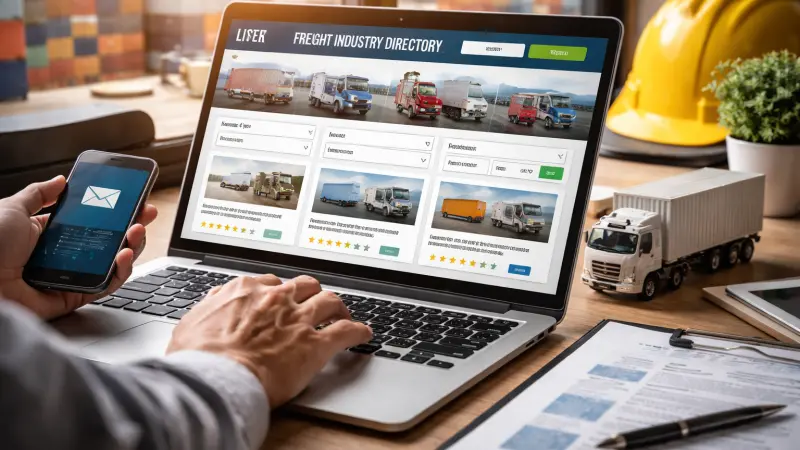
Imagine a mid-sized haulage firm in the East Midlands with a solid track record, competitive rates, and reliable drivers — yet its phone barely rings with new enquiries. The problem isn't the service; it's the visibility. In an industry where shippers, freight brokers, and supply chain managers increasingly turn to digital platforms to source carriers and logistics partners, being absent from the right directories can mean missing out on a significant volume of business. If your freight business isn't listed where decision-makers are looking, a competitor almost certainly is.
This guide explores why listing your freight business on industry-specific platforms matters, which types of platforms are worth your attention, how to optimise your listings for maximum impact, and what to avoid along the way. Whether you operate a single-vehicle courier service or manage a large fleet of HGVs, understanding the digital landscape of freight business listing platforms is increasingly essential in today's competitive UK logistics market.
Why Industry-Specific Listings Matter for Freight Companies
General business directories have their place, but freight and logistics is a specialist sector. Shippers searching for a refrigerated transport provider or a customs-clearance expert are unlikely to browse a generic local business listing. They are far more likely to use sector-specific tools — freight exchanges, logistics directories, carrier networks, and industry association databases — where the results are tailored to their precise requirements.
Listing your freight business on industry-specific platforms offers several distinct advantages over broader marketing approaches:
- Qualified leads: Visitors to freight-specific platforms already understand logistics. They are searching with buying intent, which makes them far more valuable than cold traffic from general search engines.
- Credibility signals: Appearing on recognised industry directories lends legitimacy to your operation. Many platforms require verification of licences, insurance, and operator standards before listing, which reassures potential clients.
- Improved search engine visibility: Listings on established platforms often appear in search engine results pages (SERPs), meaning your business can be discovered even by users who never visit the directory directly.
- Networking opportunities: Some platforms are as much about connecting businesses as they are about client acquisition. Partnerships, sub-contracting arrangements, and backloading opportunities frequently emerge through industry directories.
- Cost-effective marketing: Compared with paid advertising campaigns, many listing opportunities carry low or no fees, making them a highly efficient use of limited marketing budgets.
Types of Industry-Specific Platforms for Freight Businesses
Not all platforms are created equal. Understanding the distinct categories of industry-specific listings will help you prioritise where to invest your time and resources.
1. Freight Exchanges
Freight exchanges are online marketplaces where shippers post loads and carriers bid for the work. They operate in real time and are particularly useful for filling empty vehicle capacity. Leading UK examples include Haulage Exchange, Courier Exchange, and Road Transport Exchange. These platforms suit carriers of all sizes, though they typically charge membership fees and may take a commission on transactions.
Freight exchanges are best suited for businesses looking to increase vehicle utilisation quickly and access a steady stream of load opportunities. However, competition on price can be intense, so it is important to ensure your listing accurately reflects your capabilities and specialisms to stand out beyond rate alone.
2. Logistics and Transport Directories
These are searchable databases of freight service providers, organised by sector, service type, or geography. Unlike freight exchanges, they do not facilitate direct transactions. Instead, they function as reference tools for procurement professionals, supply chain managers, and shippers researching potential carriers. Examples include the Road Haulage Association (RHA) member directory, the Freight Transport Association (now Logistics UK) supplier listings, and specialist directories focused on sectors such as temperature-controlled logistics, hazardous goods transport, or last-mile delivery.
For many freight companies, being listed in a respected industry association's directory carries particular weight, as it signals compliance, professionalism, and engagement with sector standards.
3. Trade Association Databases
Membership of a relevant trade association — such as the RHA, CILT (Chartered Institute of Logistics and Transport), or the British International Freight Association (BIFA) — often comes with directory inclusion as a benefit. These listings are highly credible, as membership itself implies a degree of vetting and commitment to industry standards. For international freight forwarders, inclusion in BIFA's member directory can be particularly influential with import and export clients.
4. Port and Terminal Directories
Many UK ports and logistics hubs maintain directories of approved hauliers, freight forwarders, and customs agents who regularly operate within their facilities. For businesses specialising in port-related logistics — container haulage, ferry freight, or customs clearance — securing a listing in these directories can be highly targeted and commercially valuable.
5. Customs and Compliance Directories
Post-Brexit, customs compliance has become an increasingly important specialism in UK freight. Directories maintained by HMRC-authorised intermediaries, customs agents' associations, and trade facilitation bodies are now consulted regularly by importers and exporters seeking compliant logistics partners. If your business offers customs brokerage or AEO-certified services, listings in this category deserve particular attention.
6. Sector-Specific Supply Chain Directories
Certain industries — automotive, pharmaceutical, retail, construction, and food and beverage, among others — maintain their own supplier directories or procurement portals.
If your freight business specialises in serving one of these sectors, identifying and listing within sector-specific databases can yield highly targeted enquiries from businesses actively seeking your exact service profile.
How to Create an Effective Freight Business Listing
Securing a spot on a relevant platform is only the first step. The quality of your listing determines whether it generates meaningful interest or simply occupies space. The following principles apply across most freight directory and exchange platforms.
Be Specific About What You Offer
Vague descriptions such as "we provide transport services across the UK" are unlikely to attract targeted enquiries. Instead, be precise about your capabilities. State the types of vehicles in your fleet, the maximum payload you can accommodate, the geographical areas you cover, and any specialist services you provide — such as temperature-controlled transport, oversized load haulage, hazardous goods certification, or same-day delivery.
Specificity not only improves the relevance of your listing to potential clients, but it also helps platform algorithms surface your profile for the right searches.
Include Verified Credentials
Many shippers and freight brokers will not engage with a carrier that cannot demonstrate proper licensing and insurance. Where the platform allows, include your Operator Licence number, your insurance certificate details, and any relevant accreditations — such as ISO 9001, FORS (Fleet Operator Recognition Scheme), or Safe Contractor status. Verified credentials build trust and reduce friction in the initial stages of a commercial relationship.
Use Professional Photography
Images of your fleet, depot, or team convey professionalism and help potential clients visualise the scale and nature of your operation. Blurry smartphone photographs are unlikely to impress a procurement manager evaluating multiple carriers. Investing in a modest amount of professional photography can meaningfully differentiate your listing from competitors.
Keep Contact Information Accurate and Consistent
Inconsistent business information across directories — different telephone numbers, address variations, or trading name discrepancies — can undermine trust and create confusion. Ensure that your name, address, phone number, and website URL are identical across every platform where you are listed. This consistency also supports your search engine optimisation, as search engines use matching business information as a signal of credibility.
Write a Compelling Business Description
Your business description should clearly communicate who you are, what you do, who your ideal client is, and why you are a reliable choice. Avoid clichés such as "premier provider" or "market-leading solutions." Instead, focus on concrete facts: years in operation, fleet size, key sectors served, and geographical reach. A well-crafted description that speaks directly to a shipper's concerns will outperform generic marketing copy every time.
Encourage and Respond to Reviews
Where platforms support client reviews or ratings, actively encourage satisfied customers to leave feedback. Positive reviews significantly increase the credibility of your listing and can influence the decision of an undecided shipper. When reviews are received — positive or otherwise — respond professionally. A courteous and constructive response to a negative review demonstrates accountability and maturity, which are qualities that experienced procurement professionals value.
Prioritising Platforms: Where to Start
For freight businesses new to platform listing, it can be difficult to know where to begin. The following framework can help you prioritise:
Step 1 — Audit Your Current Presence
Before adding new listings, establish what already exists. Search for your business name and trading name on major freight directories, general business directories, and Google Maps. You may find incomplete or inaccurate listings that should be claimed and corrected before new ones are created.
Step 2 — Identify Your Core Client Profile
Who are your ideal clients? Are they small importers searching for customs clearance support, or large retailers needing dedicated transport contracts? Your ideal client profile will determine which platforms are most likely to generate relevant enquiries. If your clients are predominantly found through freight exchanges, prioritise those. If you serve specialist sectors, focus on sector-specific directories.
Step 3 — Start with Free or Low-Cost Listings
Many reputable platforms offer free basic listings. Claim and optimise these before committing to paid subscriptions. This allows you to test which platforms generate engagement without significant financial risk.
Once you identify which directories are producing enquiries, you can consider upgrading to enhanced listings or paid placements.
Step 4 — Join Relevant Trade Associations
If you are not already a member of a relevant trade association, consider whether the directory inclusion, credibility benefits, and networking opportunities justify the membership fee. For many freight businesses, association membership pays for itself through new business introductions within the first year.
Step 5 — Review and Update Regularly
A listing created and forgotten quickly becomes outdated. Fleet sizes change, services evolve, contact details shift. Set a reminder to review all your listings at least twice annually. An outdated listing — particularly one with incorrect contact details — can actively damage your reputation.
Common Mistakes to Avoid
Freight businesses that invest time in platform listings sometimes undermine their efforts through avoidable errors. The following are among the most common pitfalls.
Listing on Too Many Irrelevant Platforms
There is no merit in accumulating listings on directories unrelated to your business. A freight company listed on a wedding services directory or a beauty industry supplier database is not gaining credibility — it is generating noise. Focus your efforts on platforms where your target clients are actively searching.
Neglecting to Monitor Enquiries
Some platforms route enquiries through their own messaging systems rather than directly to your email. If you are not regularly checking these inboxes, you may be missing commercial opportunities. Set up notifications or designate someone within your business to monitor platform messages consistently.
Overstating Your Capabilities
It may be tempting to describe your business as capable of handling any load, any route, any timeline. However, misleading potential clients about your capacity or specialisms will quickly lead to dissatisfaction, negative reviews, and reputational damage. Honest, accurate listings attract clients who are genuinely suited to what you offer.
Ignoring Competitor Listings
Periodically reviewing how competitors present themselves on the same platforms can yield valuable insights. Are they highlighting accreditations you also hold but haven't mentioned? Are they covering geographic areas you serve but haven't listed? Competitor analysis is not about imitation; it is about ensuring your listing communicates your full value proposition.
The Role of General Business Directories in a Freight Company's Digital Strategy
While industry-specific platforms should be the priority for freight businesses, general business directories also have a supporting role to play. Listings on well-established business directories in the UK can improve your overall online visibility, contribute to your local search presence, and provide additional backlinks to your website — all of which support your broader digital marketing effort.
Many procurement professionals and logistics managers also use general search engines as a starting point, and a strong presence across business directories in the UK can help ensure your business appears in relevant searches. The cumulative effect of consistent listings across multiple directory platforms — both industry-specific and general — contributes to a more authoritative online presence.
For freight companies operating locally or regionally, appearing in a well-maintained directory UK business database can make the difference between being discovered by a nearby shipper or being overlooked entirely.
When considering which uk small business directory platforms to include in your digital strategy, look for those with established domain authority, active user bases, and categories relevant to logistics and transport. Not all business directories in uk carry equal weight, so it is worth prioritising quality over quantity.
Measuring the Impact of Your Listings
As with any marketing activity, it is important to evaluate whether your platform listings are generating a return. Consider implementing the following measurement approaches:
- Unique telephone numbers: Assign different phone numbers to different platforms. When a call comes in, you will know which directory it originated from.
- UTM parameters on website links: If your listing includes a link to your website, append UTM tracking parameters to the URL so that your analytics platform can identify traffic from each directory source.
- Ask new enquirers directly: A simple "How did you find us?" question during initial contact can quickly reveal which platforms are performing.
- Monitor listing views and click data: Many platforms provide basic analytics showing how many times your listing has been viewed or how often your contact details have been accessed. Review these metrics regularly.
If a platform consistently produces no engagement after six to twelve months, it may not be the right fit for your business, and your time would be better directed elsewhere.
Looking Ahead: The Evolving Landscape of Freight Platform Listings
The digital infrastructure of the UK freight industry continues to evolve. Artificial intelligence is increasingly being applied to freight matching, with some platforms moving beyond simple directories to offer predictive load matching, dynamic pricing tools, and automated carrier selection. Businesses that establish a strong digital presence now — with accurate, optimised, well-maintained listings — will be better positioned to benefit from these emerging capabilities.
Environmental credentials are also becoming an increasingly important differentiator. As sustainability reporting requirements expand across supply chains, shippers are more frequently seeking carriers who can demonstrate low-emission fleet management, carbon offsetting programmes, or alternative fuel vehicle use. If your business has measurable environmental credentials, incorporating these into your platform listings is likely to grow in commercial importance over the coming years.
Finally, the integration of digital freight platforms with enterprise resource planning (ERP) systems and transport management systems (TMS) means that carrier data held within directories may increasingly feed directly into automated procurement processes. Maintaining accurate, comprehensive listings today is an investment in future-proofing your business's discoverability within an increasingly automated supply chain environment.
Final Thoughts
For freight businesses operating in the UK, establishing a thoughtful, well-maintained presence across industry-specific platforms is one of the most cost-effective steps available to improve commercial visibility and attract new clients. The effort required to create accurate, detailed, and credible listings is modest compared to the potential return — particularly when those listings are placed on platforms where qualified buyers are actively searching.
Start with an honest audit of your current digital presence, prioritise the platforms most relevant to your clients and specialisms, and commit to keeping your listings accurate and up to date. Over time, this disciplined approach to platform listing will contribute meaningfully to the growth and reputation of your freight business.
For businesses looking to broaden their online footprint beyond sector-specific platforms, general business directories can also play a useful complementary role. Local Page UK is one example of a business directory UK platform where freight and logistics businesses can create a presence, helping improve discoverability across a wider range of directory UK business searches and supporting visibility within broader business directories in UK databases.
Frequently Asked Questions
What is the difference between a freight exchange and a freight directory?
A freight exchange is an active marketplace where shippers post loads and carriers bid for them in real time. A freight directory is a searchable database that allows shippers to find and contact carriers directly, without facilitating the transaction itself. Both serve different purposes: freight exchanges are useful for filling immediate capacity, while directories are better for building long-term client relationships and brand visibility.
Do I need to pay to list my freight business on industry platforms?
Not necessarily. Many platforms offer free basic listings, which can be sufficient for smaller operations or those just starting to build their digital presence. Paid listings typically offer enhanced visibility, priority placement, or access to additional features such as load matching tools or analytics dashboards. It is advisable to begin with free options, assess which platforms generate genuine enquiries, and then consider upgrading selectively.
How many platforms should my freight business be listed on?
There is no fixed answer, but the principle of quality over quantity applies. Being thoroughly listed on five or six highly relevant platforms will typically outperform having incomplete listings on twenty. Focus on platforms that your target clients are most likely to use, and ensure each listing is accurate, complete, and regularly maintained.
How can I ensure my freight listing ranks well within a platform's search results?
Most platform search algorithms favour listings that are complete, accurate, and actively maintained. Ensure you have filled in every available field, used specific and relevant terminology in your description, included verified credentials, and accumulated positive reviews where the platform supports them.
Some platforms also offer paid placement for higher visibility, which can be worth considering once you have confirmed a platform is generating relevant traffic.
Is it worth listing a freight business on general business directories as well as industry-specific ones?
Yes, though general directories should be treated as supplementary rather than primary. Listings on reputable business directories in UK can improve your overall search engine visibility, support local SEO, and provide additional credibility signals. However, the most commercially valuable enquiries for freight businesses are typically generated through sector-specific platforms, where visitors already have a logistics requirement in mind.
Disclaimer: The information provided in this article is for general informational and research purposes only. Company details, features, services, and market positions may change over time. Readers are advised to visit official company websites and conduct independent research before making any business decisions or purchasing services.
Most Searchable Keywords
Recent Blogs


Related Listings


Categories
- Accountants (295)
- Advertising Agencies (559)
- Architects (149)
- Automobiles (377)
- Beauty (300)
- Carpenters (146)
- Cleaning Services (387)
- Dentists (189)
- Driving (62)
- Education (1)
- Electricians (215)
- Energy (8)
- Event Organiser (687)
- Finance (602)
- Guide (3482)
- Health (2207)
- Information technology (206)
- Legal Services (361)
- Logistics (6)
- Maintenance (65)
Sponsored Listings in Dentists
Related Blogs

Ghost Brokers Fake Car Insurance Scam Explain...
Read this insightful article "Ghost Brokers Fake Car Insurance Scam Explained" to expand your knowledge!

UK Baby Names Fastest Rising and Falling Name...
Read this insightful article "UK Baby Names Fastest Rising and Falling Names" to expand your knowledge!

How to Claim for Pothole Damage From Your Cou...
Read this insightful article "How to Claim for Pothole Damage From Your Council" to expand your knowledge!
Questions & Answers – Find What You Need, Instantly!
Connect with local business experts, share verified insights, and find trusted answers across the Local Page UK network.
Ask Community
Ask questions to the Local Page UK community
Share Knowledge
Share your knowledge to help out others
Find Solutions
Find answers or offer instant solutions
For retail fit-out in Manchester, leading commercial architects include Leach Rhodes Walker, SimpsonHaugh, and Buttress, each delivering precise, brand-focused interiors with strong project management. Alternatively, consult the RIBA Manchester directory for accredited practices vetted for retail sector expertise. Always review their retail portfolio and contractor relationships to ensure seamless delivery against programme and budget.
To identify a reputable architectural consultancy in Birmingham, consult the Royal Institute of British Architects’ directory, filter by commercial or industrial expertise, and review project case studies. Prioritise firms with demonstrable success in warehouse planning applications, local planning authority knowledge, and positive client testimonials. Request references and verify their accreditation before commissioning services.
Notable London-based firms offering in-house 3D visualisation for large-scale mixed-use schemes include Foster + Partners, Zaha Hadid Architects, RSHP, PLP Architecture, and WilkinsonEyre. These practices combine architectural design with advanced CGI, enabling comprehensive pre-construction analysis, stakeholder engagement, and photorealistic representation of complex urban projects.
Yes, several Bristol architectural practices focus on historic building restoration for commercial clients, including Ferguson Mann and Stride Treglown. When selecting a specialist, verify their experience with listed buildings, conservation area consent, and heritage-led funding. Engaging a RIBA-accredited conservation architect ensures compliance, sensitive material reuse, and robust project stewardship. We recommend requesting case studies of similar commercial restorations before commissioning services.

387,388+ Questions Solved Instantly
Join thousands of verified business owners & customers sharing answers daily on Local Page UK.