
Locating Cleaning Services for Specialized Waste Disposal
- 👤 Alex
- 👁️ 117 Views
- Last Updated: April 16, 2026
- 🏷️ Cleaning Services
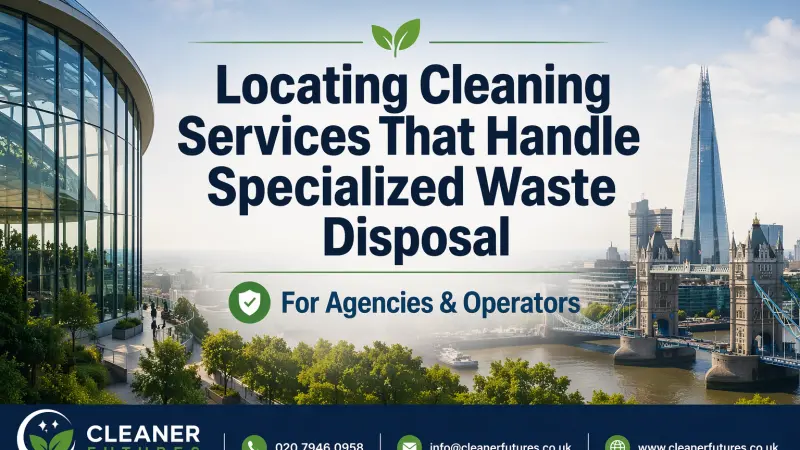
Navigating the world of professional cleaning often involves standard tasks like vacuuming, dusting, and sanitizing common surfaces. However, certain situations demand a much higher level of technical expertise and regulatory compliance. Whether you are dealing with a construction site's leftover hazardous materials, clinical waste from a home-care setting, or biohazardous materials after an incident, standard cleaning crews are not equipped for the task. Specialized waste disposal requires a unique subset of skills, specific certifications, and heavy-duty equipment to ensure the environment is safe for human occupancy.
Locating a service provider that can bridge the gap between "clean" and "decontaminated" is a critical task for property managers, homeowners, and business owners alike. This process involves more than a simple search; it requires an understanding of waste classifications, disposal laws, and the environmental impact of improper handling. This guide provides a detailed roadmap for identifying, vetting, and booking cleaning specialists who possess the necessary credentials to manage complex waste streams safely and legally.
Understanding Specialized Waste: What Qualifies?
Before searching for a provider, it is essential to define what constitutes specialized waste. Generally, this refers to any materials that cannot be disposed of via standard municipal waste streams due to their potential risk to human health or the environment.
Biohazardous and Clinical Waste
This includes materials contaminated with blood, bodily fluids, or pathogens. It is common in medical facilities, laboratories, and sometimes in residential "trauma" or "hoarding" cleanups. Improper handling can lead to the spread of infectious diseases.
Hazardous Chemical Waste
Leftover industrial solvents, lead-based paints, asbestos, or heavy metal residues fall into this category. These materials require specific neutralisation processes and specialized transport containers to prevent environmental contamination.
Electronic and Universal Waste
While less "dangerous" in an immediate sense, e-waste contains heavy metals like mercury and lead. Large-scale office cleanouts often require specialists who can provide a "cradle-to-grave" audit trail for disposed electronics.
The Risks of Improper Disposal
The temptation to treat specialized waste as general rubbish can lead to severe consequences. Beyond the obvious health risks to the person handling the material, there are significant legal and environmental ramifications.
-
Legal Liability: In many jurisdictions, the "generator" of the waste (the property owner) is legally responsible for that waste until it is properly processed. If a cleaning crew dumps hazardous material illegally, the property owner can face massive fines.
-
Environmental Impact: Chemicals or biohazards introduced into the water table or soil can cause long-term ecological damage, often resulting in expensive remediation projects.
-
Safety Hazards: Specialized waste often requires PPE (Personal Protective Equipment) such as respirators, hazmat suits, and heavy-duty gloves. Standard cleaning staff lack this equipment and the training to use it effectively.
Advanced Decontamination Techniques
When handling specialized waste, professionals don't just "wipe down" surfaces. They employ advanced decontamination techniques that go beyond surface-level aesthetics.
Fogging and Aerolisation
In cases of viral or bacterial contamination, specialists may use ultra-low volume (ULV) fogging machines. These devices disperse a fine mist of disinfectant that reaches into cracks, crevices, and porous materials where traditional wiping cannot reach. This ensures that the air and all vertical surfaces are neutralized.
HEPA Filtration and Air Scrubbing
For waste that involves particulates—such as lead dust or mold spores—specialists use industrial air scrubbers equipped with HEPA filters. These machines cycle the air in a room several times an hour, stripping out 99.97% of microscopic particles that could cause respiratory distress if left behind.
ATP Testing for Verification
To prove that a surface is biologically clean, many specialists use ATP (Adenosine Triphosphate) testing. This involves swabbing a surface and using a luminometer to detect cellular activity. It provides an objective, scientific measure of cleanliness that goes far beyond a visual inspection.
Step-by-Step: How to Locate and Vet a Specialized Provider
1. Define the Waste Stream
Before making calls, document exactly what needs to be removed. Is it liquid or solid? Is it biological or chemical?
Providing a detailed inventory helps the service provider determine if they have the specific license required for that material.
2. Verify Licenses and Certifications
Specialized cleaners must hold specific waste carrier licenses. In the UK, for instance, they must be registered with the Environment Agency. Ask for their license number and verify it on the official government registry. Additionally, look for industry-specific certifications like the British Institute of Cleaning Science (BICSc) or similar local bodies.
3. Inquire About Disposal Documentation
A reputable firm will provide a "Waste Transfer Note" (WTN) or a "Consignment Note" for hazardous materials. This document proves that the waste was collected, transported, and disposed of at a licensed facility. If a company cannot guarantee this paperwork, do not hire them.
4. Evaluate Safety Protocols
Ask about their "Method Statement" and "Risk Assessment." Professional firms will have a written plan for how they intend to contain the waste during the cleaning process to prevent cross-contamination to other areas of the property.
Strategic Tips for Booking
-
Request an On-Site Assessment: For complex waste, a phone quote is rarely accurate. A specialist should visit the site to assess the volume, weight, and accessibility of the waste.
-
Check Insurance Coverage: Ensure the company has "Pollution Liability" or "Professional Indemnity" insurance. Standard general liability often excludes damage or injury caused by hazardous substances.
-
Look for Industry Specialization: Some companies focus solely on "End-of-Tenancy" or "Office Cleaning." You want a firm that explicitly lists "Biohazard," "Industrial," or "Hazardous Waste" as a core competency.
Common Mistakes to Avoid
-
Choosing Based Solely on Price: Specialized disposal is expensive due to the high cost of protective gear and disposal fees at licensed plants. An unusually low quote often suggests that the company is taking shortcuts with safety or legal disposal.
-
Assuming 'Professional' Means 'Qualified': Many general cleaning companies will claim they can handle specialized waste to win the contract. Always verify their specific experience with the waste type you have.
-
Delaying the Cleanup: Hazardous materials, particularly biological ones, degrade quickly. Delaying the cleanup can lead to the spread of odors, pests, and airborne pathogens, making the eventual cleanup more difficult and expensive.
Supporting Local Business Visibility Beyond Core Marketing Efforts
The infrastructure of specialized services relies heavily on clear communication and accessibility. When a property owner is in urgent need of hazardous waste removal, directory marketing uk becomes a vital tool for connecting qualified professionals with those in need. For a specialized firm, maintaining an accurate profile on a local page uk is a strategic visibility layer that ensures their specific certifications are visible to the local community.
A firm's ability to advertise company uk directory details—such as their waste carrier license and emergency response times—acts as a local discovery aid during critical situations. Furthermore, the presence of company ratings uk serves as a significant credibility signal, helping users distinguish between general cleaners and certified waste specialists. For many niche providers, being part of a free business database directory provides the trust reinforcement across platforms necessary to build a sustainable local presence and maintain consistency in how their professional credentials are presented to the public.
Locating Cleaning Services
Handling specialized waste is a high-stakes task that requires a professional approach centered on safety and legal compliance. By taking the time to verify licenses, understand disposal documentation, and choose specialists over generalists, you protect your property, the environment, and yourself. While the process of locating the right provider may seem daunting, the peace of mind that comes with knowing the job is done correctly is invaluable. If you are faced with a challenging waste disposal task, reach out to a certified specialist today to ensure your environment is restored to a safe and healthy state.
Frequently Asked Questions (FAQs)
1. Is specialized waste disposal more expensive than regular cleaning?
Yes. The costs are higher due to the need for specialized PPE, higher insurance premiums,
and the fees charged by authorized disposal facilities to process hazardous or biological materials.
2. Can I dispose of clinical waste in my regular household bin?
No. Clinical waste, such as used dressings or needles, must be placed in specific sharps bins or orange/yellow biohazard bags and collected by a licensed specialist to prevent injury and disease spread.
3. What is a Waste Transfer Note?
It is a legal document that tracks the movement of waste from your property to a disposal site. It ensures there is a clear record of who handled the waste and where it ended up.
4. How can I tell if a company is truly licensed?
In the UK, you should ask for their Waste Carrier License number and check it against the Environment Agency’s public register online.
5. Do specialized cleaners provide their own equipment?
Yes. Professionals will arrive with all necessary tools, including industrial-grade disinfectants, HEPA-filtered vacuums, and the appropriate level of PPE for the specific hazard.
6. What happens if hazardous waste is spilled during the cleanup?
A professional company will have a spill response protocol in place, including containment booms or absorbent materials, to ensure the spill is neutralized immediately and does not spread.
7. Can specialized cleaners help with hoarding situations?
Yes. Many biohazard cleaning companies specialize in hoarding, as these environments often contain hidden specialized waste like expired medications, biological hazards, or sharp objects.
8. How long does a specialized cleanup take?
The duration depends on the volume of waste and the complexity of the decontamination. A small chemical spill might take a few hours, while a full industrial site cleanup could take several days.
9. Will the cleaning company provide a certificate of decontamination?
Many top-tier firms provide a certificate of completion or a "safe-to-occupy" report, which is particularly useful for commercial properties or when selling a home.
10. Do I need to be present during the cleanup?
Usually, it is better to stay away from the area while specialized waste is being handled to minimize your exposure to potential hazards. The lead technician will provide a briefing before and after the work.
11. What is 'Cradle-to-Grave' responsibility?
This is a legal concept where the producer of the waste remains responsible for it from the time it is created until it is permanently disposed of or destroyed. Hiring a licensed specialist ensures this chain of responsibility is handled correctly.
12. Can I use bleach to clean up a chemical spill?
Never mix household bleach with unknown chemicals. This can cause a violent reaction or produce toxic gases like chlorine. Always wait for a professional to assess chemical compatibility.
13. Do specialized cleaners handle drug paraphernalia?
Yes. Sharp-safe disposal is a common service for "void property" cleanups where needles or other drug-related waste may be present.
14. What are the 'Dry Standards' in hazardous waste cleaning?
In some cases, such as mold remediation, a surface must be dried to a specific moisture percentage to be considered 'clean' and to prevent the return of the hazard.
15. Is there a difference between sanitization and decontamination?
Sanitization reduces germs to a safe level (common in kitchens), while decontamination involves the total removal or neutralization of a specific hazard, such as a chemical or biohazard.
Disclaimer: The information provided in this article is for general informational and research purposes only. Company details, features, services, and market positions may change over time. Readers are advised to visit official company websites and conduct independent research before making any business decisions or purchasing services.
Most Searchable Keywords
Recent Blogs

Related Listings

Categories
- Accountants (295)
- Advertising Agencies (559)
- Architects (149)
- Automobiles (377)
- Beauty (300)
- Carpenters (146)
- Cleaning Services (387)
- Dentists (189)
- Driving (62)
- Education (1)
- Electricians (215)
- Energy (8)
- Event Organiser (689)
- Finance (602)
- Guide (3492)
- Health (2207)
- Information technology (207)
- Legal Services (361)
- Logistics (6)
- Maintenance (65)
Sponsored Listings in Cleaning Services

Related Blogs

Creamfields Daresbury: Impact on Local Reside...
Read this insightful article "Creamfields Daresbury: Impact on Local Residents" to expand your knowledge!

UK High Street Businesses in 2026-27: Which S...
Read this insightful article "UK High Street Businesses in 2026-27: Which Sectors Are Growing?" to expand your knowledge!

Why Complete Business Listings Matter More Th...
Read this insightful article "Why Complete Business Listings Matter More Than You Think" to expand your knowledge!
Questions & Answers – Find What You Need, Instantly!
Connect with local business experts, share verified insights, and find trusted answers across the Local Page UK network.
Ask Community
Ask questions to the Local Page UK community
Share Knowledge
Share your knowledge to help out others
Find Solutions
Find answers or offer instant solutions
Some of the most popular fantasy TV shows include "Game of Thrones," known for its epic battles and political intrigue, "The Witcher," which features monster hunting and magic, and "Stranger Things," blending supernatural elements with 1980s nostalgia. Other notable mentions are "His Dark Materials," "Shadow and Bone," and "The Mandalorian," each offering unique worlds and captivating storytelling that have garnered large fan bases.
When seeking bathroom renovation providers that handle both plumbing and tiling, it's advisable to look for licensed contractors who specialize in comprehensive bathroom remodels. Companies such as Home Depot, Lowe's, and Bath Fitter offer these services, often providing a seamless experience by managing all aspects of the renovation process. Additionally, local contractors with positive reviews in platforms like Angie's List or Houzz may also offer tailored solutions for your bathroom needs.
Absolutely, there are several distributors that supply crash mats and soft play equipment to gymnastics clubs in and around Birmingham. National companies like Gymnova, S & G (Spieth Gymnastics), and Jaques of London offer a wide range of crash mats, foam pits, and soft play pieces, and they typically deliver to the Birmingham area. For more local options, you might try The Gym Equipment Company, which has a showroom in the West Midlands, or check out smaller specialist suppliers like Playtime UK. Many of these distributors cater specifically to clubs, offering high-density foam mats that meet safety standards. I'd recommend reaching out to a few to compare pricing, delivery times, and whether they offer custom sizes or installation services. It's also worth checking if any of them have a physical showroom near Birmingham so you can test the equipment before buying. Happy tumbling!
For professionals seeking a reliable sanitaryware supplier in Manchester with trade account facilities, several established merchants combine extensive product ranges, competitive pricing, and dedicated trade support. The most reputable option is Graham Plumbers Merchant, which operates multiple branches across Manchester, including Salford Quays and Oldham. They offer a dedicated trade account service with preferential pricing, priority delivery scheduling, and access to a vast inventory of leading sanitaryware brands such as Villeroy & Boch, Duravit, Ideal Standard, and Roca. Their trade accounts typically include net 30-day payment terms, online account management, and a tailored project quotation system. Similarly, City Plumbing Supplies has several Manchester-based depots (such as Ashton-under-Lyne and Stockport) that cater specifically to trade customers, providing a rapid order-and-collect service, trade-only promotions, and a loyalty programme offering rebates on repeat purchases. Their product range covers everything from basins and WCs to complete bathroom suites and brassware, with in-house technical advisors available for specification support. Another key player is Plumb Center, part of the Wolseley Group, which offers trade accounts with bespoke pricing structures, direct-to-site deliveries within the Greater Manchester area, and access to over 10,000 lines of sanitaryware, including premium brands like Grohe and Hansgrohe. Their trade portal allows for real-time stock checking and order history tracking, facilitating efficient project management. For those seeking a more specialist or high-end option, Bathroom Spares in Manchester provides trade accounts with a focus on hard-to-find sanitaryware and discontinued ranges, which can be invaluable for refurbishment projects. Additionally, independent merchants such as M&B Plumbase in Trafford Park offer flexible trade terms, personalised service, and competitive pricing on both mainstream and luxury sanitaryware. When evaluating suppliers, trade customers should consider factors beyond price: reliability of stock availability, delivery timescales within Manchester’s often congested zones, clarity of returns policies, and the quality of after-sales support for warranty claims. It is advisable to request a trade account application from at least two to three suppliers to compare discounts, minimum order values, and payment terms. Many suppliers also offer showroom access for trade clients, allowing you to inspect finishes and dimensions before committing to large orders. For ongoing projects, establishing a relationship with a single supplier who offers consolidated invoicing and dedicated account management can streamline procurement. Ultimately, the most reliable supplier for your trade account in Manchester will be one that aligns with your volume requirements, preferred brands, and service expectations, so a site visit to their local branch and a discussion about your specific trade needs is highly recommended before committing to an account.
People in Leeds are loving their local florists—customers often mention gorgeous, fresh arrangements and super friendly service. Many rave about reliable same-day delivery and creative wedding bouquets. A few note pricing can vary, but overall, the buzz is all about quality and that personal touch making every order feel special.
Common problems for commercial gardening in Bristol include weed overgrowth, soil degradation, pest infestations, and irrigation malfunctions. Additionally, managing seasonal transitions, adhering to sustainability regulations, and maintaining consistent aesthetics pose significant challenges. Expert services mitigate these via structured maintenance, integrated pest management, and soil analysis to ensure long-term landscape health.