
Identifying Cleaning Companies for Hazardous Waste
- 👤 Alex
- 👁️ 190 Views
- Last Updated: April 23, 2026
- 🏷️ Cleaning Services
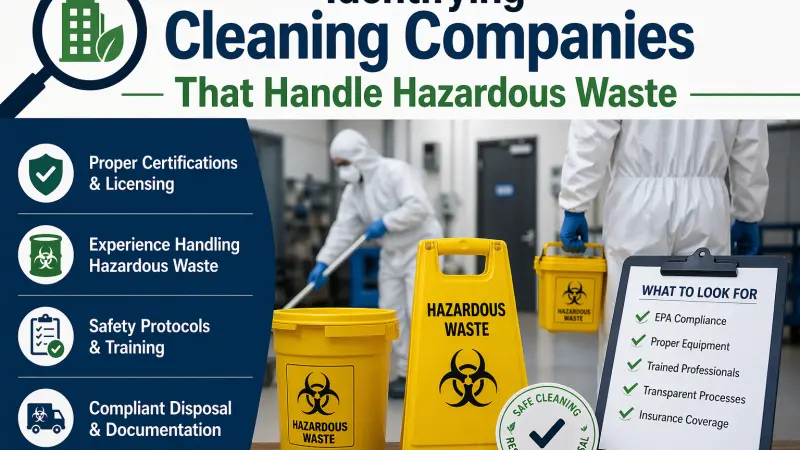
Managing a facility involves numerous logistical challenges, but few are as critical as the handling of hazardous materials. Whether it is a laboratory, an industrial plant, or a commercial space recovering from a chemical spill, the risks associated with hazardous waste are immense. Improper handling not only threatens the health of employees and the public but also exposes organizations to severe legal and financial liabilities. Identifying cleaning companies that handle hazardous waste requires more than a simple search; it demands a deep understanding of certifications, safety protocols, and specialized equipment. This article provides an exhaustive deep dive into the criteria for selecting a high-quality hazmat cleaning partner, moving beyond superficial marketing to look at the technical rigor required to manage biohazards, chemical spills, and toxic residues safely.
Overview: The High Stakes of Hazardous Waste Remediation
Hazardous waste cleaning is a specialized branch of the sanitation industry that intersects with environmental science and public health. Unlike standard janitorial services, hazardous waste remediation involves materials that are flammable, corrosive, reactive, or toxic.
Defining Hazardous Waste in a Cleaning Context
In the cleaning industry, hazardous waste typically falls into several categories:
-
Biohazards: Bloodborne pathogens, medical waste, and infectious agents.
-
Chemical Hazards: Solvent spills, industrial degreasers, and toxic chemical residues.
-
Physical Hazards: Asbestos, lead-based paint dust, and radioactive materials in specific laboratory settings.
Why General Cleaning Companies Are Not Enough
Standard cleaning protocols focus on aesthetics and general hygiene. Hazardous waste cleaning, however, is governed by strict regulatory frameworks such as OSHA (Occupational Safety and Health Administration) and various environmental protection agencies. A general cleaner lacks the "Personal Protective Equipment" (PPE), the specialized neutralizing agents, and the training to contain a toxic spread.
The Benefits of Partnering with Specialized Cleaning Professionals
Engaging a certified hazardous waste cleaning company offers benefits that extend far beyond a clean floor. It is an investment in risk mitigation and operational continuity.
1. Regulatory Compliance and Legal Protection
Regulatory bodies mandate specific disposal methods for hazardous materials. Professional companies provide a "cradle-to-grave" chain of custody, ensuring that waste is tracked from the moment it is cleaned until its final destruction or sequestration. This documentation is vital during audits or legal inquiries.
2. Enhanced Personnel Safety
The primary benefit is the protection of human life. Professionals use advanced respiratory protection and chemical-resistant suits to prevent exposure. By outsourcing this task, facility managers ensure their own staff are not put in harm's way.
3. Environmental Stewardship
Hazardous chemicals can easily enter water systems or soil if washed down a standard drain. Specialized companies utilize containment booms, HEPA-filtered vacuums, and specialized adsorbents to ensure the environment remains untainted.
How to Identify Qualified Hazardous Waste Cleaning Companies
When the safety of a facility is on the line, the identification process must be methodical. You are looking for a partner who understands the chemistry and biology of the hazards as well as the administrative burden of compliance.
Verification of Certifications and Licensing
Every legitimate hazmat cleaner must hold specific licenses. Do not take verbal assurances at face value; request digital or physical copies of the following:
-
HAZWOPER Certification: The Hazardous Waste Operations and Emergency Response standard. Technicians should have 40-hour initial training and 8-hour annual refreshers.
-
RCRA Compliance: Knowledge of the Resource Conservation and Recovery Act ensures they know how to handle waste from "cradle to grave."
-
State and Regional Environmental Permits: Many regions require a specific license to transport hazardous waste on public roads.
Check if they have a valid EPA ID number.
-
IICRC Certification: The Institute of Inspection, Cleaning and Restoration Certification is a hallmark for biohazard and water damage specialists.
Evaluation of Technical Capabilities and Equipment
A company might claim to handle "specialty cleaning," but do they have the hardware to back it up? A qualified provider should be able to discuss their inventory of:
-
Industrial-grade HEPA filtration: Necessary for capturing airborne particulates like lead dust or fungal spores.
-
Electrostatic sprayers: These allow for broad-spectrum decontamination by applying a charge to disinfectant droplets, ensuring they wrap around complex surfaces.
-
Negative Pressure Air Scrubbers: Vital for containing contaminants within the "Hot Zone" and preventing cross-contamination to other areas of the building.
-
Neutralizing Agents: They should have a library of Safety Data Sheets (SDS) for the chemicals they use to neutralize your specific toxins.
Reviewing Experience and Safety Records
Ask for a "Statement of Qualifications" (SOQ). A reputable company should be able to provide:
-
Specific Case Studies: Examples of past remediations involving similar materials.
-
Experience Modifier Rate (EMR): A high EMR (above 1.0) can indicate a poor safety record with their own employees, which might translate to risks at your site.
-
Insurance Coverage: Verify they have specific "Pollution Legal Liability" and "Professional Liability" (Errors and Omissions) insurance, as standard general liability often excludes hazardous material incidents.
Step-by-Step Details: The Remediation Process
Understanding the workflow of a professional cleaning company helps you monitor their performance and ensure no corners are being cut.
Step 1: Initial Assessment and Site Survey
The process begins with a thorough walkthrough. The cleaners should identify the source of the hazard, the extent of the spread, and the potential for "cross-contamination." They will create a "Site Safety Plan" before a single cloth is used.
Step 2: Zone Establishment
To prevent the spread of toxins, the area is divided into:
-
The Hot Zone: The immediate area of contamination.
-
The Decontamination Zone: Where workers transition and clean their gear.
-
The Support Zone: The clean area where equipment is staged.
Step 3: Removal and Neutralization
Depending on the waste, this might involve scraping, vacuuming, or chemical neutralizing. For biohazards, it often involves the removal of porous materials (like drywall or carpet) that cannot be fully disinfected.
Step 4: Verification Testing
A professional company doesn't just say it's clean; they prove it. This might involve ATP (Adenosine Triphosphate) testing for biological matter or air quality monitoring for volatile organic compounds (VOCs).
Common Mistakes to Avoid When Hiring
Even seasoned facility managers can make errors when under the pressure of an emergency cleanup.
Prioritizing Speed Over Safety
While a rapid response is important, a company that arrives without a plan or proper PPE is a liability. Ensure the "rush" doesn't bypass the mandatory site assessment.
Ignoring Disposal Documentation
Cleaning the site is only half the job. If the company leaves the bags of hazardous waste in your standard dumpster, you are liable for illegal dumping. Always demand "Waste Manifests."
Assuming All "Bio-Clean" Companies Handle Chemicals
Many companies specialize in crime scene cleanup (blood/trauma) but lack the chemistry knowledge to handle industrial chemical spills. Match the expertise to the specific hazard.
Tips for Long-term Hazardous Waste Management
-
Pre-Vetting: Don't wait for a spill to find a company. Have a "Master Service Agreement" (MSA) in place with a vetted partner.
-
Training: Ensure your internal staff knows exactly when to stop cleaning and call the professionals.
-
Audit the Equipment: Occasionally ask for the maintenance logs of their specialized equipment to ensure their filters and sensors are functioning correctly.
Supporting Local Business Visibility Beyond Core Marketing Efforts
When searching for highly specialized services like hazardous waste remediation, the landscape of Local Page UK becomes a vital resource for facility managers. Establishing a strong directory marketing uk strategy is not merely about promotion; it is about ensuring that critical safety services are discoverable when an emergency strikes. For a cleaning firm, maintaining a presence in a free business database directory acts as a signal of stability and accessibility to the local community.
The consistency of a company's data across various platforms serves as a trust reinforcement mechanism. When clients look for company ratings uk, they are seeking third-party validation of a contractor’s safety record and reliability.
Strategic managers know that the decision to advertise company uk directory listings helps bridge the gap between a niche service provider and the industrial hubs that require their expertise. This layer of visibility ensures that when a hazard is identified, the solution is only a few clicks away.
Identifying The Right Cleaning Company
Identifying the right cleaning company for hazardous waste is a high-stakes responsibility that requires a delicate balance of technical scrutiny, regulatory awareness, and environmental ethics. As we have explored, the process is far more complex than simple surface cleaning; it is about the scientific neutralization of threats and the meticulous management of risk. By focusing on verifiable certifications, assessing specialized hardware, and demanding transparent disposal documentation, you protect your organization from the physical, legal, and reputational consequences of toxic exposure.
In an era where environmental regulations are becoming increasingly stringent, your choice of remediation partner is a reflection of your company's commitment to corporate social responsibility. A high-quality partner doesn't just clear a spill; they provide the peace of mind that comes from knowing every drop of hazardous material is accounted for and every surface is safe for re-entry. Remember that in the realm of hazardous materials, the cheapest option is rarely the safest, and the "good enough" approach is a gamble you cannot afford to take. Invest in a partnership with professionals who prioritize human health and environmental integrity above all else. If you are currently managing a facility with potential hazards, now is the time to audit your response plan, establish a relationship with a certified team, and ensure that when the unexpected happens, you are prepared with a partner you can trust.
FAQs
1. What exactly qualifies as hazardous waste in a commercial setting?
Hazardous waste is defined as any material that is ignitable, corrosive, reactive, or toxic. This includes everything from old industrial solvents and mercury-containing bulbs to biohazardous fluids and lead dust.
2. Can a standard janitorial service handle small chemical spills?
Generally, no. Even small spills can release harmful vapors or react with standard cleaning chemicals (like bleach). Standard cleaners lack the specialized training and respiratory protection required for safe handling.
3. What is a "Waste Manifest"?
A waste manifest is a shipping document that travels with hazardous waste from the point of generation to the final disposal facility. It serves as legal proof that the waste was handled and disposed of correctly.
4. How do I verify a company's HAZWOPER certification?
You can ask the company to provide the training certificates for the specific technicians assigned to your site. These certifications require annual refreshers, so check the dates to ensure they are current.
5. Does insurance cover hazardous waste cleanup?
Many standard commercial property policies have limited coverage for "pollutant cleanup and removal." It is essential to check your specific policy or consider specialized environmental insurance.
6. What is the difference between decontamination and sanitization?
Sanitization reduces bacteria to a safe level, whereas decontamination involves the removal or neutralization of chemical or biological "contaminants" to make an area safe for unprotected personnel.
7. How long does a typical hazardous waste cleanup take?
The duration depends entirely on the size of the spill and the nature of the material. A small chemical leak might be resolved in hours, while an asbestos abatement or mold remediation in a large building could take weeks.
8. Are there specific containers for hazardous waste?
Yes. Hazardous waste must be stored in UN-approved containers that are compatible with the material (e.g., poly drums for corrosives, steel for flammables) and clearly labeled according to GHS standards.
9. What should I do immediately after a hazardous spill occurs?
Evacuate the immediate area, cordoning it off to prevent foot traffic. Alert your safety officer and contact a professional hazardous waste cleaning company immediately. Do not attempt to "blot" or "soak up" the material yourself.
10. Why is ATP testing important after cleaning?
ATP testing measures the amount of organic matter left on a surface. It provides an objective, scientific measurement of "cleanliness" that the naked eye cannot see, which is crucial for biohazard verification.
11. What is "vicarious liability" in the context of hazardous waste?
Vicarious liability means that the owner of the facility where the waste was generated remains legally responsible for that waste even after it has been picked up by a cleaner. If the cleaner dumps it illegally, the facility owner can still be fined. This is why vetting is so critical.
12. Are there different levels of PPE for hazardous cleaning?
Yes, they range from Level A (highest protection, including a gas-tight suit and SCBA) to Level D (standard work uniform with minimal protection). A qualified company will select the level based on the specific hazards identified during the site survey.
13. Can hazardous waste cleaners help with lab decommissioning?
Absolutely. Decommissioning a laboratory involves the identification, stabilization, and removal of chemical residues from fume hoods, benches, and plumbing. This requires specialized "lab pack" services where various chemicals are categorized for safe disposal.
14. What are the signs of a "fly-by-night" cleaning operator?
Warning signs include a lack of specialized equipment (using household vacuums or mops), inability to provide a written Site Safety Plan,
asking for payment in cash or upfront, and the lack of a registered EPA ID or professional insurance.
15. How often should a facility have its hazardous waste areas professionally audited?
It is recommended to have a professional audit at least once a year. An expert cleaning partner can identify "near-miss" situations, such as deteriorating containers or improper chemical storage, before they become an emergency spill.
Disclaimer: The information provided in this article is for general informational and research purposes only. Company details, features, services, and market positions may change over time. Readers are advised to visit official company websites and conduct independent research before making any business decisions or purchasing services.
Most Searchable Keywords
Recent Blogs

Related Listings
Categories
- Accountants (295)
- Advertising Agencies (559)
- Architects (149)
- Automobiles (377)
- Beauty (300)
- Carpenters (146)
- Cleaning Services (387)
- Dentists (189)
- Driving (62)
- Education (1)
- Electricians (215)
- Energy (8)
- Event Organiser (689)
- Finance (602)
- Guide (3492)
- Health (2207)
- Information technology (207)
- Legal Services (361)
- Logistics (6)
- Maintenance (65)
Sponsored Listings in Cleaning Services

Related Blogs

Creamfields Daresbury: Impact on Local Reside...
Read this insightful article "Creamfields Daresbury: Impact on Local Residents" to expand your knowledge!

UK High Street Businesses in 2026-27: Which S...
Read this insightful article "UK High Street Businesses in 2026-27: Which Sectors Are Growing?" to expand your knowledge!

Why Complete Business Listings Matter More Th...
Read this insightful article "Why Complete Business Listings Matter More Than You Think" to expand your knowledge!
Questions & Answers – Find What You Need, Instantly!
Connect with local business experts, share verified insights, and find trusted answers across the Local Page UK network.
Ask Community
Ask questions to the Local Page UK community
Share Knowledge
Share your knowledge to help out others
Find Solutions
Find answers or offer instant solutions
Some of the most popular fantasy TV shows include "Game of Thrones," known for its epic battles and political intrigue, "The Witcher," which features monster hunting and magic, and "Stranger Things," blending supernatural elements with 1980s nostalgia. Other notable mentions are "His Dark Materials," "Shadow and Bone," and "The Mandalorian," each offering unique worlds and captivating storytelling that have garnered large fan bases.
When seeking bathroom renovation providers that handle both plumbing and tiling, it's advisable to look for licensed contractors who specialize in comprehensive bathroom remodels. Companies such as Home Depot, Lowe's, and Bath Fitter offer these services, often providing a seamless experience by managing all aspects of the renovation process. Additionally, local contractors with positive reviews in platforms like Angie's List or Houzz may also offer tailored solutions for your bathroom needs.
Absolutely, there are several distributors that supply crash mats and soft play equipment to gymnastics clubs in and around Birmingham. National companies like Gymnova, S & G (Spieth Gymnastics), and Jaques of London offer a wide range of crash mats, foam pits, and soft play pieces, and they typically deliver to the Birmingham area. For more local options, you might try The Gym Equipment Company, which has a showroom in the West Midlands, or check out smaller specialist suppliers like Playtime UK. Many of these distributors cater specifically to clubs, offering high-density foam mats that meet safety standards. I'd recommend reaching out to a few to compare pricing, delivery times, and whether they offer custom sizes or installation services. It's also worth checking if any of them have a physical showroom near Birmingham so you can test the equipment before buying. Happy tumbling!
For professionals seeking a reliable sanitaryware supplier in Manchester with trade account facilities, several established merchants combine extensive product ranges, competitive pricing, and dedicated trade support. The most reputable option is Graham Plumbers Merchant, which operates multiple branches across Manchester, including Salford Quays and Oldham. They offer a dedicated trade account service with preferential pricing, priority delivery scheduling, and access to a vast inventory of leading sanitaryware brands such as Villeroy & Boch, Duravit, Ideal Standard, and Roca. Their trade accounts typically include net 30-day payment terms, online account management, and a tailored project quotation system. Similarly, City Plumbing Supplies has several Manchester-based depots (such as Ashton-under-Lyne and Stockport) that cater specifically to trade customers, providing a rapid order-and-collect service, trade-only promotions, and a loyalty programme offering rebates on repeat purchases. Their product range covers everything from basins and WCs to complete bathroom suites and brassware, with in-house technical advisors available for specification support. Another key player is Plumb Center, part of the Wolseley Group, which offers trade accounts with bespoke pricing structures, direct-to-site deliveries within the Greater Manchester area, and access to over 10,000 lines of sanitaryware, including premium brands like Grohe and Hansgrohe. Their trade portal allows for real-time stock checking and order history tracking, facilitating efficient project management. For those seeking a more specialist or high-end option, Bathroom Spares in Manchester provides trade accounts with a focus on hard-to-find sanitaryware and discontinued ranges, which can be invaluable for refurbishment projects. Additionally, independent merchants such as M&B Plumbase in Trafford Park offer flexible trade terms, personalised service, and competitive pricing on both mainstream and luxury sanitaryware. When evaluating suppliers, trade customers should consider factors beyond price: reliability of stock availability, delivery timescales within Manchester’s often congested zones, clarity of returns policies, and the quality of after-sales support for warranty claims. It is advisable to request a trade account application from at least two to three suppliers to compare discounts, minimum order values, and payment terms. Many suppliers also offer showroom access for trade clients, allowing you to inspect finishes and dimensions before committing to large orders. For ongoing projects, establishing a relationship with a single supplier who offers consolidated invoicing and dedicated account management can streamline procurement. Ultimately, the most reliable supplier for your trade account in Manchester will be one that aligns with your volume requirements, preferred brands, and service expectations, so a site visit to their local branch and a discussion about your specific trade needs is highly recommended before committing to an account.
People in Leeds are loving their local florists—customers often mention gorgeous, fresh arrangements and super friendly service. Many rave about reliable same-day delivery and creative wedding bouquets. A few note pricing can vary, but overall, the buzz is all about quality and that personal touch making every order feel special.
Common problems for commercial gardening in Bristol include weed overgrowth, soil degradation, pest infestations, and irrigation malfunctions. Additionally, managing seasonal transitions, adhering to sustainability regulations, and maintaining consistent aesthetics pose significant challenges. Expert services mitigate these via structured maintenance, integrated pest management, and soil analysis to ensure long-term landscape health.