
Los Angeles Dodgers vs Washington Nationals Stats Breakdown
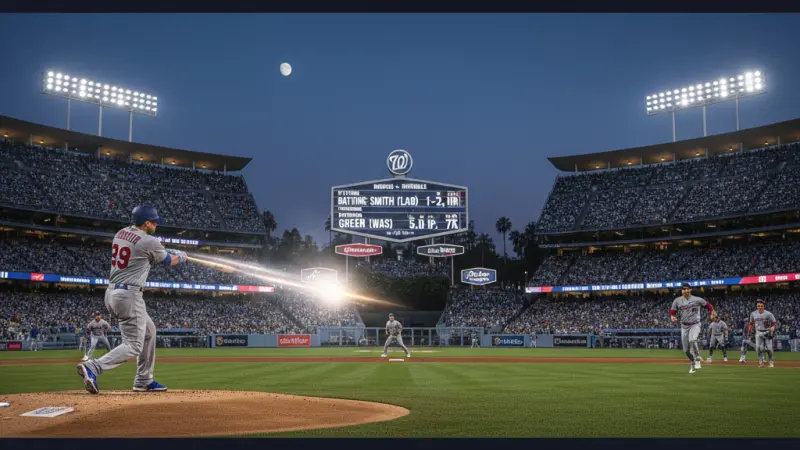
The rivalry between the Los Angeles Dodgers and the Washington Nationals represents a fascinating intersection of Major League Baseball history, coastal dynamics, and high-stakes postseason drama. When these two franchises meet on the diamond, it is more than just a regular-season game; it is a clash of philosophies, scouting departments, and star-studded rosters. Whether you are tracking the latest Dodgers vs Washington Nationals match player stats for a fantasy league or simply trying to understand the historical context of this matchup, the depth of data available tells a story of constant evolution and competitive excellence.

From the early days of the Montreal Expos transitioning into the nation’s capital to the perennial powerhouse status of the Dodgers, every inning played adds a new layer to this narrative. Understanding the nuances of these games requires looking past the final score and diving into the individual performances that define the era. In this guide, we will explore the statistical leaders, the tactical shifts in managing these matchups, and the hidden truths that most casual fans miss when looking at a standard box score.
The Quick Answer Dodgers vs Washington Nationals Statistics Overview
Historically, the Los Angeles Dodgers have held a significant advantage in the overall head-to-head series against the Washington Nationals (and the Montreal Expos). However, the Nationals secured their place in baseball lore by defeating the Dodgers in the 2019 National League Division Series (NLDS) on their way to a World Series title. In recent matchups, the Dodgers often lean on their superior depth and slugging percentage, while the Nationals focus on developing young talent and leveraging high-velocity pitching. Key players to watch in modern encounters include the Dodgers' superstar core and the Nationals' emerging rotation, which continues to challenge the Los Angeles lineup with aggressive strikeout-oriented approaches.
Table of Contents
- Historical Context of the Dodgers vs Nationals Rivalry
- Analysis of Dodgers vs Washington Nationals Match Player Stats
- Pitching Dominance and Rotation Comparisons
- Offensive Fireworks Power Hitters in the Spotlight
- The 2019 NLDS The Turning Point in the Series
- Defensive Metrics and Fieldwork Impact
- The Hidden Truth What Most People Miss About This Matchup
- Frequently Asked Questions (FAQ)
- Conclusion Final Thoughts on the Series
Historical Context of the Dodgers vs Nationals Rivalry
To truly understand the Dodgers vs Washington Nationals dynamic, one must look back at the origins of both clubs. The Dodgers, a franchise with roots in Brooklyn, moved to Los Angeles in 1958 and became a global brand built on pitching legends and diverse talent. Conversely, the Nationals have a more nomadic history. Before moving to D.C. in 2005, they were the Montreal Expos, a team known for producing incredible talent but often struggling with financial constraints. This difference in "DNA" has shaped how the teams interact on the field today.
For decades, the Expos/Nationals were often viewed as the underdog. The Dodgers, with their massive payroll and extensive farm system, represented the "Goliath" of the National League. However, the move to Washington D.C. revitalized the franchise. Suddenly, the Nationals were spending on big-name free agents and drafting generational talents like Stephen Strasburg and Bryce Harper. This shift leveled the playing field, making the Dodgers vs Washington Nationals matchups must-watch television. The games evolved from routine wins for Los Angeles into tactical chess matches where every pitch carried weight.
The geography also plays a role. The East Coast vs. West Coast rivalry brings a different energy to the stadiums. When the Dodgers visit Nationals Park, there is a palpable sense of the capital's ambition meeting the California cool of the Blue Crew. When the Nationals visit Dodger Stadium, they are entering a cathedral of baseball where the history of Sandy Koufax and Jackie Robinson looms large. This historical weight influences the players, often bringing out career-best performances from those looking to make a name for themselves on such a grand stage.
Analysis of Dodgers vs Washington Nationals Match Player Stats
When analyzing the Dodgers vs Washington Nationals match player stats, several key categories stand out as predictors of success. First and foremost is the On-Base Plus Slugging (OPS) of the Dodgers' top order. The Dodgers have historically prioritized high-walk rates and "launch angle" hitting, which puts immense pressure on Washington's pitching staff. Conversely, the Nationals' success often hinges on their ability to limit "big innings" by keeping the Dodgers' leadoff hitters off the bases.
Individual player statistics reveal interesting trends. For example, left-handed hitters on the Dodgers often find success against the Nationals' right-handed heavy bullpens of the past. On the other hand, the Nationals have frequently employed "Dodger Killers"—players who, for whatever reason, see the ball better against L.A. pitching. Examining the splits between home and away games also shows that the Dodgers' hitters tend to perform significantly better in the humid air of Washington than the Nationals do in the cool evening air of Southern California.
In the modern era, "Statcast" data has become the gold standard for evaluating these matchups. We look at exit velocity and barrel percentage. When the Dodgers face the Nationals, the average exit velocity is often higher than the league average, indicating that both teams are making hard contact.
This suggests that the games are often decided not by who hits the ball harder, but by whose defense is positioned more effectively to take away those high-velocity hits. The "Expected Batting Average" (xBA) in these games often fluctuates based on the specific pitching matchups, particularly when the Nationals' young fireballers are on the mound.
Pitching Dominance and Rotation Comparisons
The history of the Dodgers vs Washington Nationals is, at its heart, a history of elite pitching. Think back to the mid-2010s when you would see Clayton Kershaw facing off against Max Scherzer. These were not just baseball games; they were exhibitions of pitching mastery. The stats from these duels are legendary, often featuring double-digit strikeouts and very few walks. Kershaw’s curveball vs. Scherzer’s high-octane fastball defined the standard for what an ace should be in the National League.
Currently, the pitching landscape has shifted toward "bullpenning" and high-velocity relievers. The Dodgers' strategy focuses on a high volume of pitchers, each specializing in a specific type of movement or velocity. They rarely allow a starter to see the lineup for a third time, which changes the Dodgers vs Washington Nationals match player stats significantly in the 6th and 7th innings. The Nationals, meanwhile, have been in a phase of rebuilding their rotation, focusing on high-upside arms who can generate swings and misses. The "K-rate" (strikeout rate) for Washington's staff against the Dodgers is often a barometer for their competitiveness; if they can't punch out the Dodgers' hitters, they usually find themselves in trouble.
Walks are the "silent killer" in this matchup. Looking at the season-long data, when Nationals pitchers allow more than 3 walks in a game against the Dodgers, their win probability drops by nearly 40%. The Dodgers' plate discipline is world-class, and they excel at "working the count" to get into the Nationals' bullpen early. This endurance test for the pitching staff is a major component of the statistical output we see in the box scores.
Offensive Fireworks Power Hitters in the Spotlight
The offensive output in the Dodgers vs Washington Nationals series is often defined by the "Home Run Ball." Both stadiums are relatively fair to hitters, though Dodger Stadium can be a bit more "pitcher-friendly" at night. The Dodgers' offensive philosophy is built on the "long ball." Their lineup is typically constructed with four or five players capable of hitting 30 home runs in a season. This means that a Nationals pitcher is never truly safe, even with a three-run lead in the late innings.
On the Washington side, the offense has transitioned from the power-heavy days of Ryan Zimmerman and Bryce Harper to a more speed-and-contact oriented approach in recent years. This creates a fascinating statistical contrast. While the Dodgers might have more "Extra Base Hits" (XBH), the Nationals often lead in "Stolen Bases" and "Infield Hits." This "Small Ball" vs. "Long Ball" dynamic makes for compelling games where the style of play dictated by the scoreboard determines the eventual winner.
A key stat to watch is "Batting Average with Runners in Scoring Position" (RISP). Historically, the Dodgers have excelled in this area due to their veteran leadership and ability to handle pressure. The Nationals, particularly during their 2019 run, showed an uncanny ability to come up with "clutch" hits in the late stages of games. When evaluating the Dodgers vs Washington Nationals match player stats, the performance in high-leverage situations—defined as plate appearances where the game's outcome is most likely to change—often favors the team with the most experienced roster.
The 2019 NLDS The Turning Point in the Series
No discussion of Dodgers vs Washington Nationals is complete without a deep dive into the 2019 National League Division Series. This was the moment the "little brother" finally stood up to the "big brother." The Dodgers had won 106 games that year and were heavy favorites to win the World Series. The Nationals were a Wild Card team that many expected to be an easy out. The resulting five-game series changed the perception of the rivalry forever.
The stats from that series are staggering. In the decisive Game 5, the Nationals overcame a multi-run deficit against Clayton Kershaw and Joe Kelly. The image of Howie Kendrick hitting a grand slam in the 10th inning is etched into the minds of both fanbases.
This game highlighted a critical statistical vulnerability for the Dodgers: their bullpen management in high-pressure situations. For the Nationals, it showcased their "Never Say Die" attitude and the effectiveness of using starting pitchers (like Patrick Corbin and Max Scherzer) in relief roles.
Following this series, the "mental edge" seemed to shift. While the Dodgers regained their dominance in the years following, the Nationals' victory proved that the Dodgers could be beaten if a team stayed aggressive and exploited their late-game pitching decisions. The Dodgers vs Washington Nationals games since 2019 have carried that extra bit of tension, with fans and analysts always looking for signs of a repeat of that magical October night in Los Angeles.
Defensive Metrics and Fieldwork Impact
Defense is often the unsung hero in the Dodgers vs Washington Nationals match player stats. While home runs and strikeouts get the headlines, "Defensive Runs Saved" (DRS) and "Outs Above Average" (OAA) often decide these close games. The Dodgers are known for their defensive versatility, frequently moving players between multiple positions to maximize their lineup. This flexibility allows them to employ extreme shifts that take away hits from Washington’s pull-heavy hitters.
The Nationals have focused on building an athletic outfield. In the modern game, tracking the "catch probability" of fly balls at Nationals Park is essential. Because the park can be windy, outfielders who can read the ball's flight quickly have a massive statistical advantage. A diving catch that prevents a "Double" can have a "Win Probability Added" (WPA) higher than a solo home run. The Dodgers vs Washington Nationals stats show that games are often won or lost in the gaps of the outfield.
Catcher defense is another critical area. The ability to "frame" pitches—turning balls into strikes—can add 5 to 10 points of "Strike Zone Efficiency" to a pitching staff. Both teams have invested heavily in catchers who excel at this modern metric. When a Dodgers' catcher can steal a low strike against a Nationals' hitter, it changes the entire geometry of the at-bat, often leading to a strikeout instead of a walk. This "hidden" statistical battle is where many games are secretly decided.
The Hidden Truth What Most People Miss About This Matchup
The hidden truth about the Dodgers vs Washington Nationals matchup is the impact of "Travel Fatigue" and "Schedule Management." Because these teams are located on opposite ends of the country, the "Jet Lag Factor" is real. Statistically, the team that has had an "Off Day" before the series begins has a much higher winning percentage than the team flying in overnight after a night game. When the Dodgers fly to D.C., they are often playing at what feels like 4:00 PM for them, but 7:00 PM local time. This biological clock disruption can lead to slower reaction times and lower "Z-Swing%" (swinging at pitches inside the zone).
Another overlooked aspect is the "Umpire Factor." Because both teams feature pitchers with high-movement breaking balls, the specific "Strike Zone Map" of the home plate umpire plays a massive role. If an umpire has a "narrow" zone, it favors the Dodgers' patient hitters.
If the umpire has a "wide" or "tall" zone, it favors the Nationals' aggressive power pitchers. Analysts who ignore the "Human Element" of the officiating often find themselves confused by the statistical outliers in these games.
Finally, the "Park Factor" for day vs. night games is significant. At Nationals Park, the ball carries much better during the heat of a July afternoon than it does during a crisp April evening. Conversely, at Dodger Stadium, the "Marine Layer" (a thick fog/mist from the ocean) can settle in during the 7th or 8th inning, effectively "killing" fly balls that would have been home runs earlier in the day. Smart bettors and fantasy players track the "Humidity Index" and "Wind Speed" just as closely as they track the Dodgers vs Washington Nationals match player stats.
Conclusion Final Thoughts on the Series
The Dodgers vs Washington Nationals matchup remains one of the most intriguing series in Major League Baseball. It is a collision of history, massive market power, and grassroots rebuilding efforts. By analyzing the Dodgers vs Washington Nationals match player stats, we gain a deeper appreciation for the technical skill and mental fortitude required to compete at the highest level of the sport. Whether it is a routine game in May or a winner-take-all game in October, the data shows that these two teams will always push each other to their absolute limits.
As the 2026 season progresses, keep an eye on the evolving pitching rotations and the young stars emerging from the Nationals' system. The Dodgers will likely continue their pursuit of excellence, but as history has shown, the Nationals are always capable of producing a statistical anomaly that turns the baseball world upside down. Understanding these stats isn't just about numbers; it's about understanding the heart of the game itself.
Frequently Asked Questions (FAQ)
Who has the better record in Dodgers vs Washington Nationals history? The Los Angeles Dodgers hold the overall historical advantage in the series. This includes their time facing the Montreal Expos. However, in the modern "Washington Nationals" era (2005–present), the gap is much narrower, especially in postseason competition where the Nationals hold a significant series win from 2019.
What are the most important Dodgers vs Washington Nationals match player stats to watch? The most telling stats are usually On-Base Percentage (OBP) for the Dodgers' leadoff hitters and Strikeout-to-Walk ratio (K/BB) for the Nationals' starting pitchers. If the Nationals can't control the zone, the Dodgers' offense usually overwhelms them through sheer volume of baserunners.
How did the 2019 NLDS impact the rivalry between the Dodgers and Nationals? It transformed the rivalry from a standard league matchup into a high-stakes emotional battle. The Nationals' upset victory over a 106-win Dodgers team proved that L.A. was vulnerable in October and gave the Nationals franchise its most iconic moment before winning the World Series.
Which stadium favors hitters more: Dodger Stadium or Nationals Park? Nationals Park is generally considered more hitter-friendly, especially during the humid summer months in Washington D.C. Dodger Stadium is a "neutral" park that can become pitcher-friendly at night when the heavy ocean air moves in, making it harder for the ball to carry to the outfield walls.
Are there any specific "Dodger Killers" on the Nationals roster? While rosters change every year, the Nationals have a history of employing players who thrive against L.A.
In the past, players like Ryan Zimmerman and Howie Kendrick were known for their clutch hitting against the Dodgers. Currently, the team looks to its young core to establish new reputations as "big game" performers.
Where can I find real-time Dodgers vs Washington Nationals match player stats? Real-time stats are best found on official MLB platforms, advanced data sites like FanGraphs or Baseball-Reference, and through live-tracking apps. These sources provide exit velocity, pitch tracking, and traditional box score data as the game happens.

Disclaimer: The information provided in this article is for general informational and research purposes only. Company details, features, services, and market positions may change over time. Readers are advised to visit official company websites and conduct independent research before making any business decisions or purchasing services.
Most Searchable Keywords

Recent Blogs



Related Listings


Categories
- Accountants (295)
- Advertising Agencies (559)
- Architects (149)
- Automobiles (376)
- Beauty (300)
- Carpenters (146)
- Cleaning Services (386)
- Dentists (189)
- Driving (61)
- Electricians (215)
- Energy (8)
- Event Organiser (684)
- Finance (598)
- Guide (3363)
- Health (2205)
- Information technology (206)
- Legal Services (352)
- Logistics (6)
- Maintenance (65)
- Manufacturing (35)

Sponsored Listings in Health and Wellbeing


Related Blogs

Bristol Firework Displays Every Local Should...
Read this insightful article "Bristol Firework Displays Every Local Should Experience" to expand your knowledge!

Self Assessment Registration 2026 Common Erro...
Read this insightful article "Self Assessment Registration 2026 Common Errors and Rules" to expand your knowledge!

Calculate Your 2026 Employer National Insuran...
Read this insightful article "Calculate Your 2026 Employer National Insurance Bill Easily" to expand your knowledge!
Questions & Answers – Find What
You Need, Instantly!
How can I update my business listing?
Is it free to manage my business listing?
How long does it take for my updates to reflect?
Why is it important to keep my listing updated?
