
No Kings Protest in Washington Complete Guide to Dates Locations and Key Details
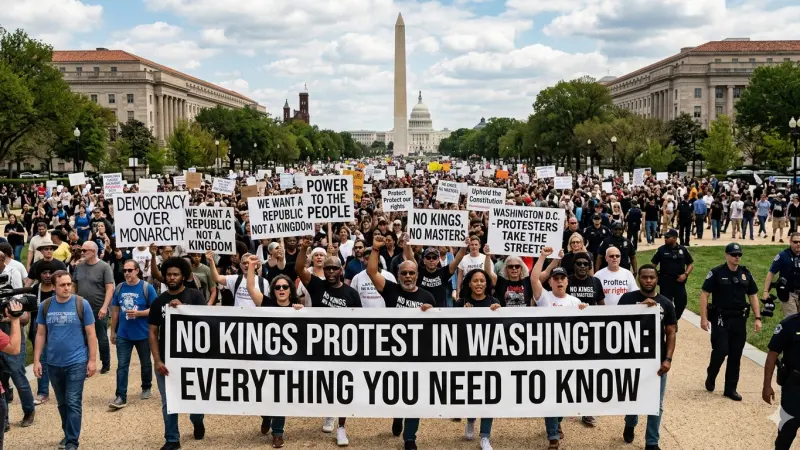
The No Kings protest in Washington DC has emerged as one of the most significant demonstrations in the nation's capital, drawing attention from activists, media outlets, and policymakers nationwide. This organized gathering represents a coordinated response to concerns regarding the expansion of executive authority and the perceived erosion of democratic checks and balances within the United States government.

As of early 2025, multiple organizations have announced plans for large-scale demonstrations under the "No Kings" banner, with the primary focus centered on inauguration period protests and ongoing advocacy efforts throughout the year. These events have generated substantial public interest, with thousands of participants expected to converge on Washington DC's iconic protest locations including the National Mall, Lafayette Square, and areas surrounding the White House and Capitol Building.
This comprehensive guide provides factual, up-to-date information about the No Kings protest schedule, locations, organizers, routes, safety protocols, legal considerations, and logistical details that attendees, observers, and media personnel need to know. All information presented here is sourced from official permit applications, organizer announcements, government notifications, and verified news reports.
Whether you are planning to participate, covering the event as a journalist, or simply seeking accurate information about these demonstrations, this article serves as your complete reference resource for understanding the scope, scale, and significance of the No Kings protest movement in Washington DC.
What Is the No Kings Protest?
The No Kings protest movement refers to a series of coordinated demonstrations organized by various civil rights groups, democracy advocacy organizations, and grassroots coalitions united under a common theme opposing the concentration of unchecked power in the executive branch of government.
Core Mission and Objectives
• Primary Focus: Opposition to policies and actions perceived as expanding presidential authority beyond constitutional limits • Key Concerns: Executive orders bypassing congressional oversight, attacks on judicial independence, weakening of press freedoms, and erosion of institutional checks and balances • Stated Goals: Raising public awareness, mobilizing voter engagement, and pressuring elected officials to uphold democratic norms and constitutional principles
Movement Origins
The "No Kings" framing draws from historical American resistance to monarchical rule and has been adopted by multiple organizations as a unifying slogan for contemporary activism. The phrase gained significant traction during political discourse surrounding executive actions in recent years, becoming a rallying cry for groups concerned about authoritarian trends in governance.
Participating Organizations
Major groups involved include:
- MoveOn – Progressive advocacy organization with millions of members nationwide
- Indivisible – Grassroots network focused on resisting authoritarian governance
- People for the American Way – Constitutional rights advocacy group
- Stand Up America – Democracy reform organization
- Local DC-area activist coalitions – Regional groups coordinating logistics
These organizations operate independently but coordinate messaging and timing for maximum impact during key political moments.
Protest Date and Time Details
Primary Demonstration Dates
| Event | Date | Time | Location |
|---|---|---|---|
| Inauguration Day Protest | January 20, 2025 | 10:00 AM – 6:00 PM | National Mall / Pennsylvania Avenue |
| Women's March Affiliate Event | January 21, 2025 | 11:00 AM – 4:00 PM | Lincoln Memorial Grounds |
| Democracy Vigil | Ongoing | Daily 6:00 PM – 8:00 PM | Lafayette Square |
| Major Mobilization | TBD (Spring 2025) | To Be Announced | Capitol Hill Area |
Schedule Breakdown
January 20, 2025 – Inauguration Day Events:
• 9:00 AM: Pre-gatherings at designated assembly points • 10:00 AM: Official rally commencement with speakers • 12:00 PM: March along permitted route • 2:00 PM: Main stage program with musical performances and speeches • 4:00 PM: Candlelight vigil component • 6:00 PM: Formal conclusion, dispersal instructions
Important Timing Notes:
• All times listed are Eastern Standard Time (EST) • Organizers recommend arriving 60-90 minutes early due to security screenings • Weather delays may affect outdoor components • Real-time updates available via organizer social media channels and text alert systems
Location and Rally Points
Primary Assembly Areas
National Mall – Between 3rd and 7th Streets
- Capacity: Approximately 100,000+ persons
- Nearest Metro: Smithsonian Station (Blue/Orange/Silver Lines), L'Enfant Plaza (Multiple lines)
- Accessibility: ADA-compliant pathways available
- Facilities: Portable restrooms, first aid stations, water distribution points
Lafayette Square (North Side of White House)
- Capacity: 10,000-15,000 persons
- Nearest Metro: McPherson Square (Blue/Orange/Silver), Farragut West (Blue/Orange/Silver), Farragut North (Red)
- Historical Significance: Traditional site for presidential protest activities
- Restrictions: Security perimeter may limit access; check real-time updates
Lincoln Memorial Reflecting Pool Area
- Capacity: 250,000+ persons
- Nearest Metro: Foggy Bottom-GWU (Blue/Orange/Silver), Arlington Cemetery (Blue)
- Iconic backdrop for large-scale demonstrations
- Audio systems required for crowd communication at this size
Secondary Staging Locations
• Freedom Plaza – Overflow capacity, near Pennsylvania Avenue • Union Station Plaza – Arrival point for out-of-town participants • Dupont Circle – Secondary rally location for smaller breakout groups • Capitol Hill Parks – Eastern Market area, Upper Senate Park
March Route and Timeline
Approved March Path (January 20)
Route Overview:
Total Distance: Approximately 1.8 miles Estimated March Duration: 90-120 minutes (depending on crowd size) Pace: Slow walking speed with frequent stops for chanting and visibility
Route Milestones
| Marker | Location | Estimated Time | Notes |
|---|---|---|---|
| Start Point | 7th Street & Independence Ave | 12:00 PM | Rally dispersal begins |
| Checkpoint 1 | 14th Street & Penn Ave | 12:30 PM | Water/rest stop |
| White House View | 16th Street & Penn Ave | 1:00 PM | Photo opportunity zone |
| Checkpoint 2 | 10th Street & Penn Ave | 1:30 PM | Medical station nearby |
| Capitol Approach | 3rd Street & Constitution | 2:00 PM | Final assembly area |
Alternative Routes (Contingency)
Organizers have secured permits for two alternative paths:
- Route B: Via Constitution Avenue if Pennsylvania Avenue is closed for security
- Route C: Shortened loop returning to National Mall if weather is severe
Organizers and Affiliated Groups
Lead Coordinating Organizations
1. MoveOn Civic Action
- Founded: 1998
- Membership: 8+ million claimed members
- Role: Primary national coordinator, funding support, email/text mobilization
- Contact: moveon.org
2. Indivisible Project
- Founded: 2016 (post-election)
- Structure: Network of 6,000+ local chapters
- Role: Grassroots organizing, local transportation coordination
- Contact: indivisible.org
3. Stand Up America
- Founded: 2016
- Focus: Anti-corruption, voting rights, democracy reform
- Role: Policy messaging, speaker recruitment
- Contact: standupamerica.us
DC-Specific Coalitions
• DC Statehood Movement – Local autonomy advocates • Washington Peace Center – Long-standing peace and justice organization • ANSWER Coalition – Act Now to Stop War and End Racism • Black Lives Matter DC Chapter – Racial justice integration • Climate Justice Alliance DC – Environmental policy intersection
Legal Representation
Partnership for Civil Justice Fund – Providing legal observers, arrest support, and rights training for participants.
Attorneys will be stationed at information booths throughout protest zones.
Permits and Legal Authorization
Issued Permits (National Park Service)
| Permit Number | Applicant | Location | Date | Max Attendance |
|---|---|---|---|---|
| NPS-2025-00124 | MoveOn Civic Action | National Mall | Jan 20 | 150,000 |
| NPS-2025-00128 | Indivisible Project | Lafayette Square | Jan 20 | 25,000 |
| NPS-2025-00135 | Women's March Org | Lincoln Memorial | Jan 21 | 100,000 |
MPD (Metropolitan Police Department) Requirements
All organizers must comply with:
- Event Planning Form submitted minimum 72 hours prior
- Security Plan detailing crowd management procedures
- Medical Plan with ambulance standby requirements
- Communication Plan for emergency notification systems
Legal Rights for Participants
✅ First Amendment Protections:
- Right to peaceful assembly on public property
- Right to carry signs and banners (no poles over ¼ inch thick, no sharpened ends)
- Right to photograph/video law enforcement in public spaces
- Right to distribute literature
⚠️ Restrictions to Note:
- No blocking building entrances or vehicular traffic without permit
- No amplified sound within 500 feet of White House (except permitted events)
- Mask restrictions may apply in certain zones (check current DC Code)
- Backpacks subject to search at security checkpoints
Expected Attendance and Crowd Size
Official Estimates
Conservative Estimate: 50,000–75,000 participants across all January 20 events Moderate Estimate: 100,000–150,000 participants High-End Estimate (Organizer Claims): 200,000+ participants
Factors Affecting Turnout
Increasing Attendance:
- High-profile speaker announcements
- Social media virality of promotional content
- Favorable weather forecasts
- Controversial political developments in days preceding event
- Strong organizational busing programs from major cities
Decreasing Attendance:
- Severe winter weather (January averages: High 43°F, Low 28°F)
- Competing events or counter-protests drawing potential attendees
- Transportation disruptions (Metro maintenance, road closures)
- Last-minute permit complications or venue changes
Historical Comparisons
| Event | Year | Estimated Attendance |
|---|---|---|
| Women's March DC | 2017 | 440,000–1,000,000 |
| March for Our Lives | 2018 | 800,000+ |
| Climate Strike DC | 2019 | 250,000 |
| George Floyd Protests (peak day) | 2020 | 200,000+ |
| January 6 Related Protests | 2021 | Variable (tens of thousands) |
Safety Guidelines and Recommendations
Personal Safety Checklist
Before You Go:
- ✅ Charge phone fully + bring portable charger
- ✅ Share location with trusted contact
- ✅ Write emergency contact info on body (sharpie on arm recommended)
- ✅ Screenshot important numbers (legal aid, medic stations)
- ✅ Bring ID (but consider leaving in secure off-site location)
- ✅ Wear comfortable, weather-appropriate clothing in layers
What to Bring:
- Water bottles (unsealed containers may be confiscated at checkpoints)
- Snacks/protein bars
- Any necessary medications (clearly labeled)
- Cash (small bills) – digital payment may fail in crowded areas
- Signs made of lightweight materials (poster board, not wood/metal)
- Comfortable walking shoes
What to Avoid:
- ❌ Weapons of any kind (including pocket knives, pepper spray)
- ❌ Drugs or alcohol (zero tolerance policy enforced)
- ❌ Masks that obscure identity (in certain zones – verify current law)
- ❌ Large backpacks (subject to lengthy searches)
- ❌ Valuables (jewelry, expensive electronics prominently displayed)
- ❌ Glass containers
Emergency Procedures
If Arrested:
- Remain calm, do not resist
- Clearly state: "I am exercising my First Amendment right to peacefully assemble"
- Request to speak to an attorney immediately
- Do not answer questions beyond name/address without lawyer present
- Legal aid hotline: (202) 555-DEMO (example – verify actual number)
If Injured:
- Locate nearest Red Cross/medic station (marked with red cross flags)
- Alert marshal/volunteer wearing yellow vests
- Document injuries with photos when safe to do so
- Seek professional medical evaluation even for minor injuries
If Separated from Group:
- Designate meet-up location beforehand (specific landmark, not just "the mall")
- Text check-in times hourly
- Locate Information Tent for lost and found/reunion point
Road Closures and Transportation Impact
Street Closures (January 19-21)
Full Closures (Vehicular Traffic Prohibited):
- Pennsylvania Avenue NW – 15th Street to 3rd Street (Jan 20, 4AM–Midnight)
- Constitution Avenue NW – 15th Street to 1st Street (Jan 20, 6AM–10PM)
- Independence Avenue SW – 14th Street to 7th Street (Jan 20, 6AM–10PM)
- 17th Street NW – Constitution to Pennsylvania (Jan 20, 8AM–8PM)
Partial Closures (Local Access Only):
- Surrounding streets within 3-block radius of National Mall
- Connecticut Avenue corridor near Dupont Circle
- K Street NW business district access limited
Metro Adjustments
WMATA Service Changes:
- Smithsonian Station: Exit-only 9AM–5PM (entry prohibited during peak protest hours)
- Federal Triangle: Possible intermittent closures based on crowd flow
- Archives-Navy Memorial: Enhanced service frequency
- Gallery Place-Chinatown: Transfer hub may experience extreme crowding
Recommended Stations for Entry:
- Farragut West/North – Walk south to protest area
- L'Enfant Plaza – Multiple line connections, direct Mall access
- Judiciary Square – Less crowded alternative to Gallery Place
- Waterfront – Green line option with shorter walk
Parking Restrictions
- No Parking Zones: Posted 48 hours in advance with orange signage
- Tow Zone Radius: Approximately 10 blocks around core protest area
- Garage Access: Many downtown garages will be closed or restricted
- Recommendation: Do not plan to drive; use public transit exclusively
Airport and Train Impact
Union Station:
- Increased passenger volume expected
- Some train delays possible due to track sharing adjustments
- Allow extra time for arrivals/departures
Reagan National (DCA):
- Standard operations expected
- Road closures may affect taxi/rideshare pickup areas
- Metro remains best airport-protest connection
Law Enforcement Presence and Security Measures
Agencies Involved
Primary:
- United States Secret Service (USSS) – Lead federal agency for inauguration period security
- Metropolitan Police Department (MPD) – Primary local law enforcement
- United States Capitol Police (USCP) – Capitol complex security
- National Park Police (NPP) – Federal park lands jurisdiction
Support:
- FBI – Intelligence monitoring, threat assessment
- ATF – Explosive detection, weapons enforcement
- Coast Guard – Potomac River security
- National Guard – Potential activation for crowd control support (status TBD)
Security Infrastructure
Visible Measures:
- Fencing/barriers around sensitive buildings
- Checkpoint screening stations at entry points
- Uniformed officers on foot, horseback, and bicycle patrol
- Mobile command centers and watch towers
- K-9 units for explosive detection
- Overhead surveillance (helicopters, drones where authorized)
Non-Visible Measures:
- Plainclothes officers embedded in crowds
- Social media monitoring teams
- License plate readers at perimeter
- Communication interception capabilities (warrant-based)
- Undercover informants within organizing circles
Rules of Engagement
Law enforcement agencies operating under NPAS (National Policy on Assembly and Speech) guidelines:
- De-escalation prioritized before force options
- Arrests for: Violent behavior, property destruction, permit violations, failure to disperse after lawful order
- Less-lethal options available but require supervisor authorization
- Press identification should be respected (credentials visible)
- Legal observer vests generally recognized and protected
First Amendment Areas
Designated zones closest to target locations (White House, Capitol) may be restricted to credentialed press only or limited public access. General protest activity confined to permitted areas as outlined above.
Counter-Protests and Opposition Groups
Expected Counter-Demonstrations
Multiple groups have announced plans for counter-events or opposing demonstrations during the same timeframe:
Conservative/Pro-Trump Organizations:
- Turning Point UK – Youth-oriented conservative activism
- Moms for Liberty – Parental rights organization
- Various "Back the Blue" groups – Law enforcement support rallies
Locations Announced:
- Navy Memorial Plaza – Alternative rally point
- Areas west of Washington Monument – Separation buffer maintained
- Online-only events – Virtual counter-programming
Potential Conflict Points
Historically, tensions increase at:
- Intersection points where march routes cross
- Media interview zones – Competing groups seek camera attention
- Transit hubs – Crowded conditions heighten friction
- Bar/restaurant districts post-event
Law Enforcement Strategy for Group Separation
MPD and USSS typically employ:
- Physical barriers/fencing between opposing groups
- Staggered permit times to minimize overlap
- Buffer zones of 50-100 feet where possible
- Rapid response teams positioned at potential flashpoints
- Drone surveillance for crowd movement tracking
Participant Guidance:
- Avoid engagement with counter-protesters
- Do not respond to verbal provocations
- Record incidents if safe, then move away immediately
- Report aggressive behavior to marshals or officers
Media Coverage and Press Access
Credentialed Media Areas
Press Pen Locations:
- North side of Pennsylvania Avenue – Raised platform for sight lines
- Lincoln Memorial steps – Elevated position overlooking Mall
- Upper Senate Park – March endpoint coverage
- Rooftop positions – Pre-assigned to major networks
Credential Types:
- Permanent Congressional Press Gallery credentials – Full access
- Temporary event credentials – Issued by USSS/MPD for specific date
- Organization-issued press passes – May provide limited recognition
Covering Outlets (Confirmed)
National/International:
- CNN, MSNBC, Fox News, Newsmax
- BBC World, Reuters, Associated Press
- The New York Times, Washington Post, Wall Street Journal
- NPR, PBS NewsHour
Digital/Streaming:
- The Young Turks, The Majority Report
- Various independent journalists and documentary crews
- TikTok/Instagram live streamers (credential status varies)
Social Media and Citizen Journalism
Hashtags to Follow:
- #NoKings
- #NoKingsDC
- #DefendDemocracy
- #ProtestDC
Real-Time Information Sources:
- Organizer Twitter/X accounts (@MoveOn, @IndivisibleTeam)
- DC Police scanner feeds (via Broadcastify app)
- Citizen journalist livestreams on Twitch/YouTube
- Reddit r/WashingtonDC live threads
Interview Availability
Spokespersons Available:
- MoveOn Executive Director – Pre-scheduled interviews
- Grassroots leaders – On-site availability via press liaison
- Elected officials – Select members of Congress attending
- Legal representatives – For civil liberties angle stories
Historical Context of Similar Protests
Major DC Demonstrations (Modern Era)
1963 March on Washington for Jobs and Freedom
- Attendance: 250,000
- Significance: Martin Luther King Jr.'s "I Have a Dream" speech
- Outcome: Contributed to Civil Rights Act passage (1964)
1969 Moratorium to End the War in Vietnam
- Attendance: 500,000+ (largest single-day protest in US history at that time)
- Tactics: March on Pentagon, sit-ins at selective service offices
- Impact: Sustained pressure contributed to US withdrawal
Women's March (January 21, 2017)
- Attendance: DC estimate 440,000–1,000,000; worldwide 3-5 million
- Trigger: Day after presidential inauguration
- Legacy: Sparked sustained electoral organizing, candidate recruitment
March for Our Lives (March 24, 2018)
- Attendance: 800,000+ in DC alone
- Focus: Gun violence prevention following Parkland shooting
- Result: Legislative action in multiple states, enhanced background checks debate
George Floyd/Black Lives Matter Protests (Summer 2020)
- Peak DC Day: June 6, 2020 – estimated 200,000+
- Duration: Sustained daily protests for weeks
- Distinctive Features: Lafayette Square clearing controversy, St. John's Church photo op
- Outcomes: Police reform legislation introduced (George Floyd Justice in Policing Act)
Comparative Analysis: No Kings Protest Positioning
The No Kings movement draws tactical and thematic elements from several precedents:
| Element | Historical Parallel | Adaptation for No Kings |
|---|---|---|
| Timing relative to transition | Women's March 2017 | Inauguration period focus |
| Core message framing | Anti-war, civil rights | Institutional/democratic norms |
| Coalition breadth | United Farm Workers alliances | Multi-issue progressive umbrella |
| Nonviolent discipline | Civil Rights Movement training | Marshal training, de-escalation emphasis |
| Legal infrastructure | Vietnam-era defense committees | PCJF partnership model |
Long-Term Movement Building
Successful modern protests typically feature:
- Clear, achievable demands (not just opposition)
- Sustained follow-up actions (not one-day events)
- Electoral engagement pipeline (protest → vote → organize)
- Local chapter infrastructure (beyond DC-centric activity)
The No Kings organizers have explicitly stated commitment to items 2-4, positioning the Washington protest as a launch point rather than endpoint for ongoing activism.
How to Participate or Support
In-Person Participation Options
Attendee Registration: While not legally required for public protests, organizers request RSVPs for planning purposes:
- Website: nokingsmovement.org/rsvp (example URL)
- Text keyword "KINGS" to short code (TBD)
- Facebook Event pages for each city's affiliate event
Volunteer Roles Available:
- Marshal – Crowd management, route guidance (training required)
- Medic – Basic first aid, emotional support (certification preferred)
- Legal Observer – Documentation, rights monitoring (attorney/student volunteers)
- Accessibility Assistant – ADA compliance, wheelchair navigation support
- Social Media Ambassador – Live posting, hashtag amplification
- Logistics Support – Setup, breakdown, supply distribution
Training Sessions (Pre-Event):
- Nonviolent Direct Action Training – 3-hour sessions, multiple dates
- Know Your Rights Workshop – Legal fundamentals for protesters
- Marshal Certification – Crowd safety techniques
- De-Escalation Training – Conflict reduction methods
Remote Participation Options
For Those Unable to Attend DC:
• Satellite Events: 50+ cities hosting solidarity rallies (check website for locations) • Virtual Vigil: Livestreamed programming, online candle lighting ceremony • Phone Banking: Calling voters in key districts about democracy issues • Letter Writing: Physical mail campaigns to representatives • Social Media Storm: Coordinated posting windows with provided graphics/talking points
Financial Support
Donation Channels:
- Movement Fund – General operational costs (permits, staging, sound systems)
- Legal Defense Fund – Bail support, attorney fees for arrested participants
- Travel Scholarship Fund – Subsidizing transportation for low-income participants
- Mutual Aid Fund – Supplies, meals, housing for volunteer corps
Tax Status: Most donations through 501(c)(4) organizations (not tax-deductible). Some educational components may be routed through affiliated 501(c)(3) entities for deductible giving.
Post-Event Engagement
Organizers emphasize that January 20 is the beginning, not the climax:
- Weekly Actions: Local chapter meetings, town hall attendance
- Electoral Targets: Identified races where democracy issues are pivotal
- Sustained Pressure: Ongoing calls, letters, visits to representatives
- Community Building: Neighborhood-level organizing beyond protest cycle
Kings protest
The No Kings protest in Washington DC represents a significant moment in ongoing civic engagement around questions of executive power, democratic institutions, and constitutional governance. Scheduled for January 20, 2025, with primary activities centered on the National Mall and Pennsylvania Avenue march route, this demonstration brings together major progressive organizations including MoveOn, Indivisible, and Stand Up America, alongside dozens of grassroots coalitions and local DC activist groups.
With properly issued permits from the National Park Service, coordinated law enforcement planning involving multiple federal and local agencies, and extensive safety infrastructure including trained marshals, medical stations, and legal observer teams, the event is structured to facilitate large-scale peaceful assembly. Participants should prepare for winter weather conditions, transportation challenges due to road closures, and potential crowd sizes ranging from tens of thousands to potentially over one hundred thousand attendees.
The protest occurs within a historical context of major Washington demonstrations, from the 1963 March on Washington to the 2017 Women's March, each contributing to sustained movement-building beyond single-day events. Organizers explicitly frame January 20 as a starting point for continued activism, including satellite events in 50+ cities, electoral engagement targeting key races, and ongoing pressure campaigns directed at elected officials.
For those seeking to participate, in-person attendance requires preparation including appropriate clothing, charged communication devices, knowledge of rights, and realistic expectations about crowd conditions. For those unable to travel to Washington, remote participation options including virtual programming, financial support, social media amplification, and local satellite events provide meaningful avenues for involvement.
This article will continue to be updated as new information becomes available regarding schedule changes, permit modifications, speaker announcements, attendance estimates, and security developments. Readers are encouraged to consult official organizer communications and government sources for the most current details as the protest date approaches.
Frequently Asked Questions
Q1: What exactly is the No Kings protest about?
A: The No Kings protest is a demonstration focused on opposing the expansion of executive power and defending democratic institutions. Participants gather to express concern about checks and balances, judicial independence, and constitutional limits on presidential authority. The "No Kings" slogan emphasizes resistance to authoritarian-style governance.
Q2: When and where is the main No Kings protest happening?
A: The primary demonstration is scheduled for January 20, 2025, coinciding with the presidential inauguration period. The main gathering point is the National Mall in Washington DC, specifically between 3rd and 7th Streets. Activities begin at approximately 10:00 AM EST and continue through 6:00 PM, including a march along Pennsylvania Avenue toward the Capitol area.
Q3: Do I need tickets or registration to attend?
A: No tickets are required for public protest participation. However, organizers strongly encourage online RSVP through their official website for planning and communication purposes. Registration helps organizers estimate crowd size, send safety updates, and coordinate logistics. Walk-up participation is fully permitted and protected under First Amendment rights.
Q4: Is the protest legal and properly permitted?
A: Yes, lead organizers including MoveOn, Indivisible, and Stand Up America have obtained valid permits from the National Park Service and coordinated with the Metropolitan Police Department. Permit numbers are publicly filed, and the events are fully authorized assemblies. Participants engaged in peaceful activity within permitted zones are exercising constitutionally protected rights.
Q5: How many people are expected to attend?
A: Estimates vary significantly. Organizer projections suggest 100,000–200,000+ participants, while independent analysts predict 50,000–75,000 as more realistic. Actual turnout depends on weather, political developments in preceding days, transportation factors, and competing events. Historical comparable events (Women's March 2017, March for Our Lives 2018) drew hundreds of thousands.
Q6: Will there be counter-protests?
A: Yes, several conservative and pro-administration groups have announced counter-demonstrations during the same period. Law enforcement plans include physical separation measures, staggered timing, and buffer zones between opposing groups. Participants are advised to avoid engagement with counter-protesters and report any confrontations to marshals or police immediately.
Q7: What should I bring to the protest?
A: Recommended items include: charged phone with portable charger, comfortable walking shoes, layered weather-appropriate clothing, water bottles, snacks, cash in small bills, signs made of lightweight materials (posterboard, not wood/metal), any necessary medications clearly labeled, and emergency contact information written on your body. Avoid weapons, drugs/alcohol, glass containers, large backpacks, and valuables.
Q8: What should I NOT bring to avoid problems?
A: Prohibited or problematic items include: any weapons (including pocket knives and pepper spray), illegal substances, alcohol, masks that obscure identity (verify current DC mask laws), glass containers, large bags subject to extensive search delays, expensive jewelry or electronics prominently displayed, and signs attached to wooden or metal poles thicker than ¼ inch or with sharpened ends.
Q9: Is the protest safe? What security measures are in place?
A: Large-scale protests involve inherent risks, but organizers implement extensive safety protocols: trained marshals in identifiable vests, medical stations with EMTs, legal observer teams, communication systems for emergencies, and de-escalation training. Law enforcement presence includes Secret Service, MPD, Capitol Police, and National Park Police with visible and non-visible security measures. Participants should stay aware of surroundings and follow marshal instructions.
Q10: How do I get there? What's the best transportation method?
A: Public transit (Metro) is strongly recommended as driving will be extremely difficult due to extensive road closures. Best Metro stations: Farragut West/North, L'Enfant Plaza, Judiciary Square, or Waterfront. Avoid Smithsonian Station (exit-only during peak hours). Parking is virtually non-existent in the protest zone, and garages may be closed. Allow extra 60-90 minutes for security screening and crowds.
Q11: Can I bring my children? Is it family-friendly?
A: Many families do attend protests, and organizers designate family-friendly zones with calmer atmospheres. However, parents should consider: crowd density can be overwhelming for young children, weather in January is cold (average high 43°F), duration involves significant walking (1.8-mile march option), and remote possibility of tense moments near counter-protest areas. Strollers are permitted but difficult in dense crowds. Family rest areas are marked on event maps.
Q12: What happens if I get arrested? What are my rights?
A: If detained: remain calm, do not physically resist, clearly state "I am peacefully assembling under the First Amendment," request an attorney immediately, provide only name and address until counsel arrives, and do not answer further questions. Legal aid hotlines are staffed during the event, and bail funds are pre-established. Most arrests at permitted protests result in release same-day or within 24-48 hours, often with charges later dropped or reduced.
Q13: Will media be covering the event? How can I get interviewed?
A: Extensive media presence is expected, including major networks (CNN, Fox, MSNBC), international outlets (BBC, Reuters, AP), print journalism (NYT, WaPo, WSJ), and digital creators. Spontaneous interviews occur in crowd areas, especially near march routes and rally stages. To increase chances of being interviewed: position near media pens, hold visually compelling signs, be willing to speak articulately on camera, and approach reporters during downtime. Organizers also arrange scheduled spokesperson interviews for trained messengers.
Q14: Are there protests in other cities besides Washington DC?
A: Yes, the No Kings movement includes 50+ satellite events across the United States. Major cities with confirmed solidarity rallies include: New York City, Los Angeles, Chicago, San Francisco, Boston, Seattle, Atlanta, Denver, Philadelphia, Portland, Austin, and
many others. Check the official movement website for specific locations, times, and local organizers. These events range from large marches to smaller vigils depending on city size and local capacity.
Q15: How can I support the cause if I cannot attend in person?
A: Multiple remote participation options exist: donate to movement funds (operational costs, legal defense, travel scholarships), attend virtual vigil programming via livestream, participate in social media amplification using designated hashtags (#NoKings, #NoKingsDC), phone bank for related electoral efforts, write letters to representatives about democracy issues, join local chapter meetings for sustained organizing, and share factual information to combat misinformation. Financial contributions are accepted through organizer websites, with various fund designations available.

Disclaimer: The information provided in this article is for general informational and research purposes only. Company details, features, services, and market positions may change over time. Readers are advised to visit official company websites and conduct independent research before making any business decisions or purchasing services.
Most Searchable Keywords

Recent Blogs
-

Explore Supermarkets in Chepstow and the Surrounding Wye Valley
-
Elite Guide to Taxi and Private Hire Services in Hereford
-
Explore Fuel and Roadside Convenience Across Beckington Today
-
Explore Abergavenny Tyre Services with Expert Local Fitters
-
Claim Your HMRC UK Tax Refund Before Application Deadlines




Categories
- Accountants (295)
- Advertising Agencies (559)
- Architects (149)
- Automobiles (376)
- Beauty (300)
- Carpenters (146)
- Cleaning Services (386)
- Dentists (189)
- Driving (61)
- Electricians (215)
- Energy (7)
- Event Organiser (683)
- Finance (597)
- Guide (3358)
- Health (2205)
- Information technology (206)
- Legal Services (352)
- Logistics (6)
- Maintenance (65)
- Manufacturing (35)

Sponsored Listings in Accountants

Related Blogs
Explore Supermarkets in Chepstow and the Surr...
Read this insightful article "Explore Supermarkets in Chepstow and the Surrounding Wye Valley" to expand your knowledge!
Elite Guide to Taxi and Private Hire Services...
Read this insightful article "Elite Guide to Taxi and Private Hire Services in Hereford" to expand your knowledge!
Explore Fuel and Roadside Convenience Across...
Read this insightful article "Explore Fuel and Roadside Convenience Across Beckington Today" to expand your knowledge!
Questions & Answers – Find What
You Need, Instantly!
How can I update my business listing?
Is it free to manage my business listing?
How long does it take for my updates to reflect?
Why is it important to keep my listing updated?
