
Mobile Optimization for Freight Listings
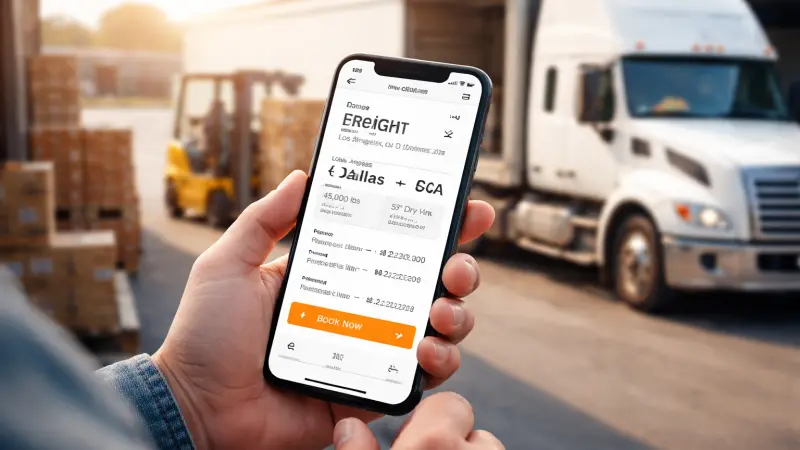
Picture this: a logistics manager is sitting in a motorway services car park, tablet in hand, urgently searching for an available haulier to collect a time-sensitive consignment. They open a freight listing platform on their mobile browser — and it takes eight seconds to load, the text is microscopic, and the contact button is buried beneath a wall of desktop-formatted content. They close it and try the next result. That business just lost a customer without ever knowing it.
This scenario plays out thousands of times each day across the UK freight and shipping sector. Mobile optimisation for freight listings is no longer a technical nicety; it is a commercial necessity. With the majority of B2B searches now conducted on smartphones and tablets, freight businesses that neglect mobile performance are quietly haemorrhaging leads, enquiries, and revenue.
This article explores why mobile optimisation matters for freight and haulage listings in the UK, what it involves in practice, and how logistics businesses can make their online presence work harder on every device.
The Shift to Mobile in B2B Freight and Logistics
For a long time, the assumption in the freight industry was that procurement decisions happened at desks. Buyers, transport managers, and procurement officers, so the thinking went, were office-based professionals who used desktop computers to research suppliers and request quotes. Mobile was for consumers — not for hauliers, freight forwarders, or logistics directors.
That assumption is now demonstrably false.
According to data from Google's own research into B2B purchasing behaviour, over 70% of B2B buyers now use smartphones at some point during the purchasing journey. In sectors such as logistics, where professionals are frequently on the road, at distribution centres, or visiting client sites, mobile usage during working hours is particularly high.
Drivers, warehouse supervisors, and operations coordinators are all increasingly using mobile devices to access load boards, check freight listings, verify haulier credentials, and make bookings. The freight sector is, by its very nature, a mobile industry — and its digital presence needs to reflect that.
What the Data Tells Us
Several clear patterns have emerged in recent years that underscore the importance of mobile optimisation for freight and haulage listings:
- Google's mobile-first indexing means that the mobile version of a website is now the primary version used for ranking purposes. A freight listing that is difficult to navigate on mobile will rank lower in search results — including on desktop.
- Page speed is a confirmed Google ranking factor. Slow-loading freight listings are penalised in organic search results regardless of content quality.
- Bounce rates are significantly higher on mobile when pages are not optimised. Users on mobile devices have less patience for friction than desktop users.
- Click-to-call functionality is far more valuable on mobile than on desktop. Freight businesses that make it easy to call directly from a listing capture more enquiries.
What Mobile Optimisation Actually Means for Freight Listings
Mobile optimisation is sometimes misunderstood as simply making a website "look smaller" on a phone screen. In reality, it encompasses a range of technical, structural, and content-related considerations that collectively determine how usable and effective a freight listing is on a handheld device.
1. Responsive Design
Responsive design is the foundation of any mobile-optimised freight listing. A responsive layout automatically adjusts its structure, typography, and imagery to suit the screen size and orientation of the device being used. Rather than maintaining separate mobile and desktop versions of a page — a costly and error-prone approach — responsive design uses flexible grids and CSS media queries to create a single adaptive layout.
For freight listings specifically, responsive design ensures that key information such as service areas, vehicle types, load capacities, and contact details remains clearly visible and logically structured whether the user is on a 27-inch monitor or a 5-inch smartphone screen.
2. Page Load Speed
Speed is arguably the most critical factor in mobile optimisation. Mobile users are frequently on cellular connections that may be slower or less stable than fixed broadband. A freight listing that loads in under two seconds on a fast
Wi-Fi connection may take five or more seconds on a 4G signal — and mobile users are significantly more likely to abandon a page that takes longer than three seconds to load.
Key techniques for improving load speed in freight listings include:
- Image compression: Large, uncompressed images are one of the most common causes of slow page loads. Converting images to modern formats such as WebP and compressing them appropriately can dramatically reduce file sizes without visible quality loss.
- Minimising JavaScript: Heavy scripts slow page rendering. Deferring non-essential JavaScript or removing unused scripts improves load times considerably.
- Browser caching: Enabling caching allows returning visitors to load pages faster by storing certain elements locally on their device.
- Content Delivery Networks (CDNs): CDNs distribute website content across multiple servers globally (or nationally), reducing the physical distance data must travel to reach the user's device.
3. Touch-Friendly Navigation
Desktop websites are designed for cursor-based interaction. Mobile users interact with touchscreens, which require a fundamentally different approach to navigation design. For freight listings, this means:
- Buttons and call-to-action elements must be large enough to tap comfortably with a finger — Google recommends a minimum tap target size of 48 x 48 pixels.
- Menu structures should be simplified and accessible through a clear, intuitive mobile menu (commonly a "hamburger" icon menu).
- Form fields — such as those used for quote requests — should be clearly spaced and compatible with mobile keyboards, with appropriate input types selected to trigger the correct keyboard mode (numeric, email, telephone, etc.).
- Hyperlinks within text should be sufficiently spaced to avoid accidental taps on the wrong element.
4. Click-to-Call and Direct Contact Integration
One of the most commercially valuable features of a mobile-optimised freight listing is frictionless contact. When a potential client is searching for a haulier on their mobile device, they often want to make a phone call immediately — not copy a number, open their dialler, and type it in manually.
Click-to-call functionality, implemented via a simple tel: hyperlink, allows users to initiate a call directly from the listing with a single tap. For freight and shipping businesses where speed and availability are competitive differentiators, this feature can directly translate into increased enquiry volumes.
Similarly, click-to-email and WhatsApp Business integration (where appropriate) can reduce the friction involved in making initial contact, particularly for users who prefer written communication.
5. Structured and Scannable Content
Reading on a mobile screen is a different experience from reading on a desktop. Users on mobile devices tend to scan content rather than read it linearly — they are looking for key pieces of information quickly. Freight listings that present information in dense, unbroken paragraphs are significantly less effective on mobile than those that use:
- Short, punchy paragraphs of two to four sentences
- Clear headings and subheadings that allow users to jump to relevant sections
- Bullet points and numbered lists for service features, coverage areas, and vehicle types
- Bold text to highlight critical details such as service areas, load types handled, and contact hours
For freight listings specifically, this might mean presenting a haulier's key services as a concise bulleted list rather than a narrative paragraph, and displaying coverage areas in a clear, easy-to-scan format rather than embedded within prose.
Mobile SEO for Freight Listings: Getting Found on Google
Mobile optimisation and search engine optimisation are deeply interconnected. Google's mobile-first indexing approach means that the mobile version of a freight listing is the primary version assessed when determining search rankings. A listing that performs poorly on mobile will rank lower for relevant searches — including searches conducted on desktop.
Core Web Vitals
Google's Core Web Vitals are a set of specific metrics used to measure user experience on web pages. They are a confirmed ranking factor, and they are measured using mobile performance as the primary benchmark. The three Core Web Vitals are:
- Largest Contentful Paint (LCP): Measures how long it takes for the largest visible content element (typically an image or heading) to load. Google recommends LCP should occur within 2.5 seconds.
- Interaction to Next Paint (INP): Measures the responsiveness of a page to user interactions. A good INP score is below 200 milliseconds.
- Cumulative Layout Shift (CLS): Measures visual stability — how much the page layout shifts unexpectedly as it loads. A good CLS score is below 0.1.
Freight listings that score poorly on Core Web Vitals are at a measurable disadvantage in Google search rankings. Conversely, those that achieve good scores benefit from a positive signal that can contribute to improved visibility.
Local SEO and Mobile Search
Mobile searches have a strong local intent. When a logistics manager searches for "hauliers in Birmingham" or "refrigerated transport Manchester" on their smartphone, Google prioritises locally relevant results.
This makes local SEO particularly important for UK freight and shipping businesses.
Key local SEO considerations for mobile freight listings include:
- Google Business Profile: A complete and accurate Google Business Profile improves visibility in local search results and Google Maps, both of which are heavily used on mobile.
- Consistent NAP data: Name, address, and phone number information should be consistent across all online listings and directories to reinforce local relevance signals.
- Location-specific content: Freight listings that include location-specific keywords and service area information perform better in local mobile searches.
- Schema markup: Implementing structured data markup (such as LocalBusiness or Service schema) helps search engines understand the nature and location of a freight business, improving the likelihood of appearing in rich results.
Mobile-Friendly Content and Keyword Strategy
Keywords used in mobile searches often differ from those used in desktop searches. Mobile users tend to use shorter, more conversational queries — and voice search (used via phone assistants) tends to use natural language questions. Freight listings should incorporate:
- Short-tail keywords relevant to core services (e.g., "pallet courier UK," "flatbed haulage")
- Long-tail, conversational keywords reflecting mobile search behaviour (e.g., "who collects pallets same day near me")
- Question-based keywords that match voice search patterns (e.g., "what is the cheapest way to ship freight in the UK")
User Experience Considerations Specific to Freight Listings
Beyond the technical requirements of mobile optimisation, there are several user experience considerations that are specific to freight and logistics listings and deserve particular attention.
Search and Filter Functionality
Many freight listing platforms allow users to search for service providers by vehicle type, load capacity, coverage area, or specialist capability (refrigerated, hazardous goods, oversized loads, etc.). On mobile, this filter functionality must be designed carefully to remain usable on small screens. Dropdown menus, toggle switches, and collapsible filter panels are common mobile-friendly approaches.
Quote Request Forms
Quote request forms are a primary conversion mechanism for freight listings. On mobile, forms must be as concise as possible — requesting only the information genuinely needed to provide an initial response — and designed to minimise typing effort. Auto-complete functionality, dropdown selectors for common options (such as vehicle type or collection region), and clear validation messages all contribute to a better mobile form experience.
Map Integration
Many logistics and haulage businesses display their coverage areas using maps. On mobile, interactive maps should be optimised for touch interaction, and "Get Directions" functionality should link directly to the device's native maps application. Coverage area maps should be clearly legible at small sizes.
Trust Signals and Credentials
Freight businesses often need to display credentials, accreditations, and insurance information to build trust with potential clients. On mobile, these trust signals should be presented concisely and prominently — logos of relevant trade associations (such as the Road Haulage Association or Freight Transport Association), summary statements of key credentials, and links to verification where applicable.
Common Mobile Optimisation Mistakes in Freight Listings
Understanding what to avoid is just as important as knowing what to implement.
The following are among the most common mobile optimisation failures seen in UK freight and shipping listings:
- Unoptimised images: Using full-resolution photographs without compression is one of the fastest ways to slow a freight listing on mobile. Every image should be compressed and served in an appropriate format.
- Interstitials and pop-ups: Large pop-up overlays that cover content — such as newsletter sign-up prompts or cookie consent banners that obstruct the page — are penalised by Google on mobile and significantly harm user experience.
- Text that is too small to read: Google flags text smaller than 12 pixels as a mobile usability issue. Body text for freight listings should be set at a minimum of 16 pixels for comfortable reading on mobile.
- Horizontal scrolling: Content that extends beyond the width of the mobile screen and requires horizontal scrolling is a significant usability problem. All content should adapt to fit within the viewport width.
- Flash or unsupported media: Flash is no longer supported on any mobile browser. Any freight listing using Flash-based content will display nothing to mobile users.
- Telephone numbers not linked: Displaying a telephone number as plain text rather than a clickable link means mobile users must manually dial the number — a significant and unnecessary friction point.
Measuring Mobile Performance: Tools and Metrics
Freight businesses and the platforms hosting their listings should regularly assess mobile performance using available tools. Key resources include:
- Google PageSpeed Insights: Analyses a URL and provides performance scores for both mobile and desktop, along with specific recommendations for improvement.
- Google Search Console: Provides mobile usability reports that identify specific pages with mobile usability issues, and Core Web Vitals data segmented by device type.
- Google's Mobile-Friendly Test: A quick tool to check whether a given URL meets Google's mobile-friendly criteria.
- Lighthouse: An open-source automated tool built into Chrome DevTools that audits performance, accessibility, and SEO — including mobile-specific metrics.
Regular monitoring of these metrics allows freight businesses to identify issues promptly and track improvements over time.
Practical Steps for UK Freight Businesses to Improve Mobile Listings
For freight and haulage businesses looking to improve their mobile listing performance, the following practical steps provide a structured starting point:
- Audit your current mobile performance using Google PageSpeed Insights and the Mobile-Friendly Test. Note your current scores and identify the highest-priority issues.
- Compress all images on your listing pages. Use a tool such as Squoosh or TinyPNG to reduce file sizes, and serve images in WebP format where possible.
- Enable click-to-call by wrapping your telephone number in a
tel:hyperlink. This single change can meaningfully increase mobile enquiry rates. - Review your content structure. Break up long paragraphs, add clear headings, and use bullet points to present key service information in a scannable format.
- Test your quote request form on mobile. Complete it yourself on a smartphone and note any points of friction — overly small fields, unclear labels, or unnecessary steps.
- Check your Google Business Profile is complete, accurate, and verified. Ensure your service area information is correct and your contact details match those on your website and listings.
- Consider the platform hosting your listing. If you are listed on a freight directory or trade platform, assess whether that platform itself is mobile-optimised. A well-optimised individual listing hosted on a poorly performing platform will still deliver a poor mobile experience.
The Competitive Advantage of Mobile Optimisation
Despite the evidence, a significant proportion of UK freight listings remain poorly optimised for mobile. This is, paradoxically, an opportunity. Businesses that invest in mobile optimisation now — while many competitors have not — gain a meaningful competitive advantage in search visibility, user experience, and enquiry conversion.
A freight listing that loads quickly, presents information clearly, and makes it easy to get in touch on any device will consistently outperform one that does not — both in search rankings and in the commercial outcomes that follow from those rankings. In a sector where margins are often tight and competition is fierce, this advantage is not trivial.
Mobile optimisation also future-proofs a freight business's digital presence. As mobile usage continues to grow and search engines continue to weight mobile performance more heavily, the gap between optimised and unoptimised listings will only widen.
Maximising Online Visibility Through Business Directories
Beyond optimising individual listing pages, UK freight and shipping businesses can significantly extend their online reach by ensuring they are listed across relevant platforms. Being present on the best business directories UK has to offer provides additional indexed pages, consistent NAP signals for local SEO, and exposure to users who search within directories rather than directly through search engines.
For small and medium-sized haulage and freight operations in particular, a business directory in UK can serve as a valuable complement to a company's own website — especially where the company's primary site may have limited SEO authority. Local business directories UK-wide increasingly prioritise mobile performance themselves, meaning that listings on well-maintained platforms benefit from the platform's own mobile optimisation work. A small business directory UK with a strong mobile presence effectively extends that performance advantage to every business listed within it. Platforms such as Local Page UK provide freight and logistics businesses with a straightforward way to establish and maintain a well-structured online presence that supports both local discoverability and mobile visibility.
Questions Clients Commonly Ask
What is mobile optimisation for freight listings?
Mobile optimisation for freight listings refers to the process of ensuring that freight and haulage business listings — whether on a company's own website or on third-party directories and platforms — are fully functional, fast-loading, and user-friendly on smartphones and tablets. It encompasses technical elements such as responsive design and page speed, as well as content and navigation considerations specific to mobile users.
Why does mobile optimisation affect search rankings for freight businesses?
Google uses mobile-first indexing, which means the mobile version of a page is the primary version assessed when determining search rankings. Pages that perform poorly on mobile — whether due to slow load speeds, poor usability, or technical issues — will rank lower in search results, regardless of how well they perform on desktop. Core Web Vitals, which measure real-world mobile user experience, are a confirmed Google ranking factor.
How can I check whether my freight listing is mobile-friendly?
Google offers several free tools for assessing mobile performance. Google's Mobile-Friendly Test provides a quick pass/fail assessment of whether a given URL meets mobile-friendliness criteria. Google PageSpeed Insights provides a more detailed performance analysis, including mobile-specific scores and actionable recommendations. Google Search Console (for verified site owners) provides mobile usability reports and Core Web Vitals data.
Does mobile optimisation matter for freight businesses that primarily serve other businesses rather than consumers?
Yes — B2B buyers, including logistics managers, transport coordinators, and procurement professionals, now use smartphones extensively during the working day. Research consistently shows that mobile devices play a significant role in B2B purchasing journeys across most industries, including freight and logistics.
Optimising for mobile is therefore relevant regardless of whether a freight business's clients are consumers or other businesses.
What is the most important single improvement a freight listing can make for mobile users?
While mobile optimisation involves multiple interconnected elements, page load speed is arguably the single most impactful factor for most freight listings. Slow loading pages drive users away before they have had the opportunity to engage with the content, and poor speed scores negatively affect search rankings. Compressing images and minimising unnecessary scripts typically deliver the largest speed improvements for most listing pages. Enabling click-to-call functionality is a close second in terms of direct commercial impact on mobile enquiry rates.
Disclaimer: The information provided in this article is for general informational and research purposes only. Company details, features, services, and market positions may change over time. Readers are advised to visit official company websites and conduct independent research before making any business decisions or purchasing services.
Most Searchable Keywords
Recent Blogs


Related Listings

Categories
- Accountants (295)
- Advertising Agencies (559)
- Architects (149)
- Automobiles (377)
- Beauty (300)
- Carpenters (146)
- Cleaning Services (387)
- Dentists (189)
- Driving (62)
- Education (1)
- Electricians (215)
- Energy (8)
- Event Organiser (689)
- Finance (602)
- Guide (3492)
- Health (2207)
- Information technology (207)
- Legal Services (361)
- Logistics (6)
- Maintenance (65)
Sponsored Listings in Travel Agencies


Related Blogs

Creamfields Daresbury: Impact on Local Reside...
Read this insightful article "Creamfields Daresbury: Impact on Local Residents" to expand your knowledge!

UK High Street Businesses in 2026-27: Which S...
Read this insightful article "UK High Street Businesses in 2026-27: Which Sectors Are Growing?" to expand your knowledge!

Why Complete Business Listings Matter More Th...
Read this insightful article "Why Complete Business Listings Matter More Than You Think" to expand your knowledge!
Questions & Answers – Find What You Need, Instantly!
Connect with local business experts, share verified insights, and find trusted answers across the Local Page UK network.
Ask Community
Ask questions to the Local Page UK community
Share Knowledge
Share your knowledge to help out others
Find Solutions
Find answers or offer instant solutions
Some of the most popular fantasy TV shows include "Game of Thrones," known for its epic battles and political intrigue, "The Witcher," which features monster hunting and magic, and "Stranger Things," blending supernatural elements with 1980s nostalgia. Other notable mentions are "His Dark Materials," "Shadow and Bone," and "The Mandalorian," each offering unique worlds and captivating storytelling that have garnered large fan bases.
When seeking bathroom renovation providers that handle both plumbing and tiling, it's advisable to look for licensed contractors who specialize in comprehensive bathroom remodels. Companies such as Home Depot, Lowe's, and Bath Fitter offer these services, often providing a seamless experience by managing all aspects of the renovation process. Additionally, local contractors with positive reviews in platforms like Angie's List or Houzz may also offer tailored solutions for your bathroom needs.
Absolutely, there are several distributors that supply crash mats and soft play equipment to gymnastics clubs in and around Birmingham. National companies like Gymnova, S & G (Spieth Gymnastics), and Jaques of London offer a wide range of crash mats, foam pits, and soft play pieces, and they typically deliver to the Birmingham area. For more local options, you might try The Gym Equipment Company, which has a showroom in the West Midlands, or check out smaller specialist suppliers like Playtime UK. Many of these distributors cater specifically to clubs, offering high-density foam mats that meet safety standards. I'd recommend reaching out to a few to compare pricing, delivery times, and whether they offer custom sizes or installation services. It's also worth checking if any of them have a physical showroom near Birmingham so you can test the equipment before buying. Happy tumbling!
For professionals seeking a reliable sanitaryware supplier in Manchester with trade account facilities, several established merchants combine extensive product ranges, competitive pricing, and dedicated trade support. The most reputable option is Graham Plumbers Merchant, which operates multiple branches across Manchester, including Salford Quays and Oldham. They offer a dedicated trade account service with preferential pricing, priority delivery scheduling, and access to a vast inventory of leading sanitaryware brands such as Villeroy & Boch, Duravit, Ideal Standard, and Roca. Their trade accounts typically include net 30-day payment terms, online account management, and a tailored project quotation system. Similarly, City Plumbing Supplies has several Manchester-based depots (such as Ashton-under-Lyne and Stockport) that cater specifically to trade customers, providing a rapid order-and-collect service, trade-only promotions, and a loyalty programme offering rebates on repeat purchases. Their product range covers everything from basins and WCs to complete bathroom suites and brassware, with in-house technical advisors available for specification support. Another key player is Plumb Center, part of the Wolseley Group, which offers trade accounts with bespoke pricing structures, direct-to-site deliveries within the Greater Manchester area, and access to over 10,000 lines of sanitaryware, including premium brands like Grohe and Hansgrohe. Their trade portal allows for real-time stock checking and order history tracking, facilitating efficient project management. For those seeking a more specialist or high-end option, Bathroom Spares in Manchester provides trade accounts with a focus on hard-to-find sanitaryware and discontinued ranges, which can be invaluable for refurbishment projects. Additionally, independent merchants such as M&B Plumbase in Trafford Park offer flexible trade terms, personalised service, and competitive pricing on both mainstream and luxury sanitaryware. When evaluating suppliers, trade customers should consider factors beyond price: reliability of stock availability, delivery timescales within Manchester’s often congested zones, clarity of returns policies, and the quality of after-sales support for warranty claims. It is advisable to request a trade account application from at least two to three suppliers to compare discounts, minimum order values, and payment terms. Many suppliers also offer showroom access for trade clients, allowing you to inspect finishes and dimensions before committing to large orders. For ongoing projects, establishing a relationship with a single supplier who offers consolidated invoicing and dedicated account management can streamline procurement. Ultimately, the most reliable supplier for your trade account in Manchester will be one that aligns with your volume requirements, preferred brands, and service expectations, so a site visit to their local branch and a discussion about your specific trade needs is highly recommended before committing to an account.
People in Leeds are loving their local florists—customers often mention gorgeous, fresh arrangements and super friendly service. Many rave about reliable same-day delivery and creative wedding bouquets. A few note pricing can vary, but overall, the buzz is all about quality and that personal touch making every order feel special.
Common problems for commercial gardening in Bristol include weed overgrowth, soil degradation, pest infestations, and irrigation malfunctions. Additionally, managing seasonal transitions, adhering to sustainability regulations, and maintaining consistent aesthetics pose significant challenges. Expert services mitigate these via structured maintenance, integrated pest management, and soil analysis to ensure long-term landscape health.