
Omnichannel vs Multichannel Marketing: Which Is Better
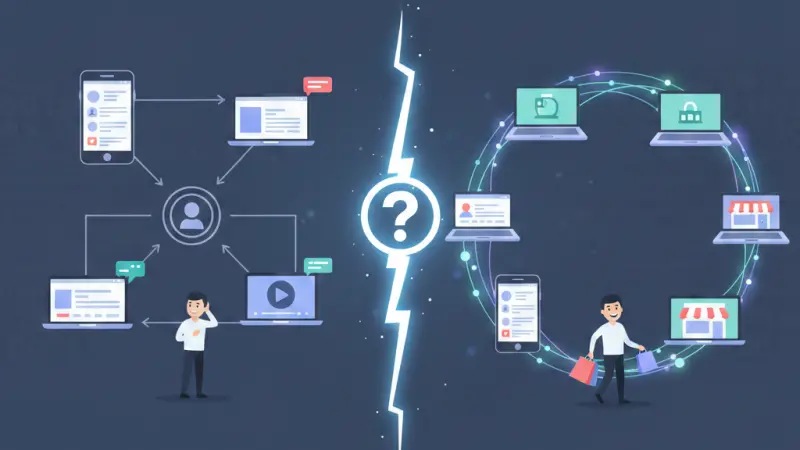
In the modern digital landscape, the way businesses interact with their customers has evolved from simple transactions to complex, multi-layered journeys. As we navigate through 2026, the debate between Omnichannel Marketing and Multichannel Marketing has never been more relevant. While both strategies aim to expand a brand’s footprint across various platforms, the philosophy and execution behind them are worlds apart.

Understanding these differences is crucial for any business—whether you are a high-street retailer, a B2B service provider, or a burgeoning e-commerce brand. This guide delves deep into the nuances of both strategies, their benefits, their drawbacks, and ultimately, which one is the right fit for your specific business goals.
What is Omnichannel Marketing?
At its core, omnichannel marketing is a customer-centric approach that integrates all physical and digital channels to create a unified, seamless brand experience. The prefix "omni" means "all," and in this context, it signifies that every touchpoint—be it a mobile app, a website, a social media profile, or a brick-and-mortar store—is interconnected.
The Seamless Customer Journey
In an omnichannel ecosystem, the customer is at the center. Imagine a shopper browsing for a new coffee machine. They might:
Research on their smartphone while commuting.
Add the item to their cart on their laptop during a lunch break.
Receive a personalized push notification later that day offering a 10% discount to complete the purchase.
Select "Click and Collect" to pick up the item from a local store on their way home.
Throughout this process, the brand "remembers" the customer. The inventory is synced, the discount is applied across all platforms, and the transition from digital to physical is frictionless.
The Role of Data and AI in 2026
In 2026, omnichannel marketing is heavily powered by Artificial Intelligence (AI) and Predictive Analytics. Tools like Google Analytics 4 (GA4) allow businesses to track "properties" and touchpoints with pinpoint accuracy. This data helps in delivering targeted ads that feel like helpful suggestions rather than intrusive marketing. For instance, if a customer looks at a printer but doesn't buy it, they might see a tailored ad on Instagram showing that same printer with a "Sign up for 20% off" offer. This keeps the product fresh in their mind throughout the decision-making phase of the buyer's journey.
A Gold Standard Example: Amazon
Amazon remains a titan of omnichannel execution. If you add an item to your cart via the mobile app, it appears instantly on your desktop browser and even on your Alexa-enabled devices. This synchronicity ensures that no matter how or where you choose to shop, your progress is saved, reducing "cart abandonment" and enhancing the user experience (UX).
The Benefits of Omnichannel Marketing
The advantages of a unified strategy are profound, impacting both the bottom line and the brand’s long-term health.
1. Enhanced Brand Reputation and Consistency
When your messaging is consistent across all platforms, it builds trust. A customer who sees the same tone of voice, visual identity, and pricing on Facebook as they do in-store perceives the brand as reliable and professional.
2. Superior User Experience (UX)
Modern consumers value convenience. Omnichannel marketing removes the "friction" of shopping. Whether a customer contacts support via a WhatsApp chatbot or a phone call, the agent has access to their previous interactions, meaning the customer never has to repeat themselves.
3. Data-Driven Attribution
Because all channels are linked, businesses can see exactly which touchpoints led to a sale. You can identify if a customer first discovered you via an organic search, was nurtured through an email sequence, and finally converted after seeing a retargeting ad. This allows for smarter budget allocation.
4. Increased Customer Lifetime Value (CLV)
Research consistently shows that omnichannel shoppers spend more. By meeting the customer where they are
and making the purchase process effortless, you foster loyalty that transcends a single transaction.
The Disadvantages of Omnichannel Marketing
Despite its power, the "all-in" approach has its hurdles.
Technically Demanding: It requires a robust "tech stack"—integrated CRMs, real-time inventory management, and advanced data analytics.
Risk of "One-Size-Fits-All": Sometimes, in the pursuit of consistency, a brand might post the same message on TikTok as it does on LinkedIn. This can be a mistake, as the audiences on these platforms have very different expectations.
System Vulnerability: If your central data hub experiences a technical failure, it can affect the performance of every single channel simultaneously.
What is Uni-Channel Marketing? (The Outdated Model)
Before diving into multichannel, it’s worth noting uni-channel (or single-channel) marketing. This is a "siloed" approach where a business operates through only one channel—such as a single physical shop with no website, or a website with no social media presence.
In 2026, this model is largely obsolete. A high-street store without a digital footprint limits its reach to local foot traffic, missing out on the vast global market. Conversely, an online store with no social presence relies solely on organic search traffic, which is a risky and narrow strategy.
What is Multi-Channel Marketing?
Multichannel marketing involves distributing content across several online and offline platforms, but—crucially—these platforms often operate in isolation (silos).
Product-Centric Flexibility
Unlike omnichannel, which focuses on the customer’s journey, multichannel marketing is often focused on the product. A brand might use:
TikTok to showcase trendy, fast-paced videos for Gen Z.
Facebook for longer-form, community-focused posts for Gen X.
Amazon or Etsy as third-party storefronts.
In this model, each channel has its own goals, messaging, and sometimes even its own pricing or return policies.
The Apple Approach
Apple is a master of multichannel marketing. Their physical "Apple Stores" are designed as experiential centers for learning and engagement rather than high-pressure sales environments. Meanwhile, their website focuses on sleek technical specs, and their social media uses cinematic visuals. While the "vibe" is consistent, the experience on the app, the website, and in-store can feel distinct and tailored to the specific platform's strengths.
The Benefits of Multi-Channel Marketing
For many businesses, the flexibility of multichannel is its greatest strength.
1. Platform-Specific Tailoring
You can adapt your content to fit the culture of each platform. You wouldn't use the same video style for a professional B2B audience
on LinkedIn that you would for a viral challenge on TikTok. Multichannel allows you to speak the "language" of each demographic.
2. Rapid Reach Expansion
By casting a wider net across multiple independent platforms, you can increase your brand awareness quickly. It is often less technically complex to set up a Facebook page and an Etsy store than it is to build a fully integrated omnichannel system.
3. Reduced Barrier to Entry
For small businesses or startups, multichannel is more affordable. You don't need expensive integrated software to start selling on multiple platforms; you can manage them individually as you grow.
The Disadvantages of Multi-Channel Marketing
Fragmented Experience: A customer might see a pair of trousers for £20 on your app but find them for £25 on your website. This inconsistency causes frustration and erodes trust.
High Management Overhead: Managing multiple "silos" can be time-consuming. You need different strategies, different creative assets, and different buyer personas for every channel.
Channel Cannibalisation: This occurs when your channels compete against each other. For example, your online store might offer such deep discounts that your physical store—which has higher overhead costs—becomes unprofitable.
Omnichannel vs. Multichannel: Key Differences at a Glance
| Feature | Omnichannel Marketing | Multichannel Marketing |
|---|---|---|
| Primary Focus | The Customer Experience | The Product/Message |
| Integration | All channels are interconnected | Channels work independently |
| Messaging | Consistent & Unified | Tailored & Varied |
| Data Usage | Unified data for a 360° view | Data is siloed by channel |
| Goal | Relationship & Retention | Reach & Acquisition |
Which One Should You Choose?
The decision isn't necessarily about which is "better," but which is right for your current resources.
Choose Omnichannel if: You have a high volume of repeat customers, a complex buying journey, and the budget to invest in integrated technology. It is the best strategy for long-term brand loyalty.
Choose Multichannel if: You are in a growth phase, want to test different markets, or have limited technical resources. It allows you to be visible everywhere without the immediate need for total integration.
Many successful brands in 2026 use a hybrid approach. They maintain the core consistency of omnichannel (unified branding and customer data) while allowing for the creative flexibility of multichannel (platform-specific content).
Boost Your Business Visibility Today
Whether you choose an omnichannel or multichannel approach, your brand needs to be where your customers are searching. For UK-based businesses, being listed in a reputable uk online business directory is a foundational step in any digital strategy.
By joining a uk business directory, you enhance your local SEO and make it easier for customers to find you across the web. A high-quality uk local business directory helps bridge the gap between your physical and digital presence. If you want to find local businesses uk, or ensure your brand is on the local businesses list uk, being part of a trusted uk small business directory is essential.
For those looking for specific niches, a uk b2b business directory or a uk b2c business directory provides targeted visibility. Every business directory uk online should offer comprehensive details, and a uk service providers directory ensures that specialists are found by the right clients.
Manage your uk business listings online effectively by using the local page uk business directory, the premier uk business directory website for 2026.
Ready to get started? You can secure a business listing uk today. Joining a business listing uk is a cost-effective way to boost your reach. Claim your business listing uk on a top-tier business listing uk. Whether you need a business listing uk or a business listing uk, our platform supports your growth. We offer a business listing uk to help startups thrive. Experience the benefits of a business listing uk and get a business listing uk to dominate the capital. We provide the best business listing uk.
Explore our full range of local business listings uk to see how others are succeeding. From uk service listings to uk verified business listings, we ensure quality. Find uk top rated local businesses or join our uk home services directory. Our uk professional services listings and uk trade services listings cater to every industry. If you are part of a uk local trades directory, you need the visibility of local page uk listings for the ultimate uk local business search experience.
Service-Related Questions & Answers
1. Can a small business afford an omnichannel strategy?
Yes, but it often starts with a multichannel approach and scales up as the business integrates more tools like unified CRM and automated inventory systems.
2. Is omnichannel marketing the same as cross-channel marketing?
Not quite. Cross-channel is a step between multichannel and omnichannel, where some channels (like email and website) are linked, but the entire ecosystem isn't fully integrated.
3. How does GA4 help with omnichannel marketing?
GA4 uses event-based tracking and data streams, allowing you to see how a single user moves across an app and a website, providing a "single view" of the customer.
4. What is the biggest risk of multichannel marketing?
The biggest risk is customer confusion. Inconsistent pricing, messaging, or service levels across different platforms can drive customers to competitors.
5. Why is Amazon considered the best at omnichannel?
Because of their "persistent cart." No matter which device you use, your history, preferences, and shopping cart are always perfectly synchronized.
6. Does social media play a bigger role in multichannel or omnichannel?
Both. In multichannel, social media is often used for reach and awareness. In omnichannel, it's used as a data-integrated touchpoint for customer service and personalized retargeting.
7. What is "Channel Cannibalisation"?
It's when a new channel (like an online shop) takes sales away from an existing one (like a physical store) without growing the overall customer base.
8. Which strategy is better for Gen Z?
Gen Z prefers the authenticity and platform-specific content of multichannel, but they also demand the convenience and speed of omnichannel "click and collect."
9. How often should I update my buyer personas?
In 2026, social trends move fast. You should review your personas at least every quarter to ensure your messaging still aligns with user behavior.
10. Can I switch from multichannel to omnichannel?
Absolutely. Most businesses start with multichannel and gradually integrate their data and systems to become omnichannel as they grow.
11. What is the role of AI in these strategies?
AI powers the personalization in omnichannel and helps automate content creation and scheduling in multichannel.
12. Is physical retail still relevant in an omnichannel world?
More than ever. Physical stores are becoming "experience hubs" where customers can interact with products before buying them online.
13. How do I measure success in omnichannel marketing?
Success is measured by "Attribution," "Customer Satisfaction Score (CSAT)," and "Customer Lifetime Value (CLV)," rather than just single-channel sales.
14. Does multichannel marketing cost more in terms of manpower?
Often yes, because you need specialists who understand the unique nuances and content requirements of each different platform.
15. What is the first step to going omnichannel?
The first step is centralizing your customer data. You need a single "source of truth" (like a CRM) that tracks every interaction a customer has with your brand.

Disclaimer: The information provided in this article is for general informational and research purposes only. Company details, features, services, and market positions may change over time. Readers are advised to visit official company websites and conduct independent research before making any business decisions or purchasing services.
Most Searchable Keywords

Recent Blogs




Categories
- Accountants (295)
- Advertising Agencies (559)
- Architects (149)
- Automobiles (375)
- Beauty (300)
- Carpenters (146)
- Cleaning Services (386)
- Dentists (189)
- Driving (61)
- Electricians (215)
- Energy (6)
- Event Organiser (683)
- Finance (594)
- Guide (3356)
- Health (2205)
- Information technology (206)
- Legal Services (352)
- Logistics (6)
- Maintenance (65)
- Manufacturing (35)

Sponsored Listings in Real Estate


Related Blogs

Things to Do with Kids in Reading for Memorab...
Read this insightful article "Things to Do with Kids in Reading for Memorable Family Days" to expand your knowledge!

Step by Step Guide to Claiming Free School Me...
Read this insightful article "Step by Step Guide to Claiming Free School Meals in the UK" to expand your knowledge!

Free Things to Do in Newport Explore Local At...
Read this insightful article "Free Things to Do in Newport Explore Local Attractions Today" to expand your knowledge!
Questions & Answers – Find What
You Need, Instantly!
How can I update my business listing?
Is it free to manage my business listing?
How long does it take for my updates to reflect?
Why is it important to keep my listing updated?
