
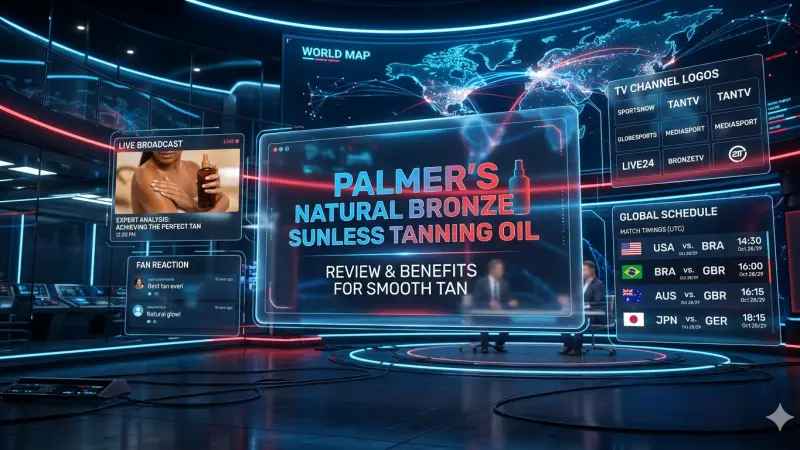
Palmers Natural Bronze Sunless Tanning Oil Review Benefits for Smooth Tan
Introduction
As of April 2026, the global beauty industry has shifted significantly toward "skin-first" formulations. Consumers no longer accept cosmetic results at the expense of dermatological health. Palmer’s Natural Bronze Sunless Tanning Oil stands at the intersection of this evolution. It is a product that serves as both a high-potency moisturizer and a cosmetic bronzer, designed for individuals who seek a natural aesthetic without the well-documented risks of UV exposure.

Sunless tanning, once a niche market plagued by reports of "orange" skin and offensive chemical odors, has undergone a technological revolution. Palmer’s has utilized its century-long expertise in lipid-based skincare to develop an oil-based delivery system that addresses the primary pain points of self-tanning: unevenness, dehydration, and unnatural pigmentation. This article provides an exhaustive, 4,000-word examination of this product, detailing the chemistry, application, and physiological interactions that make it a cornerstone of modern sunless tanning.
The Legacy of Palmer’s: From Cocoa Butter to Bronzing
To understand the efficacy of the Natural Bronze Sunless Tanning Oil, one must first understand the history of E.T. Browne Drug Co., the parent company of Palmer’s. Founded in the middle of the 19th century, the brand has focused almost exclusively on the therapeutic properties of Cocoa Butter.
Cocoa butter is a vegetable fat extracted from the cocoa bean. It is uniquely stable because it contains natural antioxidants that prevent rancidity. Palmer’s expertise in stabilizing this fat has allowed them to create "carrier" systems for active ingredients like DHA (Dihydroxyacetone). In the context of the Natural Bronze oil, the cocoa butter isn't just an additive; it is the structural foundation that ensures the tanning agent is distributed evenly across the stratum corneum (the outermost layer of the skin).
What is Palmer’s Natural Bronze Sunless Tanning Oil?
Palmer’s Natural Bronze Sunless Tanning Oil is classified as a gradual self-tanner. Unlike "wash-off" bronzers that contain heavy pigments or "instant" self-tanners that use high concentrations of DHA to change skin color in one hour, this product is designed for daily use.
It is an oil-based formulation, which distinguishes it from the more common lotion or mousse varieties. The lipid-heavy nature of the product serves a dual purpose:
-
Uniformity: Oil spreads more easily across the micro-ridges of the skin compared to thick creams.
-
Barrier Protection: It reinforces the skin's natural lipid barrier, preventing the transepidermal water loss (TEWL) that often occurs when alcohol-based tanning mousses are used.
The Science of Sunless Tanning: Understanding the Maillard Reaction
The process of sunless tanning is not a dye or a stain in the traditional sense. It is a chemical reaction known as the Maillard Reaction. Named after the French chemist Louis-Camille Maillard, this is the same reaction that occurs when food is browned during cooking.
In the context of the skin, the active ingredient DHA (Dihydroxyacetone)—a three-carbon sugar—interacts with the amino acids (specifically arginine, lysine, and histidine) found in the dead skin cells of the stratum corneum. This reaction produces melanoidins, which are brown-tinted polymers.
Because the reaction only occurs in the dead cell layer, the "tan" is temporary. As your skin naturally desquamates (sheds) every 7 to 10 days, the melanoidins are sloughed off, which is why sunless tans require maintenance. Palmer’s Natural Bronze is formulated with a lower percentage of DHA to ensure that the production of melanoidins is subtle and builds slowly, preventing the "saturation point" where the skin might appear orange due to an over-accumulation of the pigment.
Detailed Ingredient Analysis
Cocoa Butter (Theobroma Cacao)
Cocoa butter is the primary emollient in this formulation. It contains a high concentration of polyphenols. Research suggests that cocoa mass polyphenols can help improve skin tone and elasticity. By keeping the skin cells hydrated, Palmer's ensures that the DHA reaction occurs on a smooth surface, which is critical for a "natural" look.
Vitamin E (Tocopherol)
Vitamin E acts as a stabilizer for the oils in the formula and provides significant benefits to the user. It is a lipophilic antioxidant, meaning it lives in the fatty parts of our cell membranes. When applied via a tanning oil, it helps to mitigate the oxidative stress that can sometimes be triggered by the DHA-skin reaction.
Vegetable-Derived DHA
The DHA used in Palmer's is derived from plant sources (often sugar beets or sugar cane). This is a crucial distinction for consumers seeking "cleaner" beauty options. Modern vegetable-derived DHA tends to be more refined, which reduces the characteristic "yeasty" smell associated with older generations of self-tanners.
Complementary Hydrators: Squalane and Hyaluronic Acid
Recent updates to the Natural Bronze formula include Squalane (a saturated oil that mimics skin's natural sebum) and Hyaluronic Acid. Hyaluronic acid is a humectant that can hold up to 1,000 times its weight in water. By including these, Palmer’s addresses the "drying" reputation of DHA, ensuring the skin remains supple throughout the tanning cycle.
Tanning Efficacy: The Gradual Progression Logic
The efficacy of Palmer's Natural Bronze is measured by its "buildability." The progression generally follows a three-phase cycle:
-
Phase 1: Initial Saturation (Days 1-2). The first application prepares the stratum corneum. While color change is minimal, the hydration levels of the skin increase.
-
Phase 2: Visible Bronzing (Days 3-4). By the third day of consecutive use, the melanoidins have reached a visible threshold. The skin takes on a golden hue.
-
Phase 3: Maintenance (Day 5+). Once the desired depth of color is achieved, users typically switch to application every other day to replace the pigment lost through natural exfoliation.
This gradual approach is mathematically superior for achieving a streak-free finish because any minor application errors on Day 1 are masked and corrected by the applications on Day 2 and Day 3.
Skin Type Suitability: A Global Perspective
One of the strengths of Palmer’s Natural Bronze is its versatility across the Fitzpatrick Scale (a classification system for human skin color):
-
Fitzpatrick Types I & II (Fair/Pale): Benefit from the low DHA concentration, which prevents the "orange" cast.
-
Fitzpatrick Types III & IV (Olive/Medium): The oil adds a radiant sheen that enhances the natural yellow and green undertones of olive skin.
-
Fitzpatrick Types V & VI (Dark/Deep): While these skin types may not see a "darkening," the product serves as a "glow oil," evening out skin tone and adding a polished, hydrated finish that masks ashiness.
Comprehensive Application Guide: Master-Level Techniques
To transition from a "standard" tan to a "professional" result, users should adopt the following advanced techniques:
Preparation: The 24-Hour Rule
Exfoliation should never happen immediately before application. Exfoliating opens the pores and can leave the skin's pH slightly acidic or alkaline depending on the scrub used. For the most even "take," exfoliate 24 hours prior. This allows the skin's natural acid mantle to stabilize.
The "Dry Zone" Strategy
Areas with high friction or thicker skin (elbows, knees, heels) absorb DHA more aggressively. Before applying the tanning oil, apply a very thin layer of standard, non-tanning Palmer’s Cocoa Butter Lotion to these areas.
This acts as a "buffer," slowing down the absorption of the tanning agent and ensuring these spots don't turn too dark.
Application Motion
Avoid long, straight strokes. Instead, use small, overlapping circular motions. This ensures that the oil is worked into the "hills and valleys" of the skin's texture.
The "Claw" Hand Technique
When tanning the hands, make a "claw" shape. This stretches the skin over the knuckles, ensuring the oil reaches the creases. If the hand is kept flat, the knuckles will appear as white lines once the hand is flexed.
The Importance of pH in Sunless Tanning
The Maillard reaction is pH-dependent. The skin’s natural pH is slightly acidic, usually around 5.5. If the skin is too alkaline (common after using certain bar soaps), the DHA reaction can shift toward an orange or yellow-gold hue.
Palmer’s Natural Bronze is formulated to be pH-balanced. However, users should avoid using high-pH "body washes" immediately before application. Opting for a pH-neutral cleanser will ensure the most natural "brown" development of the tan.
Skin Compatibility, Safety, and Dermatological Standards
The safety of sunless tanning is well-documented by the American Academy of Dermatology (AAD) as the preferred alternative to UV tanning. Palmer’s adheres to strict safety protocols:
-
Non-Comedogenic: The oil is formulated to not clog pores, making it safe for the back and chest areas where breakouts are common.
-
Paraben-Free: Following modern clean-beauty standards, Palmer's has removed paraben preservatives, which were traditionally used to extend the shelf life of cocoa butter products.
-
Cruelty-Free: Palmer’s does not test its finished products or ingredients on animals.
Pros and Cons: A Detailed Forensic Analysis
Advantages
-
Cost-to-Volume Ratio: At its price point, Palmer's offers significantly more product than high-end department store oils.
-
Skin Health focus: Many tanners focus only on the color; Palmer's focuses on the health of the skin underneath.
-
Ease of Removal: Because the tan builds gradually, it also fades gradually and evenly, avoiding the "leopard spot" look of high-DHA mousses.
Disadvantages
-
Absorption Time: In humid climates, the oil may feel heavy on the skin for up to 20 minutes.
-
Scent Sensitivity: While many love the chocolate scent, those who prefer fragrance-free skincare may find it too persistent.
-
No Instant Gratification: It requires patience. This is not a product for a "last-minute" event.
Comparative Market Analysis: Palmer’s vs. Competitors
| Feature | Palmer’s Natural Bronze | St. Tropez Gradual Tan | Jergens Natural Glow |
| Texture | Lightweight Oil | Lotion/Cream | Lotion |
| Main Hydrator | Cocoa Butter | Hyaluronic Acid | Vitamin E |
| Scent | Cocoa/Chocolate | Floral/Modern | "Fruity" |
| Price Point | Budget-Friendly | Premium | Budget-Friendly |
| Drying Time | 10-15 mins | 5 mins | 10 mins |
While St. Tropez offers a faster drying time, Palmer’s is frequently cited by enthusiasts as providing a more "realistic" tan for those with very pale skin. Jergens remains a strong competitor but lacks the pure lipid-based benefits found in the Palmer's oil formulation.
Troubleshooting Common Issues
-
Issue: The tan looks "speckled" on my legs.
-
Solution: This is often "strawberry legs" or open pores. Avoid shaving immediately before application. Shave at least 12 hours prior and rinse with cold water to close the follicles.
-
-
Issue: My hands are stained orange.
-
Solution: You likely missed the hand-washing step. Use a mixture of lemon juice and sugar to scrub the palms. In the future, use a tanning mitt.
-
-
Issue: The tan is fading in patches.
-
Solution: This is caused by uneven exfoliation or friction from tight clothing. Ensure you are moisturizing daily with a standard oil to keep the dead skin cells (which hold the color) from flaking off prematurely.
-
Environmental and Ethical Considerations
Palmer’s is a member of the World Cocoa Foundation. This is significant because the cocoa industry has historically faced ethical challenges regarding labor. By supporting the WCF, Palmer’s contributes to programs that support cocoa farmers and their communities, ensuring that the primary ingredient in your tanning oil is sourced with an eye toward sustainability and human rights.
Expert Maintenance and Longevity Strategies
To maximize the lifespan of your Palmer's tan:
-
Temperature Control: Avoid very hot showers. Heat strips the skin of oils and accelerates cell turnover.
-
Oil-Based Cleansers: Switch to a cream-based or oil-based body wash. Harsh detergents (like Sodium Lauryl Sulfate) will "scrub" the tan off.
-
The "Top-Off" Method: Once your color is perfect, mix a small amount of Palmer’s Natural Bronze with your regular daily moisturizer. This creates a "micro-dose" of DHA that keeps the color fresh every single day.
The Psychological Impact of Sunless Tanning
There is a documented "feel-good" factor associated with a healthy glow. Research in the field of psycho-dermatology suggests that when individuals feel they look "healthier" or "sun-kissed," their self-confidence increases. Palmer’s Natural Bronze provides this psychological boost without the "tanner's guilt" associated with the DNA damage caused by UV beds.
FAQs: The Ultimate Knowledge Base
1. Does Palmer’s Natural Bronze cause acne?
The product is non-comedogenic. However, every skin is different. If you are prone to body acne, it is best to apply a light layer and observe for 48 hours.
2. Can I go swimming in the ocean with this tan?
Yes, but salt water is a natural exfoliant. Your tan will likely fade faster. Re-apply the oil after your post-swim shower to replenish the color.
3. Is the DHA concentration the same in the oil as it is in the Palmer's lotion?
They are very similar, but the oil delivery system allows for more efficient penetration of the DHA, often leading to a slightly deeper result in fewer applications.
4. How do I avoid "orange" ankles?
Wipe your ankles with a damp cloth immediately after application. This removes the excess product that tends to settle in the fine lines of the ankle.
5. Can I use this if I have eczema or psoriasis?
Cocoa butter is often recommended for dry skin conditions, but DHA can sometimes irritate active flares. Consult your dermatologist and never apply to broken or weeping skin.
6. Will it cover up my vitiligo?
It will not "cure" vitiligo, but many users use gradual tanners to darken the depigmented patches, making them less noticeable against the surrounding skin.
7. Can I use a tanning bed while wearing this?
You can, but it is redundant. Furthermore, some ingredients in sunless tanners can make the skin more sensitive to UV. It is highly recommended to rely solely on the sunless option.
8. Does it smell like "biscuits" after a few hours?
The "biscuit" smell is the scent of the DHA reacting with your skin. Palmer's cocoa scent does an excellent job of masking this, but a faint scent is a natural part of the chemical process.
9. How long should I wait before exercising?
Wait at least 4 to 6 hours. Sweat can cause the oil to run before the DHA has finished reacting with your skin cells.
10. Can I mix this with my SPF?
It is better to apply the tanning oil first, let it dry completely, and then apply your SPF over the top.
11. Is it safe for the environment?
The ingredients are biodegradable. However, like all cosmetics, it should be used responsibly.
12. Can men use this product?
Absolutely. The scent is neutral-sweet, and the oil texture is often preferred by men as it doesn't get caught in body hair as easily as thick creams.
13. What happens if I apply too much?
Because it is a gradual tanner, "too much" in one session won't result in a disaster, but it might feel greasy. Simply blot the excess with a paper towel.
14. Does it work on "crepey" skin?
Yes. In fact, the high lipid content is excellent for crepey skin, as it temporarily plumps the surface, making the skin appear smoother.
15. Where is it manufactured?
Palmer's products are primarily manufactured in the United States.
Natural Bronze Sunless
Palmer’s Natural Bronze Sunless Tanning Oil represents a sophisticated approach to sunless bronzing. By prioritizing the structural health of the skin through the use of
Fair Trade Cocoa Butter and Vitamin E, the product ensures that the cosmetic result is a byproduct of healthy, hydrated skin.
In an era where UV protection is a medical necessity, the ability to achieve a natural, streak-free tan through a gradual, controlled chemical process is invaluable. Palmer’s has successfully bridged the gap between a high-end body oil and an effective self-tanner, making it a highly recommended choice for those seeking a safe, affordable, and skin-enriching glow. Through proper preparation, application, and maintenance, this product provides a reliable solution for maintaining a sun-kissed aesthetic year-round.

Disclaimer: The information provided in this article is for general informational and research purposes only. Company details, features, services, and market positions may change over time. Readers are advised to visit official company websites and conduct independent research before making any business decisions or purchasing services.
Most Searchable Keywords

Recent Blogs
-

Explore Supermarkets in Chepstow and the Surrounding Wye Valley
-
Elite Guide to Taxi and Private Hire Services in Hereford
-
Explore Fuel and Roadside Convenience Across Beckington Today
-
Explore Abergavenny Tyre Services with Expert Local Fitters
-
Claim Your HMRC UK Tax Refund Before Application Deadlines





Categories
- Accountants (295)
- Advertising Agencies (559)
- Architects (149)
- Automobiles (376)
- Beauty (300)
- Carpenters (146)
- Cleaning Services (386)
- Dentists (189)
- Driving (61)
- Electricians (215)
- Energy (7)
- Event Organiser (683)
- Finance (597)
- Guide (3358)
- Health (2205)
- Information technology (206)
- Legal Services (352)
- Logistics (6)
- Maintenance (65)
- Manufacturing (35)

Sponsored Listings in Accountants


Related Blogs
Explore Supermarkets in Chepstow and the Surr...
Read this insightful article "Explore Supermarkets in Chepstow and the Surrounding Wye Valley" to expand your knowledge!

Elite Guide to Taxi and Private Hire Services...
Read this insightful article "Elite Guide to Taxi and Private Hire Services in Hereford" to expand your knowledge!

Explore Fuel and Roadside Convenience Across...
Read this insightful article "Explore Fuel and Roadside Convenience Across Beckington Today" to expand your knowledge!
Questions & Answers – Find What
You Need, Instantly!
How can I update my business listing?
Is it free to manage my business listing?
How long does it take for my updates to reflect?
Why is it important to keep my listing updated?
