
Public Health Campaigns UK: Strategies for National Wellness
Public health campaigns in the UK represent one of the most sophisticated applications of behavioral science and mass communication in the modern world. For decades, the UK has been at the forefront of tackling complex health challenges—ranging from the smoking epidemic of the 20th century to the modern obesity crisis and mental health concerns. These campaigns are not merely advertisements; they are carefully engineered interventions designed to shift the cultural needle on wellness.

In a landscape where the National Health Service (NHS) faces unprecedented pressure, the role of preventative healthcare has never been more critical. By leveraging digital platforms, community outreach, and evidence-based psychological triggers, the UK government aims to reduce the long-term burden on clinical services. This article delves into the mechanics of these campaigns, their historical success, and the future of health promotion in Britain.
The Evolution of Government Health Initiatives in Britain
From Post-War Recovery to Digital Health Promotion
Tracing the transition from infectious disease control to lifestyle management
The early days of UK public health were defined by survival. Following the establishment of the NHS in 1948, campaigns focused heavily on vaccinations and sanitation. However, as the infectious diseases of the past were brought under control, the focus shifted toward "non-communicable diseases" (NCDs) such as heart disease, lung cancer, and diabetes.
Statistics from the mid-20th century show a stark rise in smoking-related deaths, which prompted the first major wave of lifestyle-focused campaigns. Today, the Office for Health Improvement and Disparities (OHID) leads the charge, replacing Public Health England in 2021 to focus more intently on the health inequalities that persist across different regions of the UK.
The transition to digital has been the most significant shift in recent years. No longer relying solely on television adverts and billboards, campaigns now utilise social media algorithms and mobile apps like the "NHS Food Scanner" to interact with citizens in their daily lives, providing real-time nudges toward better choices.
Strategic Foundations of Successful NHS Campaigns
The Science of Behavioral Change and the Nudge Theory
Implementing the EAST framework for national health outcomes
The UK is world-renowned for its "Nudge Unit" (Behavioral Insights Team). Successful campaigns are built on the EAST framework: making the desired behavior Easy, Attractive, Social, and Timely. If a health campaign feels like a lecture, it is likely to fail; if it feels like a convenient choice, it thrives.
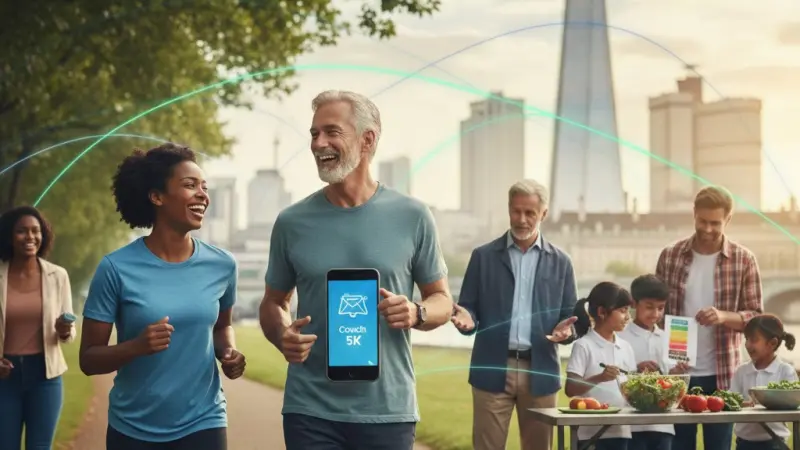
Consider the "Couch to 5K" app. It is a masterpiece of public health campaigning. It removes the barrier to entry (Easy), uses progress tracking (Attractive), builds a community of runners (Social), and prompts users when it's time to run (Timely). This move away from "scare tactics" toward "enablement" has transformed participation rates.
Research indicates that positive reinforcement leads to longer-lasting habit formation than fear-based messaging. While the "shocking" anti-smoking ads of the 90s had their place, modern UK campaigns like "Every Mind Matters" focus on empowerment, providing actionable tools rather than just highlighting the dangers of poor mental health.
Did you know? The "Stoptober" campaign has driven over 2.5 million quit attempts since its launch in 2012, making it one of the most cost-effective health interventions in UK history.
Tackling the Obesity Crisis through Integrated Messaging
The Better Health Movement and Nutritional Literacy
Understanding the impact of the Sugar Tax and front-of-pack labelling
Obesity costs the UK economy billions every year in lost productivity and healthcare expenses. The "Better Health" umbrella campaign serves as a central hub for various sub-initiatives targeting weight loss, active lifestyles, and healthier eating.
It addresses the reality that two-thirds of UK adults are overweight or living with obesity.
Crucially, the government has moved beyond just "telling" people to eat better. Policy-level campaigns, such as the Soft Drinks Industry Levy (Sugar Tax), have forced manufacturers to reformulate products. This is an example of a "passive" public health campaign where the environment is changed to benefit the consumer without them having to make a conscious effort.
Nutritional literacy is also being tackled through mandatory calorie labelling in large restaurants and "traffic light" systems on supermarket packaging. These visual cues serve as a constant, low-pressure campaign that influences millions of micro-decisions every single day across the British Isles.
Mental Health Awareness and Social Destigmatisation
The Shift from Physical to Holistic Wellbeing in UK Policy
Evaluating the Every Mind Matters initiative for long-term resilience
For decades, mental health was the "silent" part of public health. However, recent years have seen a massive surge in campaigns aimed at destigmatising mental illness. "Every Mind Matters" was launched to provide the public with the skills to manage their own mental health and support others before reaching a crisis point.
The impact has been measurable. Campaigns involving the Royal Family, such as "Heads Together," have played a vital role in shifting the British "stiff upper lip" culture toward one of openness. This shift is essential for reducing the burden on the NHS's psychological therapy services, as early intervention prevents more severe escalations.
Workplace mental health has also become a focal point. Government-backed initiatives now provide toolkits for employers, recognizing that a significant portion of the adult population spends the majority of their waking hours at work. By targeting the professional environment, public health reaches demographics that might ignore traditional media.
Smoking Cessation and the Path to a Smoke-Free Generation
Evaluating Stoptober and the Rise of Vaping as a Tool
How the UK became a global leader in tobacco harm reduction
The UK's approach to smoking is perhaps its greatest public health success story. From a nation of heavy smokers, Britain is now aiming to be "smoke-free" (less than 5% prevalence) by 2030. This is being achieved through a combination of high taxation, strict legislation, and the "Stoptober" campaign.
A unique aspect of the UK's strategy is its pragmatic stance on vaping. Unlike many other countries, UK public health bodies have actively promoted e-cigarettes as a smoking cessation tool for adults. This evidence-led approach, despite being controversial internationally, has contributed significantly to the declining smoking rates in the UK.
The "Smoke-Free Generation" legislation, which aims to ban the sale of tobacco to anyone born after a certain year, represents the ultimate "hard" campaign—where the message is backed by the full force of the law to protect future generations from addiction and disease.
Alcohol and Substance Misuse: Navigating Cultural Norms
Dry January and the Growth of Moderation Trends
Addressing the hidden epidemic of home-based drinking in Britain
While smoking is declining, alcohol-related harm remains a persistent challenge. Campaigns like "Dry January," run by Alcohol Change UK and supported by the government, have become cultural phenomena. They offer a "trial period" for sobriety, which often leads to long-term reductions in consumption.
The challenge in the UK is the deep-seated "pub culture." Public health campaigns are now pivoting to address "hidden drinking"—the glass or two of wine every night at
home that leads to increased risks of cancer and liver disease. Messaging is becoming more subtle, focusing on "drink-free days" rather than total abstinence.
Substance misuse campaigns have also evolved. There is a growing focus on harm reduction and "Know Your Units" messaging. By providing people with the facts about what they are consuming, the government hopes to foster a culture of informed moderation rather than risky binge behavior.
The Future of Public Health: AI and Hyper-Personalisation
Predictive Healthcare and Targeted Digital Interventions
Harnessing big data to reach the most vulnerable populations
The future of UK public health lies in data. We are moving away from "one-size-fits-all" broadcasts toward hyper-targeted messaging. By using NHS data, health authorities can identify specific postcodes or demographics at higher risk of certain conditions and deliver tailored campaigns directly to their devices.
Artificial Intelligence (AI) will play a role in predicting health trends before they become crises. For instance, if data shows a spike in searches for anxiety symptoms in a specific city, public health resources can be diverted to that area in real-time. This "precision public health" will be the next frontier in efficiency.
However, the human element remains vital. Community-led campaigns, where local leaders and influencers champion health messages, often have more weight than a government logo. The blend of high-tech data and high-touch community engagement will define the next decade of British health strategy.
Building a Resilient Britain
Public health campaigns in the UK have proven that consistent, evidence-based, and compassionate communication can change a nation's destiny. From the legendary "AIDS: Don't Die of Ignorance" campaign of the 1980s to the rapid-fire COVID-19 "Stay Home" messaging, the ability to mobilize the British public toward a common health goal is a powerful tool.
As we look forward, the integration of technology, behavioral science, and policy reform will be essential. The goal is no longer just the absence of disease, but the presence of holistic wellbeing for every citizen, regardless of their background or location. By continuing to innovate and "nudge" the population toward better choices, the UK can ensure the longevity of its most cherished institution—the NHS—while fostering a vibrant, healthy society.
Frequently Asked Questions
What is the most successful UK public health campaign?
Most experts point to "Stoptober" or the original "AIDS: Don't Die of Ignorance" campaign as the most successful in terms of direct behavioral change and cultural impact.
Stoptober has influenced millions to quit smoking, while the AIDS campaign essentially halted a potential epidemic through mass education.
Who funds public health campaigns in the UK?
These campaigns are primarily funded by the Department of Health and Social Care (DHSC) through the Office for Health Improvement and Disparities (OHID) and the NHS. Some are also run by independent charities like Cancer Research UK or the British Heart Foundation.
How do campaigns like Better Health help the NHS?
By encouraging people to lose weight, exercise, and quit smoking, these campaigns reduce the number of people developing chronic conditions like Type 2 diabetes or heart disease. This directly lowers the long-term cost and pressure on NHS hospitals and GPs.
What is "Nudge Theory" in public health?
Nudge theory involves using subtle indirect suggestions or positive reinforcement to influence people's behavior. In public health, this might be placing fruit at eye level in shops or sending text reminders for flu jabs.
Is the "Sugar Tax" considered a public health campaign?
Yes, it is a "legislative" campaign. It uses financial pressure to change consumer behavior and encourages manufacturers to make their products healthier, which is a core goal of health promotion.
How can I get involved in local public health initiatives?
Most local councils have a dedicated "Public Health" team. You can find information on their websites about community exercise groups, smoking cessation services, and mental health support networks in your area.
Do these campaigns work for everyone?
While mass campaigns reach millions, "health inequalities" mean that some groups are harder to reach. Modern strategy focuses on "levelling up" by creating targeted campaigns for specific ethnic groups, age ranges, or socio-economic backgrounds.
What role does social media play in UK health drives?
Social media is now a primary channel. It allows the NHS to reach younger audiences through TikTok and Instagram, using influencers and short-form video to make health advice more relatable and less formal.
Why did the government move from Public Health England to OHID?
The shift to the Office for Health Improvement and Disparities (OHID) was intended to place a stronger focus on the "disparities" aspect—ensuring that health improvements are felt equally across the country, particularly in deprived areas.
Are scare tactics still used in UK health ads?
Rarely. Evidence suggests that while scare tactics grab attention, they often cause people to "tune out" if they feel the problem is too big to solve. Modern campaigns prefer to offer solutions and small, achievable steps.
What is the "Couch to 5K" program?
It is a highly successful NHS-backed running plan designed for absolute beginners. It uses a mobile app to
guide users from walking to running 5km in nine weeks, exemplifying the "enablement" style of campaigning.
How is success measured in a public health campaign?
Success is measured through a variety of metrics: website hits, app downloads, survey data showing changes in public perception, and most importantly, long-term health data like reduced hospital admissions for specific conditions.

Disclaimer: The information provided in this article is for general informational and research purposes only. Company details, features, services, and market positions may change over time. Readers are advised to visit official company websites and conduct independent research before making any business decisions or purchasing services.
Most Searchable Keywords
Recent Blogs



Related Listings

Categories
- Accountants (295)
- Advertising Agencies (559)
- Architects (149)
- Automobiles (377)
- Beauty (300)
- Carpenters (146)
- Cleaning Services (386)
- Dentists (189)
- Driving (62)
- Electricians (215)
- Energy (8)
- Event Organiser (685)
- Finance (599)
- Guide (3365)
- Health (2207)
- Information technology (206)
- Legal Services (353)
- Logistics (6)
- Maintenance (65)
- Manufacturing (35)

Sponsored Listings in Locksmith Services


Related Blogs

Gen Z Political Reporters and News Creators i...
Read this insightful article "Gen Z Political Reporters and News Creators in the UK" to expand your knowledge!

Famous Female Social Media Influencers Across...
Read this insightful article "Famous Female Social Media Influencers Across the UK" to expand your knowledge!

Your UK Sponsor Licence 2026 Step by Step Gui...
Read this insightful article "Your UK Sponsor Licence 2026 Step by Step Guide" to expand your knowledge!
Questions & Answers – Find What
You Need, Instantly!
How can I update my business listing?
Is it free to manage my business listing?
How long does it take for my updates to reflect?
Why is it important to keep my listing updated?
