
Registered Office for Sole Directors vs Sole Traders
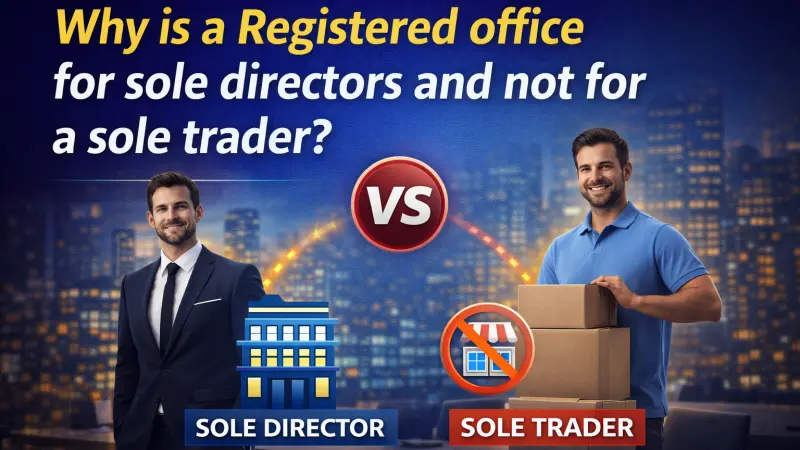
Understanding the difference between a sole director and a sole trader is essential when starting a business in the UK. One of the most common areas of confusion is why a registered office address is required for a company with a sole director but not for a sole trader.

The answer lies in the legal structure of each business type. A limited company is a separate legal entity from its owners, while a sole trader operates as an individual. Because of this distinction, the legal requirements around addresses are different.
Understanding Business Structures in the UK
Before exploring the address requirements, it is important to understand how sole directors and sole traders differ in terms of legal structure and responsibilities.
These differences influence how businesses are regulated and what information must be publicly available.
What Is a Sole Director
A sole director is an individual who runs a limited company as its only director. Even though only one person manages the company, the business itself is legally separate from the individual.
This means the company has its own legal identity, responsibilities, and obligations.
What Is a Sole Trader
A sole trader is a self employed individual who owns and operates a business personally. There is no legal distinction between the individual and the business.
The owner is personally responsible for all debts, liabilities, and obligations.
Why Limited Companies Need a Registered Office
A registered office is required for all limited companies because they are separate legal entities. The registered office serves as the official address for legal and government correspondence.
It ensures transparency and provides a reliable location where authorities and stakeholders can contact the company.
Legal Requirement for Companies
Under UK company law, every limited company must have a registered office address. This address appears on public records at Companies House and is used for official communication.
Even if a company has only one director, it must still meet this requirement.
Purpose of a Registered Office
The registered office provides a place where legal documents, tax notices, and official correspondence can be delivered.
It ensures the company remains compliant with regulatory requirements.
Why Sole Traders Do Not Need a Registered Office
Sole traders are not separate legal entities, so they are not required to have a registered office. Instead, they simply operate under their own name or business name and use their personal or trading address for correspondence.
Because there is no separate legal entity, there is no requirement to maintain an official registered address with Companies House.
Regulatory Differences
Limited companies must be registered with Companies House, which requires a registered office address. Sole traders do not register with Companies House and therefore do not need a registered office.
They may still need to provide an address to HMRC for tax purposes, but it is not publicly listed as a registered office.
Public Transparency Requirements
Companies are required to provide public information to ensure transparency and accountability. The registered office address is part of this public record.
Sole traders have fewer disclosure requirements because they operate as individuals rather than separate entities.
Benefits of Having a Registered Office for Sole Directors
A registered office ensures compliance with legal requirements and helps maintain a professional image.
It also provides a reliable location for receiving official correspondence and keeps company records organised.
Many directors choose professional address services to protect their personal privacy.
Address Options for Sole Directors
Sole directors can use their home address, a commercial office, or a virtual office as their registered office.
Choosing a professional address can enhance credibility and protect personal information.
When a Sole Trader Might Still Use a Business Address
Although not required, some sole traders choose to use a business address or virtual office to maintain privacy and present a professional image.
This can be helpful when dealing with clients or marketing their services.
Key Differences Between Sole Directors and Sole Traders
A sole director runs a limited company, which is a separate legal entity requiring a registered office.
A sole trader operates as an individual and does not need a registered office.
Companies must register with Companies House, while sole traders register with HMRC for tax purposes only.
Public disclosure requirements are greater for limited companies than for sole traders.
Choosing the Right Structure for Your Business
When deciding between operating as a sole trader or forming a limited company, it is important to consider legal requirements, tax implications, and administrative responsibilities.
Understanding address requirements is part of choosing the right structure for your needs.
Common Misconceptions
Some people believe a sole trader must have a registered office, but this is not true.
Others assume a company with only one director has fewer requirements, but
all companies must comply with the same regulations regardless of size.
Future Trends in Business Structures
With more entrepreneurs starting businesses, many choose limited companies for liability protection and credibility.
As a result, the use of registered office and virtual address services continues to grow in the UK.
A registered office is required for sole directors because they operate through a limited company, which is a separate legal entity with formal reporting requirements. Sole traders, on the other hand, operate as individuals and therefore do not need a registered office.
Understanding these differences helps business owners choose the right structure and ensure compliance with UK regulations while maintaining professionalism and efficiency.
FAQs
1 Why does a limited company need a registered office Because it is a separate legal entity that must receive official correspondence.
2 Do sole traders need a registered office No, they are not required to have one.
3 What address does a sole trader use They usually use their personal or trading address for correspondence.
4 Is a registered office public Yes, it appears on Companies House records.
5 Can a sole director use a home address Yes, but it will be publicly visible.
6 Do sole traders register with Companies House No, they register with HMRC for tax purposes.
7 Can a sole trader use a virtual office Yes, but it is optional.
8 What is the main difference between a sole director and sole trader A sole director runs a limited company, while a sole trader operates as an individual.
9 Is a registered office required even with one director Yes, all limited companies must have one.
10 Can a company change its registered office Yes, by notifying Companies House.
11 Why is transparency required for companies To ensure accountability and legal compliance.
12 Do sole traders have public records No, they have fewer public disclosure requirements.
13 Can a sole trader become a limited company Yes, they can incorporate if they choose.
14 Does a registered office improve credibility Yes, especially if it is a professional address.
15 Which structure is easier to manage Sole traders have fewer administrative requirements, but companies offer liability protection.

Disclaimer: The information provided in this article is for general informational and research purposes only. Company details, features, services, and market positions may change over time. Readers are advised to visit official company websites and conduct independent research before making any business decisions or purchasing services.
Most Searchable Keywords

Recent Blogs



Related Listings

Categories
- Accountants (295)
- Advertising Agencies (559)
- Architects (149)
- Automobiles (377)
- Beauty (300)
- Carpenters (146)
- Cleaning Services (386)
- Dentists (189)
- Driving (62)
- Electricians (215)
- Energy (8)
- Event Organiser (685)
- Finance (599)
- Guide (3365)
- Health (2207)
- Information technology (206)
- Legal Services (353)
- Logistics (6)
- Maintenance (65)
- Manufacturing (35)

Sponsored Listings in Locksmith Services


Related Blogs

Gen Z Political Reporters and News Creators i...
Read this insightful article "Gen Z Political Reporters and News Creators in the UK" to expand your knowledge!

Famous Female Social Media Influencers Across...
Read this insightful article "Famous Female Social Media Influencers Across the UK" to expand your knowledge!

Your UK Sponsor Licence 2026 Step by Step Gui...
Read this insightful article "Your UK Sponsor Licence 2026 Step by Step Guide" to expand your knowledge!
Questions & Answers – Find What
You Need, Instantly!
How can I update my business listing?
Is it free to manage my business listing?
How long does it take for my updates to reflect?
Why is it important to keep my listing updated?
