
Retail AI Strategy For Creating Human Centric Experiences in the UK
- 👤 Tim David
- 👁️ 101 Views
- Last Updated: March 18, 2026
- 🏷️ Information technology
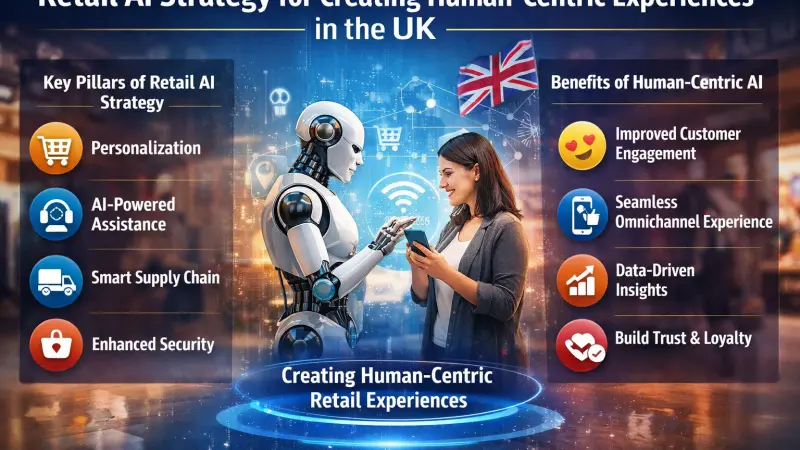
Imagine a shopper walking into a flagship store on London’s Regent Street after spending hours browsing a specific collection of sustainable knitwear online. They expect a seamless transition from their digital research to their physical purchase, yet all too often, they are met with a generic experience where the store associate has no record of their preferences, and the item they want is languishing in a distribution centre five miles away due to a forecasting error. This disconnect highlights the central challenge facing the modern UK retail sector: how to use sophisticated technology to make a brand feel more human, rather than more mechanical. As British consumers increasingly demand relevance and speed, the most successful retail organisations are discovering that the highest level of automation is actually that which remains invisible to the end user.
Retail AI Strategy has evolved from a futuristic concept into an operational necessity for UK small to medium-sized enterprises (SMEs) and national high-street chains alike. The goal is no longer just about replacing human labour with machines, but about creating an "intelligent fabric" that supports every decision—from supply chain logistics to the tone of a customer service interaction. In a landscape defined by fluctuating consumer confidence and rising operational costs, the ability to translate vast quantities of data into moment-by-moment responsiveness is what separates market leaders from those struggling with stagnant inventory and declining brand loyalty. This article explores how quiet, continuous decision support is redefining the British retail experience, moving away from "clunky" automation toward empathetic, informed intelligence.
The transformation of the retail experience is fundamentally about the transition from reactive systems to predictive, empathetic intelligence. For decades, the industry operated on the basis of historical averages and retrospective reporting, a method that is increasingly ill-suited to the volatility of the modern market. Today, the most effective organisations are those that deploy Artificial Intelligence (AI) and machine learning not to replace understanding, but to enhance it. Whether it is a boutique in the Cotswolds or a national electronics chain, the goal is to ensure that the technology fades into the background, leaving the customer with an experience that simply feels "right." This guide explores how these systems are being integrated into the operational fabric of successful UK businesses.
The Evolution of Retail Operations: From Dashboards to Real-Time Intelligence
A few years ago, a global apparel retailer with a significant footprint in the UK noticed a recurring problem that traditional data dashboards alone could not explain. Despite having access to weekly performance reports, certain stores in metropolitan hubs were consistently out of stock on fast-moving seasonal items, while regional outlets held excess inventory that eventually required heavy markdowns to clear. The financial impact was two-fold: lost revenue from missed sales and eroded margins from forced clearances. Weekly reports arrived too late to correct the imbalance, and manual forecasts failed whenever consumer behaviour shifted unexpectedly due to trends, weather, or local events.
The turning point arrived when the retailer moved beyond historical averages and introduced real-time analytics combined with machine learning demand models. Instead of looking at what happened during the same week last year, the system began to continuously adjust forecasts based on live sales data, regional trends, UK weather patterns, and promotional activity. Inventory recommendations were updated daily—and in some cases, hourly. This allowed the business to respond to a sudden heatwave in the South East or a viral social media trend in Manchester by rerouting stock before the shortage occurred. Within a single season, stockouts declined materially, and clearance rates dropped significantly, proving that intelligence is most powerful when it is applied to the foundational mechanics of the business.
This shift illustrates how a Retail AI Strategy is transforming operations through quiet, continuous decision support. These systems are increasingly embedded into the operational fabric of retail, guiding replenishment, pricing, assortment planning, and logistics without requiring human intervention at every microscopic step. By automating the "maths" of retail, human managers are freed to focus on the creative and strategic aspects of the business, such as brand storytelling and community engagement. This synergy between machine efficiency and human strategy is what defines the next generation of successful retail experiences in the United Kingdom.
Operational Resilience and Automated Fulfilment
Automation plays a critical role in physical logistics, acting as a complementary force to digital intelligence. In distribution and fulfilment centres across the UK, retailers are increasingly deploying robotics to handle repetitive picking and packing tasks. This is particularly vital during peak periods such as Black Friday or the Christmas rush, where human labour is often stretched to its limits. One major UK grocery retailer recently implemented automated fulfilment for online orders after struggling to meet the surge in same-day delivery expectations. The result was a dramatic increase in order turnaround speed and a significant reduction in picking errors, even as total order volume grew.
The success of these systems lies in their ability to handle volume without sacrificing the accuracy that consumers expect. As order volumes grow, automated systems scale accordingly, ensuring that the "last mile" of delivery remains reliable. For the customer, this doesn't feel like "automation"; it simply feels like a reliable service where the correct items arrive on time.
The technology serves as an invisible backbone, supporting the promise of convenience that modern shoppers have come to expect. When logistics are handled with this level of precision, the brand reputation is bolstered, and the likelihood of repeat business increases significantly for the SME or large-scale provider.
Personalisation That Actually Feels Personal
Retail personalisation has existed for years, but many customers can still tell when recommendations feel mechanical or forced. A common frustration amongst UK shoppers is receiving promotions for products they have already purchased or receiving offers that ignore their recent browsing behaviour entirely. This disconnect often stems from fragmented data systems—where the website, the mobile app, and the physical store do not "talk" to one another—rather than a lack of intent on the part of the retailer. When personalisation is done poorly, it can feel like a surveillance-driven annoyance rather than a helpful, bespoke service.
Consider the experience of a high-street electronics retailer. Online shoppers might browse extensively for a specific type of camera or high-end audio equipment before deciding to visit a physical store to see the product in person. In many traditional setups, these digital signals are not shared with the store associates or the marketing platforms. As a result, the customer might receive irrelevant follow-up emails for the very product they are currently holding in their hand, and the in-store staff lack the context needed for a meaningful, informed conversation. This fragmentation creates a friction-filled journey that can ultimately alienate the customer and drive them toward a competitor.
Unifying Customer Interaction Data
By unifying customer interaction data and applying machine learning models in real time, retailers can close this gap. When a customer enters a store, an associate with access to a unified profile can see recent browsing activity and tailor their recommendations accordingly. Marketing campaigns can be adapted dynamically based on real-time behaviour rather than static demographic segments. Customers notice the difference not because they see the technology, but because the interactions feel more informed and respectful of their time. This is "intelligence that listens" rather than "automation that talks at" the consumer, which is a key pillar of a modern Retail AI Strategy.
UK retailers who have successfully bridged this gap find that their marketing spend becomes much more efficient. Instead of sending thousands of generic "one-size-fits-all" emails, they can send highly targeted, relevant communications that have a much higher conversion rate. Furthermore, this level of personalisation helps to build emotional loyalty. When a brand demonstrates that it understands a customer’s preferences and history, the customer feels valued as an individual, which is a powerful competitive advantage in the crowded UK retail market. This approach transforms data from a commodity into a relationship-building tool.
The Evolution of Customer Service through Conversational AI
AI is also fundamentally changing how retailers handle customer service and enquiries. Chatbots and virtual assistants have evolved from simple script-following tools into sophisticated conversational agents that can resolve a large share of routine inquiries instantly. From tracking an order status to explaining return policies, these tools provide the immediate responses that modern consumers demand. One prominent UK fashion brand deployed conversational AI during a major seasonal sale after previous events had completely overwhelmed their support teams. The AI handled the vast majority of routine inquiries, allowing human agents to focus on complex issues such as delivery exceptions or bespoke styling advice.
The result of this strategic implementation was a significant improvement in customer satisfaction scores, even as order volumes hit record highs. The key to this success was ensuring that the AI was a helper, not a barrier. When an inquiry became too complex for the machine to handle, the system seamlessly handed the conversation over to a human agent, providing them with the full context of the interaction. This prevented the customer from having to repeat themselves—a major pain point in traditional customer service. In this environment, the technology supports the employee, ensuring they can provide the best possible service without being bogged down by repetitive tasks.
Improving Accessibility and Inclusivity
Conversational AI also offers the potential to improve accessibility in retail. For customers who may find traditional navigation difficult, or for those who prefer to interact via voice or text, these assistants provide an alternative way to engage with a brand. By offering multi-channel support that is available 24/7, UK retailers can ensure that they are meeting the needs of a diverse customer base. This inclusivity is not just good for society; it is good for business, as it opens up the brand to a wider audience and demonstrates a commitment to modern, customer-first service standards. This is a vital component of any inclusive Retail AI Strategy.
Trust, Risk, and the Next Phase of Customer Experience
As digital commerce expands across the United Kingdom, so does the exposure to fraud and operational risk. For online marketplaces, a sudden spike in fraudulent transactions can be devastating, particularly during high-volume periods like the holidays. Traditional rule-based systems often fail in these scenarios; they might flag obvious fraud but miss subtle, evolving patterns.
Even worse, these rigid systems often produce "false positives," blocking legitimate customers and causing immense frustration at the checkout. In a world where customer experience is paramount, being wrongly accused of fraud is a sure-fire way to lose a customer for life.
Forward-thinking UK retailers are shifting to machine-learning-based fraud detection that analyses transaction behaviour in real time. Instead of relying on static thresholds (such as "flag any order over £500"), these systems evaluate the context of every transaction. They look at purchase velocity, device patterns, and historical behaviour to determine the likelihood of fraud. This nuanced approach has led to a decline in fraud losses while simultaneously reducing the number of legitimate customers who are blocked. For the customer, the checkout process remains smooth and frictionless, while the retailer remains protected from the evolving tactics of cybercriminals.
Responsible Data Use as a Competitive Advantage
Trust extends far beyond fraud prevention; it is fundamentally about how a retailer handles customer data. In the UK, where GDPR and the Data Protection Act have set a high bar for data privacy, retailers that deploy AI without transparency risk eroding public confidence. Successful organisations treat responsible data use as a core part of the customer experience, not just a legal compliance afterthought. Clear consent mechanisms, explainable recommendations, and consistent data governance are all essential for building long-term trust in an increasingly automated world.
When a retailer is transparent about how they use data to improve the shopping experience—for example, by clearly stating why a certain product is being recommended—the customer is more likely to engage. This transparency transforms data from a "scary" commodity into a tool for mutual benefit. In the long run, the retailers who will thrive are those that prove they can be trusted with the "digital twin" of their customers. Trust is the currency of the modern economy, and in retail, it is the foundation upon which every interaction is built. Ethical AI is therefore not just a moral choice, but a strategic business imperative.
The Sequencing of AI Implementation: Avoiding Common Pitfalls
What retailers most often get wrong with AI is not their ambition, but their sequencing. Many organisations across the UK move too quickly to automate decisions before they have built sufficient confidence in their underlying data and models. When the outcomes of an AI system do not align with the frontline experience of store staff or the reality of customer needs, trust in the technology quickly erodes. Teams may begin to "work around" the system, reverting to manual processes and negating the investment in technology. This "automation gap" can lead to significant operational inefficiencies and a decline in employee morale.
In these moments, the answer is rarely to abandon AI altogether. Instead, it is usually necessary to slow down, reintroduce transparency, and create space for shared understanding between the technology teams and the operational staff. When human teams review AI outcomes together, question the underlying assumptions, and retain human judgement where nuance matters, trust in the system returns. The most successful retail experiences are those where the intelligence is applied with restraint, supporting people instead of attempting to replace the deep understanding that only a human can provide.
Building Adaptable Data Platforms
To support this continuous improvement, retailers must build adaptable data platforms. A "monolithic" approach to technology—where everything is tied together in a rigid, unchangeable system—is a recipe for obsolescence. Instead, UK SMEs and larger firms are moving towards modular, cloud-based architectures that allow them to swap out different AI models as technology evolves.
This agility is crucial in a market as fast-moving as the UK high street. An adaptable platform ensures that the retailer can respond to new consumer trends, regulatory changes, or technological breakthroughs without having to rebuild their entire infrastructure from scratch, ensuring long-term Retail AI Strategy success.
The Future of Retail: Efficiency Meets Empathy
Looking ahead, AI will continue to shape the retail landscape in less visible but more impactful ways. Computer vision technology is already beginning to reduce checkout friction in "just walk out" stores in major cities like London, while predictive systems are becoming better at anticipating customer needs before they are even explicitly expressed. However, the future of customer experience in retail will not be defined by the complexity of the code, but by how intelligently these systems work together and how thoughtfully retailers balance efficiency with empathy.
The retailers who will lead the UK market in the coming years are those that understand that technology is a means to an end, not an end in itself. Whether it is using AI to ensure that a local shop has the right items in stock for its community, or using machine learning to protect a vulnerable customer from fraud, the ultimate goal is to serve the human being on the other side of the counter. When systems are designed with empathy for both the customer and the employee, the technology naturally fades into the background. The result is an experience that doesn't feel like a series of automated transactions, but like a genuine, helpful, and respectful interaction.
Frequently Asked Questions Regarding Retail AI and Automation
Why does automation sometimes make the shopping experience feel worse?
Automation can feel "mechanical" or frustrating when it is implemented without context or as a barrier to human help. For example, a chatbot that cannot solve a problem and refuses to put you through to a person creates a negative experience. The most successful UK retailers use "quiet automation"—systems that work behind the scenes to make sure the right stock is available and that in-store staff have the information they need to be more helpful, rather than replacing those staff entirely.
How can small UK businesses compete with large retailers using AI?
Small businesses actually have an advantage: they already have a strong personal connection with their local community. SMEs can use affordable, "off-the-shelf" AI tools for things like inventory management or simple email personalisation to handle the "grunt work" of the business. This allows the business owner to spend more time on the things that large retailers struggle to replicate—authentic local knowledge, community trust, and personal service. AI should be viewed as an equaliser, not a barrier.
Does AI in retail mean that there will be fewer jobs for people?
While AI will certainly change the nature of retail jobs, it is more likely to augment human roles than to eliminate them entirely. By automating repetitive and administrative tasks (like stock counting or basic data entry), employees can focus on higher-value tasks like customer consultation, complex problem solving, and creative merchandising. In the UK, we are seeing a shift towards a more "consultative" style of retail where staff are viewed as expert advisors supported by data, leading to more fulfilling careers.
How do I know if I can trust a retailer with my data?
In the UK, retailers must adhere to strict data protection laws (UK GDPR). You can generally trust a retailer that is transparent about its data policies, provides clear options for consent, and explains how your data is being used to benefit you. Reputable retailers will also use advanced encryption and AI-driven fraud detection to protect your information from external threats. Always look for brands that provide clear privacy statements and easy-to-use data management tools.
What is "Predictive Retail" and how does it affect me?
Predictive retail uses AI to guess what you might want next based on your past behaviour and broader trends. At its best, this means your favourite shops are more likely to have your size in stock or to suggest products that you genuinely find useful.
At its worst, it can feel like "creepy" surveillance. The best UK retailers are careful to use predictive technology in a way that feels like a helpful suggestion rather than an unwanted intrusion into your privacy, maintaining the balance between efficiency and respect.
Ultimately, the journey towards a more intelligent retail environment is about more than just software updates and hardware installations. It is about a fundamental shift in mindset—from seeing the customer as a data point to seeing them as a person with unique needs and expectations. As the UK retail landscape continues to evolve, the businesses that thrive will be those that use technology to become more, not less, human. By following the principles of quiet intelligence, unified data, and ethical engagement, retailers can create experiences that aren't just efficient, but truly exceptional.
Disclaimer: The information provided in this article is for general informational and research purposes only. Company details, features, services, and market positions may change over time. Readers are advised to visit official company websites and conduct independent research before making any business decisions or purchasing services.
Most Searchable Keywords
Recent Blogs


Related Listings



Categories
- Accountants (295)
- Advertising Agencies (559)
- Architects (149)
- Automobiles (377)
- Beauty (300)
- Carpenters (146)
- Cleaning Services (387)
- Dentists (189)
- Driving (62)
- Electricians (215)
- Energy (8)
- Event Organiser (686)
- Finance (602)
- Guide (3372)
- Health (2207)
- Information technology (206)
- Legal Services (353)
- Logistics (6)
- Maintenance (65)
- Manufacturing (35)
Sponsored Listings in Information Technology

Related Blogs

How Much Do UK Actors Really Earn Full Indust...
Read this insightful article "How Much Do UK Actors Really Earn Full Industry Breakdown" to expand your knowledge!

Blue Light Card UK 2026 Check Eligibility and...
Read this insightful article "Blue Light Card UK 2026 Check Eligibility and Claim" to expand your knowledge!

BBC Radio 1 DJs Net Worth Ranking Revealed
Read this insightful article "BBC Radio 1 DJs Net Worth Ranking Revealed" to expand your knowledge!
Questions & Answers – Find What
You Need, Instantly!
How can I update my business listing?
Is it free to manage my business listing?
How long does it take for my updates to reflect?
Why is it important to keep my listing updated?
