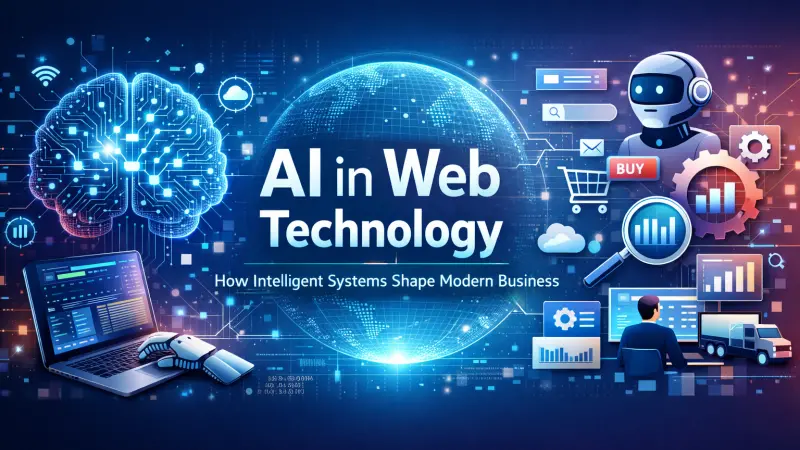
Could the website you visited this morning already know what you were looking for before you even typed a single character into the search bar? For the modern United Kingdom SME, contractor, or service provider, the internet is no longer a static collection of digital brochures. We have entered the era of the "Invisible Web"—a sophisticated ecosystem where Artificial Intelligence (AI) and machine learning are quietly rewriting the fundamental rules of how technology functions. This shift is not merely an aesthetic update; it is a structural revolution that is changing the way British businesses interact with their clients and how digital infrastructure is managed at scale.
In the early days of the World Wide Web, platforms operated much like a traditional library: static, predictable, and entirely dependent on the user to navigate through simple hyperlinks. Today, that "dead" system has been replaced by living, breathing architectures that predict, learn, and adapt. Behind the sleek, minimalist interfaces we use daily, AI is reshaping the digital landscape, often working so subtly that its influence remains unnoticed by the average user. From tailored search results to fluid website layouts, web technologies are blending into a deeper layer of intelligence that defines the modern digital experience.
The Evolution from Static Pages to Living Digital Systems
For many years, the standard for business web design in the UK focused on presentation. A company’s website was an online brochure—a fixed point of information with very little room for interaction. However, the integration of AI in web technology has moved the goalposts. Modern platforms are no longer passive; they are observational. They monitor user behaviour in real-time to personalise content, ensuring that the information presented is as relevant as possible to the individual visitor.
Machine learning systems are the engines behind this transformation. By studying intricate patterns in clicks, dwell time, and search queries, these systems can adapt a website's interface to suit personal preferences. For instance, a UK-based news outlet may display entirely different headlines to two different readers based on their previous interests. Similarly, an e-commerce platform might rearrange its product categories or homepage banners based on a visitor's browsing history. This level of dynamic content personalisation ensures a smoother user journey, reducing the cognitive load on the consumer and increasing the efficiency of the digital service.
While this quiet intelligence creates a more seamless experience, it also carries weight. These systems subtly influence our decisions and even our emotional responses to a brand. By removing "friction" from the user experience, AI makes the digital world feel more intuitive, but it also means that our online paths are increasingly being paved by algorithms rather than purely serendipitous discovery.
AI as the New Architect of Digital Infrastructure
Artificial Intelligence has graduated from being a "plug-in" feature or a novelty chatbot; it has become the very foundation of modern web platforms. For UK service providers and contractors, understanding AI as a digital architect is crucial for staying competitive.
AI is now applied at the structural level to create layouts, manage data flow, and automate high-level customer service tasks that previously required human intervention.
Consider the logistics of high-value service industries, such as luxury transport or specialized equipment hire. A platform offering yachts for rent, for example, may rely heavily on AI to predict seasonal demand across different maritime regions. By analysing past activity and global travel trends, the system can automatically recommend specific destinations or vessel types to a user. To the customer, it looks like a clean, simple interface. Behind the scenes, however, predictive algorithms are informing every suggestion and pricing adjustment.
We are seeing a clear trend towards "intelligence-first" models in digital service development. Leading platforms in the travel and convenience sectors are built on web technologies capable of handling vast datasets to provide individualised results in milliseconds. This level of responsiveness would be impossible with traditional, rigid web structures. Instead, permanent frames are being substituted with dynamic architectures that evolve and improve over time, learning from every interaction to become more effective at serving the user's needs.
The Rise of Predictive User Experiences
The hallmark of the modern web is that it no longer waits for instructions. In the current technological climate, the web anticipates needs before a user even acts. This is known as a predictive experience, and it is becoming the standard for high-performing UK business platforms. We see this across various sectors:
- Streaming and Media: Services suggest content based on time of day and viewing habits before a search is even initiated.
- Logistics and Navigation: Real-time data allows apps to adjust routes and delivery estimates before traffic congestion even occurs.
- Automated Support: Advanced AI assistants identify common pain points and offer solutions before a human support agent is required.
This predictive layer is designed to reduce "friction"—the obstacles that prevent a user from completing a task or making a purchase. However, as systems suggest choices in advance, human decision-making becomes increasingly guided by machine logic. While convenience increases, there is a growing dependence on these automated systems. This is made possible by modern web infrastructure, specifically cloud computing and optimised browser engines that allow complex AI models to run almost instantly. The result is a digital environment that feels responsive and human-centric, even when the underlying technology is incredibly complex.
The Hidden Ethics of Intelligent Web Systems
As AI integrates more deeply into our digital lives, ethical considerations become paramount for UK businesses and developers. When a system is "quietly rewriting
the rules," transparency and responsibility must be at the forefront of its implementation. Several key questions arise as we move forward:
- Data Ownership: Who truly owns the vast amounts of behavioural data collected to train these intelligent systems?
- Algorithmic Bias: If an automated system makes an error in judgement or displays bias in its recommendations, who is held accountable?
- Influence vs. Manipulation: Where is the line between a helpful recommendation and an algorithm that steers consumer behaviour for profit?
Recommendation engines have the power to shape opinions, and dynamic pricing models can significantly influence consumer spending habits. Even small design adjustments, known as "nudge theory," can steer user behaviour on a massive scale. Consequently, UK SMEs and developers carry a new weight of responsibility. Building ethical AI systems requires constant oversight and a commitment to fairness.
Conversely, the positive impact of AI on web accessibility cannot be overstated. Speech generation tools have revolutionised how people with visual impairments interact with the web, while image description systems provide context where there was once only a blank space. Instant translation services bridge language barriers, allowing UK businesses to connect with global communities instantly. The same intelligence that guides a commercial recommendation can also be used to open new paths for digital inclusion and social connection.
Conclusion: The Future of the Intelligent Web
The most influential technologies in history are often those that operate most quietly. Artificial Intelligence is no longer a concept confined to science fiction or high-end research laboratories; it is woven into the browsers, apps, and digital services that British businesses use every single day. We have moved from a web of information to a web of intelligence.
Web technologies have successfully shifted from simple information displays to adaptive, learning systems. As these digital foundations become more sophisticated, the boundary between human choice and machine guidance will continue to refine itself. For the UK business community, the future will not necessarily be defined by "brighter" visuals
or more intrusive features, but by the depth of the intelligence integrated into their platforms. Embracing this shift means understanding that the web is no longer just a tool we use, but a partner that learns, predicts, and evolves alongside us.
Frequently Asked Questions (FAQ)
What is the "Invisible Web" in the context of AI?
The Invisible Web refers to the underlying AI and machine learning algorithms that operate behind the scenes of a website. Unlike visible features like chatbots, these systems quietly manage data, personalise content, and predict user needs without the user explicitly interacting with the AI itself.
How can UK SMEs benefit from AI-driven web technology?
SMEs can use AI to automate customer service, provide personalised product recommendations, and gain deeper insights into customer behaviour. This leads to higher conversion rates, improved user retention, and more efficient resource management.
Does AI-driven personalisation affect user privacy?
Personalisation relies on data collection. For UK businesses, it is vital to balance AI features with strict adherence to data protection regulations like the UK GDPR. Transparency about what data is collected and how it is used is essential for maintaining customer trust.
Is predictive technology only for large corporations?
No. With the rise of accessible cloud services and AI integrations for popular platforms like WordPress or Shopify, even small businesses and independent contractors can implement predictive elements, such as automated scheduling or smart inventory recommendations.
Will AI replace human web designers in the UK?
AI is more likely to act as a co-pilot than a total replacement. While AI can handle data-heavy tasks and layout optimisations, human
designers are still required for creative direction, ethical oversight, and understanding the nuanced brand identity of a British business.