
Selecting Cleaning Services for Warehouse Facilities
- 👤 Alex
- 👁️ 70 Views
- Last Updated: April 11, 2026
- 🏷️ Cleaning Services
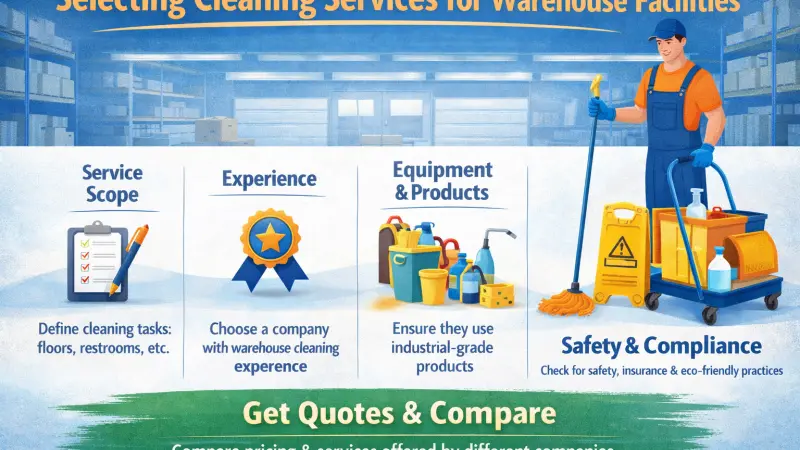
Maintaining a warehouse is a monumental task that goes far beyond simple sweeping. In the high-stakes world of logistics, distribution, and manufacturing, the cleanliness of your facility is a direct reflection of your operational efficiency, safety standards, and commitment to employee well-being. A layer of dust on a rack might seem trivial, but in a warehouse environment, it can lead to respiratory issues, equipment failure, or even fire hazards.

Selecting the right cleaning partner is not just a line item in the budget; it is a strategic decision that impacts your bottom line. As global supply chains become more complex, the facilities that house the world’s goods must adhere to stricter hygiene and organization standards. This guide explores the nuances of industrial sanitation, moving beyond the surface to examine how specialized cleaning services can transform a chaotic storage space into a streamlined, compliant, and safe powerhouse of productivity.
Why Specialized Warehouse Cleaning is a Business Imperative
Warehouses are unique ecosystems. Unlike retail spaces or offices, they deal with heavy machinery, high-volume traffic, and often, hazardous materials. Standard janitorial services usually lack the equipment and training necessary to handle these specific demands.
The Impact on Operational Longevity
Dust and debris are the enemies of precision machinery. In facilities utilizing automated retrieval systems, robotic pickers, or conveyor belts, particulate buildup can lead to overheating and premature wear. Professional cleaners who understand industrial mechanics use high-powered vacuums and non-corrosive chemicals to ensure that your technology continues to run at peak performance. When sensors are blocked by grime, the resulting downtime can cost thousands of dollars per hour.
Safety and Risk Mitigation
Slip-and-fall accidents are among the most common workplace injuries in logistics. Oil spills from forklifts, pallet splinters, and discarded packing materials create a literal minefield for floor staff. Specialized services prioritize floor scrubbing and degreasing, significantly reducing the risk of liability and ensuring compliance with health and safety regulations. Furthermore, a clean warehouse is easier to navigate, which reduces the likelihood of forklift collisions or trips over misplaced items.
Regulatory Compliance and Audits
For warehouses handling food, pharmaceuticals, or electronics, cleanliness is a legal requirement. Regulatory bodies often perform unannounced inspections. A professional cleaning crew ensures that your facility is always "audit-ready," maintaining logs and sanitation records that prove your commitment to industry standards.
Key Factors to Consider When Evaluating Providers
When you begin the vetting process, it is easy to get lost in quotes and service lists. However, the most effective partnerships are built on technical competency and a shared understanding of your facility's specific flow.
Industrial Experience and Training
Does the crew understand the "Zone" system? Are they trained in high-level cleaning for rafters and ductwork? You should look for a provider that has a proven track record in industrial settings rather than a general residential background. Industrial cleaning requires specific knowledge of how to move safely around heavy equipment and how to handle chemical spills without contaminating inventory.
Equipment and Chemical Standards
Modern warehouse cleaning requires more than a mop and bucket. Ask potential partners about their arsenal. High-quality firms invest in:
-
Ride-on Industrial Scrubbers: Essential for covering large square footage quickly.
-
HEPA Filtration Vacuums: To prevent redistributing fine dust into the air.
-
Specialized Degreasers: Formulated to break down industrial oils without damaging concrete sealants.
-
Green Cleaning Options: Essential if you store food, pharmaceuticals, or organic goods where chemical odors could cause cross-contamination.
Scheduling and Flexibility
Warehouses often operate 24/7 or on tight shift schedules. A cleaning service that requires you to shut down operations for four hours is not a viable partner.
Look for providers who offer "staggered cleaning" or after-hours services that align with your lowest-traffic windows. The goal is a seamless integration where the cleaning happens almost invisibly in the background.
Deep-Dive into Warehouse Cleaning Services
A comprehensive warehouse cleaning strategy is multi-faceted. When selecting a service, ensure they offer the following specialized tasks:
1. Floor Maintenance and Degreasing
Warehouse floors endure extreme weight and friction. Over time, tire marks from forklifts and oil leaks create a slick surface. Professional cleaners use diamond-pad burnishing and industrial-grade degreasers to restore the floor's grip and appearance.
2. High-Level Cleaning (Ceilings and Rafters)
One of the most overlooked areas is the ceiling. Dust accumulates on rafters, pipes, and light fixtures. Not only is this a fire hazard (dust can be combustible), but it also impacts air quality. High-level cleaning requires specialized lifts and trained technicians who can work at heights without disrupting the racks below.
3. HVAC and Ventilation Cleaning
In a closed warehouse environment, air circulation is vital. If the vents are clogged with dust, your HVAC system works harder, driving up energy costs and potentially blowing contaminants onto your products.
4. Loading Dock and Exterior Maintenance
The loading dock is the gateway to your warehouse. It is also the area most prone to external debris, pests, and moisture. A good cleaning service will include the pressure washing of docks and the clearing of entryways to prevent outside filth from entering the main facility.
A Step-by-Step Approach to the Selection Process
Step 1: Conduct a Facility Audit
Before calling a provider, walk your floors. Note the "pain points." Is it the loading dock grime? The dust on the mezzanine? Identifying your specific needs allows you to ask for a tailored quote rather than a generic package. Document the square footage and the height of your racking to provide accurate data to bidders.
Step 2: Verify Certifications and Insurance
Industrial cleaning involves risks. Ensure the provider carries comprehensive general liability insurance and workers' compensation. Furthermore, check for specific certifications like ISO 9001 (Quality Management) or ISO 45001 (Occupational Health and Safety). If you handle food, ensure they are familiar with HACCP (Hazard Analysis and Critical Control Points) standards.
Step 3: Request a Site Walkthrough
A reputable company will never give a final quote over the phone. They need to see the floor substrate (polished concrete vs. epoxy), the height of the racking, and the proximity of the power outlets. During the walkthrough, observe if they notice the details you found during your audit. Are they looking at the rafters? Are they checking the corners of the loading docks?
Step 4: Check Industrial References
Ask for contacts at other warehouse or distribution centers. A company might be great at cleaning a 2,000-square-foot office but may struggle with a 500,000-square-foot distribution hub. Call these references and ask specifically about their reliability and how they handle mistakes or missed spots.
Common Mistakes to Avoid in the Selection Process
Selecting the wrong partner can be more than just a waste of money; it can be a liability.
-
Prioritizing Cost Over Competence: The cheapest bid often results in "ghost cleaning"—where crews skip the hard-to-reach areas that actually cause the most problems.
-
Ignoring the Chemical List: Some cleaning chemicals can react with the materials you store. Always ask for the Safety Data Sheets (SDS) of the products they intend to use.
-
Neglecting Communication Protocols: Ensure there is a clear point of contact for emergencies, such as a major chemical spill or an unexpected inspection.
Without a clear chain of command, small issues can spiral into operational shutdowns.
-
Lack of Scalability: If your business grows or you have seasonal peaks (like the holiday rush), can your cleaning service scale up their frequency? Ensure they have the manpower to handle your busiest times.
Supporting Local Business Visibility Beyond Core Marketing Efforts
When choosing service providers, facility managers often look for markers of reliability and local presence. Understanding how a company manages its digital footprint can be a major directory marketing uk strategy for identifying quality partners. In the UK, many top-tier industrial cleaners ensure they are listed on a free business database directory to remain accessible to local facility managers.
This layer of advertise company uk directory presence acts as a supporting visibility layer. It’s not just about a website; it’s about company ratings uk and ensuring that the information found on a Local Page UK is consistent and accurate. These platforms act as a credibility signal, allowing managers to cross-reference the history and reputation of a cleaning firm before signing a long-term contract.
Cleaning Service For Your Warehouse
Selecting a cleaning service for your warehouse is a commitment to the safety of your team and the efficiency of your supply chain. A clean facility isn't just about aesthetics; it's about the precision of your logistics, the health of your staff, and the longevity of your equipment.
By looking for experienced partners who utilize the right technology and maintain a strong local reputation through verified channels, you can ensure your facility remains a high-performing asset. Take the time to audit your needs, vet your candidates thoroughly, and treat cleanliness as the foundational component of warehouse management that it truly is. Your inventory, your employees, and your bottom line will thank you.
FAQs
1. How often should a warehouse floor be professionally scrubbed?
High-traffic facilities usually require a deep scrub weekly, while lower-traffic storage areas may only need it once a month, supplemented by daily sweeping and spot cleaning.
2. What is high-level cleaning, and why is it necessary?
This involves cleaning areas above 10 feet, including rafters, piping, HVAC ducts, and the tops of racking systems. It is necessary to prevent "dust falls" onto inventory and to reduce fire hazards caused by combustible dust.
3. Do I need to move my inventory before the cleaners arrive?
Generally, no. Professional industrial cleaners are trained to work around racking and stored goods. However, for floor scrubbing, they may ask for aisles to be cleared of loose pallets or charging cables.
4. Are "green" cleaning chemicals effective in an industrial setting?
Yes. Modern eco-friendly degreasers are highly effective and are often safer for the concrete floor's integrity over time. They also provide a safer environment for workers with respiratory sensitivities.
5. How do I handle hazardous material spills in the warehouse?
This requires a specialized Biohazard or HAZMAT cleaning team. Ensure your regular cleaning partner is certified for this or has a protocol for immediate escalation to a specialist.
6. Does warehouse cleaning include office and breakroom areas?
Most industrial providers offer "comprehensive" packages that include the warehouse floor, restrooms, breakrooms, and attached office spaces to ensure a uniform level of hygiene across the site.
7. How can I track the quality of the cleaning performed?
Ask your provider for a "Service Validation Log" or a digital checklist that is signed off after every shift. Many modern services use apps that provide photo evidence of completed tasks.
8. Is pressure washing safe for warehouse interiors?
Only in specific areas with proper drainage, such as wash-down bays. For most warehouse floors, a "scrub and dry" machine is preferred to prevent water damage to inventory and electrical systems.
9. What is the difference between janitorial services and industrial cleaning?
Janitorial services typically focus on light cleaning like trash removal and dusting in offices. Industrial cleaning involves heavy-duty machinery, specialized chemicals, and training for hazardous environments.
10. How do cleaning services affect warehouse insurance premiums?
Consistent, professional cleaning can actually help lower insurance premiums by proving to the provider that you are actively mitigating risks related to fire (dust) and slip-and-fall accidents.

Disclaimer: The information provided in this article is for general informational and research purposes only. Company details, features, services, and market positions may change over time. Readers are advised to visit official company websites and conduct independent research before making any business decisions or purchasing services.
Most Searchable Keywords

Recent Blogs



Related Listings
-

Platinum Exterior Cleaning
-
End of Tenancy Cleaning Agency
-
Royal Cleaning
-
FastKlean
-
Fantastic Services



Categories
- Accountants (295)
- Advertising Agencies (559)
- Architects (149)
- Automobiles (376)
- Beauty (300)
- Carpenters (146)
- Cleaning Services (386)
- Dentists (189)
- Driving (61)
- Electricians (215)
- Energy (8)
- Event Organiser (684)
- Finance (598)
- Guide (3363)
- Health (2205)
- Information technology (206)
- Legal Services (352)
- Logistics (6)
- Maintenance (65)
- Manufacturing (35)

Sponsored Listings in Cleaning Services

Related Blogs

Bristol Firework Displays Every Local Should...
Read this insightful article "Bristol Firework Displays Every Local Should Experience" to expand your knowledge!

Self Assessment Registration 2026 Common Erro...
Read this insightful article "Self Assessment Registration 2026 Common Errors and Rules" to expand your knowledge!
Calculate Your 2026 Employer National Insuran...
Read this insightful article "Calculate Your 2026 Employer National Insurance Bill Easily" to expand your knowledge!
Questions & Answers – Find What
You Need, Instantly!
How can I update my business listing?
Is it free to manage my business listing?
How long does it take for my updates to reflect?
Why is it important to keep my listing updated?
