
Startups The 6 Key Questions to Ask Yourself
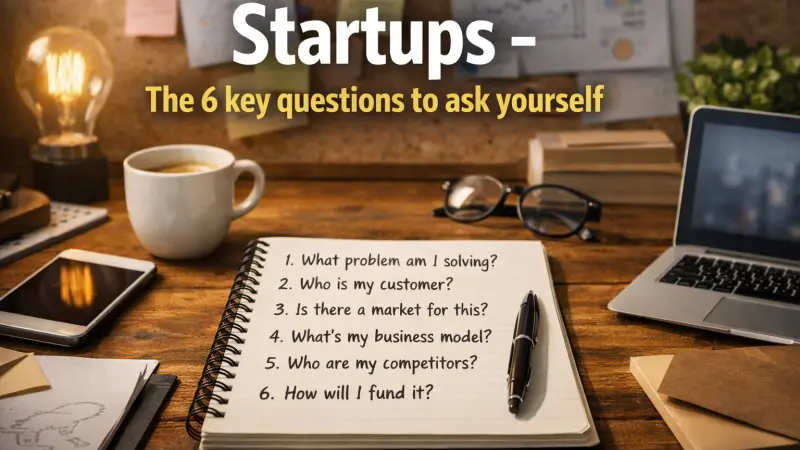
Starting a business is an exciting journey filled with opportunities, challenges, and important decisions. While having a great idea is a strong starting point, successful startups are built on careful planning, self reflection, and a clear understanding of goals and risks.
Before launching your startup, it is essential to ask yourself the right questions. These questions help you evaluate your idea, understand your market, and prepare for the realities of running a business. They also help you identify potential challenges early and create a strong foundation for growth.
In this article, we explore the six key questions every startup founder should ask themselves before starting or scaling a business.
Why Asking the Right Questions Matters
Asking important questions helps entrepreneurs clarify their vision and make informed decisions. It reduces uncertainty and helps identify gaps in planning.
Startups that take time to evaluate their strategy are more likely to succeed because they are better prepared for challenges.
Self assessment also helps ensure you are building a business that aligns with your goals, skills, and resources.
What Problem Am I Solving
Every successful startup begins with a clear problem that needs solving. Understanding the problem helps define your value proposition and ensures your product or service has real demand.
Ask yourself whether the problem is significant enough that customers will pay for a solution.
Clearly defining the problem also helps shape your marketing and product development strategies.
Who Is My Target Customer
Identifying your target audience is essential for building a successful business. Understanding who your customers are, what they need, and how they behave helps you tailor your offering effectively.
Research your market and create customer profiles to better understand their challenges and preferences.
Knowing your audience improves marketing effectiveness and customer satisfaction.
What Makes My Business Different
Competition exists in almost every industry, so understanding your unique selling point is crucial.
Ask yourself what sets your business apart from competitors and why customers should choose your product or service.
Your unique value proposition helps define your brand and strengthens your market position.
How Will I Make Money
A clear revenue model is essential for sustainability. Consider how your business will generate income and whether your pricing strategy is realistic.
Understanding costs, profit margins, and revenue streams helps ensure financial stability.
A strong financial plan supports long term growth.
Do I Have the Right Resources
Starting a business requires time, skills, and financial resources. Assess whether you have the tools and support needed to launch successfully.
You may need to invest in training, hire team members, or seek professional advice.
Understanding your resources helps you plan effectively and avoid unnecessary risks.
Am I Prepared for Challenges and Risks
Every startup faces challenges such as competition, financial pressure, and market uncertainty. Being prepared for these risks helps you stay resilient and adaptable.
Consider how you will handle setbacks and what strategies you will use to overcome obstacles.
A realistic mindset helps you stay focused and motivated.
How These Questions Support Business Planning
Answering these questions helps create a clear roadmap for your startup. They provide insights that guide decision making, strategy development, and goal setting.
They also help identify strengths and weaknesses, allowing you to refine your approach before launching.
This preparation increases confidence and improves your chances of success.
Common Mistakes Startups Make
Many startups fail because they skip proper planning or underestimate challenges. Common mistakes include not researching the market, lacking a clear revenue model, and ignoring customer feedback.
Taking time to ask the right questions helps avoid these pitfalls.
Learning from common mistakes can improve your strategy.
The Importance of Flexibility
While planning is important, flexibility is equally essential. Markets change, customer needs evolve, and unexpected challenges arise.
Being open to feedback and willing to adapt helps startups stay competitive.
Flexibility allows businesses to grow and improve over time.
Building Confidence as a Founder
Answering key questions helps build confidence by giving you a clearer understanding of your business.
Confidence helps you make decisions, communicate your vision, and inspire others.
Preparation reduces uncertainty and supports effective leadership.
Starting a business is a rewarding journey, but success requires careful planning and honest self assessment. By asking yourself these six key questions, you can gain clarity, identify opportunities, and prepare for challenges.
Understanding your problem, customers, value proposition, revenue model, resources, and risks helps create a strong foundation for your startup.
Taking time to reflect and plan increases your chances of building a sustainable and successful business.
FAQs
1 What are the key questions to ask before starting a startup The main questions focus on the problem you are solving, your target customers, your value proposition, revenue model, resources, and risks.
2 Why is identifying a problem important for startups It ensures there is real demand for your product or service and helps define your value proposition.
3 How do I identify my target customer Research your market, analyse customer behaviour, and create profiles based on needs and preferences.
4 What is a unique value proposition It is what makes your business different and why customers should choose you over competitors.
5 Why is a revenue model important It helps ensure your business can generate income and remain financially sustainable.
6 How can I assess my startup resources Evaluate your skills, finances, tools, and support network to determine readiness.
7 What risks should startups consider Financial challenges, competition, market changes, and operational risks are common.
8 Can I start a business without all resources in place Yes but planning and prioritising essential resources helps reduce risk.
9 How do these questions help business planning They provide clarity, guide strategy, and help identify potential challenges early.
10 Should I revisit these questions after launching Yes reviewing them regularly helps adapt to changes and improve strategy.
11 What is the biggest mistake startups make Skipping market research and lacking a clear plan are common mistakes.
12 How can startups stay flexible By listening to customer feedback and adapting strategies when needed.
13 Do all successful startups start with a plan Most successful startups begin with clear planning and market understanding.
14 How can I validate my startup idea Test your concept through research, feedback, and small scale trials.
15 Why is self assessment important for entrepreneurs It helps ensure you are prepared, realistic, and focused on building a sustainable business.
Disclaimer: The information provided in this article is for general informational and research purposes only. Company details, features, services, and market positions may change over time. Readers are advised to visit official company websites and conduct independent research before making any business decisions or purchasing services.
Most Searchable Keywords
Recent Blogs


Related Listings

Categories
- Accountants (295)
- Advertising Agencies (559)
- Architects (149)
- Automobiles (377)
- Beauty (300)
- Carpenters (146)
- Cleaning Services (387)
- Dentists (189)
- Driving (62)
- Electricians (215)
- Energy (8)
- Event Organiser (686)
- Finance (602)
- Guide (3374)
- Health (2207)
- Information technology (206)
- Legal Services (354)
- Logistics (6)
- Maintenance (65)
- Manufacturing (35)
Sponsored Listings in Travel Agencies


Related Blogs

Meet the Fair Work Agency Changing UK Work Ru...
Read this insightful article "Meet the Fair Work Agency Changing UK Work Rules in 2026" to expand your knowledge!

Collective Redundancy Errors Now Carry Higher...
Read this insightful article "Collective Redundancy Errors Now Carry Higher 2026 Penalties" to expand your knowledge!

Explore Dog Friendly Walks in the Cotswolds f...
Read this insightful article "Explore Dog Friendly Walks in the Cotswolds for 2026" to expand your knowledge!
Questions & Answers – Find What
You Need, Instantly!
How can I update my business listing?
Is it free to manage my business listing?
How long does it take for my updates to reflect?
Why is it important to keep my listing updated?
