
Strategies for Effective Freight Directory Listings
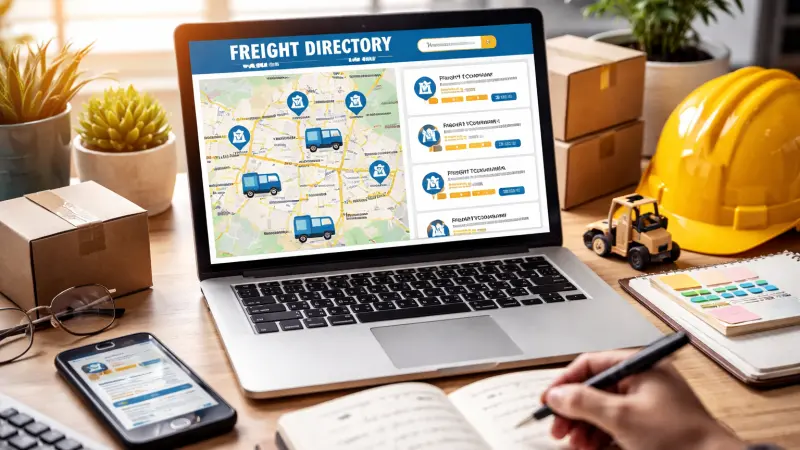
Imagine a logistics manager urgently searching for a reliable freight partner to move time-sensitive cargo across the Midlands. They turn to an online directory, type in a few search terms, and within seconds are presented with a shortlist of companies. If your freight business does not appear in those results, that contract goes elsewhere. This is the quiet, everyday reality of how freight directory listings either work for you — or against you.
For freight operators, hauliers, and logistics providers across the United Kingdom, maintaining a strong and well-optimised presence in online directories is no longer optional. It is a foundational element of any serious business development strategy. Effective freight directory listings increase your visibility to buyers, strengthen your credibility, and improve your position in local and national search results. Yet many businesses still treat their directory profiles as an afterthought, missing significant commercial opportunity.
This article outlines the key strategies for making your freight directory listings as effective as possible — from choosing the right platforms and crafting compelling profiles, to leveraging free local SEO listings UK businesses often overlook.
Why Freight Directory Listings Matter More Than Ever
The freight and logistics industry is increasingly competitive. With the rise of digital procurement, shippers and supply chain managers routinely begin their search for transport partners online. A significant proportion of that discovery happens through directory listings, search engine results, and industry-specific platforms.
According to industry research, a large majority of B2B buyers conduct online research before engaging a new supplier. For freight services, where trust, reliability, and geographic coverage are paramount, directory listings serve as a first point of contact and a trust signal. A well-maintained profile communicates professionalism; a sparse or outdated one sends the opposite message.
Beyond first impressions, directory listings also contribute directly to search engine optimisation. When your business appears consistently across multiple UK business directory sites, search engines interpret this as a signal of legitimacy and relevance. The result is improved organic rankings, particularly for location-specific queries such as "haulage company Manchester" or "freight services Birmingham."
The Role of NAP Consistency
One of the most critical — and frequently neglected — aspects of directory listing optimisation is NAP consistency. NAP stands for Name, Address, and Phone Number. Search engines cross-reference your business details across multiple directories to verify your legitimacy. Any inconsistency — a different phone number on one platform, an abbreviated address on another — creates confusion and can actively harm your local search rankings.
For freight businesses that may have multiple depots or regional offices, this becomes especially important. Each location should have its own consistent listing, with accurate and up-to-date contact details, to ensure maximum local visibility.
Selecting the Right Directories for Freight Businesses
Not all directories are created equal. Listing your freight business indiscriminately across hundreds of low-quality platforms can actually be counterproductive, attracting spam and diluting your digital footprint. Instead, a focused, strategic approach yields better results.
Industry-Specific Freight and Logistics Directories
Industry-specific directories are among the most valuable platforms for freight businesses. These are directories designed specifically for logistics, haulage, and transport companies, and they attract an audience that is actively looking for freight services. Examples include specialist logistics portals, haulage directories, and freight exchange platforms that allow carriers and shippers to connect.
When selecting an industry-specific directory, consider the following:
- Audience quality: Does the platform attract genuine shippers and logistics buyers, or is it primarily used by other carriers?
- Domain authority: High-authority directories pass more SEO value to your listing.
- Verification processes: Directories that verify business credentials tend to carry more weight with both search engines and potential clients.
- Visibility features: Does the platform allow you to add detailed service descriptions, upload accreditation documents, or respond to reviews?
General UK Business Directories
In addition to specialist platforms, general local business directory UK sites play a crucial role in building your online presence. These are the directories that carry broad audiences and strong domain authority, ensuring your business is discoverable by a wide range of searchers.
The most reputable general directories for UK businesses include well-established platforms that have been indexing UK companies for many years. Appearing on the right UK business directory list — rather than simply any directory — ensures your listings carry genuine SEO value and reach relevant audiences.
When assessing general directories, prioritise those that:
- Have a strong, established presence in UK search results
- Allow businesses to add detailed descriptions, categories, and keywords
- Offer the ability to respond to customer reviews
- Provide options for adding images, accreditations, and service areas
Google Business Profile
No discussion of directory listings would be complete without addressing Google Business Profile (formerly Google My Business). For freight companies targeting local or regional clients, this is arguably the single most important listing to maintain. Appearing in Google's local pack — the map-based results shown at the top of location-specific searches — can dramatically increase the volume of enquiries your business receives.
Ensure your Google Business Profile is fully completed, including your business category, service area, operating hours, and a thorough description of your services. Regularly uploading photos of your fleet and facilities, and actively responding to reviews, further strengthens your profile's performance.
Crafting a High-Performing Freight Directory Profile
Once you have identified the appropriate directories, the quality of your profile is what determines whether it generates enquiries or simply exists without purpose. A high-performing freight directory profile is detailed, accurate, keyword-rich (without being spammy), and clearly communicates your competitive advantages.
Writing an Effective Business Description
Your business description is the core of your directory listing. It should clearly explain what you do, where you operate, and what sets you apart from competitors. For freight businesses, this typically includes:
- The types of freight you handle (e.g., ambient, temperature-controlled, hazardous goods, oversized loads)
- Your geographic coverage (regional, national, international)
- Your vehicle fleet and capacity
- Any specialist services or accreditations (e.g., FORS, ISO certifications, ADR licence)
- Your operating hours and emergency or out-of-hours availability
Write your description in clear, accessible language. Avoid excessive jargon, but do use industry terminology where appropriate — potential clients familiar with logistics will recognise it as a sign of genuine expertise. Naturally incorporate relevant search terms, including your primary service type and geographic area, to improve the listing's search visibility.
Choosing the Correct Categories and Service Tags
Most directories allow you to select one or more categories and service tags for your business. Take time to choose the most accurate and relevant options available. For freight businesses, this might include categories such as:
- Haulage and road freight
- Warehousing and storage
- International freight forwarding
- Same-day courier services
- Cold chain logistics
Selecting the right categories ensures your listing appears in the correct search filters and sections within the directory, improving the likelihood that relevant buyers will find you.
Using Images and Visual Assets
Directories that permit image uploads offer an important opportunity to make your listing stand out. High-quality photographs of your fleet, warehouse facilities, or loading operations convey professionalism and build immediate confidence. Avoid using generic stock photography; authentic images of your actual business operation are far more persuasive.
Where possible, include your company logo as the primary image to reinforce brand recognition. If the directory supports video, a short clip showcasing your operations can be highly effective.
Keeping Listings Current
An outdated directory listing is worse than no listing at all. If a potential client calls a number that is no longer in service, or arrives at an address that has changed, the damage to your reputation can be significant. Establish a process for reviewing all your directory listings at least twice a year, and update them promptly whenever contact details, service offerings, or operating hours change.
Leveraging Reviews and Reputation Management
For freight businesses, trust is the currency of new business relationships. Reviews and ratings on directory listings play a central role in establishing that trust, particularly with buyers who are unfamiliar with your company.
Actively Soliciting Reviews
Do not wait passively for reviews to accumulate. Proactively ask satisfied clients to leave a review on your most important directory listings. The best time to make this request is shortly after a successful delivery or project, when the positive experience is fresh. A simple, personal email — or even a direct conversation — is sufficient.
Be specific about which platform you would like them to use. If Google Business Profile is your priority, direct them there.
If a specialist freight directory carries particular weight in your sector, encourage reviews there instead. Spreading your review requests across multiple platforms incrementally builds your reputation across the board.
Responding to Reviews
Responding to reviews — both positive and negative — demonstrates that your business is attentive and accountable. For positive reviews, a brief, genuine acknowledgement is entirely appropriate. For negative reviews, a calm, professional response that addresses the concern and outlines any remedial action taken can actually enhance your credibility with prospective clients reading the exchange.
Never engage defensively or dismissively with negative feedback in a public forum. The manner in which a business handles criticism tells potential clients a great deal about how it will handle problems during a live contract.
Local SEO and Directory Listings for Freight Businesses
Local search engine optimisation is particularly relevant for freight operators who serve specific geographic areas. When potential clients search for freight services within a defined region, local SEO signals determine whose business appears most prominently in the results. Directory listings are one of the most powerful local SEO tools available.
Building Local Citations
A citation is any online mention of your business name, address, and phone number. Building citations across reputable directories — both general and industry-specific — strengthens your local search presence. The most effective citations come from high-authority platforms that are well-indexed by search engines.
Utilising free local SEO listings UK platforms is a cost-effective way to build citation volume. Many reputable directories offer free basic listings, which, when consistently optimised, contribute meaningfully to local search performance. Paid enhancements or featured placements can be considered for the most strategically important platforms, but free listings remain the foundation.
Targeting Location-Specific Keywords
When writing descriptions and service information for your directory listings, incorporate location-specific keywords naturally. For example, a haulage company based in Leeds might include phrases such as "freight services Leeds," "road haulage West Yorkshire," or "logistics company Yorkshire" within their profile descriptions.
These geo-modified keywords help search engines understand your service area and improve your visibility for locally-focused searches. Avoid forcing keywords unnaturally into your descriptions; instead, write as you would when speaking to a prospective client, allowing the location context to arise organically within the text.
Utilising Structured Data and Schema Markup
For businesses with their own websites, complementing directory listings with structured data markup (schema.org) on your website reinforces your local SEO signals. Schema markup for local businesses allows search engines to understand your business type, location, and contact details more clearly, improving the accuracy and prominence of your search listings.
Monitoring Performance and Refining Your Approach
Effective directory listing management is not a one-time task. To extract maximum value, it is important to monitor the performance of your listings and refine your approach based on the data available.
Tracking Enquiries and Traffic Sources
Where possible, use unique phone numbers or dedicated landing page URLs for different directory listings. This allows you to track
which platforms are generating the most enquiries, enabling you to concentrate your optimisation efforts on the highest-performing channels.
Most directories with premium or enhanced listing options also provide performance analytics, including the number of profile views, clicks through to your website, and calls generated. Reviewing these metrics regularly provides a clear picture of where your listing investment is delivering the strongest return.
Benchmarking Against Competitors
Periodically search for your key services and geographic area across the directories you use. Assess how your profile compares to those of competitors appearing in the same results. Consider whether your description is more or less compelling, whether your review count and rating are competitive, and whether there are categories or services that competitors are highlighting that you have not yet included.
This competitive benchmarking exercise often reveals straightforward improvements that can meaningfully improve your listing's performance with relatively little effort.
Common Mistakes to Avoid With Freight Directory Listings
Even experienced businesses make avoidable errors with their directory listings. The following are among the most common:
- Incomplete profiles: Leaving key fields empty — such as service descriptions, categories, or images — reduces both the appeal of your listing and its search performance.
- Inconsistent NAP data: As discussed earlier, variations in your business name, address, or phone number across different platforms can undermine your local SEO efforts.
- Neglecting niche directories: Many freight businesses focus exclusively on major general directories and miss the highly targeted audiences available through specialist logistics and haulage platforms.
- Ignoring reviews: Failing to solicit or respond to reviews leaves significant trust-building potential untapped.
- Listing and forgetting: Directory listings require ongoing maintenance. Outdated information erodes credibility and can actively damage your reputation.
- Over-optimising with keywords: Stuffing your descriptions with repetitive keywords makes your listing appear untrustworthy and may be penalised by some platforms.
Integrating Directory Listings Into a Broader Digital Strategy
Directory listings are most effective when they form part of a broader, integrated digital marketing strategy. Treating them in isolation — as a box to tick rather than a channel to actively manage — limits their potential impact.
Consider how your directory profiles connect to your website, your social media presence, and your content marketing efforts. When a prospective client discovers your business through a directory listing, they will typically conduct further research before making contact. A well-designed website with clear service information, case studies, and accreditation details reinforces the positive impression created by your directory profile.
Similarly, consistent branding across all digital touchpoints — including directory listings, social media, and your own website — builds recognition and trust over time. Ensure your tone of voice, visual identity, and key messaging are aligned across all platforms.
Final Considerations: Making Your Freight Business Easy to Find
The freight and logistics industry operates on relationships and reliability. But those relationships cannot begin until a potential client finds you. In today's digital-first environment, effective directory listings are one of the most direct routes to being discovered by the right buyers at the right time.
By choosing appropriate platforms, crafting detailed and accurate profiles, maintaining NAP consistency, and actively managing your reviews, freight businesses can establish a compelling digital presence that generates genuine commercial enquiries. The effort required is modest compared to the potential return, making directory listing optimisation one of the most cost-effective strategies available to freight operators of any size.
For businesses looking to strengthen their online presence through directory listings, Local Page UK offers a straightforward platform for businesses across all sectors to manage their listings and improve discoverability. Freight operators seeking to extend their reach without significant expenditure may also benefit from exploring a free business listing, which provides a practical starting point for building local visibility across UK business directory sites.
Questions Clients Commonly Ask
What is a freight directory listing and why does my business need one?
A freight directory listing is a profile for your freight or logistics business on an online directory platform. It typically includes your business name, contact details, service description, geographic coverage, and any relevant accreditations. Directory listings improve your online visibility, help potential clients discover your services, and contribute to your local search engine optimisation (SEO) performance. For freight businesses operating in a competitive market, maintaining strong directory listings is an effective and relatively low-cost way to generate inbound enquiries.
How many directories should a freight business list on?
There is no single correct answer, but quality is more important than quantity. Focusing on a curated selection of high-authority, relevant directories — including Google Business Profile, industry-specific freight and logistics platforms, and reputable general UK business directories — is more effective than submitting to hundreds of low-quality sites. For most freight businesses, maintaining between ten and twenty well-optimised listings across carefully chosen platforms is a practical and achievable target.
How do directory listings improve local SEO for freight companies?
Directory listings improve local SEO by creating citations — mentions of your business name, address, and phone number across the web. Search engines use these citations to verify your business's existence and location, which in turn improves your rankings for geographically-targeted search queries. Consistent, accurate NAP data across multiple reputable directories is one of the most reliable signals that search engines use to determine local search rankings.
Are free directory listings worthwhile, or should I invest in paid options?
Free directory listings on reputable platforms are absolutely worthwhile and form the foundation of any directory listing strategy. Many of the most valuable directories for freight businesses offer free basic listings that, when properly optimised, deliver genuine SEO and visibility benefits.
Paid enhancements — such as featured placements, priority positioning, or advanced analytics — can be considered selectively for the platforms that are most likely to reach your target audience, but they should complement, not replace, a strong foundation of free listings.
How often should I update my freight directory listings?
At a minimum, review all your directory listings twice a year to ensure the information remains accurate. Additionally, update any listing promptly whenever your business details change — including phone numbers, addresses, operating hours, or services offered. If your business undertakes significant developments such as fleet expansion, new accreditations, or geographic expansion, these are also good opportunities to refresh your listings with updated descriptions and images.
Disclaimer: The information provided in this article is for general informational and research purposes only. Company details, features, services, and market positions may change over time. Readers are advised to visit official company websites and conduct independent research before making any business decisions or purchasing services.
Most Searchable Keywords
Recent Blogs


Related Listings
Categories
- Accountants (295)
- Advertising Agencies (559)
- Architects (149)
- Automobiles (377)
- Beauty (300)
- Carpenters (146)
- Cleaning Services (387)
- Dentists (189)
- Driving (62)
- Electricians (215)
- Energy (8)
- Event Organiser (686)
- Finance (602)
- Guide (3372)
- Health (2207)
- Information technology (206)
- Legal Services (353)
- Logistics (6)
- Maintenance (65)
- Manufacturing (35)
Sponsored Listings in Travel Agencies



Related Blogs

How Much Do UK Actors Really Earn Full Indust...
Read this insightful article "How Much Do UK Actors Really Earn Full Industry Breakdown" to expand your knowledge!

Blue Light Card UK 2026 Check Eligibility and...
Read this insightful article "Blue Light Card UK 2026 Check Eligibility and Claim" to expand your knowledge!

BBC Radio 1 DJs Net Worth Ranking Revealed
Read this insightful article "BBC Radio 1 DJs Net Worth Ranking Revealed" to expand your knowledge!
Questions & Answers – Find What
You Need, Instantly!
How can I update my business listing?
Is it free to manage my business listing?
How long does it take for my updates to reflect?
Why is it important to keep my listing updated?
