
Suspended Ceilings: Benefits, Designs & Installation Tips
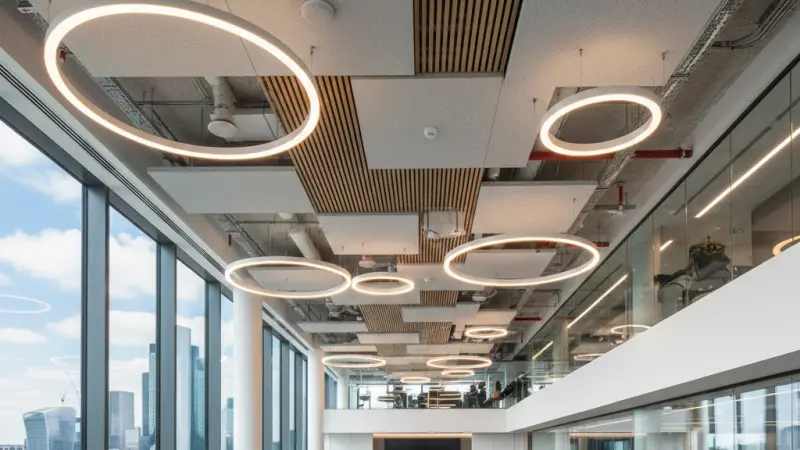
The architectural landscape of the United Kingdom is a tapestry of historic heritage and cutting-edge modernity. Central to the functionality and aesthetic of these structures is the often-overlooked yet critical sector of "Ceilings – Suspended." In the UK, the commercial interiors market is a multi-billion pound industry, and suspended ceilings—also known as dropped ceilings—form the backbone of this ecosystem. These systems are not merely decorative; they are essential engineering solutions that facilitate acoustic control, fire safety, thermal insulation, and the concealment of complex mechanical and electrical services.

From the high-rise glass monoliths in the City of London to the industrial estates of the Midlands and the creative hubs in Manchester, suspended ceilings are ubiquitous. The sector's economic importance cannot be overstated. It supports a vast network of specialist contractors, material manufacturers, and distribution chains. As a British business analyst, one observes that the health of this sector is a primary indicator of the broader construction and office fit-out market. When businesses are confident and expanding, the demand for sophisticated interior solutions skyrockets.
In recent years, the sector has shifted from providing basic mineral fibre tiles to high-end bespoke designs incorporating metal, wood, and integrated LED lighting. This evolution reflects a growing understanding of how the internal environment affects productivity and well-being. Furthermore, the UK's stringent building regulations, particularly regarding fire safety post-Grenfell, have placed the ceiling industry under a spotlight, demanding higher standards of installation and material certification. Whether you are a facility manager or a property developer looking to find local businesses uk, understanding the nuances of this industry is paramount for successful project delivery.
The Landscape of Ceilings – Suspended in the UK
The UK market for suspended ceilings has demonstrated remarkable resilience and adaptability. Currently, the market size is buoyed by a significant uptick in commercial refurbishments. As companies reassess their physical footprints in a post-pandemic world, the "flight to quality" has become a dominant trend. Landlords are upgrading Grade B office spaces to Grade A to attract tenants, often starting with high-specification ceiling systems that improve the overall "feel" and acoustic performance of a space.
Geographically, London and the South East remain the primary hubs of activity, driven by the density of corporate headquarters and infrastructure projects like Crossrail and the expansion of tech hubs. However, the "Levelling Up" agenda has seen increased activity in regions like the West Midlands and the North West, where major urban regeneration projects are transforming city centres. The industry has evolved significantly post-pandemic; the focus has shifted toward air quality and hygiene. Antimicrobial ceiling tiles and systems that integrate seamlessly with high-efficiency HVAC units are now standard requirements in many healthcare and educational tenders.
Digital transformation has also touched this traditional trade. Contractors are increasingly listed on a uk online business directory to ensure they are visible to procurement officers who now conduct most of their preliminary research online. The evolution of the industry is also marked by a move toward modular construction. Prefabricated ceiling modules, including integrated lighting and sensors, are being developed to reduce on-site labour time and improve safety. This shift reflects a broader trend in the UK construction industry toward efficiency and precision, ensuring that the suspended ceiling remains a high-performance component of the modern building.
Comprehensive Services Breakdown
The diversity of services within the suspended ceiling niche is vast. At its most basic level, the industry provides "Lay-in Grid" systems. These are the workhorses of the sector, consisting of a metal framework suspended by wires from the structural soffit, with tiles laid into the grid. These are favoured for their cost-effectiveness and ease of access to the plenum space for maintenance.
However, the modern service provider offers much more. Specialty services now include:
Acoustic Solutions: Specialist contractors use high-density mineral wool or glass wool tiles to manage sound absorption and attenuation. This is critical in open-plan offices and schools.
Fire-Rated Ceilings: These are engineered to provide structural integrity for 30, 60, or 120 minutes during a fire, protecting the building's escape routes and structural elements.
Metal Ceiling Systems: Often found in transport hubs and high-end lobbies, these offer durability and a sleek, industrial aesthetic.
They are available in clip-in, lay-on, or hook-on variations.
Hygienic and Cleanroom Ceilings: Essential for the UK’s pharmaceutical and food processing sectors, these tiles are non-shedding and resistant to frequent cleaning.
Bespoke Rafts and Baffles: Instead of a wall-to-wall ceiling, many modern designs use "clouds" or vertical baffles to solve acoustic issues while leaving the structural soffit exposed—a popular look in creative industries.
For many startups and specialized sole traders entering this competitive landscape, securing a business listing uk is the first step in showcasing these diverse capabilities to a national audience. The ability to articulate these technical services clearly to potential clients is what differentiates a top-tier contractor from a general builder.
How to Choose the Right Service Provider
Selecting a suspended ceiling contractor is a decision that impacts the safety and longevity of your building. In the UK, the first thing to look for is accreditation. Membership in the FIS (Finishes and Interiors Sector) is a strong hallmark of quality, as members must adhere to a strict code of conduct and technical standards.
Secondly, verify their insurance. A reputable provider should hold Public Liability and Employers' Liability insurance at a minimum, and for complex designs, Professional Indemnity insurance is advisable. Reputation is the third pillar. In the digital age, checking local business listings uk for verified reviews and past project portfolios is essential. Don't be afraid to ask for case studies or to visit a site where they have recently completed work.
Local reputation matters because ceiling contractors often need to return for minor adjustments or maintenance. A contractor with deep roots in a specific UK region will likely have better relationships with local suppliers, ensuring that project timelines are met even during supply chain disruptions. Furthermore, check for Health and Safety certifications such as CHAS or SafeContractor. Given the risks involved with working at height and handling heavy grid systems, a commitment to safety is non-negotiable.
Industry Challenges & Future Outlook
The UK ceiling industry faces several headwinds, primarily the rising cost of raw materials—steel for grids and mineral fibre for tiles. However, these challenges are driving innovation. Sustainability is no longer a "nice-to-have"; it is a regulatory requirement. The "Circular Economy" is gaining traction, with manufacturers like Armstrong and Ecophon offering recycling programmes for old ceiling tiles, diverting them from UK landfills.
Technological shifts are also prominent. The integration of "Smart Ceilings" is the next frontier. We are seeing ceilings embedded with IoT sensors that track occupancy, adjust lighting based on natural daylight, and even monitor CO2 levels. This data-driven approach to facility management is becoming standard in the London tech sector. Regulatory changes, particularly the Building Safety Act, mean that every component of the ceiling system must be documented with a "Golden Thread" of information regarding its fire performance and origin.
For businesses navigating these complex shifts, finding the right partners through a uk free business directory can help in forming the joint ventures necessary to tackle large-scale, tech-heavy projects. The future outlook is one of increased professionalization and technical sophistication, where the ceiling is seen as an active, rather than passive, part of the building's infrastructure.
Business Tips for Ceilings – Suspended Professionals
For professionals in this trade, technical excellence is only half the battle; the other half is marketing. Many ceiling contractors are excellent at their craft but struggle with digital visibility. In the UK, the majority of B2B procurement starts with a search engine. If your business doesn't appear when a facility manager searches for "ceiling repairs near me," you are losing revenue.
A key tip is to leverage uk service listings to build a robust online footprint. This involves more than just a name and number; high-quality photos of your
best installations, detailed descriptions of your fire-safety expertise, and a link to your website are crucial. Digital visibility acts as your 24/7 salesperson.
Furthermore, networking within the UK construction supply chain is vital. Establishing relationships with architects and office fit-out companies can lead to a steady stream of subcontracting work. Content marketing is also a powerful tool—writing short guides on "How to improve office acoustics" can position you as an expert rather than just a labourer. Remember, in a niche like suspended ceilings, your reputation for reliability is your most valuable asset.
Wrapping Up & Local Page Integration
The suspended ceiling industry is a vital, dynamic component of the UK's built environment. It combines aesthetics, safety, and acoustic engineering to create spaces where people can thrive, work, and learn. As we have explored, whether it is navigating the post-pandemic market landscape, choosing a provider with the right accreditations, or adopting the latest smart technology, the industry requires a high degree of expertise.
For businesses looking to thrive in this competitive sector, or for consumers looking to hire the best in the trade, a central hub for information and connection is required. This is where the uk business directory comes into play. By providing a structured, high-authority platform for UK companies to showcase their services, it bridges the gap between those who need work done and the professionals capable of doing it.
As the UK economy continues to evolve, the demand for quality interior finishes will only grow. Staying visible, staying compliant, and staying connected through the right digital channels is the blueprint for success in the 21st-century construction market.
Boost Your Visibility with Local Page UK
For businesses operating in the Ceilings – Suspended sector, being found online is no longer optional—it is critical for survival. Competition is fierce, and your potential clients are looking for verified, local experts. Local Page UK offers the premier solution for UK businesses to enhance their digital presence and build trust with a local audience. We encourage all trade professionals to claim their business listing uk today to reach more customers and secure their place in the UK's most trusted trade network.
FAQ
What exactly is a suspended ceiling and why is it used?
A suspended ceiling, often referred to as a dropped ceiling, is a secondary ceiling hung below the main structural soffit. It consists of a metal grid system and individual tiles. In the UK, these are primarily used to hide unsightly pipes, wires, and ductwork while providing easy access for maintenance. Additionally, they offer significant benefits in terms of acoustic insulation, fire protection, and thermal efficiency. By reducing the volume of a room, they can also lower heating costs, making them an economically sound choice for both commercial and industrial properties across the country.
Are suspended ceilings fireproof?
While no material is entirely "fireproof" under all conditions, most suspended ceiling systems used in the UK are designed to be "fire-retardant" or "fire-rated." A fire-rated ceiling is tested to provide structural integrity for a specific duration, such as 30 or 60 minutes. This is crucial for protecting the structural steel of a building and ensuring safe escape routes. It is vital to ensure that both the tiles and the grid system are installed according to the manufacturer’s fire-testing data to maintain their protective qualities.
How do I choose the right ceiling tile for my office?
Choosing the right tile depends on your primary goal. For open-plan offices, acoustic absorption tiles (Class A) are best to reduce echo and noise distraction. If the office is in a noisy industrial area, sound attenuation tiles might be needed to block external sound.
Aesthetic considerations also play a role; modern mineral fibre tiles offer a clean, white finish, while metal or wood-effect tiles provide a more premium, designer look. Always consult a specialist listed on a reputable directory to ensure the tiles meet current UK building regulations.
Can I install a suspended ceiling myself?
While it is technically possible for a highly skilled DIY enthusiast to install a basic grid, professional installation is strongly recommended for commercial projects. Professional contractors have the specialist laser levels required for a perfectly flat finish and the knowledge to ensure the system is safely anchored to the structural soffit. Furthermore, for fire-rated or acoustic ceilings, a certificate of installation from a professional is often required for insurance purposes and building control compliance in the UK.
How do I find a reliable ceiling contractor near me?
The best way to find a reliable contractor is to use a verified Localpage listing. This allows you to browse through local specialists who have established reputations and proven track records. Look for contractors who have positive customer feedback and are members of industry bodies like the FIS. Avoid hiring contractors based on price alone; ensure they have the correct insurance and can provide a detailed quote that includes waste disposal and health and safety compliance.
How much does a suspended ceiling cost per square metre?
Costs in the UK vary significantly based on the materials chosen and the complexity of the installation. A basic lay-in grid with standard mineral fibre tiles can start from £25 to £35 per square metre. However, for high-end metal systems, acoustic rafts, or fire-rated ceilings, prices can exceed £60 to £100 per square metre. Factors such as the height of the room, the number of cutouts for lights and vents, and the geographic location (prices are generally higher in London) will also influence the final project cost.
How do I maintain a suspended ceiling?
Maintenance is relatively simple. Tiles can be dusted or vacuumed using a soft brush attachment. For marks or stains, most mineral fibre tiles can be lightly wiped with a damp cloth, though you must avoid over-wetting them as they can sag. If a tile becomes water-damaged due to a leak, it should be replaced immediately to prevent mould growth and maintain fire safety. The grid should be checked periodically to ensure it remains level and that the suspension wires are secure and free from corrosion.
What is the difference between sound absorption and sound attenuation?
Sound absorption refers to the ability of a tile to stop sound from bouncing back into the same room (reducing echo). This is measured by an Alpha Weighted score ($\alpha_w$). Sound attenuation refers to the ability of the ceiling to stop sound from travelling through the plenum space into the next room. This is measured in decibels (dB). In a busy UK office, a balance of both is usually required to ensure privacy in meeting rooms while maintaining a comfortable noise level in the general workspace.
Are suspended ceilings environmentally friendly?
Yes, they can be. Many leading UK manufacturers now produce tiles with high recycled content, sometimes up to 40% or 50%. Furthermore, mineral fibre and metal tiles are often fully recyclable at the end of their life cycle. By improving the thermal insulation of a room, suspended ceilings also help reduce a building's carbon footprint by lowering the energy required for heating and cooling. Look for products with EPD (Environmental Product Declaration) certificates to verify their sustainability credentials.
How long does it take to install a suspended ceiling?
For a standard office space of approximately 100 square metres, a professional team can typically complete the installation in 2 to 3 days, depending on the complexity of the grid and the number of obstructions. This includes the setting out, installing the perimeter trim, hanging the main runners and cross tees, and finally laying the tiles. If there are many lights or air conditioning units to integrate, the process may take longer.
Can I paint my suspended ceiling tiles?
It is generally not recommended to paint standard mineral fibre ceiling tiles. Painting them can bridge the pores of the material, significantly reducing their acoustic absorption properties. Furthermore, the weight of the paint can cause tiles to sag, and the paint may alter the fire-rating of the tile. If you want a specific colour, it is much better to purchase pre-coloured tiles from the manufacturer, which are available in almost any RAL colour to suit your branding.
What is a "concealed grid" ceiling?
A concealed grid ceiling is a system where the metal framework is hidden by the tiles, creating a smooth, monolithic appearance similar to a traditional plasterboard ceiling. These are often used in high-end UK retail stores or luxury lobbies where a sleek aesthetic is desired. They offer the clean look of plasterboard but with the added benefit of being able to remove individual tiles to access the services above, though they are generally more expensive and difficult to install than standard lay-in grids.
Do suspended ceilings help with damp issues?
While a suspended ceiling won't "fix" a damp problem in the structural soffit, there are specialist moisture-resistant tiles available for high-humidity areas like kitchens, changing rooms, or swimming pools. These tiles are designed to withstand up to 95% or even 100% relative humidity without sagging or delaminating. However, if there is a persistent leak or damp issue in the building, it must be addressed at the source before the ceiling is installed to prevent damage to the system.
Can I hang heavy objects from my suspended ceiling?
No, you should never hang heavy objects like large light fixtures, projectors, or signs directly from the ceiling tiles or the lightweight grid. These systems are designed to support their own weight and the weight of standard light fittings.
Anything heavy must be fixed directly to the structural soffit above using independent suspension wires or brackets. A professional contractor will be able to advise on the correct "patressing" or support structures required for integrated equipment.
What is the most common reason for a suspended ceiling to sag?
The most common reason for sagging is moisture or humidity. Standard mineral fibre tiles can absorb water vapour from the air if the building is not properly heated or ventilated, causing them to lose their rigidity. Other causes include the use of incorrect, heavy light fittings that aren't properly supported, or a leak in the plumbing above. If you notice sagging, it is important to identify the cause quickly and consult a professional on Local page to prevent the tiles from falling.

Disclaimer: The information provided in this article is for general informational and research purposes only. Company details, features, services, and market positions may change over time. Readers are advised to visit official company websites and conduct independent research before making any business decisions or purchasing services.
Most Searchable Keywords

Recent Blogs
-

Explore Supermarkets in Chepstow and the Surrounding Wye Valley
-
Elite Guide to Taxi and Private Hire Services in Hereford
-
Explore Fuel and Roadside Convenience Across Beckington Today
-
Explore Abergavenny Tyre Services with Expert Local Fitters
-
Claim Your HMRC UK Tax Refund Before Application Deadlines




Categories
- Accountants (295)
- Advertising Agencies (559)
- Architects (149)
- Automobiles (376)
- Beauty (300)
- Carpenters (146)
- Cleaning Services (386)
- Dentists (189)
- Driving (61)
- Electricians (215)
- Energy (7)
- Event Organiser (683)
- Finance (597)
- Guide (3358)
- Health (2205)
- Information technology (206)
- Legal Services (352)
- Logistics (6)
- Maintenance (65)
- Manufacturing (35)

Sponsored Listings in Property Maintenance



Related Blogs

Explore Supermarkets in Chepstow and the Surr...
Read this insightful article "Explore Supermarkets in Chepstow and the Surrounding Wye Valley" to expand your knowledge!

Elite Guide to Taxi and Private Hire Services...
Read this insightful article "Elite Guide to Taxi and Private Hire Services in Hereford" to expand your knowledge!

Explore Fuel and Roadside Convenience Across...
Read this insightful article "Explore Fuel and Roadside Convenience Across Beckington Today" to expand your knowledge!
Questions & Answers – Find What
You Need, Instantly!
How can I update my business listing?
Is it free to manage my business listing?
How long does it take for my updates to reflect?
Why is it important to keep my listing updated?
