
Technical & Agricultural Colleges: Courses, Careers & Entry Routes
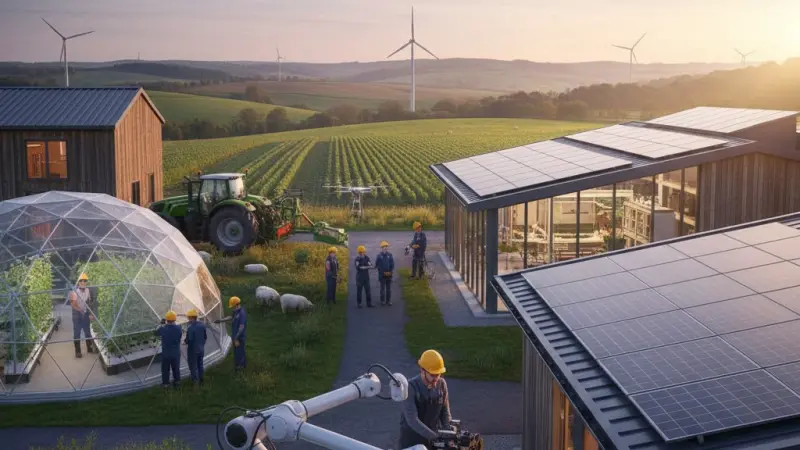
The landscape of the United Kingdom’s education sector is undergoing a quiet yet profound revolution, spearheaded by the Colleges – Technical & Agricultural niche. Often referred to as the "backbone of the rural and industrial economy," these institutions provide the critical bridge between academic theory and the practical expertise required to sustain our nation’s infrastructure and food security. In an era defined by rapid technological advancement and the urgent need for sustainable practices, the economic importance of these colleges cannot be overstated. They are no longer just places for traditional vocational training; they are hubs of innovation, research, and high-level skill development that contribute billions of pounds to the UK’s Gross Domestic Product (GDP).
As we navigate the complexities of a post-Brexit economy and a world increasingly focused on "Net Zero" targets, technical and agricultural colleges have become pivotal in addressing the UK's skills gap. These institutions serve a dual purpose: they provide young people with viable, high-earning career paths in sectors like agritech, engineering, and environmental science, while also offering adult learners the opportunity to upskill in response to changing market demands. The integration of digital proficiency with traditional craftsmanship has created a new breed of professional—one who is as comfortable operating a GPS-guided autonomous tractor as they are managing complex supply chain logistics. For businesses looking to tap into this talent pool, using a uk online business directory is an essential first step in identifying the regional hubs of excellence that define this sector today.
The Landscape of Colleges – Technical & Agricultural in the UK
The current market size for the UK’s land-based and technical education sector is robust, characterized by a mix of specialized independent colleges and larger multi-disciplinary FE (Further Education) groups. Post-pandemic, the industry has seen a significant surge in interest, driven by a renewed public appreciation for food security and local manufacturing. Key regions of activity remain concentrated in the agricultural heartlands of the South West, East Anglia, and the East Midlands, though technical innovation centres are increasingly prominent in the "Northern Powerhouse" regions.
Post-pandemic evolution has been marked by a "digital-first" approach to practical learning. While the hands-on nature of the sector means physical attendance remains mandatory for many modules, colleges have invested heavily in simulation technology and remote data analysis tools. This evolution has made the sector more resilient, allowing for a hybrid model of education that appeals to a broader demographic. Furthermore, the industry has moved toward "Sustainable Intensification"—a concept that teaches students how to increase productivity while reducing environmental impact. To understand the breadth of these institutions across the country, many stakeholders consult a business listing uk to find localized providers that have adapted their curriculum to meet these modern challenges. This transparency in the market allows for better collaboration between educational bodies and the private sector.
Comprehensive Services Breakdown
The services and products offered by technical and agricultural colleges in the UK have expanded far beyond simple diplomas. Today, these institutions are sophisticated service providers offering:
Level 3 to Level 7 Apprenticeships: Integrating workplace learning with academic rigour, these are highly sought after by the UK’s leading agribusinesses and engineering firms.
Commercial Consultancy: Many colleges operate commercial farms or workshops that provide research and development services to local SMEs.
Short-Course Professional Certification: Vital for maintaining health and safety standards, such as NPTC (National Proficiency Tests Council) certificates for pesticide application or chainsaw operation.
Bespoke Corporate Training: Custom-built modules for large-scale industrial partners looking to train staff on specific new technologies.
Technology Demonstrations: Acting as local hubs for agritech, where new machinery—from drones to robotic harvesters—is showcased.
Within this niche, the diversity of specialisms is immense, covering everything from equine management and horticulture to renewable energy installation and advanced manufacturing. For professionals operating in these areas, securing a business listing uk is a strategic move to ensure their specific specialisms are visible to the wider B2B and B2C markets. Whether it is a specialized soil analysis service or a provider of technical maintenance for agricultural machinery, the visibility of these services is what drives the local economy forward.
How to Choose the Right Service Provider
For consumers—whether they are prospective students or business owners looking for a training partner—choosing the right college or technical provider requires due diligence. The first indicator of quality is accreditation. In the UK, look for institutions that are overseen by Ofsted and affiliated with Landex (Land Based Colleges Aspiring to Excellence). These bodies ensure that both the facilities and the teaching standards meet the rigorous requirements of the industry.
Beyond official ratings, local reputation and verified reviews play a massive role. In a sector where practical results are everything, hearing from past students or corporate clients is invaluable. Insurance and health and safety records are also non-negotiable, given the high-risk environments often found in technical and agricultural settings. To streamline this search, many users rely on local business listings uk to compare providers based on geographical proximity and service ratings. A verified listing often provides the peace of mind that the provider is legitimate, insured, and recognized within the community as a leader in their field.
Industry Challenges & Future Outlook
The future of the technical and agricultural sector is inextricably linked to the "Green Industrial Revolution." Sustainability is no longer a peripheral topic; it is the core of the curriculum. Challenges include the rapid pace of technology shifts—where hardware can become obsolete within a few years—and the regulatory changes following the UK's departure from the Common Agricultural Policy (CAP) toward the Environmental Land Management (ELM) scheme.
Colleges must now teach "Carbon Literacy" alongside traditional skills. The outlook, however, remains positive. The shift toward precision farming, vertical gardening, and renewable energy provides a wealth of new opportunities. To stay ahead, institutions and individual professionals are increasingly utilizing a business listing uk to signal their commitment to these new standards. By listing their green credentials and updated service offerings, they can attract a new generation of environmentally conscious partners and students.
Business Tips for Colleges – Technical & Agricultural Professionals
For professionals in this sector, marketing a local business requires a blend of traditional networking and modern digital visibility. Word-of-mouth remains powerful in rural communities, but it must be backed by a strong online presence. Potential clients and students will almost always "Google" a provider before making contact.
Optimise for Local Search: Ensure your business is listed in specialized directories.
Highlight Success Stories: Use case studies showing how your training or services led to tangible business growth or career success.
Engagement: Use social media to showcase the "hands-on" nature of your work—videos of machinery in action or livestock management are highly engaging.
Verification: Utilize uk verified business listings to build trust. In a niche sector,
being a "verified" provider can be the deciding factor for a client.
Digital visibility is the modern-day storefront. Even the most established agricultural college or technical workshop needs to be easily found by those using a uk local business search.
Wrapping Up & Local Page Integration
The Colleges – Technical & Agricultural sector is a vibrant, evolving, and essential part of the UK’s economic fabric. From providing the skills to feed the nation to engineering the infrastructure of tomorrow, these institutions and the professionals they produce are indispensable. As the industry continues to move toward a high-tech, sustainable future, the need for clear, accessible, and verified information becomes paramount.
For any UK business or educational provider within this niche, standing out in an increasingly crowded digital landscape is the key to longevity. This is where Local Page UK serves as the premier solution. By offering a robust, highly searchable, and authoritative platform, it allows local businesses to connect with their community and beyond. Whether you are a small technical workshop or a large agricultural college, being part of a comprehensive uk business directory ensures that your expertise is just a click away for those who need it most.
Boost Your Visibility with Local Page UK
In the competitive world of technical and agricultural services, your skills deserve to be seen. Whether you are providing specialized farm equipment maintenance, offering vocational training, or running a technical consultancy, digital visibility is your most powerful tool for growth. Don't let your expertise stay hidden in the shadows of the digital noise. Claim your business listing uk today on Local Page UK and join a network of verified professionals dedicated to excellence. Let us help you reach the customers, students, and partners who are looking for exactly what you offer.
FAQ
1. What are the main entry routes into agricultural colleges in the UK?
Entry routes vary depending on the level of study. For Level 2 and 3 vocational courses (equivalent to GCSEs or A-Levels), students typically need a range of GCSEs including English, Maths, and Science. For degree-level study, A-Levels, BTECs, or T-Levels in relevant subjects are required. Apprenticeships offer a "work-while-you-learn" route, often requiring an employer willing to sponsor the student. Many colleges also offer foundation years for those without traditional qualifications.
2. How long do most technical courses take to complete?
The duration depends on the qualification. A Level 3 Diploma usually takes two years of full-time study. Apprenticeships can last between 18 months and four years, depending on the complexity of the trade. Degree programmes are typically three years, or four if they include a placement year in the industry. Short professional certifications (like pesticide or forklift handling) can often be completed in a few days to a week.
3. Are there scholarships available for agricultural students?
Yes, many UK agricultural colleges and universities offer specific scholarships, bursaries, and grants. These are often funded by industry bodies like the NFU (National Farmers' Union), charitable trusts, or the colleges themselves. Criteria can range from academic excellence and financial need to a commitment to entering a specific niche like sustainable farming or dairy management. It is always best to check the individual college's financial support page.
4. What is the difference between a technical college and a university for agriculture?
Technical colleges (Further Education) usually focus on practical, vocational skills and Level 1–3 qualifications, though many now offer "top-up" degrees. Universities (Higher Education) focus more on the scientific, managerial, and theoretical aspects of the industry, offering full Bachelors, Masters, and PhD programmes.
Many students start at a technical college to gain hands-on experience before progressing to a university for higher-level management training.
5. Can I find local technical colleges using an online directory?
Absolutely. Using a Localpage is one of the most efficient ways to identify institutions in your specific region. These directories allow you to filter by location and service type, making it easy to see which colleges offer the specific technical or agricultural specialisms you are looking for. They also often provide contact details and links to the college’s official website for more in-depth research.
6. What kind of careers can I pursue after an agricultural degree?
The career paths are incredibly diverse. You could become a farm manager, an agronomist (soil and crop scientist), a livestock nutritionist, or a land surveyor. Other routes include roles in agricultural policy, food supply chain management, international development, or agritech sales and research. With the rise of environmental concerns, many graduates also move into conservation, renewable energy, and carbon management consultancy.
7. Do technical colleges help with job placements?
Most technical and agricultural colleges have very strong links with local industry. Many courses include a mandatory work placement element, and colleges often have dedicated careers teams that help students find apprenticeships or graduate roles. Because these sectors often face skills shortages, the employment rates for graduates from reputable colleges are typically very high, with many students securing jobs before they even finish their course.
8. What are the current "green" trends in technical education?
The biggest trends include precision agriculture (using data and GPS to minimize waste), carbon sequestration techniques, and the transition to electric or hydrogen-powered farm machinery. There is also a huge focus on biodiversity enhancement and "regenerative agriculture," which looks at improving soil health rather than just maximizing yield. Technical colleges are integrating these topics into almost every module to ensure students are future-proofed.
9. Is prior experience in farming necessary to apply?
No, it is a common myth that you must come from a farming background. In fact, the industry is actively seeking "new entrants" from urban areas to bring fresh perspectives and digital skills. While some practical experience is always beneficial (and sometimes required for high-level degrees), most colleges offer introductory courses designed specifically for those with zero prior experience in the land-based sector.
10. How has Brexit affected technical and agricultural colleges?
Brexit has changed the funding landscape and moved the focus toward "Public Money for Public Goods." This means colleges are now focusing more on teaching environmental stewardship and productivity without subsidies. It has also highlighted the need for domestic skills, as the industry can no longer rely as heavily on seasonal labour from the EU, leading to a significant increase in the demand for automated and robotic technical training.
11. What facilities should I look for in a good technical college?
A high-quality institution should offer a mix of "real-world" and simulated environments. For agriculture, this means access to a commercial working farm with diverse livestock and crops. For technical trades, look for modern workshops with up-to-date machinery, CAD (Computer-Aided Design) suites, and perhaps "innovation labs" where students can work on new technologies like drones or renewable energy systems.
12. Are there adult learning options in this sector?
Yes, the sector is very popular for career changers. Many colleges offer part-time, evening, or intensive "block" courses designed for mature learners. There are also Level 4 and 5 higher apprenticeships that are suitable for those already in the workforce looking to pivot into a management or technical specialist role. Professional development short courses are also a staple for adult education in the industry.
13. How do these colleges contribute to the UK’s Net Zero targets?
They are essential to hitting these targets. By training the next generation of land managers in carbon-neutral farming and teaching engineers how to maintain renewable energy infrastructure, these colleges provide the practical manpower needed for the transition. They also often act as research hubs, trialling new carbon-capture methods on their own estates to provide data for the wider industry.
14. Can a business list its training services in a directory?
Yes, any business that provides training, consultancy, or technical services within the agricultural or industrial sector can benefit from being listed. It helps them reach local clients who are searching for specific expertise.
By appearing in a reputable directory, a business can showcase its accreditations and build the trust necessary to win contracts from both private clients and larger educational institutions.
15. Why is digital visibility important for local colleges and trades?
In today’s world, your digital footprint is often the first point of contact. Students and businesses alike use the internet to compare their options. If a local provider isn't visible, they simply won't be considered. Using a platform like Local page ensures that even a small, highly specialized provider can be found by those who need their specific skills, bridging the gap between local expertise and those who require it.
Disclaimer: The information provided in this article is for general informational and research purposes only. Company details, features, services, and market positions may change over time. Readers are advised to visit official company websites and conduct independent research before making any business decisions or purchasing services.
Most Searchable Keywords
Recent Blogs


Related Listings

Categories
- Accountants (295)
- Advertising Agencies (559)
- Architects (149)
- Automobiles (377)
- Beauty (300)
- Carpenters (146)
- Cleaning Services (387)
- Dentists (189)
- Driving (62)
- Electricians (215)
- Energy (8)
- Event Organiser (686)
- Finance (602)
- Guide (3377)
- Health (2207)
- Information technology (206)
- Legal Services (357)
- Logistics (6)
- Maintenance (65)
- Manufacturing (35)
Sponsored Listings in Entertainment Services


Related Blogs

How Much BBC Radio 4 Today Programme Hosts Re...
Read this insightful article "How Much BBC Radio 4 Today Programme Hosts Really Earn" to expand your knowledge!

New UK Trade Union Access Rules for Employers...
Read this insightful article "New UK Trade Union Access Rules for Employers in 2026" to expand your knowledge!

Winter Fuel Payment Eligibility and How Much...
Read this insightful article "Winter Fuel Payment Eligibility and How Much You Could Get" to expand your knowledge!
Questions & Answers – Find What
You Need, Instantly!
How can I update my business listing?
Is it free to manage my business listing?
How long does it take for my updates to reflect?
Why is it important to keep my listing updated?
