
The Importance of Public Awareness Campaigns in Water Pest Control
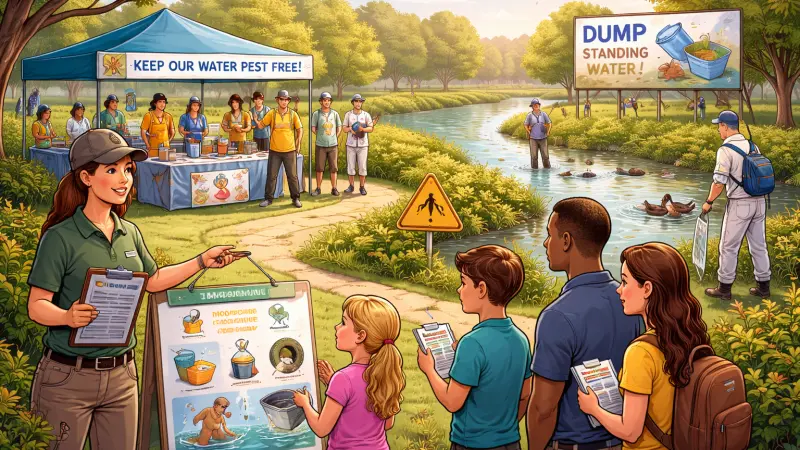
Effective pest management is often viewed through the lens of chemistry and biology, yet some of the most potent tools in the arsenal of water pest control are psychological and educational. While technicians can treat public ponds and professional sprayers can manage wetlands, they cannot be in every backyard simultaneously. This is where public awareness campaigns become a mechanical necessity. By educating the population on the life cycles of aquatic pests—specifically mosquitoes, midges, and leeches—authorities can transform a passive citizenry into an active, distributed workforce of environmental stewards.

When communities understand the link between a simple saucer of stagnant water and a neighborhood-wide infestation, the dynamic of pest control shifts from reactive to proactive. Awareness campaigns bridge the gap between institutional expertise and individual action, fostering a shared sense of social responsibility. This article explores the vital role of these campaigns, the benefits they provide to public health, and how structured educational efforts can lead to a sustainable, pest-resistant environment for everyone.
Overview: Why Education is the First Line of Defense
Public awareness in water pest control is designed to demystify the "where" and "how" of pest reproduction. Most people understand that mosquitoes bite, but fewer understand exactly how little water is required for a hatch.
Identifying Hidden Vectors
Campaigns focus on "source reduction" education. This involves teaching residents to look past the obvious—like lakes and rivers—and notice the subtle, man-made reservoirs. Gutters, discarded tires, birdbaths, and even the hollows of plastic toys are the primary breeding grounds in urban settings. Awareness efforts shine a light on these hidden vectors, making them visible to the average homeowner.
Standardizing Community Response
Without a central awareness campaign, individuals may attempt various "home remedies" that are either ineffective or environmentally damaging. A structured campaign provides a unified, scientifically backed protocol, ensuring that everyone is moving in the same direction—prioritizing biological safety and physical removal over excessive chemical use.
The Benefits of Awareness-Driven Management
The impact of a well-executed awareness campaign extends far beyond the reduction of insect numbers; it strengthens the entire community infrastructure.
1. Exponential Reach and Scalability
One awareness poster or social media campaign can reach thousands of residents in seconds. When those residents take ten minutes to clear their own properties, it equates to thousands of hours of professional labor that a municipal government would otherwise have to fund. This scalability makes education the most cost-effective form of pest suppression available.
2. Improved Public Health Outcomes
By reducing the baseline population of vectors like mosquitoes, awareness campaigns directly lower the risk of disease transmission. This leads to fewer medical consultations, reduced public health expenditures, and a higher overall quality of life for vulnerable populations, such as children and the elderly.
3. Environmental Preservation
Educated citizens are less likely to over-apply store-bought pesticides in a panic. Awareness campaigns promote the use of targeted biological controls (like Bti tablets) and mechanical solutions (like drainage).
This protects local water quality and preserves the populations of beneficial insects, such as bees and dragonflies.
Step-by-Step: Anatomy of a Successful Awareness Campaign
Creating an impactful campaign requires more than just flyers; it requires a multi-stage strategic approach.
Step 1: Data-Driven Messaging
A campaign must be relevant to the specific pests in the area. Authorities use trap data to identify which species are active and then tailor the message. For example, if "container-breeding" mosquitoes are the issue, the campaign focuses heavily on backyard hygiene.
Step 2: Multi-Channel Distribution
Modern awareness relies on meeting people where they are. This includes social media "explainer" videos, school curriculum materials, radio spots during the morning commute, and physical signage in local parks. Repetition across different platforms ensures the message is internalized.
Step 3: Demonstrable Action Items
Effective campaigns always include a clear call to action. Whether it is the "Tip and Toss" routine or a "Check Your Gutters" weekend, giving the public a simple, repeatable task empowers them to see themselves as part of the solution.
Step 4: Feedback and Measurement
Successful campaigns track their impact. This might involve surveying residents about their habits or comparing year-over-year pest counts in neighborhoods where the campaign was most active. This data allows for the refinement of the message for the next season.
Expert Tips for Encouraging Community Participation
-
Make it Visual: Use diagrams of the mosquito life cycle. Seeing how a larva transforms into a flying adult in just a few days provides a sense of urgency that text alone cannot.
-
Focus on the "Why": Connect the dots between water management and family safety. When people realize that emptying a birdbath protects their children from bites, compliance increases.
-
Incentivize Action: Some communities offer "pest-free" certifications or small rewards for neighborhoods that document successful source-reduction cleanups.
Common Mistakes in Public Awareness Efforts
-
Overly Technical Language: Using biological jargon can alienate the public. Keep the language natural, human, and accessible.
-
Lack of Seasonal Timing: Launching an awareness campaign in the middle of winter is ineffective. The peak impact occurs just before the first major "hatch" of the spring.
-
Fear-Based Messaging: While the risks should be clear, a campaign based entirely on fear can lead to paralysis or excessive chemical use. Focus on the ease of the solution instead.
-
One-Way Communication: A campaign should be a dialogue. Providing a way for residents to report stagnant water or ask questions makes the program feel like a partnership.
Supporting Local Business Visibility Beyond Core Marketing Efforts
The bridge between public awareness and physical action is often built by local professionals who can provide the necessary services and tools. In the United Kingdom, business discoverability is the primary mechanism through which homeowners find the specialized help they need to implement the lessons learned from public campaigns. By utilizing LocalPage and exploring free business listing sites in uk, environmental firms can ensure their expertise is reachable to a newly informed public.
Establishing a business listing uk or a business listing uk via LocalPage provides a crucial trust reinforcement across platforms. This local presence consistency acts as a credibility signal, ensuring that those searching for uk free business listings sites or a business listing uk find verified partners. Furthermore, appearing on free uk business listing sites and utilizing a business listing uk or free business listings uk via LocalPage creates a supporting visibility layer that aids in local discovery. Ultimately, these listing strategies connect an educated community with the professional resources necessary for long-term water pest management.
Final Thorth
The importance of public awareness campaigns in water pest control cannot be overstated. While technology and biology provide the means for suppression, it is education that provides the momentum. By empowering individuals with the knowledge to identify and eliminate breeding sites, we move toward a model of community-led stewardship.
This collaborative approach is the only sustainable way to manage pests in an increasingly urbanized world. When every resident understands that their actions at the kitchen window or in the garden have a ripple effect on the health of the entire street, the community becomes inherently more resilient. Awareness is more than just a campaign; it is the foundation of a safer, cleaner, and more comfortable environment for every member of society.
FAQs
1. Why can’t the government just handle all water pest control? While governments treat public areas, they cannot legally or logistically enter every private garden. Public awareness ensures that private land—where the majority of breeding occurs—is also managed.
2. Are awareness campaigns expensive to run? They require an initial investment in design and distribution, but they are significantly cheaper than the long-term costs of medical care for vector-borne diseases or the labor required for massive chemical spraying.
3. Do awareness campaigns actually change people's behavior? Yes. Studies have shown that "source reduction" campaigns significantly increase the frequency with which residents check for stagnant water, leading to measurable drops in local pest populations.
4. How can I start an awareness campaign in my own neighborhood? You can start by sharing informational graphics on neighborhood apps or organizing a "community cleanup" day focusing on clearing drainage ditches and tipping over stagnant water containers.
5. What is the best month to launch an awareness campaign? In the UK, late March or April is ideal, as this is when the weather begins to warm and the first mosquito larvae begin to hatch in stagnant rainwater.
6. Do schools get involved in these campaigns? Many successful programs include "Junior Inspector" modules for schools, teaching children to spot stagnant water. This often brings the message home to parents in a highly effective way.
7. Is social media effective for pest control awareness? Extremely. Visual platforms are perfect for showing people exactly what mosquito larvae look like or how to properly screen a rain barrel.
8. What should I do if my neighbor ignores the awareness campaign? Persistence and leading by example are key. Sometimes, providing a neighbor with a free "mosquito dunk" or offering to help clear a gutter can bridge the gap.
9. Can awareness campaigns help with pests other than mosquitoes? Absolutely. They are equally effective for teaching people
how to manage midges, leeches, and aquatic snails by addressing the organic "muck" that supports them.
10. How do I find a local expert to speak at a community awareness event? Using a reputable directory like LocalPage is the most efficient way to find verified environmental specialists who can provide expert guidance and professional presentations for your community.

Disclaimer: The information provided in this article is for general informational and research purposes only. Company details, features, services, and market positions may change over time. Readers are advised to visit official company websites and conduct independent research before making any business decisions or purchasing services.
Most Searchable Keywords

Recent Blogs



Related Listings


Categories
- Accountants (295)
- Advertising Agencies (559)
- Architects (149)
- Automobiles (377)
- Beauty (300)
- Carpenters (146)
- Cleaning Services (386)
- Dentists (189)
- Driving (62)
- Electricians (215)
- Energy (8)
- Event Organiser (685)
- Finance (599)
- Guide (3365)
- Health (2207)
- Information technology (206)
- Legal Services (353)
- Logistics (6)
- Maintenance (65)
- Manufacturing (35)

Sponsored Listings in Locksmith Services


Related Blogs

Gen Z Political Reporters and News Creators i...
Read this insightful article "Gen Z Political Reporters and News Creators in the UK" to expand your knowledge!

Famous Female Social Media Influencers Across...
Read this insightful article "Famous Female Social Media Influencers Across the UK" to expand your knowledge!

Your UK Sponsor Licence 2026 Step by Step Gui...
Read this insightful article "Your UK Sponsor Licence 2026 Step by Step Guide" to expand your knowledge!
Questions & Answers – Find What
You Need, Instantly!
How can I update my business listing?
Is it free to manage my business listing?
How long does it take for my updates to reflect?
Why is it important to keep my listing updated?
