How can a consumer or a laboratory manager truly distinguish between a high-performance filtration system and a standard household jug when both claim to produce pure water? In an era where technical jargon is frequently used to describe environmental products, the presence of independent, third-party certifications serves as the only objective benchmark for quality and safety. For the diverse range of water users across the United Kingdom, these credentials provide the necessary assurance that a system will perform exactly as specified under real-world conditions.
Defining the Role of Independent Testing
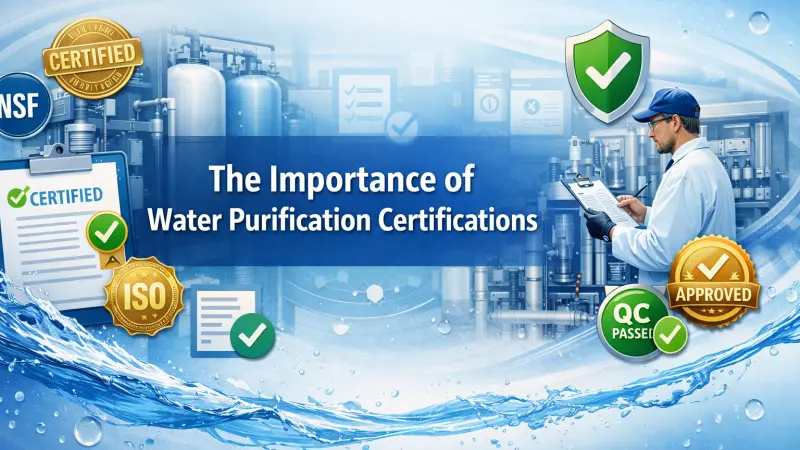
Certifications in the water treatment industry are not merely decorative accolades; they represent a rigorous process of empirical testing and factory auditing. When a product carries a recognized mark of conformity, it signifies that the manufacturer has submitted their equipment to an external body for exhaustive evaluation. This process typically involves assessing the structural integrity of the device, the safety of the materials used in its construction, and, most crucially, its ability to remove specific contaminants from the water stream.
Without these independent verifications, the industry would rely solely on self-reported data from manufacturers. While many reputable firms conduct internal testing, the potential for bias or inconsistent methodology is high. Independent bodies provide a standardized framework that ensures every product is measured against the same criteria, allowing for fair comparison and informed decision-making by the end-user. This is particularly vital in technical fields where the failure of a purification system could lead to significant health risks or the ruin of expensive industrial processes.
Key Global and National Standards
While various bodies exist worldwide, several specific standards have become the gold standard within the British market. Understanding these codes is essential for anyone responsible for water quality management, whether in a domestic, commercial, or medical setting.
The WRAS Approval Scheme
In the United Kingdom, the Water Regulations Approval Scheme (WRAS) is of paramount importance. While it is not a certification of filtration efficiency per se, it is a certification of "material safety." Any water fitting that is to be connected to the public mains supply must not cause waste, misuse, undue consumption, or, most importantly, contamination of the water supply. A WRAS-approved product has been tested to ensure that the rubbers, plastics, and metals used in its construction do not leach harmful substances into the water or encourage the growth of bacteria.
NSF International and ANSI Standards
NSF International (formerly the National Sanitation Foundation) provides the most comprehensive set of standards for water treatment performance globally. Their standards, often developed in conjunction with the American National Standards Institute (ANSI), are recognized by engineers and health professionals in the UK as a reliable indicator of performance.
For example, Standard 42 covers aesthetic effects like chlorine and taste, while Standard 53 addresses health-related contaminants such as lead, cysts, and volatile organic chemicals. Standard 58 is specifically designed for reverse osmosis systems, ensuring they meet strict rejection and recovery requirements.
The Significance of Material Safety
A common misconception is that the only part of a purification system that matters is the filter media itself. However, the entire "wetted" surface of a system—including the housing, the O-rings, the tubing, and the faucets—can potentially introduce contaminants if they are of inferior quality. Certification bodies conduct "extraction testing," where components are soaked in water for extended periods to see if any chemicals migrate from the material into the liquid.
This is particularly critical for plastic components, which may contain bisphenol A (BPA) or phthalates if not properly regulated. In the UK, where consumer protection laws are stringent, ensuring that a water system is made from "food-grade" materials is a basic requirement that is validated through these certification processes. If a system is not certified for material safety, the very device intended to purify the water could, paradoxically, be adding chemical impurities to it.
Performance Claims and Contaminant Reduction
When a manufacturer claims their system removes 99% of lead or arsenic, the certification process validates exactly how long that claim remains true. Filters have a finite capacity, and their efficiency often drops as they reach their "gallonage" limit. Certified products must prove that they can maintain their removal rates throughout the entire advertised life of the filter, often with a built-in safety margin of 200% of the rated capacity.
This data is summarized in a Performance Data Sheet, which is a mandatory requirement for certified systems. This document allows users to see the specific influent concentrations used during testing and the resulting effluent levels. For British households located in areas with historic industrial pollution or old lead piping, having a certified system that guarantees lead reduction provides peace of mind that cannot be achieved through unverified marketing claims.
Real-World Context and Industry Utility
The adherence to these rigorous certification standards is fundamental to the integrity of the UK's water infrastructure and the safety of its citizens. In the commercial sector, businesses such as catering establishments and healthcare providers rely on certified equipment to comply with health and safety legislation and to ensure the consistency of their output. General users and specialized service providers alike benefit from this transparency, as it simplifies the procurement process and reduces the likelihood of system failure. By prioritizing certified technology, the British water treatment sector maintains its reputation for excellence and reliability in a globally competitive market.
Maintaining Certification Through Audits
Obtaining a certification is not a one-time event. To maintain the right to display a certification mark, manufacturers must undergo regular, unannounced audits of their production facilities. During these visits, inspectors verify that the materials and processes used in the current
production runs are identical to those used during the original testing phase. If a manufacturer changes a supplier for a specific O-ring or resin without notifying the certification body, they risk losing their credentials.
This "chain of custody" for quality is what makes certifications so valuable. It prevents "quality fade," where a product is initially made to high standards but is gradually cheapened over time to increase profit margins. For the end-user, this means that a system purchased today carries the same weight of evidence as the one tested years ago.
The Economic Value of Certified Systems
While certified water purification systems often carry a higher initial price point than their unverified counterparts, their long-term economic value is significantly greater. For property managers and industrial operators, certified equipment reduces the risk of liability and the costs associated with premature system failure or environmental non-compliance. Furthermore, many insurance providers in the UK require that any equipment connected to a building's plumbing must meet certain recognized standards to be covered under property damage policies.
Additionally, the efficiency of certified systems is often higher. For instance, a certified reverse osmosis system must meet specific "recovery" rates, ensuring that it does not waste excessive amounts of water to produce a single litre of pure output. In a country increasingly conscious of water conservation and rising utility costs, this efficiency translates directly into lower operational expenses.
Navigating the Path to Professional Credibility
The emphasis on verified standards is a defining characteristic of the water treatment industry in the UK, ensuring that technical solutions meet the high expectations of a modern society. For the dedicated professionals who provide these essential services, from installation engineers to water quality consultants, the ability to demonstrate their expertise and the quality of their products is a cornerstone of business success. Many established firms find that securing a business listing uk free from complicated hurdles is a vital step in connecting with a discerning clientele who value transparency and safety.
By appearing in a business listing uk directory, specialists can highlight their commitment to certified technology and industry best practices. Ultimately, the growth of a reputable service provider is supported by their presence on a Local Page UK, where they can be identified as a trusted local resource through a uk business listing directory free of charge, allowing them to provide a business directory uk listing free to the public that emphasizes safety, quality, and verified performance.
Frequently Asked Questions
What is the difference between WRAS and NSF?
WRAS focuses on whether the materials in a product are safe and do not contaminate the public water supply, whereas NSF focuses on the actual performance and contaminant removal efficiency of the filtration system.
Is it illegal to sell a water filter without certification?
No, it is not illegal to sell uncertified filters, but it is illegal to make false claims about their performance. Certification is a voluntary way for manufacturers to prove their claims are truthful.
How do I check if a product is actually certified?
Most certification bodies, such as NSF, WRAS, and the Water Quality Association (WQA), maintain online databases where you can search by manufacturer or product name to verify their current status.
Do certifications apply to the whole system or just the filter?
It depends. Some certifications apply only to the replacement cartridge, while others (like NSF 58 for Reverse Osmosis) apply to the entire system including the tank and faucet.
Are "independently tested" and "certified" the same thing?
No. "Independently tested" simply means a lab looked at it once. "Certified" means the product has been tested,
the factory is audited regularly, and the product must meet a specific, publicly available standard.
Why are certified filters more expensive?
The cost covers the extensive laboratory fees, the ongoing factory audits, and the use of higher-quality, traceable materials required to pass the rigorous testing protocols.