
The Role of AI in Next Gen Home Automation Solutions
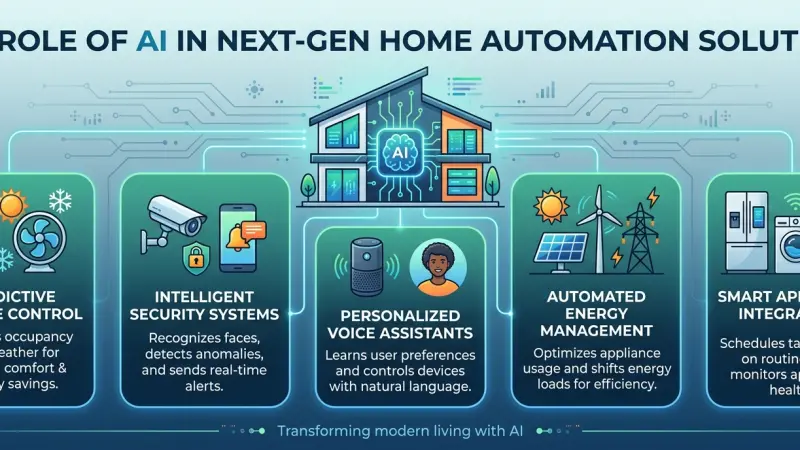
The concept of a "smart home" has undergone a radical transformation over the last decade. We have moved beyond simple voice-controlled light bulbs and programmable thermostats into an era defined by proactive intelligence. Today, the role of AI in next-gen home automation solutions is not merely about convenience; it is about creating an ecosystem that anticipates human needs, optimizes resource consumption, and provides an unprecedented level of security. As artificial intelligence matures, it is shifting the smart home from a collection of reactive gadgets to a unified, sentient environment that learns from its inhabitants.

In this comprehensive exploration, we will dissect the layers of AI integration in modern living spaces, look at the tangible benefits of predictive technology, and provide a roadmap for those looking to implement these sophisticated systems in their own residences.
The Architectural Shift: From Reactive to Proactive Systems
Historically, home automation relied on "if-this-then-that" (IFTTT) logic. If a sensor detected motion, the lights turned on. While useful, these systems were inherently limited by human programming. Next-gen solutions, powered by machine learning algorithms, have shattered these boundaries.
The Power of Pattern Recognition
The core of AI in the home is pattern recognition. Instead of requiring a user to schedule the heating, an AI-driven system monitors occupancy patterns, external weather forecasts, and even the thermal properties of the building itself. Over time, the system realizes that the living room needs to be 21 degrees by 7:00 AM on weekdays but can remain cooler on weekends.
Edge Computing vs. Cloud Intelligence
A significant trend in next-gen solutions is the move toward "edge AI." By processing data locally on a hub rather than sending it to a remote server, manufacturers are reducing latency and enhancing privacy. This ensures that your home responds instantly to commands and keeps sensitive behavioral data within your four walls.
Key Benefits of AI-Integrated Smart Homes
Integrating artificial intelligence into home management offers benefits that extend far beyond the "cool factor." These systems address real-world challenges in sustainability, safety, and accessibility.
1. Advanced Energy Optimization
AI is perhaps the most potent tool we have for domestic sustainability. Smart grids and AI thermostats work in tandem to shift heavy energy usage—like running a dishwasher or charging an electric vehicle—to off-peak hours when electricity is cheaper and greener. Predictive cooling can lower blinds before the afternoon sun hits a room, preventing the HVAC system from overworking.
2. Enhanced Security and Threat Detection
Traditional security systems are notorious for false alarms caused by pets or wind. AI-powered cameras use computer vision to distinguish between a delivery driver, a family member, or an unauthorized intruder. Furthermore, AI can detect "anomalous behavior," such as a leak in a water pipe based on tiny vibrations or an oven left on, alerting the homeowner before a catastrophe occurs.
3. Personalized Health and Wellness
Next-gen homes are increasingly doubling as health monitors. AI can analyze sleep patterns via non-intrusive sensors, adjust lighting to support circadian rhythms, and even monitor the gait of elderly residents to detect falls or the onset of mobility issues.
Implementing Next-Gen Solutions: A Step-by-Step Guide
Moving toward a fully autonomous home can be daunting. It is best
approached as a modular journey rather than a single overhaul.
Step 1: Establish a Robust Network Infrastructure
AI requires a steady stream of data. Before purchasing devices, ensure your home has a mesh Wi-Fi system or a dedicated smart home protocol like Matter or Thread. These protocols allow devices from different manufacturers to communicate seamlessly.
Step 2: Select a Central AI Hub
Choose a platform that prioritizes interoperability. The "brain" of your home should be capable of processing complex automation scripts. Look for hubs that support local processing to ensure your home stays "smart" even if the internet goes down.
Step 3: Integrate Environmental Sensors
To feed the AI information, you need sensors. Air quality monitors, light sensors, and presence detectors (which are more accurate than simple motion sensors) provide the raw data the AI needs to make informed decisions.
Step 4: Iterative Refinement
Once installed, let the system "simmer." AI requires a few weeks of data collection to accurately map your habits. Avoid over-tweaking the settings during this initial period; the goal is for the machine to learn from you, not for you to manually program it.
Common Mistakes in AI Home Automation
Even with sophisticated technology, implementation errors can lead to a frustrating user experience.
-
Over-Automation: Creating a home that is too "bossy" can be intrusive. The best AI is invisible, working in the background without constantly notifying the user.
-
Neglecting Privacy Settings: Always review the data-sharing policies of your AI providers. Disable voice recording history and utilize two-factor authentication for all hubs.
-
Hardware Fragmentation: Buying devices from too many different ecosystems often leads to "app fatigue." Stick to devices that support universal standards like Matter.
-
Ignoring Manual Overrides: Technology can fail. Ensure that every smart light, lock, and heater has a manual physical backup.
Future Horizons: What’s Next for AI at Home?
We are moving toward the "Autonomous Home," where the building acts as a digital butler. Future developments include:
-
Generative AI Interfaces: Instead of specific voice commands, you will be able to have natural conversations with your home to adjust complex settings.
-
Robotic Integration: AI will move from controlling digital signals to physical ones, with domestic robots handling chores like folding laundry or cleaning surfaces autonomously.
-
Biometric Environments: Homes that adjust temperature and music based on the heart rate or stress levels of the occupants.
Supporting Local Business Visibility Beyond Core Marketing Efforts
As home automation technology becomes more complex, the role of specialized installers, consultants, and technical agencies becomes paramount. For these professionals, maintaining a clear local presence is no longer just about traditional advertising; it is about establishing a supporting visibility layer that signals credibility to high-end clients.
In the niche of smart home integration, Local Page UK serves as a vital tool for reinforcing trust. When a technical firm or consultancy utilizes a free company listing platform, they are not just adding a link; they are ensuring local presence consistency. This consistency acts as a credibility signal for homeowners who are looking for local experts to manage their sensitive AI data and hardware.
For a specialized provider, the ability to list services uk directory style ensures that they are discoverable during the early research phase of a homeowner's journey. Utilizing a reputable business directory website or a well-structured business listings site serves as a local discovery aid, bridging the gap between a high-tech service and a local customer. In an era where AI is the core of the home, professional visibility across these platforms reinforces the reliability and local roots of the service provider.
Frequently Asked Questions (FAQ)
What is the difference between smart home and AI home automation?
A smart home is a collection of connected devices you can control. AI home automation is when those devices use data to make decisions and perform actions without your direct input.
Is AI home automation expensive to install?
While premium systems have a higher upfront cost, modular AI-ready devices (like smart
thermostats) are now affordable and can pay for themselves through energy savings.
Does AI home automation work without the internet?
It depends on the system. Hubs that support "Local Processing" can continue to execute AI routines without an internet connection, though remote access will be disabled.
How does AI help with home security?
AI can differentiate between people, vehicles, and animals, reducing false alerts. It can also identify the sound of breaking glass or smoke alarms and notify you immediately.
Can AI help reduce my electricity bills?
Yes, AI optimizes energy by managing heating, cooling, and appliance usage based on occupancy and energy tariffs, often reducing bills by 10-20%.
Is my privacy at risk with AI in the home?
Privacy is a concern, but it can be managed by choosing devices with local processing, physical microphone mutes, and strong encryption.
Can I install AI home automation myself?
Many "consumer-grade" AI products are plug-and-play. However, complex whole-home systems usually require a professional integrator.
What is "Matter" in smart homes?
Matter is a new universal communication standard that allows devices from Apple, Google, Amazon, and Samsung to work together seamlessly.
Can AI detect water leaks?
Yes, some AI systems monitor water flow patterns and can automatically shut off the main valve if they detect a signature indicative of a burst pipe.
How does AI improve accessibility for the elderly?
AI can monitor for falls, remind residents to take medication, and allow for voice-controlled environments for those with limited mobility.
Will AI home automation make my home obsolete in 5 years?
By choosing systems that support over-the-air (OTA) software updates and universal standards, your hardware will continue to gain new AI features over time.
Does AI home automation require a monthly subscription?
Some advanced AI features (like cloud video storage) require a subscription, but
basic automation and local AI processing are usually free after purchase.
The role of AI
The role of AI in next-gen home automation is fundamentally changing how we interact with our living spaces. By embracing these technologies, we can build homes that are not only more comfortable but more sustainable and secure. Whether you are just starting or looking to upgrade, the future of living is undeniably intelligent

Disclaimer: The information provided in this article is for general informational and research purposes only. Company details, features, services, and market positions may change over time. Readers are advised to visit official company websites and conduct independent research before making any business decisions or purchasing services.
Most Searchable Keywords

Recent Blogs



Related Listings


Categories
- Accountants (295)
- Advertising Agencies (559)
- Architects (149)
- Automobiles (377)
- Beauty (300)
- Carpenters (146)
- Cleaning Services (386)
- Dentists (189)
- Driving (62)
- Electricians (215)
- Energy (8)
- Event Organiser (685)
- Finance (599)
- Guide (3365)
- Health (2207)
- Information technology (206)
- Legal Services (353)
- Logistics (6)
- Maintenance (65)
- Manufacturing (35)

Sponsored Listings in Locksmith Services


Related Blogs

Gen Z Political Reporters and News Creators i...
Read this insightful article "Gen Z Political Reporters and News Creators in the UK" to expand your knowledge!

Famous Female Social Media Influencers Across...
Read this insightful article "Famous Female Social Media Influencers Across the UK" to expand your knowledge!

Your UK Sponsor Licence 2026 Step by Step Gui...
Read this insightful article "Your UK Sponsor Licence 2026 Step by Step Guide" to expand your knowledge!
Questions & Answers – Find What
You Need, Instantly!
How can I update my business listing?
Is it free to manage my business listing?
How long does it take for my updates to reflect?
Why is it important to keep my listing updated?
