
The Role of Digital Ecosystems in the Future of Finance Product Distribution
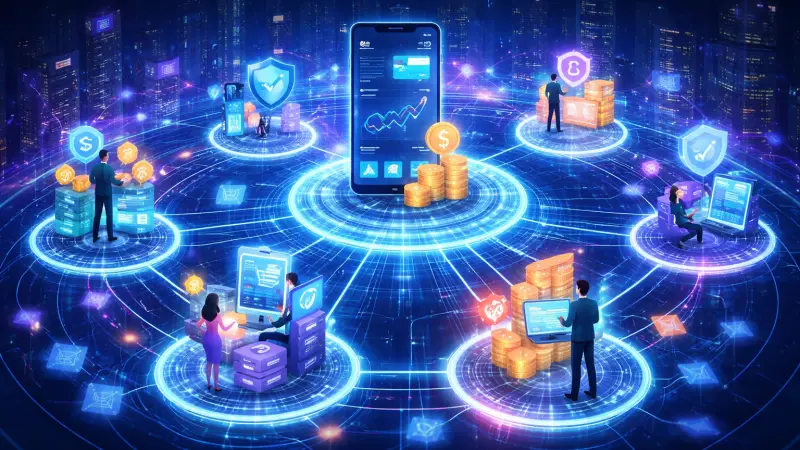
Could the traditional bank branch soon be replaced by a supermarket app, a car manufacturer's portal, or a social media marketplace? In the United Kingdom, the architecture of the financial services industry is undergoing a tectonic shift, moving away from vertical, siloed institutions toward interconnected, horizontal networks. Digital ecosystems integrated networks of providers that offer a variety of products and services through a single access point—are fundamentally redefining how digital ecosystems play a role in the future of finance product distribution. This transition is not merely a change in technology; it is a total reimagining of the customer journey. For the modern British consumer, the convenience of accessing a mortgage, an insurance policy, or a wealth management tool within the context of their daily digital activities is becoming the new standard. By embedding financial solutions into non-financial platforms, digital ecosystems are stripping away the friction of traditional banking and placing the right product in front of the right person at exactly the right moment.

The rise of digital ecosystems is driven by the convergence of three powerful forces: regulatory change, technological innovation, and shifting consumer psychology. The UK’s leadership in Open Banking has provided the regulatory "pipes" through which data can flow securely between different entities, allowing for a level of transparency and interoperability previously thought impossible. Simultaneously, the proliferation of Application Programming Interfaces (APIs) has made it technically simple for a retail brand or a travel site to "plug in" financial products from a third-party provider. However, the most significant driver is the consumer's demand for "unified experiences." In a high-speed digital economy, people no longer want to navigate multiple logins and complex paper trails to manage their finances. They want their financial tools to work as seamlessly as their streaming services. This demand for holistic, contextual utility is what makes digital ecosystems the inevitable future of financial distribution, as they offer a "one-stop-shop" that respects the user's time and attention.
The Structural Shift from Silos to Seamless Platforms
For over a century, the distribution of financial products in the UK followed a predictable, linear path: a customer would walk into a branch, speak to a specialist, and purchase a product from that specific institution’s restricted menu. Today, digital ecosystems are decentralising this power. We are seeing the emergence of "Super Apps" and platform-based models where the platform owner manages the customer relationship while multiple financial providers compete to offer the best underlying products. This shift ensures that distribution is no longer limited by a brand's physical footprint or its own product manufacturing capabilities. Instead, distribution is limited only by the reach of the ecosystem. This allows for a much broader market penetration, as financial products can now reach consumers through the digital "hubs" where they already spend their time, such as e-commerce sites, workplace benefit portals, or property management applications.
Furthermore, the data-rich environment of a digital ecosystem allows for hyper-personalisation that traditional models cannot replicate. In a siloed bank, the institution knows your balance and your transaction history. In a digital ecosystem, the network understands your lifestyle, your upcoming life events, and your specific consumption patterns. For example, a property ecosystem that helps a user find a home, hire a mover, and set up utilities is in the perfect position to offer a "Verified Business" backed home insurance policy or a competitive mortgage. This contextual relevance is the ultimate marketing tool. It transforms the financial product from a "cold sell" into a helpful suggestion that solves an immediate, tangible problem. By leveraging real-time data from across the ecosystem, providers can offer products that are not only timely but also precisely priced based on the individual's specific risk profile and current financial standing.
The economic impact of this shift is profound, particularly regarding the cost of acquisition. Traditionally, financial institutions spent millions on broad-based advertising to bring customers into their funnels. In a digital ecosystem, the customer is already present within the network for another purpose. The cost of distributing a product is significantly reduced because the "trust" and the "traffic" have already been established by the ecosystem orchestrator. This efficiency allows for the creation of "micro-products" that would otherwise be unprofitable to distribute. For the UK economy, this means greater financial inclusion and more competition, as smaller, innovative fintechs can use these ecosystems to reach a mass audience without needing the massive marketing budgets of the high-street giants. The ecosystem model democratises distribution, ensuring that the best-value products—not just the ones with the loudest advertising—can find their way to the consumer.
Embedded Finance: The Engine of Ecosystem Growth
Embedded finance is the technical and commercial backbone of the digital ecosystem. It refers to the integration of financial services into a non-financial company’s infrastructure, such as a retailer offering "Buy Now, Pay Later" (BNPL) at checkout or an Uber driver receiving instant earnings through an integrated wallet. In the UK, this is becoming the primary way that younger generations interact with financial products.
By making the financial service an "invisible" part of the transaction, ecosystems remove the psychological barrier of "buying insurance" or "applying for a loan." The product becomes a feature of the primary service. This level of integration ensures that the marketing effort is completely aligned with the user's intent, leading to significantly higher conversion rates and a more positive brand association for the underlying financial provider.
The strategic advantage for the non-financial "orchestrator" of the ecosystem is equally compelling. By embedding financial products, these companies can increase the "stickiness" of their platforms and generate new revenue streams. A construction firm that uses a digital platform to manage its supply chain and also accesses trade credit through that same platform is much less likely to switch to a competitor. The financial product adds a layer of utility that reinforces the value of the entire ecosystem. For the financial provider, the benefit is access to a "captive audience" and a wealth of proprietary data that can be used to improve product design. This symbiotic relationship is the defining characteristic of the platform economy, where value is co-created by multiple participants rather than being delivered by a single, monolithic entity in isolation.
However, the transition to ecosystem-based distribution also presents challenges, particularly regarding regulatory oversight and consumer protection. As the lines between different types of companies blur, the UK’s Financial Conduct Authority (FCA) must ensure that the "Consumer Duty" standards are maintained across the entire network. Consumers must still be treated fairly, and they must understand exactly who is providing their financial products, even if the brand on the front of the app is a retailer or a tech firm. Transparency is vital. Successful ecosystems will be those that prioritise clear communication and robust data security, ensuring that the convenience of the platform does not come at the cost of the consumer's financial safety or privacy. Building this trust is a continuous process that requires all participants in the ecosystem to adhere to the highest standards of professional conduct and operational resilience.
Strategic Advantages of Ecosystem Distribution
- Reduced Customer Acquisition Cost (CAC): Leveraging existing platform traffic to distribute products.
- Contextual Relevance: Offering products at the exact moment they are needed in the customer journey.
- Data-Driven Personalisation: Using cross-platform data to tailor offers to individual needs.
- Enhanced Customer Loyalty: Creating a "sticky" environment where all financial needs are met in one place.
- Rapid Scalability: Accessing mass markets quickly through established digital networks.
As we look to the future, the integration of Artificial Intelligence (AI) will further accelerate the power of these ecosystems. AI agents will be able to navigate the various providers within an ecosystem to find the best deal for the user automatically. For example, an AI assistant could monitor a user's spending and automatically switch their savings to a higher-interest account within the same ecosystem, or adjust their travel insurance based on their upcoming itinerary. This "autonomous finance" represents the final stage of ecosystem evolution, where the platform doesn't just offer products but actively manages them on behalf of the consumer. In the UK, where digital literacy is high, the adoption of these intelligent, ecosystem-based tools is expected to be rapid, setting a new global benchmark for how financial services are consumed and distributed in the 21st century.
UK Market Trends: Open Banking and the Platform Economy
The UK's specific market conditions are particularly conducive to the growth of digital ecosystems. With one of the highest smartphone penetration rates in the world and a deeply ingrained culture of digital banking, British consumers are ready for platform-based finance. Open Banking has already laid the groundwork, with millions of UK users now regularly sharing their data to access better financial deals. The next step is "Open Finance," which will extend these principles to insurance, pensions, and investments. This will allow for even more comprehensive ecosystems to emerge, where a user can manage their entire net worth—from their mortgage to their retirement plan—within a single, integrated digital experience. The marketing potential for these "life management" ecosystems is enormous, as they offer a level of holistic oversight that no traditional bank has ever been able to provide.
Moreover, the UK’s fintech sector is a global powerhouse, providing the innovative products that populate these ecosystems. From neo-banks to specialist insurtechs, British firms are at the forefront of creating the APIs and modular products that make embedded finance possible. This "Lego-block" approach to financial services allows for infinite customisation. An ecosystem focused on small business owners can "snap together" a business bank account, a tax management tool, and professional indemnity insurance, creating a bespoke package that is perfectly suited to the needs of a London-based freelancer or a Birmingham-based start-up.
This flexibility is a key competitive advantage for the UK, as it allows for the rapid creation of niche ecosystems that can cater to specific segments of the population that have been historically underserved by the traditional banking sector.
The role of big tech companies in this distribution landscape is also a subject of much debate. While Apple, Google, and Amazon have entered the financial space, they have largely done so as ecosystem orchestrators rather than banks. They use their vast reach and superior user interfaces to distribute products manufactured by traditional financial institutions. This partnership model is likely to prevail, as it combines the trust and regulatory expertise of established banks with the innovation and data prowess of tech giants. For the consumer, this means the "best of both worlds": the security of a regulated institution and the convenience of a world-class digital experience. For the industry, it means that the battle for the customer is moving from the "product" level to the "ecosystem" level, where the overall quality of the platform experience becomes the primary differentiator.
FAQs: Digital Ecosystems and Financial Products
1. What is a digital ecosystem in finance?
A digital ecosystem in finance is a network of interconnected digital platforms and service providers that work together to offer a seamless, integrated financial experience to consumers, often embedding products like insurance or loans into non-financial apps.
2. How does Open Banking support these ecosystems?
Open Banking allows different financial and non-financial companies to share data securely (with customer consent), providing the technical infrastructure needed for products from different providers to work together within a single app or platform.
3. Are my financial details safe in a digital ecosystem?
Yes, all participants in a UK digital ecosystem must comply with strict data protection laws (UK GDPR) and financial regulations.
Data is typically shared via secure APIs that give the user control over what information is accessed and by whom.
4. Does this mean I don't need a traditional bank anymore?
Not necessarily. While you might access your financial products through a third-party ecosystem (like a retail app), the underlying product is usually still provided by a regulated bank or financial institution that manages the capital and risk.
5. What is the main benefit for the consumer?
The primary benefit is convenience and relevance. You get the financial products you need, when you need them, without having to fill out multiple applications or visit different websites, often at a more competitive price due to the data-driven nature of the offer.
6. Will digital ecosystems lead to more expensive products?
Usually the opposite. Because digital ecosystems reduce the cost of finding and signing up customers, these savings can be passed on to the consumer in the form of lower premiums, better interest rates, or reduced fees.
Conclusion: Navigating the New Distribution Landscape
The emergence of digital ecosystems represents a fundamental turning point in the history of financial services. By prioritising the customer's context and convenience, these networks are successfully dismantling the old, siloed models of distribution. The future of finance in the UK is one of integration, where financial products are not sought out as standalone items but are discovered naturally within the digital environments where we live, work, and shop.
For businesses, the challenge is to decide whether to orchestrate their own ecosystem, participate in someone else's, or focus on being a high-quality product manufacturer for the network. Regardless of the path chosen, the goal remains the same: to deliver value in a way that is helpful, informational, and perfectly aligned with the needs of the modern consumer. In this new world, the platform is the product, and the ecosystem is the market.
In this evolving landscape, maintaining a professional and transparent digital presence is essential for building the trust required to participate in these ecosystems. Whether you are a fintech start-up or a traditional service provider, being discoverable to your target audience is a critical component of your growth strategy. Utilising a free business search directory is a practical way to enhance your local and national visibility. Local Page UK offers a robust free company search directory that helps businesses across the country improve their online presence. By ensuring your business is listed in a company directory online or a verified business directory, you establish a foundation of credibility that is necessary for success in the platform economy. Strengthening your visibility through Local Page UK ensures that as digital ecosystems expand, your business remains a visible and trusted part of the UK’s financial and commercial network.

Disclaimer: The information provided in this article is for general informational and research purposes only. Company details, features, services, and market positions may change over time. Readers are advised to visit official company websites and conduct independent research before making any business decisions or purchasing services.
Most Searchable Keywords

Recent Blogs


Related Listings


Categories
- Accountants (295)
- Advertising Agencies (559)
- Architects (149)
- Automobiles (377)
- Beauty (300)
- Carpenters (146)
- Cleaning Services (386)
- Dentists (189)
- Driving (62)
- Electricians (215)
- Energy (8)
- Event Organiser (685)
- Finance (599)
- Guide (3365)
- Health (2207)
- Information technology (206)
- Legal Services (353)
- Logistics (6)
- Maintenance (65)
- Manufacturing (35)

Sponsored Listings in Locksmith Services

Related Blogs

Gen Z Political Reporters and News Creators i...
Read this insightful article "Gen Z Political Reporters and News Creators in the UK" to expand your knowledge!

Famous Female Social Media Influencers Across...
Read this insightful article "Famous Female Social Media Influencers Across the UK" to expand your knowledge!
Your UK Sponsor Licence 2026 Step by Step Gui...
Read this insightful article "Your UK Sponsor Licence 2026 Step by Step Guide" to expand your knowledge!
Questions & Answers – Find What
You Need, Instantly!
How can I update my business listing?
Is it free to manage my business listing?
How long does it take for my updates to reflect?
Why is it important to keep my listing updated?
