
Tips for Comparing Cleaning Service Packages
- 👤 Alex
- 👁️ 69 Views
- Last Updated: April 11, 2026
- 🏷️ Cleaning Services
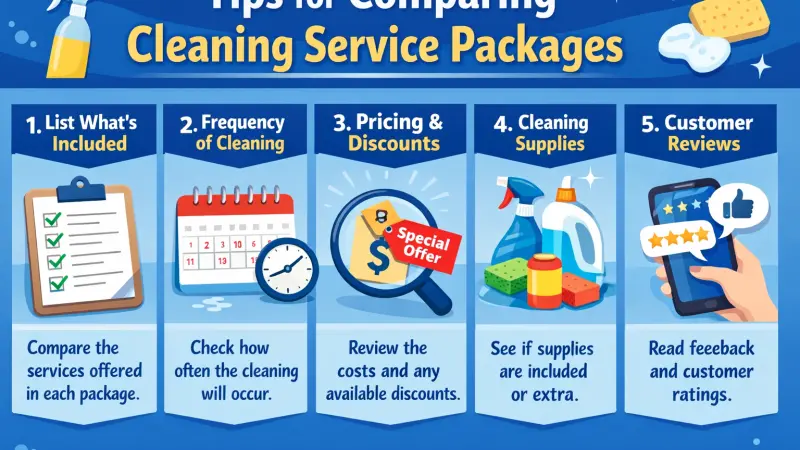
Selecting a cleaning service is rarely as simple as picking the lowest number on a quote sheet. Whether you are a facility manager overseeing a high-traffic corporate office or a homeowner seeking to reclaim your weekends, the "package" you choose defines the health, safety, and longevity of your environment. However, the cleaning industry is notorious for its lack of standardization. One company’s "Deep Clean" might be another company’s "Standard Maintenance," and the fine print regarding insurance, equipment, and chemical usage can drastically alter the actual value of the service.

Comparing cleaning service packages requires a discerning eye and a structured approach. It is about looking past the marketing brochures and understanding the operational reality of what occurs when the crew arrives. This comprehensive guide provides the tools to decode complex proposals, identify hidden costs, and ultimately choose a service that aligns with your specific needs and budget. By the end of this article, you will be able to navigate the procurement process with confidence, ensuring that your investment translates into a truly pristine space.
The Fundamentals: What Makes Up a Cleaning Package?
Before you can compare, you must understand the components. Most professional cleaning packages are built on three main pillars: Labor, Materials, and Management.
Labor and Time Allocation
This is usually the largest cost driver. A package should explicitly state the number of person-hours dedicated to your site. Be wary of packages that quote a "flat rate" without specifying the time; this often leads to rushed work if the job takes longer than the cleaner anticipated. Professional companies use labor calculators to ensure their staff has enough time to meet the hygiene standards promised in the contract.
Scope of Work (SOW)
The SOW is the heart of the package. It should be a granular list of tasks. Does "cleaning the bathroom" include descaling the showerheads, or just wiping the mirror and sink? A high-quality package will break tasks down into daily, weekly, and monthly rotations. Without a detailed SOW, you have no baseline to hold the provider accountable if the quality begins to slip over time.
Equipment and Consumables
Some packages are "all-inclusive," providing everything from industrial vacuums to paper towels. Others require the client to provide the supplies. When comparing, ensure you are accounting for the cost of these materials if they aren't included in the base price. Furthermore, the quality of the equipment—such as the difference between a domestic vacuum and a HEPA-filtered industrial upright—can significantly impact indoor air quality.
Benefits of a Rigorous Comparison Process
Taking the time to perform a side-by-side analysis of cleaning packages offers several strategic advantages:
-
Elimination of Hidden Fees: You’ll identify "add-on" costs for things like window cleaning or floor buffing that might be buried in the fine print.
-
Risk Mitigation: By comparing insurance and bonding levels, you ensure that you aren't liable for workplace accidents or property damage.
-
Service Alignment: You avoid paying for "fluff" services you don't need while ensuring that high-priority areas (like high-touch disinfection) are fully covered.
-
Budgetary Predictability: A well-defined package prevents "scope creep," where the price slowly climbs over time as tasks are added.
Step-by-Step: How to Compare Cleaning Proposals
1. Standardize the Request
To compare accurately, you must give every company the same information. Provide a floor plan, the number of occupants, and a list of your "non-negotiables." If you give different information to different vendors, their packages will be impossible to compare fairly.
2. Verify Technical Standards
Ask about the technology included. Is the company using color-coded microfiber cloths to prevent cross-contamination (e.g., using a bathroom cloth in the kitchen)? A package that includes superior technology often justifies a higher price point through better health outcomes and faster completion times.
3. Analyze the Management Ratio
A package is only as good as its supervision. Ask: "Who checks the work?" A company that includes a dedicated area manager who performs monthly audits
is worth more than a "solo" cleaner with no oversight. In a professional setting, the supervisor-to-cleaner ratio is a key metric of quality.
4. Check the "Service Level Agreement" (SLA)
Look for the company’s policy on missed tasks. A professional package will include a guarantee, such as "Any issues reported within 24 hours will be rectified at no extra cost." This ensures the provider remains responsive long after the contract is signed.
Tips for Identifying Value over Price
The cheapest package is often the most expensive in the long run. If a quote is significantly lower than the others, ask yourself where they are cutting corners.
-
Staff Wages: Low-cost packages often rely on high-turnover staff. This leads to security risks and inconsistent quality.
-
Chemical Quality: Are they using harsh, cheap bleach that will eventually damage your fixtures, or are they using high-quality, pH-neutral cleaners?
-
Insurance Coverage: Verify that the "Public Liability" coverage is sufficient for your building's value. A "cheap" cleaner with no insurance is a major financial liability for you.
The Nuance of Chemical Safety and Sustainability
When comparing packages, the specific products used can be a major differentiator. Modern cleaning has shifted away from "smelling like lemons" toward actual clinical safety.
pH-Neutral vs. Acidic Cleaners
Ask providers which chemicals they use on sensitive surfaces. Acidic cleaners can destroy natural stone or etch certain metals. A premium package will specify the use of material-appropriate chemicals that protect the longevity of your building's interior.
Green Cleaning Credentials
Sustainability is no longer a niche request. Compare how each company handles waste. Do they use concentrated chemicals to reduce plastic waste? Do they use biodegradable products? A package that prioritizes "Green" cleaning often indicates a company with a high degree of corporate responsibility and attention to detail.
Analyzing Operational Logistics
A cleaning package isn't just a list of chores; it is an operational plan. You need to know how the team functions during their shift.
The "Dwell Time" Factor
In the context of disinfection, "dwell time" is the amount of time a chemical must sit on a surface to actually kill pathogens. If a cleaner sprays and immediately wipes, they are only cleaning for aesthetics, not for health. A package that mentions standardized dwell times for high-touch surfaces shows a higher level of professional training.
Staff Training and Background Checks
Security is paramount. Compare the vetting processes of each provider. Do they perform criminal background checks? How are the keys or access codes managed? A package that includes a transparent security protocol offers a level of peace of mind that justifies a higher price point.
Supporting Local Business Visibility Beyond Core Marketing Efforts
When you are in the final stages of comparing cleaning service packages, it is often helpful to look at how a business presents itself within the local ecosystem. A provider’s commitment to transparency is often reflected in their directory marketing uk strategy. For example, a reliable firm will often maintain an updated Local Page UK that lists their specific certifications and service areas, acting as a vital local discovery aid for potential clients. This is especially true for independent contractors who rely on reputation rather than massive ad budgets.
Furthermore, an advertise company uk directory presence serves as a supporting visibility layer that reinforces the credibility of their formal quote. When you see a business listed in a free business database directory, it provides a level of trust reinforcement across platforms. You can cross-reference the details in their proposal with the company ratings uk found on these independent platforms. This local presence consistency is a key indicator that the business is established and accountable.
By utilizing a Local Page UK and checking company ratings uk, you can verify that the provider is a legitimate part of the professional directory marketing uk landscape. Ultimately, a firm that takes the time to advertise company uk directory details and appear in a free business database directory is signaling that they are open to public scrutiny and committed to long-term service. This multi-platform presence helps ensure business discoverability for those seeking specialized or high-standard maintenance.
Choosing the Right Partner for Your Space
Comparing cleaning service packages is an exercise in detail and due diligence. By looking beyond the price tag and evaluating the scope of work, the quality of management, and the technical standards of each provider, you ensure that your environment is not just "tidy," but truly clean and safe.
Remember that the best package is the one that offers the most transparency. A company that is willing to explain their pricing, show you their insurance documents, and provide a detailed task list is a company that values its reputation. Use the tips outlined in this guide to filter out the "budget" options and find a professional partner that will protect your assets and enhance your well-being. A clean space is the foundation of a productive life and business—invest the time to choose the right package, and the results will speak for themselves. Reach out to your top candidates today, ask the hard questions, and secure the high-standard service you deserve.
Strategic Appendix: The Lifecycle of a Cleaning Contract
To truly master the comparison of cleaning packages, one must understand that a contract is not static. It is a lifecycle that begins with the RFP (Request for Proposal) and ends with the final audit.
Phase 1: The Standardized Audit
Before requesting quotes, conduct your own audit. Note the areas where dust accumulates most frequently and identify your "high-value" zones. When you present this data to potential providers, you set a high bar for their customized proposals.
Phase 2: The Transition Period
The first 90 days of a cleaning package are the most critical. This is where the provider learns the nuances of your building. Compare how each company handles this transition—do they send a supervisor for the first week? Do they provide a site-specific manual for the cleaners?
Phase 3: Long-term Performance Monitoring
A package that looks good on paper must perform in reality. Look for providers that offer digital reporting or "Smart Cleaning" sensors. These tools allow you to compare the promised labor hours with actual time-on-task, providing a level of data-driven accountability that is the hallmark of modern, premium cleaning services. By focusing on these granular details, you move from being a simple customer to a strategic partner in your facility’s maintenance.
FAQs
1. What should I do if two packages have vastly different prices for the same tasks?
Ask for a breakdown of labor hours. Usually, the more expensive company is allocating more time for the work, ensuring a higher level of detail and better wages for their staff, which results in lower turnover.
2. Is a "flat fee" better than "hourly" billing?
A flat fee is better for budget predictability, while hourly billing is better for tasks that vary in intensity. For a standard cleaning package, a flat fee with a clearly defined SOW is usually preferred for long-term contracts.
3. Do I need to provide the cleaning products?
It depends on the package. Most commercial packages include supplies, while some residential cleaners ask the homeowner to provide them to prevent cross-contamination between different houses.
4. How do I know if the "Deep Clean" in a package is actually a deep clean?
Check the task list for items like "inside ovens," "behind appliances," "skirting boards," and "window tracks." If these aren't listed, it’s just a standard maintenance clean with a different name.
5. Can I negotiate the terms of a cleaning package?
Absolutely. Most companies are happy to remove tasks you don't need in order to bring the price down or add specific tasks that are critical to your facility, such as specialized floor care or server room cleaning.
6. What is the most important thing to look for in a cleaning contract?
The "Scope of Work" and the "Termination Clause." You need to know exactly what you are getting and how easily you can leave if the service fails to meet the agreed-upon standards.
7. Should I choose a local company or a national franchise?
Local companies often provide more personalized service and better communication, while national franchises may have more robust backup systems, specialized equipment, and standardized training protocols.
8. How do I compare the "Green" credentials of different packages?
Look for specific certifications like "EU Ecolabel." Don't just take the company's word that they are "eco-friendly"—ask for the Safety Data Sheets (SDS) for the chemicals they use.
9. Why is "ATP Testing" mentioned in some premium packages?
ATP testing measures organic matter on a surface. It provides a scientific proof of cleanliness that goes beyond what the eye can see, which is essential for healthcare and food preparation environments.
10. How often should I re-evaluate my cleaning package?
At least once a year. Your building's usage may change, staff numbers might fluctuate, and new cleaning technologies may allow for better results or potential cost savings.

Disclaimer: The information provided in this article is for general informational and research purposes only. Company details, features, services, and market positions may change over time. Readers are advised to visit official company websites and conduct independent research before making any business decisions or purchasing services.
Most Searchable Keywords
Recent Blogs


Related Listings
-

Platinum Exterior Cleaning
-
End of Tenancy Cleaning Agency
-
Royal Cleaning
-
FastKlean
-
Fantastic Services


Categories
- Accountants (295)
- Advertising Agencies (559)
- Architects (149)
- Automobiles (376)
- Beauty (300)
- Carpenters (146)
- Cleaning Services (386)
- Dentists (189)
- Driving (61)
- Electricians (215)
- Energy (8)
- Event Organiser (684)
- Finance (598)
- Guide (3363)
- Health (2205)
- Information technology (206)
- Legal Services (352)
- Logistics (6)
- Maintenance (65)
- Manufacturing (35)
Sponsored Listings in Cleaning Services

Related Blogs

Bristol Firework Displays Every Local Should...
Read this insightful article "Bristol Firework Displays Every Local Should Experience" to expand your knowledge!

Self Assessment Registration 2026 Common Erro...
Read this insightful article "Self Assessment Registration 2026 Common Errors and Rules" to expand your knowledge!
Calculate Your 2026 Employer National Insuran...
Read this insightful article "Calculate Your 2026 Employer National Insurance Bill Easily" to expand your knowledge!
Questions & Answers – Find What
You Need, Instantly!
How can I update my business listing?
Is it free to manage my business listing?
How long does it take for my updates to reflect?
Why is it important to keep my listing updated?
