
Top Features to Consider When Choosing a Home Automation Business

The smart home market has expanded dramatically over the past several years, and with that growth has come a significant increase in the number of businesses offering home automation services. For homeowners, this choice can be genuinely overwhelming. From sole traders installing entry-level smart speakers to established companies delivering full whole-home integration projects, the variation in quality, expertise, and approach is enormous.

Choosing the right home automation business is not simply about finding the cheapest quote or the most impressive-looking website. It is about identifying a company whose capabilities, credentials, and working practices align with your specific needs and the complexity of what you want to achieve. A poorly chosen provider can leave you with systems that do not work as promised, integration that breaks down within months, and no one willing to take responsibility for fixing it.
This guide walks through the features that genuinely matter when evaluating home automation businesses, the questions you should ask before committing, and the mistakes that even careful homeowners frequently make during the selection process.
Understanding the Home Automation Business Landscape
Home automation is not a single, clearly defined service. It encompasses an enormous range of technologies, approaches, and project scales. At one end of the spectrum, you have consumer-facing products like smart plugs and connected bulbs that almost anyone can install. At the other, you have deeply integrated whole-home systems that control lighting scenes, climate, security, audio and video, window treatments, and energy management through a single unified interface.
The businesses operating in this space reflect this diversity. Some specialise in a single technology or brand. Others operate as general smart home integrators capable of designing and installing complex multi-room systems. Some focus exclusively on residential projects while others work across residential and commercial environments. Understanding where on this spectrum your own project sits is the essential first step in knowing what kind of company you are actually looking for.
Why the Selection Decision Carries More Weight in This Sector
Home automation projects involve a level of access and trust that most home improvement work does not. A smart home company may be configuring your security cameras, your door locks, your alarm system, and your home network. They will have detailed knowledge of your home's layout and may retain remote access credentials to support your system after installation.
This is not a casual hiring decision. The quality, integrity, and professionalism of the company you choose have consequences that extend well beyond the installation itself. Getting this decision right from the start is considerably easier than trying to resolve problems after a poor choice has already been made.
What the Market Currently Looks Like in the UK
The UK home automation market includes a wide range of provider types. Large, established integrators often hold certifications from major platform manufacturers and serve premium residential clients with projects running into tens of thousands of pounds. Mid-market companies typically serve the owner-occupied family home sector with systems in the five to twenty thousand pound range. Smaller operators and sole traders serve the entry-level market, often focusing on single-room or single-system installations.
Each tier of this market has its legitimate place, and the most expensive option is not automatically the best fit for every project. What matters is matching the company's capabilities and experience to the specific scope and complexity of what you want to achieve.
The Top Features to Look for in a Home Automation Business
1. Relevant Certifications and Accreditations
The single most reliable indicator of a home automation company's technical competence is its portfolio of relevant certifications. Unlike general building trades, home automation does not yet have a single mandatory licensing requirement in the UK. This means that self-certification is common and the market contains operators with vastly different levels of genuine expertise.
Look specifically for:
- CEDIA membership: The Custom Electronic Design and Installation Association is the professional body for home technology integrators in the UK. Full membership requires demonstrated competence and adherence to professional standards. CEDIA-certified companies are trained in best practices for design, installation, and client management.
- Platform-specific certifications: Major platforms such as Control4, Crestron, Lutron, Loxone, and Savant all run their own dealer and installer accreditation programmes. A company certified by the platform they install has been trained and assessed by the manufacturer, providing meaningful quality assurance for that specific technology.
- NAPIT or NICEIC registration: Where the installation involves electrical work beyond connecting to existing circuits, the company should hold an appropriate electrical competence accreditation.
- Network installation credentials: Smart home systems are fundamentally network-dependent. Companies with formal networking qualifications or accreditations, such as those offered by manufacturers like Pakedge or Araknis, demonstrate a more complete understanding of the infrastructure that underpins a reliable smart home system.
Do not take claims of certification at face value. Ask to see documentation and, where possible, verify directly with the certifying body.
2. A Portfolio of Completed Projects
Any established home automation business should be able to show you examples of completed work. A portfolio tells you several things simultaneously: the scale of projects the company has handled, the aesthetic quality of their installations, the range of technologies they have worked with, and whether their completed work matches the style and scope of your own project.
Be specific in what you ask for. If you want a whole-home audio system, ask to see examples of similar installations. If you are planning a security integration project, look for case studies in that area. A company with an impressive portfolio of lighting projects is not automatically qualified to deliver a complex whole-home integration, and the reverse is equally true.
Some companies will offer to put prospective clients in touch with previous customers who are willing to discuss their experience and, in some cases, show you their completed installation. This is an exceptionally valuable opportunity and worth requesting specifically.
3. A Structured Design and Consultation Process
Reputable home automation businesses do not skip straight to a quote. They invest time in understanding your home, your lifestyle, your existing infrastructure, and your actual goals before recommending a system. This design and consultation process is both a service in itself and an indicator of how the company approaches its work more broadly.
A company that provides a quote based on a brief phone call or a generic project description has not done the work necessary to give you an accurate or appropriate recommendation. The right company will conduct a site visit, assess your network infrastructure, discuss your daily routines, understand your technology preferences, and then design a system that fits your specific situation rather than a template solution.
4. Transparent and Itemised Pricing
Home automation projects can involve significant costs, and the breakdown of those costs between hardware, software licences, installation labour, programming, and ongoing support should be clearly communicated.
A reputable company will provide a written, itemised quote that allows you to understand exactly what you are paying for.
Be particularly attentive to the following areas when reviewing a quote:
- Whether ongoing software licence fees or subscription costs are clearly stated
- Whether programming and commissioning are included or quoted separately
- What the quote includes by way of post-installation support and for how long
- What the process and potential cost is for expanding the system in the future
- Whether a warranty on the installation work itself is offered and for what period
A company that is vague about pricing, reluctant to provide written quotes, or that presents only a single lump sum without breakdown should prompt significant caution.
5. Clear After-Sales Support and Maintenance Offering
Smart home systems are sophisticated and, like all technology, they can develop issues. Software updates can occasionally cause compatibility problems. Devices can fail. Network changes can affect system behaviour. The question of who supports your system when something goes wrong is one of the most important factors in your overall ownership experience, and it should be clarified before you commit to any company.
Ask each company you are considering the following questions about their support model:
- Do you offer a remote support service, and what does it cover?
- What is your typical response time for support requests?
- Do you offer ongoing maintenance contracts, and what do they include?
- What happens to my system if your company ceases trading?
- Are firmware and software updates included in your support offering?
A company with a clearly structured and documented support offering is one that has thought carefully about the long-term relationship with its clients. One that is vague or dismissive about after-sales support is one that may be difficult to reach once your installation is complete.
6. Strong and Genuine Client Reviews
Online reviews are not infallible, but they remain one of the most useful indicators of what a company is actually like to work with. For home automation businesses, look for reviews that go beyond generic praise and speak specifically to the quality of the installation, the communication during the project, the responsiveness of support, and how the company handled any issues that arose.
Look for reviews across multiple platforms rather than relying on a single source. A company with uniformly excellent reviews on one platform but mixed or absent reviews elsewhere warrants further investigation. Pay particular attention to how the company responds to critical or negative reviews, as this reveals a great deal about its culture and its approach to client relationships.
7. Future-Proofing and System Scalability
Technology evolves rapidly, and a smart home system that is cutting-edge today will need to adapt and expand over time. A good home automation business should be able to explain clearly how the system they are recommending can grow and evolve alongside your needs and alongside the broader development of the technology.
Questions worth asking include whether the system is based on open standards or proprietary protocols, how new devices and integrations are added, and what the company's approach is to keeping existing systems current as new technology emerges. The best companies view themselves as long-term technology partners rather than one-time installers.
8. Clear Communication and Professionalism
This may seem like an obvious point, but the way a company communicates with you before you have even hired them tells you a great deal about how they will communicate once the money has changed hands. Prompt responses to enquiries, clear explanations of technical concepts without unnecessary jargon, and a genuine interest in understanding your needs rather than simply closing a sale are all positive indicators of a company that values its client relationships.
Conversely, slow or inconsistent communication, high-pressure sales tactics, reluctance to put things in writing, or an inability to explain their recommendations in plain terms should all give you pause.
A Step-by-Step Approach to Evaluating Home Automation Businesses
Step 1: Define Your Project Scope Before Making Any Enquiries
Before approaching any company, get as clear as possible on what you actually want to achieve. Which rooms or areas do you want to automate? Which systems are you prioritising: lighting, heating, security, audio and video, or a combination? What is your realistic budget range? Do you need the work done within a specific timeframe? Having clear answers to these questions allows you to have more productive conversations with potential providers and makes it much easier to compare quotes on a like-for-like basis.
Step 2: Build a Shortlist Using Multiple Sources
Use a combination of search engines, personal recommendations, trade body directories, and local review platforms to identify candidate companies in your area. Aim for a shortlist of three to five businesses before making any contact. Checking the CEDIA installer finder and any manufacturer-certified dealer lists for the platforms you are interested in is a particularly effective starting point for finding companies with verified technical credentials.
Step 3: Conduct Initial Screening Conversations
Before investing time in site visits, conduct brief initial conversations with each company on your shortlist. These calls serve to confirm that the company operates in your area, has experience with projects of your scale and type, and is available within your timeframe. They also give you a first impression of communication style and professionalism. A company that handles initial enquiries poorly is unlikely to improve once the project is underway.
Step 4: Request and Compare Formal Proposals
Invite the most promising companies from your initial conversations to conduct site visits and prepare formal proposals. Evaluate each proposal not just on price but on the depth of understanding it demonstrates, the specificity of the recommended solution, the clarity of the pricing breakdown, and the comprehensiveness of the after-sales support offer. A more expensive proposal that covers everything clearly is often better value than a cheaper one with significant gaps.
Step 5: Check References and Verify Credentials
Before making a final decision, verify the certifications claimed by your preferred company and, where possible, speak to previous clients. Ask specifically about the installation experience, the communication during the project, the reliability of the system after installation, and the quality of any support received since completion. This step is frequently skipped by homeowners who are eager to proceed, and it is frequently the step that, when missed, leads to regret.
Practical Tips for Making the Best Choice
Do Not Confuse Technology Knowledge with Installation Expertise
A company with deep knowledge of a particular brand or platform is not automatically skilled at designing and installing a system that works reliably in your specific home. Practical installation expertise includes understanding how to route cabling correctly, how to integrate systems from multiple manufacturers,
how to configure a network that can support multiple connected devices without degradation, and how to programme a system so that the client can actually use it intuitively. Look for evidence of practical expertise, not just brand familiarity.
Ask Specifically About Network Infrastructure
The reliability of any smart home system is fundamentally determined by the quality of the network it runs on. A company that does not discuss your existing network infrastructure, or that dismisses concerns about Wi-Fi coverage, is either not technically thorough enough or is prioritising a quick sale over a robust solution. A genuinely competent home automation business will assess your network as part of the design process and will either confirm it is adequate or recommend specific improvements.
Treat the Quote Process as an Evaluation Tool
The quality of a company's quote tells you about their attention to detail, their transparency, and their professionalism. A thorough, well-structured written quote that covers all aspects of the project is a positive sign. A verbal quote, a single-line estimate, or a proposal that leaves significant areas undefined is a warning sign, regardless of how impressive the number sounds.
Think About Ownership, Not Just Installation
The most satisfied smart home owners are those who received comprehensive training from their installer and who have a clear, simple way to get help when they need it. Ask each company how they handle client onboarding after installation, what training they provide, and how day-to-day queries are managed. A company that disappears after installation and has no structured support model will leave you dependent on your own technical knowledge to maintain a complex system.
Common Mistakes Homeowners Make When Choosing a Home Automation Business
Choosing Based Primarily on Price
Price is a legitimate consideration but a poor primary filter. Home automation projects involve significant technical complexity and long-term system reliability. A company that delivers a noticeably lower quote than its competitors is almost certainly cutting costs somewhere, whether in hardware quality, installation time, programming thoroughness, or post-installation support. The cost of resolving problems caused by a cheap installation almost always exceeds the initial saving.
Not Asking About System Ownership
Some home automation platforms are proprietary in a way that ties your system permanently to a single installer. If that installer ceases trading or you have a falling out, you may find yourself unable to get support for or make changes to your own system without starting again from scratch. Always ask explicitly about system ownership and what happens to your system if you change providers in the future. Open-standard systems offer significantly more flexibility in this regard.
Skipping the Reference Check
Almost every homeowner who has had a poor experience with a home automation company will tell you that the warning signs were visible in retrospect. References from previous clients are one of the most reliable ways to surface these signs in advance. The reference check feels like a formality until the moment it reveals something important, and at that point, the time invested in asking for references pays for itself many times over.
Assuming All Smart Home Companies Have Equivalent Capabilities
The range of technical capability across the home automation sector is vast. A company that excels at lighting control installations may have limited experience with integrated security systems. A company with strong audio-visual expertise may lack the networking knowledge needed to deliver a reliable multi-device connected home. Never assume that a home automation company is equally competent across all areas of the smart home. Ask specifically about experience with each element of your project.
Not Clarifying Ongoing Costs
Many home automation platforms involve ongoing software licence fees, subscription costs for cloud services, or annual maintenance contract charges that are separate from the initial installation cost. These can add up to a significant sum over the lifetime of the system. Make sure every ongoing cost is clearly explained and documented before you commit to a platform or a provider.
Supporting Local Business Visibility Beyond Core Marketing Efforts
When homeowners search for home automation companies, they typically begin with a combination of search engines, word-of-mouth recommendations, and trade body directories. However, a less visible but genuinely useful layer of the research process involves structured local business platforms, which many clients consult as part of cross-referencing a company's legitimacy and local presence.
Platforms such as Local Page UK serve as local discovery tools that help businesses establish a consistent and searchable presence within their operating area. For a home automation company working primarily within a defined region, being represented on such platforms reinforces the sense of an established local operation, which matters to homeowners who prefer to hire businesses with demonstrable roots in their community.
Using a free company listing platform is a practical way for home automation businesses to extend their local discoverability without significant investment. The primary value is not the volume of traffic generated directly from the platform, but the consistency signal it contributes to a company's overall digital footprint. A business that appears accurately across a broad range of local and general platforms is one that search engines and prospective clients alike treat as more credible and more established.
For homeowners conducting due diligence, checking whether a home automation company is represented on a structured list services uk directory alongside its other digital presence can be a useful verification step. Consistent, accurate information across multiple platforms suggests a business that is actively managing its professional profile, which correlates with the kind of attentiveness that clients want in a service provider.
From the perspective of home automation businesses themselves, maintaining an accurate and complete profile on a business directory website functions as a credibility signal that supports, rather than replaces, their core marketing efforts.
It tells prospective clients, particularly those who are researching cautiously, that the business has invested in presenting itself consistently and professionally across the digital landscape.
In practical terms, a presence on a business listings site that is kept current with accurate contact details, service descriptions, and location information ensures that any client who encounters the business through any channel, whether a referral, a search result, or a trade directory, finds consistent and reassuring information. This local presence consistency is a small but meaningful part of the trust-building process that precedes a client's decision to make contact.
Frequently Asked Questions
1. What is the most important qualification to look for in a home automation company?
CEDIA membership is widely regarded as the most meaningful professional accreditation in the UK home automation sector because it is technology-agnostic and requires demonstrated competence in design, installation, and professional practice. Beyond this, platform-specific certifications from the manufacturer of the system being installed are highly relevant because they confirm that the installer has been trained and assessed on that particular technology. Electrical competence accreditations are also important where the work involves electrical installation.
2. How many quotes should I get before choosing a home automation company?
For any project of meaningful scale, obtaining at least three written proposals is advisable. This gives you a useful range of approaches and prices, and the process of reviewing multiple proposals will help you develop a clearer understanding of what the work actually involves and what constitutes a reasonable offer. Be wary of using the lowest quote as your benchmark; focus instead on which proposal best demonstrates understanding of your project and clarity about what is included.
3. What is the difference between a smart home installer and a home automation integrator?
In practice, these terms are often used interchangeably, but there is a meaningful distinction. A smart home installer typically refers to a company that fits individual smart devices, such as smart locks, thermostats, or lighting, often with limited integration between them. A home automation integrator designs and installs systems where multiple technologies work together through a unified control interface, typically involving bespoke programming and significant infrastructure work. If you want devices that work together seamlessly through a single app or control panel, you need an integrator rather than simply an installer.
4. How long does a typical home automation installation take?
The timeframe depends heavily on the scope and complexity of the project. A single-room audio system or a smart lighting installation in one zone might take a day. A whole-home integration project covering lighting, heating, security, and audio and video across an entire property could take several weeks, particularly if structural work such as cable installation is required. The timeline should be clearly specified in any formal proposal, including key milestones and what disruption you should expect at each stage.
5. Can home automation systems be added to an existing property, or are they only for new builds?
Modern home automation systems are very well suited to retrofit installation in existing properties. Many of the most capable platforms support wireless devices and protocols that eliminate the need for significant rewiring. That said, certain elements of a more advanced installation, such as in-wall speakers, concealed cabling, or dedicated control panels, may involve a degree of building work that is easier to incorporate during renovation than in a fully finished home. A good home automation company will assess your property and advise honestly on what is achievable without major disruption and where a phased approach might be more practical.
6. What should I do if my home automation system stops working after installation?
The first step is to contact your installer through whatever support channel they have established. A reputable company will have a defined process for handling support requests, including remote diagnostics for many common issues. If you are unable to reach your installer, check whether the platform has its own support service or online resources. For more serious issues, document the problem in writing to your installer, as this creates a record that may be important if the issue is not resolved promptly. If you are not under a maintenance contract, this situation underscores the importance of discussing support arrangements clearly before installation rather than after.
7. Are home automation systems difficult to use on a day-to-day basis?
A well-designed and properly configured home automation system should be significantly easier to use than managing individual devices separately. The best systems are intuitive enough that every member of a household, including those with limited technology experience, can use them comfortably. The key variables are the quality of the system design, the thoroughness of the programming, and the training provided after installation. A system that has been designed with the household's actual daily routines in mind, and where the installer has invested time in tailoring the interface to suit all users, should feel natural rather than complicated.
8. What is the difference between a closed and an open home automation platform?
A closed or proprietary platform is one where the system can only be configured, maintained, and expanded by a specific installer or company, often using proprietary hardware and software. An open platform uses standardised protocols that multiple manufacturers and installers can work with. Closed platforms can offer higher performance and tighter integration but lock you into a specific provider. Open platforms offer more flexibility and choice but may require more careful design to achieve the same level of seamless integration. Both approaches have legitimate use cases, and the right choice depends on your priorities and how important supplier independence is to you.
9. How do I know if the home automation company is giving me a fair price?
Comparing multiple written, itemised proposals is the most effective way to develop a sense of fair market pricing for your specific project. Be aware that hardware costs are generally similar across reputable providers, since they are purchasing from the same manufacturers. The main variables are the quality of the design and programming work, the depth of the after-sales support offer, and the company's overhead and experience level. A significantly lower price usually means something meaningful has been reduced, and the challenge is identifying what that is before making a commitment.
10. Can I use smart home devices from different brands together?
Yes, but the ease of integration depends on the platforms and protocols involved. Some ecosystems are designed to work together and support widely adopted standards such as Matter, Zigbee, or Z-Wave, which facilitate cross-brand compatibility. Others are more tightly controlled and require specific bridging hardware or software to work with devices from other manufacturers. A skilled home automation integrator will design a system that achieves the integration you want, either by selecting compatible devices from the outset or by using a central control platform that can communicate with multiple ecosystems. This is one of the key areas where professional design expertise adds significant value over a self-assembled DIY approach.
11. What happens to my smart home system if the company I used goes out of business?
This is a genuinely important question and one that many homeowners do not consider until it becomes relevant. The answer depends on the platform the system is built on. Open-standard systems, or those built on platforms with a strong and independent developer ecosystem, can often be maintained and expanded by other qualified installers. Highly proprietary systems that rely on a single company's hardware and software may be more difficult to support if that company ceases to operate. When evaluating a proposal, ask your installer specifically about the continuity options for your system in different scenarios, and factor this into your decision.
12. Do I need to upgrade my home network before installing a home automation system?
Possibly. The reliability of a smart home system is directly tied to the quality and coverage of the network it runs on. Many homes, particularly older properties or those with multiple floors and thick walls, have network infrastructure that is adequate for basic browsing but insufficient for a high density of connected smart home devices. A thorough home automation company will assess your network as part of the design process and will advise on any necessary infrastructure improvements. Common recommendations include installing a mesh Wi-Fi system, adding wired network connections to key locations, or upgrading to a more capable router. Factoring these costs into your overall budget from the start avoids surprises later.
13. Is it better to automate the whole home at once or do it in stages?
Both approaches are viable, and the right answer depends on your budget, the nature of your property, and your priorities. Automating the whole home in a single project generally produces a more cohesive and well-integrated result, since the installer can design everything together and ensure that all systems work consistently with each other. A staged approach can be more affordable and allows you to live with an initial system before deciding how to expand it. The key requirement of any staged approach is that the foundational infrastructure, particularly the network and any cabling, is designed from the beginning to accommodate the ultimate scope of the project, even if the devices themselves are added progressively.
14. Should I be concerned about the privacy and security implications of a smart home?
Privacy and security are legitimate considerations that a good home automation company should address proactively. Smart home devices connect to your network and in some cases to cloud services, creating potential vulnerabilities if not properly configured. A reputable installer will discuss network segmentation (keeping smart home devices on a separate network from your personal computers and phones), the security practices of the platforms they recommend, and how to manage access credentials safely. Systems that require ongoing cloud connectivity for core functions also carry a dependency risk: if the cloud service is discontinued, affected functionality may be lost. These are questions worth raising explicitly with any company you are evaluating.
15. How do I prepare my home before the installation team arrives?
Your installer should provide specific preparation guidance as part of the pre-installation process, but general steps include ensuring clear access to all areas where work will take place, backing up any existing smart home configurations you want to preserve, confirming that the team has the access credentials they need for your network, and removing fragile or valuable items from work areas. For larger projects involving multiple days of installation, it is worth discussing with your installer which areas of the home will be affected each day so that you can plan your household routine accordingly. Clear communication before installation begins almost always leads to a smoother process.
Choose with Confidence by Asking the Right Questions
The home automation sector offers genuinely transformative possibilities for how you experience and manage your home. But the quality of that experience depends almost entirely on the quality of the business you choose to design and deliver it. Getting this decision right requires patience, careful research, and a willingness to ask questions that might feel uncomfortable but that reveal exactly the kind of information you need.
The features covered in this guide, from certifications and portfolios to support structures and system ownership, are not arbitrary checklists. They are the factors that consistently distinguish home automation businesses that deliver outstanding long-term results from those that create short-term installations and long-term frustrations.
Take your time, use multiple sources in your research, compare proposals carefully, and do not let enthusiasm for the technology override the due diligence that a decision of this significance deserves.
The right company is out there. This guide gives you the tools to recognise them.
Start your search today by building a shortlist of CEDIA-registered or manufacturer-certified companies in your area, and work through the evaluation steps in this guide before committing to anyone. Your smart home journey begins with a smart first decision.

Disclaimer: The information provided in this article is for general informational and research purposes only. Company details, features, services, and market positions may change over time. Readers are advised to visit official company websites and conduct independent research before making any business decisions or purchasing services.
Most Searchable Keywords

Recent Blogs
-
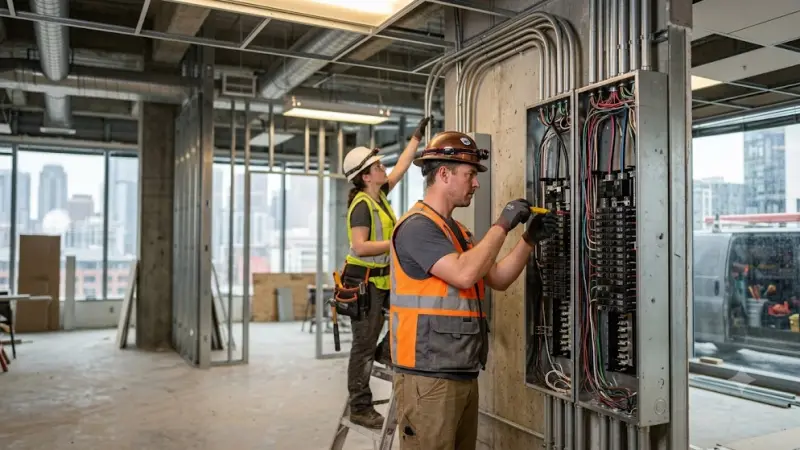
How to Choose the Right Commercial Electrical Services Company in the UK
-

A Guide to Business Software Integration Services in the UK
-

How to Choose the Right Industrial Fabrication Contractor in the UK
-

Choose the Best Commercial Masonry Contractor UK Guide
-

Best UK Business Procurement Consultants for Growth



Categories
- Accountants (293)
- Advertising Agencies (559)
- Architects (149)
- Automobiles (374)
- Beauty (300)
- Carpenters (146)
- Cleaning Services (383)
- Dentists (189)
- Driving (61)
- Electricians (212)
- Energy (6)
- Event Organiser (682)
- Finance (593)
- Guide (3335)
- Health (2203)
- Information technology (189)
- Legal Services (352)
- Logistics (2)
- Maintenance (56)
- Manufacturing (27)

Sponsored Listings in Educational Services


Related Blogs
How to Choose the Right Commercial Electrical...
Read this insightful article "How to Choose the Right Commercial Electrical Services Company in the UK" to expand your knowledge!
A Guide to Business Software Integration Serv...
Read this insightful article "A Guide to Business Software Integration Services in the UK" to expand your knowledge!
How to Choose the Right Industrial Fabricatio...
Read this insightful article "How to Choose the Right Industrial Fabrication Contractor in the UK" to expand your knowledge!
Questions & Answers – Find What
You Need, Instantly!
How can I update my business listing?
Is it free to manage my business listing?
How long does it take for my updates to reflect?
Why is it important to keep my listing updated?
