
UK B2B Plastic Injection Moulding Manufacturer Sourcing Guide
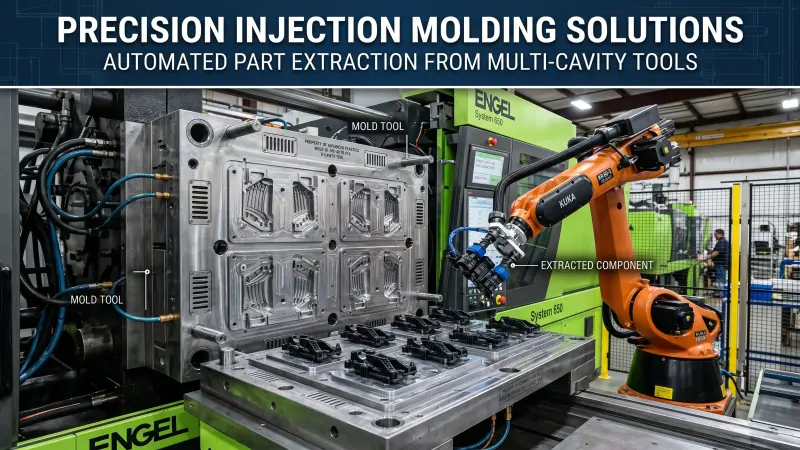
For UK procurement managers, operations directors, and product design engineers, selecting an industry-grade plastic injection moulding manufacturer is a critical strategic decision. The modern manufacturing landscape demands more than just a component supplier; it requires a partner capable of navigating complex material sciences, mitigating supply chain volatility, and delivering strict quality assurance. When outsourcing component production, businesses must evaluate how a production partner handles tool design, polymer selection, scaling transitions, and total cost of ownership.
Securing a reliable partner means looking closely at technical capabilities, quality accreditations like ISO 9001 and ISO 13485, and prototyping support. This commercial guide breaks down the essential criteria for evaluating domestic production partners, details pricing structures, and profiles the leading technical moulding specialists servicing the UK market.
How Do You Select a Reliable Plastic Injection Moulding Manufacturer?
Evaluating potential manufacturing partners requires a structured framework that looks beyond the initial unit cost. UK supply chains face distinct pressures, including stringent regulatory compliance, sustainability mandates, and the need for rapid time-to-market. A competent partner must demonstrate mastery across several core technical competencies.
Advanced Design for Manufacture (DFM)
A professional manufacturer should provide comprehensive DFM feedback before steel or aluminium hits the milling machine. DFM analysis identifies potential manufacturing flaws such as uneven wall thicknesses, inappropriate draft angles, poor gate placements, and structural weak points that cause component warping. Catching these variables early prevents costly tool modifications later.
Robust Quality Management Systems (QMS)
Industrial sectors—ranging from automotive and aerospace to medical devices—demand absolute traceability and zero-defect consistency. Ensure your chosen partner holds up-to-date certifications relevant to your sector:
-
ISO 9001: The baseline standard for general quality management systems.
-
ISO 13485: Standard required for medical device component manufacturing, requiring cleanroom environments (Class 7 or Class 8).
-
IATF 16494: Crucial for automotive supply chains, emphasizing defect prevention and continuous reduction of waste.
Technical Polymer Expertise
The performance of an injection-moulded component depends entirely on its material composition. Modern industrial applications increasingly rely on engineering-grade polymers, high-performance thermoplastics, and bio-based resins. Your manufacturing partner must possess deep expertise in processing complex materials, including PEEK, PPS, polycarbonates, and glass-filled nylons, ensuring components meet mechanical, thermal, and chemical resistance requirements.
The Strategic Value of Sourcing with UK Plastic Injection Moulding Companies
Amid rising geopolitical shifts and volatile international shipping costs, UK procurement teams are re-evaluating the true cost of offshoring production to distant regions. Working with domestic UK plastic injection moulding companies offers distinct commercial and operational advantages that directly protect business margins.
Direct Communication and Agile Engineering
Miscommunications over technical engineering specifications can derail project timelines by weeks or months. Domestic sourcing allows engineering teams to collaborate in the same time zone, conduct rapid physical site audits, and review physical prototypes without customs delays. This proximity accelerates the prototyping phase, allowing products to reach the commercial market much faster.
Mitigating Intellectual Property and Supply Chain Risks
Protecting intellectual property (IP) remains a primary concern for high-tech sectors, defense, and electronics. The UK legal framework provides robust, enforceable protections for proprietary designs and mold tooling assets. Furthermore, domestic production shields operations from global shipping bottlenecks, container shortages, and fluctuating import tariffs, creating a more predictable and resilient supply chain.
Custom Injection Moulding UK: Balancing Prototyping with Production Scalability
Industrial product development rarely moves directly from a CAD sketch to a high-volume manufacturing run. It requires an iterative pathway where components are thoroughly tested for fit, form, and mechanical function. Specializing in custom injection moulding UK services means providing scalable solutions that support a product throughout its entire lifecycle.
Prototyping and Low-Volume Bridging
In the initial development phases, companies often require low volumes (typically 50 to 5,000 units) to conduct field trials or secure regulatory approvals. Manufacturers utilize modular insert tooling systems or high-grade aluminium molds to deliver these low-volume runs quickly and cost-effectively. This bridges the gap between initial 3D-printed prototypes and final production-grade components.
Choosing the Correct Tooling Material
The choice of tooling material dictates both the upfront capital investment and the long-term unit cost:
-
Aluminium Tooling: Ideal for low-to-medium volumes (up to 10,000 cycles). It offers faster heat dissipation, shorter production lead times, and lower initial costs, though it wears down quicker when processing abrasive glass-filled polymers.
-
P20/H13 Steel Tooling: The industry standard for high-volume manufacturing. Hardened steel tooling can withstand millions of cycles, deliver highly repeatable tolerances, and handle aggressive engineering resins without degrading.
Technical Moulding Solutions: Overcoming Complex Component Challenges
Standard consumer goods often permit loose tolerances, but industrial applications require highly specialised setups. Leading providers deploy advanced technical moulding solutions to solve intricate geometric and structural challenges.
Multi-Shot Overmoulding and Insert Integration
For parts that require a soft-touch exterior over a rigid structural core (such as hand tools or medical instruments), manufacturers use multi-shot or two-shot (2K) moulding. This process injects two different resins into the same mold during a single cycle. Similarly, automated insert moulding embeds threaded metal brass inserts or electronic components directly into the plastic matrix, eliminating the need for manual assembly post-production.
Scientific Injection Moulding (SIM) Protocols
Advanced engineering applications rely on Scientific Injection Moulding. SIM uses sophisticated sensor data embedded within the mold cavities to monitor real-time pressure, melt temperature, and flow velocity. By controlling these variables scientifically rather than relying on operator guesswork, manufacturers can maintain dimensional tolerances down to the micron level across production runs spanning hundreds of thousands of parts.
Precision Injection Moulding Supplier Capabilities for High-Tech Industries
Sectors such as aerospace, medical electronics, and optoelectronics cannot afford component failures. Partnering with a vetted precision injection moulding supplier ensures your components are manufactured under pristine, highly controlled conditions using top-tier machinery.
Cleanroom Environments and Biosafety Standards
Medical and diagnostic products require strict bio-burden control. Top tier UK suppliers maintain dedicated Class 7 (10,000) or Class 8 (100,000) cleanrooms certified to ISO 14644 standards. These environments control airborne particulates, humidity, and temperature, preventing contamination during the molding and automated packaging stages.
Metrology and Verifiable Inspection Report Systems
Precision manufacturing is incomplete without verifiable proof of compliance. Leading contract providers equip their quality assurance labs with advanced metrology equipment, including Coordinate Measuring Machines (CMM), optical vision inspection systems, and non-destructive X-ray testing. These systems generate detailed First Article Inspection Reports (FAIR) and statistical process control (SPC) data, ensuring every component batch aligns perfectly with the initial engineering master files.
Thermoplastic Moulding Services: Material Selection Framework
Understanding material behavior under high pressure and temperature is key to production success. Industrial thermoplastic moulding services encompass
a broad spectrum of polymers, each presenting distinct shrinkage rates, tensile strengths, and processing complexities.
Standard Commodity Plastics
-
Polypropylene (PP): Widely utilized for its exceptional chemical resistance, high fatigue life, and flexibility. Commonly found in packaging, automotive fluid reservoirs, and consumer products.
-
Acrylonitrile Butadiene Styrene (ABS): Known for high impact resistance, rigidity, and excellent surface finish potential, making it the preferred choice for electronic enclosures and structural housings.
High-Performance Engineering Polymers
-
Polyamides (Nylon/PA66): Often reinforced with glass fibers to dramatically increase mechanical tensile strength and thermal stability. Ideal for structural engine components and heavy-duty industrial gears.
-
Polycarbonate (PC): Offers optical clarity alongside immense impact resistance. Frequently used in medical housings, protective eyewear, and automotive lighting components.
-
PEEK (Polyether Ether Ketone): An ultra-performance polymer capable of replacing metal components in aerospace and medical implants due to its extreme thermal thresholds and chemical inertness.
What Factors Dictate the Injection Moulding UK Price?
Navigating the financial architecture of polymer manufacturing requires a clear understanding of tool engineering versus part production costs. When estimating the injection moulding UK price, procurement teams must analyze three primary cost drivers.
1. Initial Tooling Capital Expenditure
The tool design and construction represent the largest upfront expense. A complex mold featuring hydraulic side-actions, internal sliders, and multiple cavities requires extensive precision CNC machining and spark erosion (EDM). While a single-cavity prototype tool might cost between £3,000 and £8,000, a multi-cavity, hardened steel production tool designed for millions of cycles can range from £25,000 to over £100,000.
2. Part Complexity, Weight, and Material Costs
The physical mass of the component and the market price of the raw polymer per kilogram form the base material cost. Commodity resins are inexpensive, while specialized engineering resins command a premium. Additionally, parts with thick walls require longer cooling phases within the cycle, which increases production time and raises processing costs.
3. Cycle Time and Automation Efficiency
The time required to complete one full molding cycle (clamp, inject, cool, eject) is known as the cycle time. Machinery operating expenses are billed on an hourly rate based on the tonnage of the injection moulding press required (ranging from 25 tonnes for small parts to 1,000+ tonnes for large panels). Utilizing automated robotics to extract parts and trim gates minimizes manual labor, lowering the long-term piece price for high-volume contracts.
Top Plastic Injection Moulding Companies in the UK
To assist procurement teams in evaluating potential production partners, here is a detailed analysis of the leading plastic moulding manufacturers UK market sectors rely on for contract supply.
1. Tex Plastics
Tex Plastics operates major manufacturing facilities in both Derby and Barnstaple, positioning it as a dominant player in the UK's contract plastics arena. The company focuses heavily on embedded lifecycle management, providing comprehensive design, tooling, molding, and secondary assembly solutions.
-
Key Features: Advanced DFM analysis, 3D mold-flow simulation software, and robust lean manufacturing frameworks.
-
Products/Services: Single-shot molding, multi-shot overmoulding, cleanroom production, ultrasonic welding, and complex component assembly.
-
UK Market Relevance: Strongly embedded in the UK electronics, automotive, and medical supply chains, offering comprehensive support from initial concept to final logistics.
2. Malton Plastics
Based in North Yorkshire, Malton Plastics is highly regarded for its agility and advanced technical capabilities, serving both low-volume startups and high-volume industrial clients.
-
Key Features: Fast-turnaround tooling modification, automated pick-and-place robotics, and a broad machine tonnage range.
-
Products/Services: Custom thermoplastic component molding, insert moulding, structural foam moulding, and post-moulding decorative printing.
-
UK Market Relevance: A critical manufacturing resource for Northern England's manufacturing and consumer goods sectors, known for flexible scheduling and rapid lead times.
3. Boddingtons Plastics
Operating out of a state-of-the-art facility in Kent, Boddingtons Plastics is a premium, highly accredited manufacturer specializing in precision engineering for highly regulated markets.
-
Key Features: Class 7 cleanroom manufacturing environments, full traceability tracking, and advanced optical validation systems.
-
Products/Services: Medical device contract manufacturing, surgical instrumentation housings, precision technical components, and complex multi-part assembly.
-
UK Market Relevance: A primary Tier-1 supplier to the UK healthcare, pharmaceutical, and medical diagnostics industries.
4. Rutland Plastics
Located in the Midlands, Rutland Plastics utilizes an extensive facility equipped with some of the largest injection moulding presses in the UK, capable of handling large-scale industrial components.
-
Key Features: Large tonnage press capabilities (up to 1,500 tonnes), thick-walled molding expertise, and on-site tool maintenance.
-
Products/Services: Thick-walled industrial component moulding, gas-assisted injection moulding, electrofusion fittings, and 3D printing for rapid prototyping.
-
UK Market Relevance: A major manufacturing partner for the UK utilities, construction, and heavy automotive infrastructure sectors.
5. Counterplas
Based in the West Midlands, Counterplas focuses heavily on sustainable manufacturing practices, integrating energy-efficient hybrid machinery and recycled polymer streams.
-
Key Features: Automated manufacturing cells, sustainable polymer sourcing options, and extensive warehousing support.
-
Products/Services: High-volume automated molding, technical thin-walled packaging production, insert moulding, and automated retail display components.
-
UK Market Relevance: Serves the fast-moving consumer goods (FMCG) and construction industries across the UK, offering cost-effective domestic volume production.
6. Pentagon Plastics
Operating from Buckinghamshire, Pentagon Plastics provides a highly specialized "one-stop-shop" service, seamlessly blending internal toolmaking with production moulding.
-
Key Features: In-house master toolmakers, modular insert systems for prototyping, and exceptional low-to-medium volume flexibility.
-
Products/Services: Prototype tool design, bridge tooling, custom low-volume production runs, and comprehensive post-moulding machining.
-
UK Market Relevance: Highly valued by UK product innovators, aerospace contractors, and specialized engineering firms requiring rapid, iterative development support.
7. Step 1828 (Formerly Wheatley Plastics)
With a manufacturing heritage spanning several decades in Stockport, Step 1828 combines traditional precision tool craftsmanship with modern automated processing systems.
-
Key Features: Family-run consultative approach, rapid quoting models, and an optimized lean operational structure.
-
Products/Services: Technical plastic component moulding, low-to-high volume production scaling, insert overmoulding, and specialized packaging solutions.
-
UK Market Relevance: Provides highly responsive contract manufacturing to businesses across the North West, specializing in industrial fittings and retail solutions.
8. Broanmain Plastics
Located in Surrey, Broanmain Plastics is an agile, multi-disciplined manufacturer offering both thermoplastic injection moulding and thermoset compression moulding services.
-
Key Features: In-house tool repair workshops, diverse polymer processing capabilities, and tailored sub-assembly workflows.
-
Products/Services: Custom thermoplastic injection moulding, compression moulding, overmoulding, component tapping, and retail product packaging.
-
UK Market Relevance: Supports electronics, aerospace, and consumer product innovators throughout Southern England with highly customizable contract runs.
9. Omega Plastics
Omega Plastics operates advanced manufacturing sites across the North East of England, delivering rapid-response tooling alongside high-volume production capabilities.
-
Key Features: Specialized rapid tooling development, large-scale cleanroom capabilities, and comprehensive automotive supply chain validations.
-
Products/Services: Rapid prototype moulding, production-intent tooling construction, high-volume injection moulding, and complex component assembly.
-
UK Market Relevance: A key player in the UK automotive assembly corridors and medical device sectors, renowned for moving projects quickly from design to full-scale production.
10. Amtek Plastics
Based in Devon, Amtek Plastics prides itself on maintaining transparent pricing structures and a consultative engineering approach tailored for procurement professionals.
-
Key Features: Advanced online project tracking portals, fully integrated supply chains, and an optimized tool procurement network.
-
Products/Services: Component design refinement, international and domestic tooling management, injection moulding, and kanban inventory dispatch services.
-
UK Market Relevance: A trusted manufacturing partner for UK industrial, consumer electronics, and healthcare brands seeking highly visible project management.
Navigating Bespoke Toolmaking and Moulding Workflows
Successful component sourcing relies on close alignment between tool design and the physical molding process. Opting for a manufacturer that integrates bespoke toolmaking and moulding under a single roof eliminates the finger-pointing that often occurs when tool design is decoupled from the production floor.
The Tool Trial Progression (T1 to Approved Production)
Once the bespoke tool is manufactured, it undergoes its initial trial run, known as the T1 phase. These first sample components are thoroughly reviewed for dimensional accuracy, structural strength, and surface cosmetics.
Minor adjustments are made to the tool's venting, gating, or core dimensions based on the data. Production only scales up once your quality team approves the samples and signs off on the Initial Sample Inspection Report (ISIR).
Protecting and Maintaining the Tooling Asset
Your tool is a major capital investment. Vett your chosen manufacturer to ensure they provide scheduled, preventative tool maintenance as part of their service agreement.
This includes ultrasonic cleaning, clearing cooling lines, and lubricating slider rails after every production cycle. Proper tool care ensures the mold lasts for its full warranty life without requiring expensive replacements.
High Volume Injection Moulding: Maximising Automation and Cost Efficiency
When production scaling demands hundreds of thousands of components per month, operations must shift toward high volume injection moulding configurations optimized for maximum efficiency and minimal cycle times.
Embracing Advanced Robotic Automation
High-volume manufacturing cells utilize integrated 3-axis or 6-axis articulated arm robotics to automate part handling. These systems remove components from the mold, trim sprues and runners, and place completed parts directly onto conveyor belts for automated vision inspection. This minimizes human intervention, eliminates contamination risks, and stabilizes cycle times to drive down the cost per unit.
Multi-Cavity Tool Designs
To scale production efficiently, single-cavity prototype tools are replaced with multi-cavity production tools. A mold designed with 4, 8, 16, or even 32 identical cavities produces multiple parts with every single machine cycle. While multi-cavity tooling requires a higher initial investment, it significantly reduces the overall machine running time and lowers the final part cost for large-volume orders.
Technical Auditing of Tooling and Moulding Suppliers
Before finalizing a contract manufacturing agreement with tooling and moulding suppliers, procurement teams should conduct a rigorous on-site or virtual technical audit. This process verifies that the supplier possesses the operational capacity and quality standards required to safeguard your production line.
Capacity and Press Allocation Auditing
Verify that the manufacturer’s machinery fleet aligns with your product portfolio. Small, intricate components require high-speed, lower-tonnage micro-moulding machinery, whereas larger structural enclosures demand large-tonnage presses with high injection capacities. Furthermore, ask about their press utilization rates to ensure they have enough operational headroom to accommodate sudden increases in your order volumes.
Checking Contingency Plans and Material Control
A resilient partner must have robust risk-mitigation strategies in place. Examine how they manage raw materials, verify batch-to-batch polymer consistency, and store backup resin supplies. Additionally, confirm that their facility features robust backup power systems, fire-suppression infrastructure for tooling vaults, and emergency machinery redundancy plans to prevent unexpected production stoppages.
Contract Plastic Manufacturing UK: Structuring SLA Agreements
Entering into a long-term contract with a provider of contract plastic manufacturing UK services requires a well-structured Service Level Agreement (SLA). A clear contract aligns both organizations on quality standards, delivery metrics, and asset ownership.
Tooling Ownership and Transfer Rights
The SLA must clearly state that once the upfront tooling invoices are paid in full, your company retains absolute legal ownership of the physical mold asset. The contract should guarantee your right to inspect, audit, or relocate the tooling asset if your business requirements evolve or production demands change.
Defining Acceptable Quality Limits (AQL)
Establish clear, quantifiable metrics for component acceptance using industry-standard AQL frameworks (such as ISO 2859-1). Define what constitutes a critical defect (e.g., functional dimensional failure), a major defect (e.g., severe sink marks), and a minor defect (e.g., slight surface discoloration). Setting these boundaries beforehand prevents disputes over batch acceptance and streamlines the quality review process.
Plastic Injection Moulding Procurement Checklist
For procurement leads comparing suppliers, this structured technical checklist serves as an essential framework during requests for quotes (RFQs).
-
Accreditation Check: Verify valid ISO 9001, ISO 13485, or IATF 16949 certificates relative to sector requirements.
-
Tooling Warranty Agreement: Confirm guaranteed shot-life cycles for steel or aluminium molds with included maintenance clauses.
-
DFM and Simulation Access: Ensure upfront access to mold-flow predictive software to catch design defects prior to tool milling.
-
Material Certification: Demand complete polymer traceability data sheets and certificate of conformity documentation for every batch.
-
Metrology Capabilities: Verify the presence of coordinate measuring machines (CMM) and vision inspection systems within the quality control lab.
-
Automation Integration: Assess the use of robotics for part extraction to ensure stable cycle times and minimized labor costs.
Disclaimer: The information provided in this article is for general informational and research purposes only. Company details, features, services, and market positions may change over time. Readers are advised to visit official company websites and conduct independent research before making any business decisions or purchasing services.
Most Searchable Keywords
Recent Blogs


Related Listings


Categories
- Accountants (295)
- Advertising Agencies (559)
- Architects (149)
- Automobiles (377)
- Beauty (300)
- Carpenters (146)
- Cleaning Services (387)
- Dentists (189)
- Driving (62)
- Education (1)
- Electricians (215)
- Energy (8)
- Event Organiser (687)
- Finance (602)
- Guide (3482)
- Health (2207)
- Information technology (206)
- Legal Services (361)
- Logistics (6)
- Maintenance (65)
Sponsored Listings in Travel Agencies

Related Blogs

Ghost Brokers Fake Car Insurance Scam Explain...
Read this insightful article "Ghost Brokers Fake Car Insurance Scam Explained" to expand your knowledge!

UK Baby Names Fastest Rising and Falling Name...
Read this insightful article "UK Baby Names Fastest Rising and Falling Names" to expand your knowledge!

How to Claim for Pothole Damage From Your Cou...
Read this insightful article "How to Claim for Pothole Damage From Your Council" to expand your knowledge!
Questions & Answers – Find What You Need, Instantly!
Connect with local business experts, share verified insights, and find trusted answers across the Local Page UK network.
Ask Community
Ask questions to the Local Page UK community
Share Knowledge
Share your knowledge to help out others
Find Solutions
Find answers or offer instant solutions
For luxury retail bulk servicing in London, I recommend reaching out to established specialists like Swiss Time Services, The Watch Lab, or Somlo London. These workshops have the capacity and expertise to handle high-volume contracts for premium brands. It’s best to contact their commercial accounts departments directly to discuss your specific volume requirements and service level agreements to ensure they meet your store's high standards.
Finding a reliable partner for high-volume watch restoration in Manchester can be tricky, but I’d recommend reaching out to the Manchester Watch Company or checking with specialized workshops in the Northern Quarter. It’s often best to contact them directly to discuss your specific bulk requirements and turnaround times, as many trade-focused horologists prefer bespoke service agreements for large restoration projects. Good luck with your search!
Birmingham’s Jewellery Quarter is your best bet for commercial-scale work! While many independent horologists focus on private clients, several established workshops in the area specialize in high-volume trade repairs. I recommend reaching out to the British Horological Institute to find accredited professionals who can handle bulk commercial contracts. Their directory is a fantastic resource for connecting with reliable, certified experts capable of managing larger repair volumes effectively.
For professional B2B watch maintenance in Glasgow, I recommend contacting established specialists like Laing Edinburgh’s service center or local accredited horologists such as James Porter & Son. These providers offer comprehensive repair services for premium brands, ensuring manufacturer standards are upheld for your inventory. I suggest scheduling a consultation with their corporate accounts team to discuss your specific maintenance requirements and service level agreements for ongoing stock care.
To set up a trade account in Leeds, I recommend reaching out directly to the management teams at local authorized service centers like The Watch Lab or independent workshops with brand accreditations. Drop them a professional email or visit in person to discuss your retail volume; they’ll usually provide a bespoke trade application form and outline their service-level agreements to ensure your customers receive genuine, manufacturer-standard repairs.
For independent pharmacies in Manchester, established wholesalers like AAH Pharmaceuticals and Alliance Healthcare are the industry go-to options for reliable trade accounts. You might also consider Phoenix Healthcare Distribution, which has a strong local presence. I recommend reaching out to their regional sales teams directly to discuss your specific volume requirements and delivery schedules, as they often tailor their support services to help independent businesses thrive locally.
Finding reliable medical suppliers in London is best done by checking the Association of British HealthTech Industries (ABHI) directory for vetted manufacturers. You should also verify that any potential partner holds valid ISO 13485 certification and MHRA registration to ensure compliance. Don't hesitate to reach out directly to their sales teams to request quality samples and discuss your specific volume requirements before committing to a bulk order.
Hi there! Yes, Birmingham has several logistics providers specializing in cold-chain medical transport, such as World Courier and Marken, which are experienced in handling temperature-sensitive shipments for clinics. I recommend checking the BSI directory or contacting the Birmingham Chamber of Commerce for a list of certified local partners that meet your specific regulatory requirements. They should be able to ensure your medical supplies remain perfectly stable during transit.