
Ghost Brokers Fake Car Insurance Scam Explained
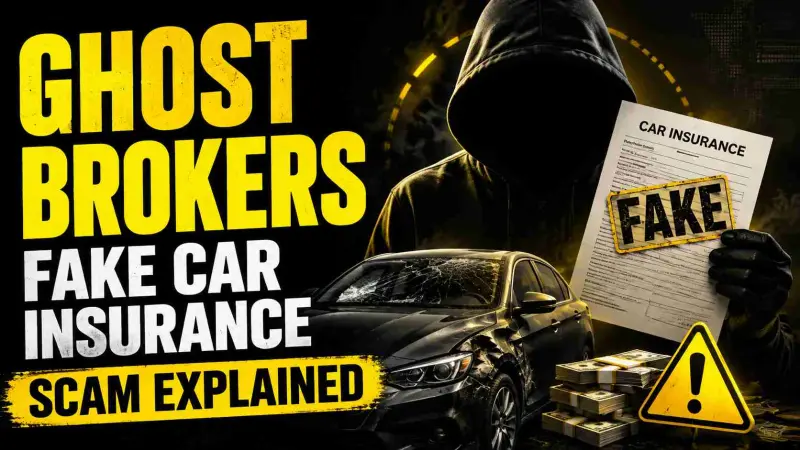
A car insurance quote that is hundreds of pounds cheaper than every legitimate alternative can feel like a lucky find, especially when you are a young driver facing a high premium. But some of the cheapest offers circulating on social media, messaging apps and online forums are not bargains at all. They are ghost broking scams.
A ghost broker is a fraudster who pretends to arrange legitimate motor insurance but instead sells a completely fake policy, manipulates information on a genuine policy, or takes out cover using false details before cancelling it. The result can be devastating: you may believe you are insured while legally driving without valid cover.
The problem is particularly serious for younger motorists because high insurance costs make unusually cheap offers more attractive. The Insurance Fraud Bureau has specifically highlighted fake insurance advertising aimed at young people, while the UK government's Motor Insurance Taskforce has identified ghost broking as a form of fraudulent insurance activity.
This guide explains how ghost brokers operate, why young drivers are targeted, the warning signs to look for, how to verify an insurance policy, what happens if you have already paid a scammer, and what you should do if you discover that your car insurance is not genuine.
How do ghost brokers scam young drivers, and how can you avoid fake car insurance?
What exactly is a ghost broker?
A ghost broker is an individual or organisation that falsely presents itself as an insurance broker or intermediary.
Instead of arranging valid cover correctly, the fraudster may:
- Sell completely fabricated insurance documents.
- Take out a genuine policy using false or deliberately altered information.
- Change details such as the driver's age, address, occupation or driving history to obtain a cheaper premium.
- Arrange a genuine policy and then cancel it without the customer's knowledge.
- Use a real insurer's branding, documents or contact details to appear credible.
- Advertise through social media accounts, messaging services or websites that disappear after taking payment.
The important distinction is that a cheap insurance quote is not automatically a scam. The problem arises when the person arranging the cover is dishonest, unauthorised, or misrepresents information to create a price that could not legitimately be offered.
Government guidance describes ghost broking as fake insurance being sold online by illegal intermediaries, with victims unknowingly purchasing invalid cover.
Why are young drivers particularly attractive targets?
Young motorists often face some of the highest car insurance premiums in the market. That creates a strong incentive to search beyond conventional insurers and comparison services.
A fraudster understands this psychology.
An advert promising to cut a £2,000 premium to £900 can look irresistible to someone who has just passed their driving test. The scammer may also exploit the fact that a new driver may not yet understand how insurance pricing, policy documents, brokers and databases work.
The Insurance Fraud Bureau has previously reported that one in three 18-to-24-year-olds surveyed had seen a suspicious car insurance advertisement on social media. The same IFB material found that many people did not check whether a seller had a legitimate website before buying.
The risk is therefore not simply that young drivers are inexperienced behind the wheel. They can also be inexperienced insurance customers.
How does a typical ghost broking scam work?
Although individual scams vary, the process often follows a familiar pattern.
Step 1: The fraudster creates an attractive offer
The scammer may post an advert on Facebook, Instagram, TikTok, Snapchat, WhatsApp, Telegram, an online marketplace or a community group.
The advert might promise:
- Very cheap insurance.
- "Special" young-driver rates.
- Same-day cover.
- No deposit.
- Guaranteed approval.
- Cover despite previous problems.
- A broker who can "beat any quote".
Some scammers use the names or logos of genuine insurers to create an appearance of legitimacy.
Step 2: The victim provides personal information
The customer may be asked for their:
- Full name.
- Date of birth.
- Address.
- Driving licence information.
- Vehicle registration.
- Occupation.
- Claims history.
- Previous convictions.
- Payment details.
This creates another risk: the victim may be handing sensitive personal information to a criminal.
Step 3: The scammer produces apparently genuine documents
The victim might receive a policy schedule, certificate of insurance, reference number or confirmation email.
Documents alone do not prove that the policy is valid.
A convincing PDF can be created in minutes. A genuine insurer's name can be copied. A real policy number can potentially be misused.
Step 4: The victim starts driving
This is where the scam becomes especially dangerous.
The customer may have paid hundreds of pounds and believe everything is sorted. They have no reason to think they are uninsured until an insurer, police officer, MIB check or accident investigation reveals a problem.
Step 5: The scammer disappears
The social media account may be deleted. The telephone number may stop working. Messages may remain unread.
By then, the customer can be left trying to establish whether they have any valid insurance at all.
Why is an extremely cheap quote dangerous?
The temptation is understandable: insurance can be expensive, particularly for newly qualified drivers.
But there is a difference between finding a cheaper legitimate policy and being offered a price that depends on fraud.
Suppose three legitimate insurers quote £1,800, £2,000 and £2,150. A person on social media offers the same driver "fully comprehensive cover" for £650.
That does not automatically prove fraud, but it should trigger questions.
How is the broker obtaining that price? Which insurer is providing the cover? What excess applies? What information was submitted? Is the broker authorised? Can the insurer independently confirm the policy?
A legitimate saving should survive those checks.
Can a ghost broker use a real insurance company?
Yes. This is one reason ghost broking can be difficult to spot.
A scammer may misuse the name of a genuine insurer or arrange some form of genuine policy using incorrect information.
That means simply seeing a familiar insurance company name on a document is not enough.
You should independently contact the insurer using contact information obtained from the insurer's official website or another trustworthy source. Do not rely solely on the telephone number or email address supplied by the person selling the policy.
Ask the insurer whether:
- A policy exists.
- The vehicle is covered.
- You are named correctly.
- The registration number is correct.
- The policy start date is correct.
- The type of use is correct.
- The policy remains active.
- The information supplied to the insurer matches your actual circumstances.
Why false information can leave you uninsured
Ghost brokers sometimes promise to lower premiums by changing customer information.
For example, a broker might tell a 19-year-old driver to state that they live
at a different address because the alternative postcode produces a lower premium.
Another might suggest changing the driver's occupation or claiming that a more experienced driver is the main user of the vehicle.
This is not a harmless shortcut.
Insurance pricing depends on accurate risk information. If material facts are deliberately misrepresented, the policy can be cancelled, treated as invalid or otherwise affected depending on the circumstances and applicable insurance terms.
The safest rule is simple: never allow somebody to submit information that you know is false simply because it makes the premium cheaper.
How can you check whether your car insurance is genuine?
There are several checks you can make before driving.
Check the intermediary
If someone claims to be an insurance broker, investigate who they are.
The Financial Conduct Authority maintains regulatory information concerning firms carrying out insurance distribution activity.
Do not assume that a professional-looking website proves authorisation. Search for the business independently and compare its details with official records.
Contact the insurer directly
Use contact information from the insurer's official website, not necessarily the information given to you by the broker.
Ask whether your policy exists and whether its details are correct.
This is particularly important if the price or sales process seemed unusual.
Check your vehicle's insurance record
The Motor Insurers' Bureau provides a free Check Your Vehicle service that allows eligible members of the public to see whether their vehicle is showing as having a live insurance policy in the central insurance record.
However, there is an important limitation.
A database showing that a vehicle has a policy does not automatically prove that every aspect of the cover is correct. MIB explains that a vehicle can show as insured while issues such as the type of use or other policy information may still need checking with the insurer.
So think of the database check as one layer of verification, not the only check.
What should you do if your policy does not appear on the database?
Do not immediately assume that you have been scammed.
Recently purchased or renewed policies can take time to appear in the insurance database. MIB advises motorists to contact their insurer if the vehicle does not show as insured and notes that recently arranged policies may temporarily be missing from the record.
The sensible process is:
- Check the policy documents.
- Contact the insurer directly.
- Confirm that the vehicle registration is correct.
- Ask when the policy information was submitted.
- Check the vehicle again after the appropriate period.
- Do not drive if the insurer confirms that you do not have valid cover.
What happens if you unknowingly bought fake car insurance?
Being an innocent victim does not necessarily remove the consequences of driving without valid insurance.
UK law requires at least third-party motor insurance for driving on roads and public places. GOV.UK states that a driver caught without insurance can receive a £300 fixed penalty and six penalty points. A court can impose an unlimited fine and disqualification, and police have powers to seize the vehicle.
That is why discovering a ghost-broker scam should trigger immediate action.
Do not simply keep driving because you paid for a policy.
The key issue is whether valid insurance actually covers your use of the vehicle.
What if you have already paid a ghost broker?
Act quickly.
Stop using the vehicle until your insurance position is clear
If the insurer confirms there is no valid cover, do not drive the car on public roads until legitimate insurance is arranged.
Contact your bank or payment provider
Explain that you believe you have been the victim of fraud. Ask what options are available to recover the payment.
The outcome will depend on how you paid and the circumstances.
Preserve evidence
Keep:
- Screenshots of advertisements.
- Messages.
- Emails.
- Receipts.
- Bank statements.
- Policy documents.
- Telephone numbers.
- Website addresses.
- Social media usernames.
- Names supplied by the seller.
Do not delete the conversation simply because the scammer has disappeared.
Report the fraud
Fraud should be reported through the appropriate UK reporting channels. GOV.UK also advises scam victims to report suspected fraud promptly.
You should also notify the genuine insurer if their name or branding has been misused.
What if you have already been stopped by police?
Be honest about what happened.
If you genuinely believed you were insured, explain the circumstances and provide the evidence you have.
However, do not assume that showing a fake certificate will make the legal insurance issue disappear. A document claiming that insurance exists is not the same as valid cover.
If the matter has become a criminal or regulatory issue, consider obtaining independent legal advice.
Can a ghost broker cause problems with your future insurance?
Potentially, yes.
The consequences can extend beyond losing the original payment.
If a fraudulent policy involved deliberately false information, there may be questions about what
information was supplied, who supplied it and what you knew at the time.
This is another reason to retain evidence showing that you were deceived.
A young driver who has been scammed should not simply conceal the problem and move on. The priority is establishing the true insurance position and correcting inaccurate records.
What mistakes should young drivers avoid?
The biggest mistake is making price the only deciding factor.
Other common errors include:
Trusting a friend-of-a-friend
Someone recommended through a social circle can still be operating a scam.
Treat recommendations as leads, not proof.
Checking only the document
Fake documents can look convincing.
Verify the policy with the insurer.
Assuming database confirmation means everything is correct
A vehicle may show as insured while the details of the policy still need checking. MIB specifically warns that its vehicle check does not confirm every aspect of the policy.
Giving somebody permission to "fix" your details
Never allow another person to invent information to reduce the premium.
Paying because the seller creates urgency
"Pay within 10 minutes or the price disappears" is a classic pressure tactic.
A legitimate insurance purchase deserves time for verification.
What should parents tell a newly qualified driver?
Parents can help by teaching young motorists that insurance is part of driving, not an administrative formality.
Before a young driver buys cover, encourage them to:
- Obtain several legitimate quotes.
- Compare the policy details, not just the headline price.
- Verify the insurer or intermediary.
- Ask questions about anything they do not understand.
- Check the vehicle's insurance status.
- Keep copies of the policy documents.
- Never falsify information.
- Treat social-media insurance adverts with caution.
The goal is not to scare new drivers away from cheaper insurance. It is to teach them how to distinguish a genuine saving from an offer that creates a much larger problem.
How are authorities responding to ghost broking?
Ghost broking is not being treated as a minor consumer nuisance.
The UK government's Motor Insurance Taskforce final report identifies fake insurance offers sold online by illegal intermediaries as a form of insurance fraud. The report also notes collaboration between organisations including the Insurance Fraud Bureau and Insurance Fraud Enforcement Department.
The government has also backed industry-wide efforts to identify illegal insurance intermediaries and improve victim support. In 2024, the Home Office reported that the insurance sector had adopted a charter designed to strengthen cooperation against insurance fraud and specifically mentioned bogus insurance offers.
This matters because ghost broking increasingly operates in an online environment where scammers can create, advertise and remove accounts quickly.
How could technology change the fight against fake insurance?
Technology is likely to play a growing role.
Insurance companies, regulators, databases and law enforcement can compare information across multiple systems to identify inconsistencies.
For motorists, however, the most useful technology is often surprisingly simple: independently checking the policy and the vehicle record before driving.
Artificial intelligence and automated fraud detection may help organisations identify suspicious patterns more quickly, but criminals are also becoming better at creating professional-looking websites, adverts and documents.
That means visual polish should never replace verification.
What does the future of ghost broking look like?
Ghost broking is likely to evolve alongside online advertising and digital payments.
The basic scam may remain the same, but the delivery mechanism can change. A fraudster who once relied on printed adverts can now reach thousands of potential customers through social platforms and messaging communities.
The government's recent focus on illegal insurance intermediaries and online bogus offers suggests that enforcement and prevention efforts will continue to develop.
For consumers, the future lesson is straightforward: verification will become more important, not less.
A polished website, verified-looking social profile, digital certificate or professional message does not independently establish that insurance exists.
The safest buying process remains one where the customer can trace the
insurance back to a legitimate provider and independently confirm the policy.
What is the safest way to buy car insurance as a young driver?
Start with established insurers, reputable comparison services or properly verified intermediaries.
When comparing quotes, look beyond price.
Check:
- The insurer providing the cover.
- The policy type.
- Your permitted use of the vehicle.
- Excesses.
- Optional extras.
- Driver information.
- Vehicle information.
- Start and renewal dates.
- Cancellation terms.
- Whether the vehicle is recorded as insured.
If a person offering insurance tells you that they can save you hundreds of pounds but asks you to lie about your circumstances, walk away.
The saving is not real.
A simple five-minute ghost broker check
Before paying for a suspiciously cheap policy, stop and run this checklist.
1. Who is selling it?
Find the business independently.
2. Who is the actual insurer?
Do not accept vague answers.
3. Can the insurer confirm the policy?
Contact the insurer using independently sourced details.
4. Does the vehicle show as insured?
Use the official MIB vehicle-check service where applicable.
5. Is every piece of information accurate?
Never accept a policy based on false details.
If any answer raises doubts, do not drive until the situation has been resolved.
Key Insights
- Ghost broking is a real insurance scam, not simply an unusually cheap way to buy cover.
- Young drivers can be attractive targets because high premiums create pressure to find cheaper deals.
- A genuine insurer's name or a professional-looking policy document does not prove that your cover is valid.
- Never allow a broker or intermediary to falsify your address, occupation, driving history or other information.
- Check your vehicle's insurance status through the official MIB service and confirm the policy directly with the insurer.
- Driving without valid insurance can result in a £300 fixed penalty and six points, with more serious consequences possible in court.
- If you have been scammed, preserve evidence, contact your payment provider and report the fraud promptly.
- The safest insurance deal is not necessarily the cheapest quote; it is the cheapest genuine policy that correctly covers your circumstances.
FAQ
What is a ghost broker?
A ghost broker is a fraudster who pretends to arrange legitimate insurance but sells fake cover, manipulates policy information or otherwise arranges insurance dishonestly. Victims can believe they are insured when they are actually driving without valid cover.
Why do ghost brokers target young drivers?
Young drivers often face expensive insurance premiums, making unusually cheap offers attractive. Scammers exploit that financial pressure by advertising large discounts and presenting themselves as people who can access special rates.
How can I tell if a car insurance broker is genuine?
Verify the business independently, check relevant regulatory information, identify the actual insurer and contact that insurer directly. Do not rely solely on social media profiles, reviews, certificates or contact details supplied by the seller.
Are cheap car insurance deals always scams?
No. Legitimate insurers and brokers can offer different prices because they assess risk differently. The warning sign is an offer that is unusually cheap combined with pressure, secrecy, false information or an inability to verify the policy.
Can ghost brokers use real insurance companies?
Yes. A scam may misuse a legitimate insurer's name or involve a genuine policy created using inaccurate information. That is why you should independently contact the insurer and confirm that your exact policy details are correct.
What happens if my fake insurance policy is discovered?
You may be treated as uninsured if valid cover does not exist. In Great Britain, driving without insurance can result in a £300 fixed penalty and six points, while court proceedings can result in an unlimited fine or disqualification.
Can I check whether my car is insured online?
Yes. The Motor Insurers' Bureau provides a free online Check Your Vehicle service for eligible users to see whether their vehicle is recorded as having a live policy.
Does appearing on the insurance database guarantee I am properly insured?
No. MIB explains that its vehicle check confirms that a live policy is recorded, but it does not establish that every aspect of the policy, such as the type of use, is correct. You should also confirm the policy details with your insurer.
What should I do if my insurance does not appear on the database?
Contact your insurer immediately. Recently purchased or renewed policies can take time to appear, so the absence of a record does not automatically prove fraud. If the insurer cannot confirm valid cover, do not drive until legitimate insurance is arranged.
Should I give a broker my driving licence details?
A legitimate insurance application may require personal and driving information, but you should first establish who you are dealing with and why the information is required. Never provide sensitive information to an unverified social-media seller.
Can a ghost broker make my insurance cheaper by changing my address?
Changing your address to an inaccurate one can constitute misrepresentation and may affect whether the policy provides valid cover. Your insurance application should always contain accurate information about where you live and your circumstances.
What if I have already paid a ghost broker?
Stop and establish whether you actually have valid insurance. Contact the genuine insurer, speak to your bank or payment provider about the fraudulent transaction, preserve all evidence and report the scam through the appropriate authorities.
Can a ghost broker steal my personal information?
Yes. Scammers may collect names, addresses, dates of birth, driving licence information and payment details while pretending to arrange insurance. This information can potentially create additional fraud or identity risks.
Is insurance bought through social media automatically fake?
No. A legitimate insurance business can have a social-media presence. The problem is that social media makes it easy for criminals to impersonate businesses or advertise fake services, so every seller should be independently verified.
Will ghost broking continue to be a problem?
The underlying scam is likely to continue evolving as criminals use new advertising platforms, communication channels and digital tools. Government and insurance-industry initiatives are increasingly focused on illegal insurance intermediaries and online bogus insurance offers.
Final Thoughts
Ghost brokers succeed because they exploit a completely understandable desire: paying less for car insurance.
For young drivers, that temptation can be especially strong. But a policy that saves
hundreds of pounds is worthless if it does not provide genuine cover.
The safest approach is to slow the transaction down. Verify who is selling the insurance, identify the actual insurer, check the policy directly, make sure every personal detail is accurate and confirm that your vehicle is recorded as insured where appropriate.
Disclaimer: The information provided in this article is for general informational and research purposes only. Company details, features, services, and market positions may change over time. Readers are advised to visit official company websites and conduct independent research before making any business decisions or purchasing services.
Most Searchable Keywords
Recent Blogs

Related Listings
Categories
- Accountants (295)
- Advertising Agencies (559)
- Architects (149)
- Automobiles (377)
- Beauty (300)
- Carpenters (146)
- Cleaning Services (387)
- Dentists (189)
- Driving (62)
- Education (1)
- Electricians (215)
- Energy (8)
- Event Organiser (687)
- Finance (602)
- Guide (3482)
- Health (2207)
- Information technology (206)
- Legal Services (361)
- Logistics (6)
- Maintenance (65)
Sponsored Listings in Locksmith Services

Related Blogs
Ghost Brokers Fake Car Insurance Scam Explain...
Read this insightful article "Ghost Brokers Fake Car Insurance Scam Explained" to expand your knowledge!
UK Baby Names Fastest Rising and Falling Name...
Read this insightful article "UK Baby Names Fastest Rising and Falling Names" to expand your knowledge!
How to Claim for Pothole Damage From Your Cou...
Read this insightful article "How to Claim for Pothole Damage From Your Council" to expand your knowledge!
Questions & Answers – Find What
You Need, Instantly!
How can I update my business listing?
Is it free to manage my business listing?
How long does it take for my updates to reflect?
Why is it important to keep my listing updated?
