
Vehicle Customisation & Conversion: What’s Possible and Who to Hire
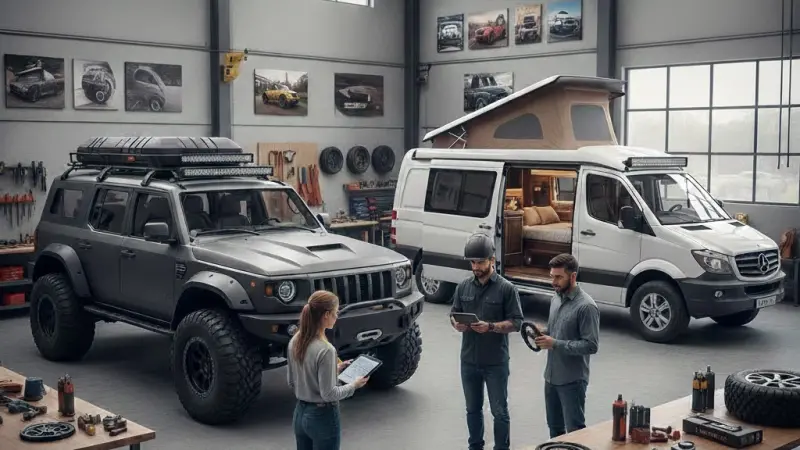
The automotive landscape in the United Kingdom is undergoing a profound transformation. No longer is a vehicle merely a means of transport from point A to point B; for a growing segment of British consumers and businesses, it is a canvas for self-expression, a mobile office, or a bespoke home on wheels. The British car customisation and vehicle conversion sector has emerged as a powerhouse of engineering creativity and economic resilience, contributing significantly to the UK's automotive aftermarket, which is valued at over £21 billion annually.
This sector encompasses everything from aesthetic "wrap" shops in London’s industrial estates to high-end coachbuilders in the Midlands and campervan converters in the Scottish Highlands. The economic importance of this industry cannot be overstated. It supports thousands of highly skilled jobs in fabrication, electrical engineering, and digital design. For the UK economy, it represents a high-value niche that thrives on British craftsmanship and technical innovation. Whether it is adapting a van for wheelchair accessibility or upgrading a luxury SUV with bespoke leather interiors, the demand for "bespoke" is at an all-time high. Consumers are increasingly looking to Local Page UK to bridge the gap between their vision and the technical experts capable of executing it.
The Landscape of Car Customisation and Vehicle Conversion Specialists in the UK
The UK market for vehicle modification is one of the most sophisticated in the world. Historically rooted in the "tuning" culture of the 1990s, the industry has matured into a regulated, high-standard professional service sector. Post-pandemic, the industry saw an unprecedented surge. As international travel restrictions limited holidays, the "staycation" boom led to a massive spike in campervan conversions. Simultaneously, the rise of home delivery services increased the demand for bespoke commercial van racking and refrigeration conversions.
Geographically, the West Midlands remains a critical hub due to its deep automotive heritage, but we see significant clusters of activity in the South East for luxury modifications and the North West for commercial fleet conversions. The evolution of the industry has been marked by a shift from purely mechanical upgrades to integrated digital solutions. Modern specialists now deal as much with software and ECU remapping as they do with body kits and paintwork. For anyone looking to enter this market as a consumer, the first step is often to consult a uk local business directory to identify specialists who possess the specific tooling for modern vehicle architectures.
The industry has also become more professionalised. Where once "back-street" garages dominated, we now see "Centres of Excellence" that partner directly with manufacturers (OEMs). This professionalisation has made the UK a global leader in "Special Vehicle Operations," exporting custom-built emergency vehicles and luxury armoured cars worldwide. The post-pandemic landscape is one defined by high demand, long lead times, and a renewed focus on quality over cost.
Comprehensive Services Breakdown
The breadth of services offered within the UK customisation niche is vast. To understand what is possible, we must categorise the offerings into three primary pillars: Aesthetic, Functional, and Performance.
Aesthetic Customisation
This is perhaps the most visible side of the industry. Vehicle wrapping—applying high-quality vinyl to change a car's colour or texture—has become a standard alternative to traditional resprays. It allows for finishes like satin, matte, and chrome that paint cannot easily replicate. Interior retrimming is another high-growth area, where specialists use Nappa leather, Alcantara, and carbon fibre to elevate a standard cabin to "supercar" levels of luxury. For businesses looking to showcase these services, securing a business listing uk listing is essential to capture the visual-heavy search traffic of modern consumers.
Functional Conversions
This is the "workhorse" side of the industry. It includes:
Campervan Conversions: Transforming empty shells like the VW Transporter or Ford Transit into fully-fledged living spaces with kitchens, beds, and solar power.
Accessibility (WAVs): Installing ramps, lifts, and hand controls to allow those with disabilities to regain independence.
Commercial Racking: Bespoke shelving, power systems, and lighting for tradespeople.
Performance & Security
Beyond looks and utility, many UK specialists focus on the "soul" of the vehicle. Engine remapping (tuning the car’s computer for better fuel efficiency or power) is highly popular. Furthermore, given the rise in vehicle theft, the installation of high-end immobilisers (like the Ghost II) and tracking systems has become a core service. Professionals in this space often find that a business listing uk is the best way to gain initial traction in a competitive local market.
How to Choose the Right Service Provider
With so much variety, choosing the right specialist is a high-stakes decision. Unlike a standard MOT, customisation often involves irreversible changes to a vehicle’s structure or electronics. Therefore, a rigorous vetting process is required.
Firstly, check for accreditations. For structural conversions, you should look for ISO 9001 certification or membership in the VBRA (Vehicle Body Repairers Association). If you are looking for a campervan, check if the builder is an NCC (National Caravan Council) approved workshop. Reviews are the lifeblood of the service industry. A provider may have a glossy Instagram feed, but their local business listings uk will reveal the reality of their customer service and aftercare.
Insurance is another non-negotiable factor. Does the specialist have "Goods in Trust" insurance? Does their public liability cover the specific type of modification they are performing? In the UK, it is also vital to ensure the provider understands the legalities of the Road Vehicles (Construction and Use) Regulations. A reputable shop will always advise you on what is "road legal" versus "track only." Finally, reputation in the local community often outweighs national advertising. Use a uk local trades directory to find craftsmen who have built a legacy of trust over decades rather than months.
Industry Challenges & Future Outlook
The "Green Revolution" is the single biggest challenge and opportunity for the sector. As the UK moves toward the 2035 ban on new petrol and diesel cars, conversion specialists are pivoting toward Electric Vehicles (EVs). We are seeing the birth of the "EV Retrofit" industry, where classic cars (like the original Mini or Land Rover Defender) are being fitted with electric motors and batteries.
Regulatory changes are also tightening. The Individual Vehicle Approval (IVA) scheme, which ensures that non-standard vehicles meet safety and environmental standards, is becoming more stringent. Specialists must now invest heavily in testing and documentation. This increased barrier to entry is weeding out hobbyists and leaving a more professional, albeit more expensive, market. To stay ahead, many businesses are using a business listing uk to ensure they are visible to the new generation of eco-conscious car owners.
Sustainability is also appearing in the materials used. We are seeing a shift away from traditional leathers toward "vegan" interiors made from recycled ocean plastics or pineapple fibres. The future of vehicle customisation in the UK is high-tech, sustainable, and strictly regulated.
Business Tips for Professionals
For the business owners reading this, the challenge is no longer just about the quality of your welding or the precision of your stitching; it is about your digital footprint. In a niche where customers might travel hundreds of miles for a specific conversion, being "findable" is everything.
Digital visibility starts with local SEO. Ensure your business is listed on a uk home services directory if you provide mobile installations, or a professional services list if you handle high-end coachbuilding.
Content marketing is your best friend. Create videos of your "before and after" projects. This not only builds trust but provides the social proof that high-value customers demand.
Networking within the industry is also vital. B2B relationships with local car dealerships can provide a steady stream of "delivery-mileage" vehicles for customisation. Maintaining an active profile on a uk verified business listings platform ensures that when a dealership or a private client searches for a specialist, your credentials are front and centre. Remember, in this industry, your reputation is your most valuable asset, but your website and directory listings are your most powerful sales tools.
Wrapping Up & Local Page Integration
The vehicle customisation and conversion industry in the UK is a testament to British ingenuity and the enduring love affair with the motor car. From the smallest cosmetic tweaks to the most complex structural overhauls, the possibilities are limited only by your imagination and your budget. As we have explored, the key to a successful project lies in the quality of the specialist you hire.
For businesses operating in this space, the competition is fierce. To stand out, you need more than just a workshop; you need a robust online presence. Localpage provides the essential infrastructure for UK businesses to connect with their local audience. By leveraging a uk business directory website, specialists can ensure their craftsmanship is seen by the people who matter most. Whether you are a consumer looking for your dream campervan or a business owner looking to grow your brand, the right connections are just a click away.
Boost Your Visibility with Local Page UK
In the fast-paced world of automotive services, digital "findability" is the engine of growth. For Car Customisation and Vehicle Conversion Specialists, being tucked away in an industrial unit is no longer an excuse for being invisible. Customers are searching for your expertise right now. By choosing to claim your business listing uk, you position your brand in front of a high-intent audience looking for quality and reliability. Don't let your competitors take the lead; join the premier network for UK professionals today.
Frequently Asked Questions
1. What is the difference between a modification and a conversion?
A modification generally refers to changing or adding parts to an existing vehicle to improve its performance or appearance, such as adding a spoiler or remapping the engine. A conversion is more structural and functional, often changing the vehicle's purpose entirely—for example, turning a panel van into a refrigerated unit or a campervan. Both require professional expertise to ensure safety and legality.
2. Will customising my car void its manufacturer warranty?
It depends on the modification and the manufacturer. Generally, a manufacturer will only void the warranty on parts that are directly affected by the customisation. For instance, if you install an aftermarket exhaust and the engine fails, they may refuse a claim. However, many UK specialists offer their own warranties, and some "Approved Converters" work in tandem with manufacturers to preserve the original warranty.
3. Do I need to inform my insurance company about modifications?
Yes, absolutely. Failing to declare even minor aesthetic changes like a vinyl wrap or new alloy wheels can completely invalidate your insurance policy. Most UK insurers will accept modifications, though they may increase your premium. Some specialist insurers focus specifically on the custom and classic car markets, often offering better rates for highly modified vehicles.
4. Is vehicle remapping legal in the UK?
Yes, remapping is legal, but it must comply with emissions regulations. If a remap involves removing a Diesel Particulate Filter (DPF) or bypassing emissions hardware, it will fail an MOT and is illegal for road use.
Professional tuners ensure the vehicle remains within the legal limits for road use while optimising power and fuel efficiency.
5. How can I find a reliable conversion specialist near me?
Finding a reliable specialist requires looking at verified reviews and local reputation. You can use Localpage to search for top-rated professionals in your specific area. Always look for workshops that have clear galleries of previous work and are willing to provide references from past clients who have had similar work done.
6. What is an IVA test and when do I need one?
An Individual Vehicle Approval (IVA) test is a UK scheme that ensures that "specialist" vehicles, which have not been type-approved to British or European standards, meet the necessary safety and environmental requirements. You generally need an IVA if you have built a car, or if you have significantly modified the chassis or structural integrity of an existing vehicle.
7. How much does a full campervan conversion typically cost?
Costs vary wildly based on specifications. A basic "kombi" conversion might start around £5,000, while a high-end, off-grid professional conversion with lithium power, heating, and bespoke cabinetry can exceed £30,000 plus the cost of the van. The quality of materials and the complexity of the electrical systems are the primary price drivers.
8. Are vinyl wraps better than a professional respray?
Vinyl wraps are generally cheaper and offer more variety in terms of textures and finishes. They also protect the original paintwork, which can help with resale value. However, a wrap typically lasts 3 to 5 years, whereas a high-quality respray is permanent. For temporary style changes or leased vehicles, wrapping is usually the preferred option.
9. Can I convert my petrol or diesel car to electric?
Yes, but it is a complex and expensive process. Several UK specialists now offer "drop-in" electric crates for classic cars like the Land Rover Defender or Jaguar E-Type. Prices usually start from £20,000. While the initial cost is high, these conversions can future-proof classic vehicles against ULEZ charges and future fuel bans.
10. What are the laws regarding window tinting in the UK?
The law is very specific: the front windscreen must allow at least 75% of light through, and the front side windows must allow at least 70%. There are no legal restrictions on the tint darkness for the rear side windows or the rear windscreen. Using a professional installer ensures your tints remain road legal and avoid police fines.
11. Can customising my vehicle increase its resale value?
In most cases, standard modifications (like loud exhausts or extreme body kits) can actually decrease the resale value. However, high-quality, functional conversions—such as a professional campervan build or an accessibility conversion—can significantly increase the vehicle's market value. Always keep receipts and certificates for any work performed.
12. What should I look for in a campervan electrical system?
Safety is paramount. Ensure the specialist uses high-quality components and includes a RCD (Residual Current Device) for mains hookups. For off-grid use, look for MPPT solar controllers and DC-to-DC chargers. All wiring should be correctly fused and of the appropriate gauge to prevent overheating and potential fire risks.
13. How long does a typical vehicle customisation project take?
A simple window tint or vinyl wrap can be completed in 1 to 3 days. A full interior retrim might take 1 to 2 weeks. However, a complex vehicle conversion, such as a full camper or a bespoke commercial build, can take anywhere from 4 to 12 weeks depending on the complexity and the workshop's current backlog.
14. Are there specific regulations for wheelchair accessible vehicles?
Yes, Wheelchair Accessible Vehicles (WAVs) must meet strict safety standards regarding floor strength and occupant restraint systems. They often undergo an IVA test to ensure they are safe for the wheelchair user.
It is vital to hire a specialist with experience in PAS 2012 standards for WAV conversions.
15. How do I market my vehicle customisation business effectively?
Success in this niche comes from a combination of high-quality visual content and strong local SEO. By registering your business on a directory like Local page, you ensure that your services are visible to local customers. Combine this with a strong Instagram presence and a portfolio of your best work to build a brand that people trust.
Disclaimer: The information provided in this article is for general informational and research purposes only. Company details, features, services, and market positions may change over time. Readers are advised to visit official company websites and conduct independent research before making any business decisions or purchasing services.
Most Searchable Keywords
Recent Blogs


Related Listings
Categories
- Accountants (295)
- Advertising Agencies (559)
- Architects (149)
- Automobiles (377)
- Beauty (300)
- Carpenters (146)
- Cleaning Services (387)
- Dentists (189)
- Driving (62)
- Electricians (215)
- Energy (8)
- Event Organiser (686)
- Finance (602)
- Guide (3376)
- Health (2207)
- Information technology (206)
- Legal Services (356)
- Logistics (6)
- Maintenance (65)
- Manufacturing (35)
Sponsored Listings in Travel Agencies

Related Blogs
Sexual Harassment Rules Tighten Across UK Fro...
Read this insightful article "Sexual Harassment Rules Tighten Across UK From October 2026" to expand your knowledge!
Employment Tribunal Claim Deadline Extends Fr...
Read this insightful article "Employment Tribunal Claim Deadline Extends From October 2026" to expand your knowledge!
Rainy Day Activities in Cheltenham Hidden Gem...
Read this insightful article "Rainy Day Activities in Cheltenham Hidden Gems for 2026" to expand your knowledge!
Questions & Answers – Find What
You Need, Instantly!
How can I update my business listing?
Is it free to manage my business listing?
How long does it take for my updates to reflect?
Why is it important to keep my listing updated?
