
Virtual Financial Fairs as a Strategic Lead Generation Tool
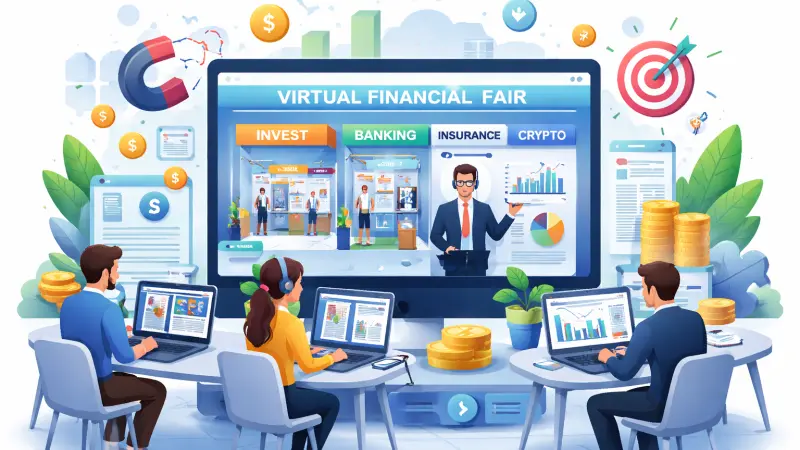
Have you ever considered how the rapid digitisation of the financial services sector has fundamentally altered the way professionals acquire high-quality prospects? In the current economic climate of the United Kingdom, the traditional champagne-and-canapé networking events are increasingly being supplemented, or even replaced, by sophisticated virtual financial fairs. These digital environments offer a unique opportunity for banks, insurance brokers, and investment firms to engage with a targeted audience without the geographical constraints or overhead costs associated with physical venues. By leveraging virtual financial fairs as a lead generation tool, companies can streamline their sales funnels and reach demographics that were previously inaccessible due to logistical barriers. This transition is not merely a temporary response to global shifts but a permanent evolution in how the Finance & Insurance category identifies and nurtures potential clients. As we delve into the mechanics of these digital exhibitions, it becomes clear that the integration of data analytics and real-time interaction provides a level of insight that physical events simply cannot replicate in a cost-effective manner for the modern enterprise.
The primary keyword of virtual financial fairs represents a paradigm shift in the industry, where the focus moves from passive attendance to active, data-driven engagement. When a firm participates in a digital expo, every interaction—from a document download to a chat session—is recorded, providing a granular level of detail that informs future marketing strategies. Secondary keywords such as "digital exhibition," "financial services marketing," "fintech events," "insurance leads," and "online networking" illustrate the breadth of this ecosystem. Furthermore, semantic keywords including "wealth management webinars," "broker engagement," "compliance-ready platforms," "lead scoring," and "attendee demographics" help to paint a complete picture of the operational landscape. For UK-based firms, ensuring that these tools align with local regulations like the Financial Services and Markets Act is essential. This article explores the multifaceted benefits of these platforms, offering a comprehensive guide for organisations looking to bolster their lead generation pipelines through innovative digital means while maintaining the professional decorum expected in the British financial sector.
The Evolution of Networking in the UK Finance Sector
The historical trajectory of financial networking in the City of London and beyond has always prioritised face-to-face rapport, yet the rise of the "Virtual Financial Fair" has introduced a new layer of efficiency. Historically, lead generation involved significant travel, expensive booth rentals, and a high degree of uncertainty regarding the quality of traffic. Today, virtual platforms allow for precise audience segmentation, ensuring that the individuals visiting a digital stand are genuinely interested in the specific products offered, whether those are mortgage products, life insurance policies, or complex investment vehicles. This evolution is driven by the increasing comfort level of British consumers with digital-first interactions, especially among younger investors and tech-savvy business owners. By removing the physical barriers of entry, virtual fairs democratise access to expert financial advice, allowing firms based in regional hubs like Edinburgh or Manchester to compete on a level playing field with those in the heart of London. This shift is not just about convenience; it is about the strategic application of technology to solve the age-old problem of how to find and convert qualified leads in a crowded and highly competitive marketplace.
One of the most significant advantages of this digital evolution is the ability to host niche events that cater to specific segments of the finance and insurance industry. For instance, a virtual fair dedicated solely to ESG (Environmental, Social, and Governance) investing can attract a highly motivated group of attendees who are specifically searching for sustainable financial products. This level of targeting is difficult to achieve in a broad physical trade show where the audience is often diluted. From a lead generation perspective, the specificity of virtual fairs means that the "top of the funnel" is already pre-filtered. Marketing teams can deploy tailored content, such as whitepapers on UK tax efficiency or live Q&A sessions regarding pension reforms, which resonate deeply with the specific interests of the digital participants. Furthermore, the longevity of these events often exceeds that of physical shows; digital platforms can remain "open" for on-demand viewing for weeks after the live date, providing a continuous trickle of inbound leads. This extended lifecycle ensures that the initial investment in high-quality digital assets continues to pay dividends long after the curtain has closed on the main event, solidifying the virtual fair's status as a cornerstone of modern financial services marketing.
Maximising ROI through Digital Lead Capture
Return on Investment (ROI) is the ultimate metric for any marketing initiative, and virtual financial fairs excel in providing clear, attributable results. In a physical setting, a business card dropped in a bowl is a lead, but its value is often unknown until weeks later. In a virtual environment, lead capture is instantaneous and enriched with contextual data. When an attendee interacts with a digital booth, the system can automatically pull data from their registration profile, including their job title, company size, and specific areas of interest.
This allows for immediate lead scoring, where the sales team can prioritise high-value prospects based on their activity levels during the fair. For example, an individual who attends three different webinars on corporate insurance and downloads a brochure on liability coverage is clearly a "warm" lead compared to someone who merely browsed the lobby. This data-driven approach reduces the "time-to-contact," which is a critical factor in the UK's fast-moving financial market. By integrating these platforms with existing Customer Relationship Management (CRM) systems, firms can automate the follow-up process, ensuring that no potential client falls through the cracks due to administrative delays.
The cost-saving element of virtual fairs also plays a massive role in enhancing the overall ROI for finance firms. Without the need for physical printing, shipping bulky displays, or paying for staff accommodation, a much larger portion of the budget can be allocated to content creation and targeted advertising to drive the right traffic to the event. In the UK, where business travel costs and venue hire in major cities remain high, the pivot to digital offers a significant competitive edge for smaller firms or startups that might otherwise be priced out of major industry gatherings. Moreover, the environmental impact—a key consideration for many UK companies today—is drastically reduced, aligning the firm’s marketing activities with broader corporate social responsibility goals. When calculating the cost-per-lead, virtual events consistently outperform traditional methods because they leverage the scalability of the internet. A single digital booth can theoretically serve thousands of visitors simultaneously, providing each one with a high-quality, personalised experience that would require an army of staff at a physical event. This scalability, combined with the precision of digital tracking, makes virtual financial fairs an irresistible proposition for any lead-generation-focused marketing department within the insurance and finance sectors.
Enhancing Attendee Engagement with Interactive Features
Engagement is the lifeblood of successful lead generation, and modern virtual platforms offer a suite of tools designed to keep attendees active and interested. Unlike a static website, a virtual financial fair is a dynamic environment featuring live polls, interactive workshops, and peer-to-peer networking lounges. For a UK audience, which values professionalism and expertise, providing access to "Office Hours" with senior advisors or live-streamed debates on the impact of Bank of England interest rate changes can be a major draw. These interactive elements serve two purposes: they provide immediate value to the attendee, and they provide the host with deeper insights into the attendee’s mindset. Gamification is another powerful tool; by offering points or rewards for visiting different areas of the fair or participating in discussions, organisers can encourage a broader exploration of the services on offer. This increased "dwell time" directly correlates with higher brand recall and a greater likelihood of a lead converting into a client. In the context of insurance, interactive risk assessment tools or calculators embedded within the virtual booth can provide instant, personalised feedback to the user, making the prospect of a follow-up consultation much more appealing and relevant to their specific needs.
Building trust is often cited as the biggest challenge in digital financial services, yet virtual fairs provide a platform for humanising a brand through video content and real-time chat. When a prospect can see and speak with a human representative through a secure video link, the perceived "digital wall" disappears. This is particularly important for complex financial products like mortgages or wealth management, where the personal relationship between the advisor and the client is paramount. By hosting live webinars with Q&A sessions, firms can demonstrate their thought leadership and subject matter expertise, positioning themselves as trusted authorities in the UK market. Furthermore, the use of "breakout rooms" allows for more intimate discussions among small groups of peers, fostering a sense of community that is often missing from standard digital marketing. This community-building aspect is a potent lead generation tool because it encourages word-of-mouth referrals and social proof. When an attendee sees their peers engaging with a brand and asking insightful questions, it validates their own interest. In essence, the interactive features of a virtual fair transform a solitary browsing experience into a collective event, creating a high-trust environment that is conducive to the high-stakes decision-making required in the finance and insurance industries.
Integrating Virtual Fairs into a Multi-Channel Strategy
To truly excel as a lead generation tool, virtual financial fairs should not exist in a vacuum but should be a key component of a broader multi-channel marketing strategy. The journey often begins long before the event starts, with targeted LinkedIn campaigns, email marketing to existing databases, and search engine optimisation (SEO) efforts to capture those looking for financial advice online. Once the event concludes, the lead generation process enters its most critical phase: the nurture cycle. The data collected during the fair should inform the content of follow-up emails, ensuring that the messaging is highly relevant to what the prospect viewed during the event. For example, if a lead spent significant time in a section dedicated to "UK Small Business Loans," the subsequent marketing automation should provide them with case studies or guides specifically related to commercial lending. This seamless transition from the virtual event to personalised post-event communication is what separates successful firms from those that merely "show up." By treating the virtual fair as a data-acquisition engine, UK finance firms can fuel their entire marketing ecosystem for months, creating a consistent stream of touchpoints that eventually lead to a successful conversion.
Furthermore, the content generated for a virtual fair—such as recorded presentations, infographics, and whitepapers—can be repurposed across other digital channels to extend its value. A successful webinar from the fair can be edited into short "knowledge bites" for social media or turned into a long-form blog post that drives organic traffic to the firm's website. This "content atomisation" ensures that the intellectual property created for the event reaches the widest possible audience. Additionally, integrating the virtual fair with a company’s social media presence allows for real-time amplification.
Encouraging attendees to share insights using a dedicated hashtag can increase the visibility of the event to their own professional networks, effectively turning every attendee into a potential brand advocate. For the UK insurance market, where reputation and visibility are key, this multi-channel approach ensures that the brand remains "top of mind" throughout the buyer’s journey. Ultimately, the virtual financial fair acts as a high-intensity hub within a wider network of digital activity, concentrating engagement and data collection into a specific timeframe while providing the raw materials needed for sustained marketing success across all available platforms and touchpoints.
Future Trends in Virtual Financial Events
The landscape of virtual lead generation is constantly shifting, with emerging technologies like Artificial Intelligence (AI) and Augmented Reality (AR) set to redefine the virtual financial fair experience. We are already seeing the introduction of AI-driven "matchmaking" algorithms that suggest specific booths or sessions to attendees based on their LinkedIn profiles or past behaviour. This level of personalisation ensures that every visitor has a bespoke experience, significantly increasing the chances of a successful lead capture. Imagine a scenario where an AI assistant greets a visitor and says, "Based on your interest in UK tax-efficient savings, I recommend you join the live workshop starting in five minutes." This proactive engagement model represents the future of digital marketing in the finance sector. Additionally, AR technology could allow attendees to "walk" through a 3D representation of a financial district or interact with visualisations of complex data sets in a way that is far more engaging than a standard spreadsheet. As these technologies become more accessible, the line between the physical and virtual worlds will continue to blur, offering even more creative ways for firms to demonstrate value and capture the attention of potential clients.
Sustainability and accessibility will also remain driving forces in the evolution of these events. As UK firms face increasing pressure to report on their carbon footprint, the move towards digital-first events provides a clear and measurable way to reduce the environmental impact of business development. Moreover, virtual fairs offer unparalleled accessibility for individuals with disabilities or those who cannot travel due to personal commitments, ensuring that financial advice is available to a truly diverse audience. This inclusivity is not only ethically sound but also expands the potential lead pool for firms, tapping into underserved markets. The rise of "hybrid" events—which combine a small, high-value physical gathering with a massive virtual component—is also a likely trend, providing the best of both worlds. For lead generation, this means that firms can use the physical event for "closing" high-net-worth deals while using the virtual side for mass-market lead acquisition. As we look ahead, it is clear that the virtual financial fair will continue to adapt, innovate, and remain an indispensable tool for any UK finance or insurance company that is serious about growth in the digital age.
Summary of Key Findings
- Virtual fairs significantly reduce overheads while increasing the geographical reach of lead generation efforts.
- Real-time data capture allows for immediate lead scoring and more effective sales follow-ups.
- Interactive features like live webinars and 1-on-1 video chats build the trust necessary for financial transactions.
- Niche targeting ensures that the audience is highly relevant to the specific products or services being offered.
- The environmental benefits of digital events align with modern UK corporate social responsibility standards.
- Integration with CRMs and multi-channel marketing creates a robust and sustainable sales pipeline.
Frequently Asked Questions
How do virtual financial fairs differ from standard webinars?
While a webinar is typically a single presentation, a virtual financial fair is a multi-dimensional event with various booths, networking lounges, and simultaneous sessions, offering a much broader experience.
Are virtual leads as high-quality as physical ones?
Often, they are of higher quality because the digital platform allows for better filtering and
intent-based tracking, ensuring you spend time only on those truly interested in your services.
What is the typical duration of a virtual financial fair?
Live components usually last one to three days, but the platform often remains accessible for "on-demand" viewing for 30 to 90 days, providing ongoing lead generation.
How can we ensure data security during these events?
Reputable virtual event platforms used in the UK finance sector are built with high-level encryption and are fully compliant with GDPR and other relevant data protection regulations.
Do attendees need special software to participate?
Most modern virtual fairs are browser-based, meaning attendees can join from any device with an internet connection without downloading additional software.
How do I drive traffic to my virtual booth?
Success requires a mix of pre-event promotion via email, social media advertising, and providing
high-value content or exclusive offers that incentivise people to visit your stand.
In conclusion, the adoption of virtual financial fairs marks a significant milestone for the UK's financial services industry, offering a sophisticated and scalable solution for modern business development. As firms strive to adapt to a digital-first economy, the ability to engage with prospects in a high-trust, data-rich environment becomes a critical differentiator. Beyond these specialized events, maintaining a robust digital footprint across the wider internet is equally essential for long-term growth. To help with this, businesses can utilise a company directory online to ensure their contact details are accurate and reachable. By focusing on both targeted events and broader online presence, companies can significantly improve their reach. For those looking to list their services and enhance their online visibility in a competitive market, Local Page UK provides a comprehensive verified business directory and company directory online. By ensuring your firm is present in a free business search directory, you reinforce the leads generated at virtual fairs, creating a cohesive and resilient strategy for professional success in the UK’s finance and insurance sector.
Disclaimer: The information provided in this article is for general informational and research purposes only. Company details, features, services, and market positions may change over time. Readers are advised to visit official company websites and conduct independent research before making any business decisions or purchasing services.
Most Searchable Keywords
Recent Blogs


Related Listings

Categories
- Accountants (295)
- Advertising Agencies (559)
- Architects (149)
- Automobiles (377)
- Beauty (300)
- Carpenters (146)
- Cleaning Services (387)
- Dentists (189)
- Driving (62)
- Education (1)
- Electricians (215)
- Energy (8)
- Event Organiser (686)
- Finance (602)
- Guide (3381)
- Health (2207)
- Information technology (206)
- Legal Services (359)
- Logistics (6)
- Maintenance (65)
Sponsored Listings in Home and Garden


Related Blogs

Strictly Come Dancing Pros Net Worth Salary a...
Read this insightful article "Strictly Come Dancing Pros Net Worth Salary and Personal Life" to expand your knowledge!

Britains Richest Authors Ranked for 2026 by N...
Read this insightful article "Britains Richest Authors Ranked for 2026 by Net Worth" to expand your knowledge!

Why Basel Market Risk Deadline Has Shifted to...
Read this insightful article "Why Basel Market Risk Deadline Has Shifted to 2028" to expand your knowledge!
Questions & Answers – Find What
You Need, Instantly!
How can I update my business listing?
Is it free to manage my business listing?
How long does it take for my updates to reflect?
Why is it important to keep my listing updated?
