
What is the marketing potential of smart contracts in insurance products
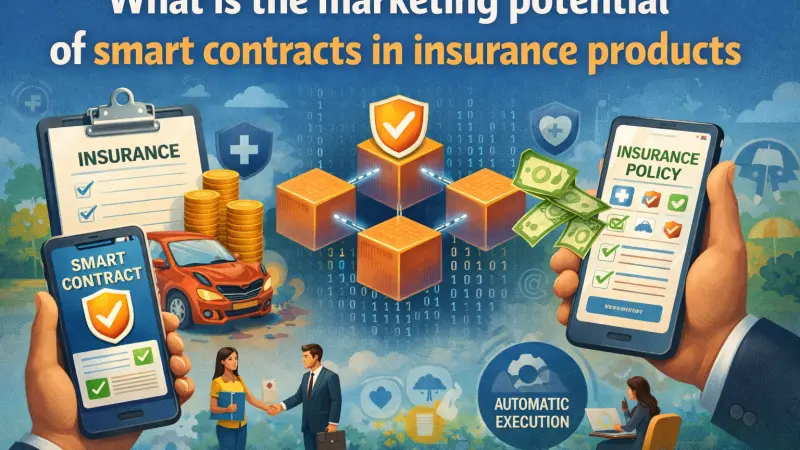
Could the traditional, often cumbersome process of filing an insurance claim soon become a relic of the past? In the United Kingdom, where the insurance sector contributes significantly to the national GDP, the integration of smart contracts is no longer a futuristic concept but a burgeoning reality. Smart contracts self-executing digital agreements with the terms directly written into lines of code are poised to redefine the marketing potential of insurance products by offering unprecedented levels of transparency, speed, and reliability. For the modern British consumer, who increasingly values digital efficiency and clear-cut accountability, the shift toward programmable insurance represents a fundamental change in how protection is perceived and purchased.
The core marketing potential of smart contracts in insurance lies in their ability to solve the industry’s longest-standing grievance: the "trust gap." Historically, the relationship between the insurer and the insured has been defined by complex jargon and lengthy manual verification processes that can delay payouts for weeks or even months. By leveraging blockchain technology, insurers can now market products that guarantee automatic execution once specific, verifiable conditions are met. This transition from "promise-based" to "code-based" security allows firms to differentiate themselves in a saturated market, appealing to tech-savvy demographics and businesses seeking streamlined risk management solutions.
Understanding Smart Contracts within the Insurance Framework
Before assessing the marketing implications, it is essential to understand the technical architecture that makes smart contracts a viable tool for UK insurers. At its simplest, a smart contract is a set of "if-then" propositions hosted on a decentralised ledger. For example, "if a flight is delayed by more than four hours, then the policyholder receives a predetermined sum." Because the contract is hosted on a blockchain, it is immutable and transparent, meaning neither the insurer nor the policyholder can unilaterally alter the terms once the agreement is live. This structural integrity is a powerful marketing asset, as it eliminates the fear of "fine print" that often deters potential customers from comprehensive coverage.
In the UK, the rise of "Insurtech" hubs in London and Manchester has accelerated the development of these digital protocols. These contracts rely on "oracles"—external data feeds that provide the real-world information required to trigger a payout. Whether it is weather data for agricultural insurance or flight tracking for travel policies, oracles ensure that the data is objective and untampered with. For marketing professionals, this means they can promote insurance products that are "objectively fair." The marketing narrative shifts from the insurer's willingness to pay to the technical impossibility of not paying when the conditions are met, creating a unique value proposition centered on absolute reliability.
The Role of Transparency in Enhancing Customer Trust
Transparency has frequently been the Achilles' heel of the insurance industry, with many consumers feeling that the claims process is a "black box." Smart contracts directly address this by making the policy conditions visible and verifiable. From a marketing perspective, this allows UK insurance firms to position themselves as "transparent-first" entities. In a post-REDPIT (Regulatory and Economic Development of Private Insurance and Trusts) environment, where consumer protection is paramount, being able to demonstrate that a policy is governed by an unchangeable digital script is a significant competitive advantage that fosters long-term brand loyalty.
Furthermore, transparency leads to a reduction in disputes. When the criteria for a claim are binary—either the event happened or it didn't—there is no room for the subjective interpretation that typically leads to litigation or ombudsman complaints. Marketing these products as "dispute-free insurance" resonates deeply with small business owners and contractors who do not have the time or resources to engage in protracted legal battles with large carriers. By reducing the friction associated with the claims journey, insurers can improve their Net Promoter Scores (NPS) and utilise positive customer sentiment as a core component of their organic marketing and acquisition strategies.
Parametric Insurance: A New Frontier for Product Innovation
The most immediate application of smart contracts is found in parametric insurance, a product type that pays out a set amount based on the magnitude of an event rather than the actual loss sustained. This is particularly relevant for the UK’s agricultural and shipping sectors. For instance, an apple farmer in Kent could hold a smart contract-based policy that pays out if temperatures drop below freezing for more than three consecutive nights.
The farmer does not need to prove the damage to the crops; the temperature data triggers the payment automatically. The marketing potential here is enormous, as it allows for the creation of "niche" products that were previously too expensive to administer.
Parametric products also allow for "micro-insurance" models. Marketing insurance to gig economy workers or freelance professionals becomes viable when the cost of administration is virtually zero. Because the smart contract handles the verification and disbursement, insurers can offer low-premium, high-velocity products that cover specific, short-term risks. This ability to granularise insurance coverage allows firms to tap into previously underserved markets, expanding their reach across the diverse economic landscape of the United Kingdom. It transforms insurance from a grudging annual purchase into a flexible, on-demand service that integrates seamlessly into the digital lifestyle of the modern consumer.
Driving Down Premiums through Operational Efficiency
Operational efficiency is often a dry topic, but its marketing implications are profound: lower premiums. Traditional insurance is burdened by high administrative costs, including the manual processing of documents, the employment of loss adjusters, and the maintenance of complex legacy IT systems. Smart contracts automate a substantial portion of this workflow. When these savings are passed on to the consumer, the insurer gains a massive pricing advantage. In a price-sensitive market like the UK, being able to market "premium protection at a reduced cost" due to technical innovation is a winning strategy.
Moreover, the reduction in fraud—which costs the UK insurance industry billions of pounds annually—further stabilizes pricing. Because smart contracts rely on verified data oracles rather than potentially falsified human testimony, the opportunity for fraudulent claims is significantly diminished. Marketing a product as being "protected by blockchain security" gives consumers peace of mind that their premiums are not being inflated by the dishonest actions of others. This creates a more equitable "pool" of risk, which is a compelling narrative for ethical marketing campaigns that seek to align the interests of the insurer with those of the honest policyholder.
Automated Claims Processing and the Instant Gratification Era
We live in an era defined by instant gratification, where consumers expect services to be delivered at the touch of a button. Traditional insurance claims, which can take weeks to process, are fundamentally at odds with this cultural shift. Smart contracts enable "instant claims," where the payout is initiated the moment the data oracle confirms the trigger event. Marketing the "end of the claims form" is a revolutionary concept. Imagine a traveller at Heathrow whose flight is cancelled; before they have even left the terminal, their smart contract has detected the cancellation and deposited the hotel allowance into their bank account.
This level of service creates a "wow factor" that is incredibly rare in the financial services sector. From a viral marketing perspective, these instant payouts generate significant social proof. Customers who experience a seamless, automated rescue in a moment of crisis are highly likely to share their experience online. By focusing on the "experience" of the payout rather than just the "coverage" of the policy, UK insurers can build a modern brand identity that feels helpful and proactive. It moves the insurer away from being a distant, reactive giant to a helpful, digital companion that is always looking out for the client's interests in real-time.
Navigating the Challenges of Smart Contract Implementation
Despite the immense marketing potential, the journey toward widespread adoption of smart contracts in the UK insurance market is not without hurdles. The primary challenge is the "oracle problem"—the risk that the data feed itself could be inaccurate or compromised. For a smart contract to be truly effective, the data must be beyond reproach.
Consequently, insurance firms must invest heavily in high-security, decentralised oracle networks. Marketing these products therefore requires a level of technical education; insurers must explain to their customers how the data is sourced and why it can be trusted, ensuring that the technology does not become a barrier to entry.
There is also the matter of legal and regulatory frameworks. The UK’s Financial Conduct Authority (FCA) has been proactive in exploring blockchain through its "regulatory sandbox," but the legal status of code as a contract is still an evolving area of law. Insurance marketers must be careful to balance their enthusiasm for automation with clear communication regarding the consumer's rights and the available avenues for recourse. Ensuring that the "human element" remains accessible for complex queries is essential. A hybrid approach—where smart contracts handle simple, high-volume claims while human experts manage nuanced cases—is likely the most marketable and sustainable model for the foreseeable future.
Data Privacy and the GDPR Landscape in the UK
In the United Kingdom, data privacy is governed by strict regulations, including the UK General Data Protection Regulation (GDPR). When marketing blockchain-based insurance, firms must address concerns regarding the "right to be forgotten." Since blockchains are traditionally immutable, storing personal data directly on the ledger could conflict with legal requirements. To navigate this, innovative firms are using "off-chain" data storage solutions where the smart contract contains only a reference or a "hash" of the data, rather than the data itself. Marketing these products requires a sophisticated approach to privacy-centric messaging.
Insurers who can successfully communicate their commitment to data security while leveraging blockchain will win the trust of the "privacy-conscious" consumer. The marketing potential here lies in the "sovereignty" of data; allowing users to control who accesses their information and for how long. By positioning smart contracts as a tool for enhanced privacy rather than a threat to it, UK insurers can align themselves with the broader movement toward digital rights. This ethical positioning can be a powerful differentiator in a market where consumers are increasingly wary of how large corporations handle their sensitive personal and financial information.
The Future Outlook for Programmable Insurance Products
Looking ahead, the marketing potential of smart contracts in insurance will likely expand into the "Internet of Things" (IoT). As our homes, cars, and workplaces become increasingly connected, the number of available data oracles will explode. We may see "smart home" policies that automatically adjust premiums based on the maintenance of security systems, or "connected car" insurance that rewards safe driving habits in real-time.
The marketing shift will be toward "preventative insurance," where the smart contract doesn't just pay for damage but actively helps the policyholder avoid it through data-driven insights and alerts.
For UK insurers, the key to success will be the seamless integration of these technologies into user-friendly interfaces. The technology behind the smart contract should remain "invisible" to the end-user, much like the protocols that power the internet today. The marketing focus should remain on the benefits: speed, fairness, transparency, and value. As the technology matures and the regulatory environment stabilises, smart contracts will move from the periphery to the core of the insurance offering, fundamentally changing the industry’s reputation and creating a more efficient, trust-based financial ecosystem for all British citizens.
Frequently Asked Questions
What exactly is a smart contract in the context of insurance?
A smart contract is a digital agreement stored on a blockchain that automatically executes actions, such as a claims payout, when specific conditions are met. It removes the need for manual intervention and reduces the time between a claim-triggering event and the receipt of funds.
How does a smart contract know when to pay out?
Smart contracts use "oracles," which are trusted data feeds that provide information from the real world. For example, a flight insurance smart contract would use a flight tracking database as an oracle to confirm if a flight was delayed or cancelled.
Are smart contracts legal for insurance in the UK?
Yes, while the legal framework is still evolving, the UK Law Commission has confirmed that smart contracts can be legally binding under English law. Many UK insurers are already testing these products under the supervision of the Financial Conduct Authority (FCA).
Will smart contracts make insurance cheaper?
In many cases, yes. By automating the claims process and reducing the need for manual administration and loss adjustment, insurers can significantly lower their operating costs. These savings are often passed on to the consumer in the form of lower premiums.
Can a smart contract claim be denied?
A smart contract claim is binary; if the data oracle confirms the conditions were met, the payout is automatic. It cannot be "denied" by a human agent based on subjective judgment.
However, if the conditions specified in the code are not met, the contract simply will not trigger.
As the landscape of financial technology continues to evolve, maintaining a strong online presence is essential for businesses within the UK's insurance and technology sectors. Whether you are an insurtech startup or a traditional brokerage adapting to the digital age, being easily discoverable by your target audience is paramount. For those looking to increase their reach, utilizing a free company search directory can provide a significant boost to local visibility. By ensuring your business is listed in a Local Page UK company directory online, you can improve your search engine rankings and connect with consumers actively seeking innovative insurance solutions. Leveraging a verified business directory or a free business search directory is a strategic step toward building the digital authority needed to thrive in today's competitive and increasingly automated marketplace.
Disclaimer: The information provided in this article is for general informational and research purposes only. Company details, features, services, and market positions may change over time. Readers are advised to visit official company websites and conduct independent research before making any business decisions or purchasing services.
Most Searchable Keywords
Recent Blogs


Related Listings

Categories
- Accountants (295)
- Advertising Agencies (559)
- Architects (149)
- Automobiles (377)
- Beauty (300)
- Carpenters (146)
- Cleaning Services (387)
- Dentists (189)
- Driving (62)
- Electricians (215)
- Energy (8)
- Event Organiser (686)
- Finance (602)
- Guide (3372)
- Health (2207)
- Information technology (206)
- Legal Services (353)
- Logistics (6)
- Maintenance (65)
- Manufacturing (35)
Sponsored Listings in Travel Agencies


Related Blogs

How Much Do UK Actors Really Earn Full Indust...
Read this insightful article "How Much Do UK Actors Really Earn Full Industry Breakdown" to expand your knowledge!

Blue Light Card UK 2026 Check Eligibility and...
Read this insightful article "Blue Light Card UK 2026 Check Eligibility and Claim" to expand your knowledge!

BBC Radio 1 DJs Net Worth Ranking Revealed
Read this insightful article "BBC Radio 1 DJs Net Worth Ranking Revealed" to expand your knowledge!
Questions & Answers – Find What
You Need, Instantly!
How can I update my business listing?
Is it free to manage my business listing?
How long does it take for my updates to reflect?
Why is it important to keep my listing updated?
